 Blaine Exterior
 Why Blaine Harbor Puts Windows Through More Than Most Homes
Homes around Blaine Harbor sit close enough to the water that the air itself works against your windows every day. Salt-laden moisture drifts in off the bay, wind-driven rain hits siding and window frames at an angle instead of straight down, and the long, damp Whatcom County winters keep everything wet for weeks at a time. Add the moss and algae season that runs from fall through spring in this part of Washington, and you've got a set of conditions that will find any weakness in a window or its installation.
None of this means windows here need to be exotic or overbuilt. It means the installation has to respect what the site actually does to a building. A window that's a perfectly good product can still fail early if it's set, flashed, or sealed the way you'd do it on a dry inland lot forty miles from any water.
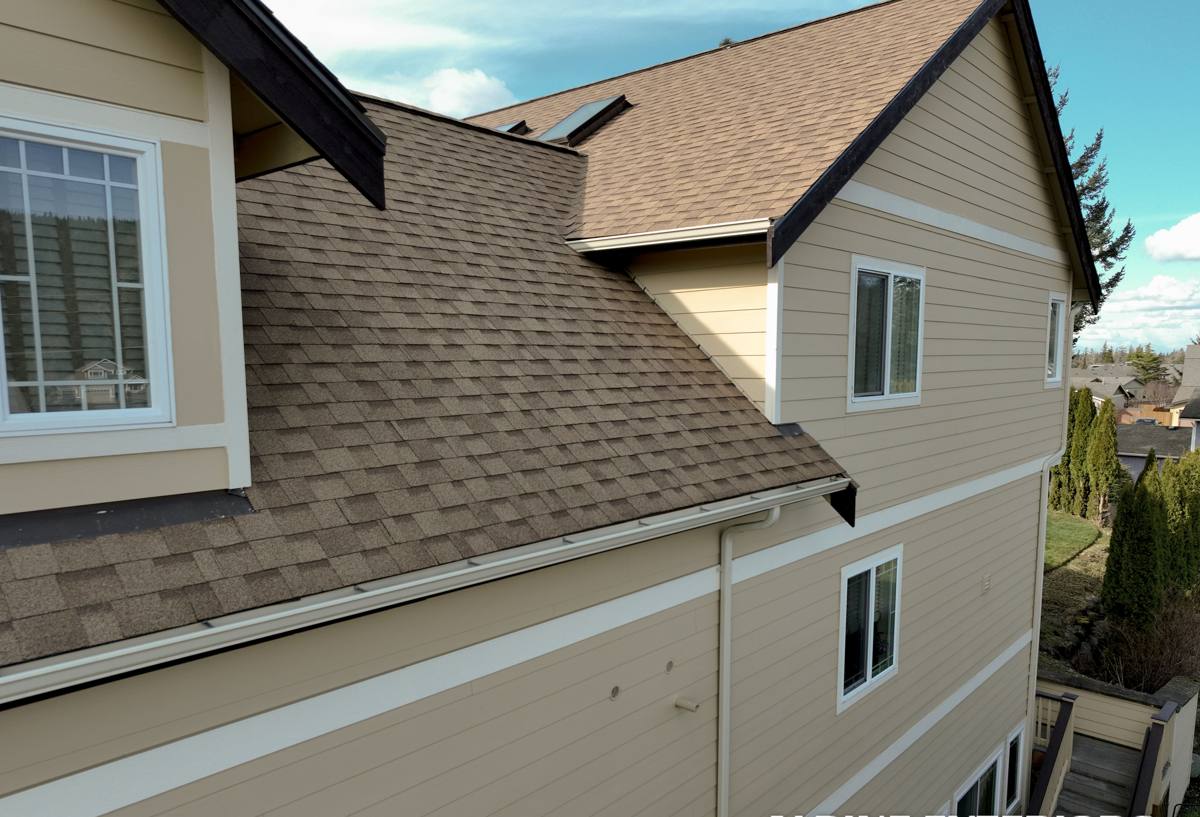
What Correct Installation Means in a Marine Climate
Most window failures we're called out to fix aren't glass failures or frame failures — they're water management failures. The window itself is fine; the way it was tied into the wall isn't. In a location like Blaine Harbor, where wind-driven rain is a regular event rather than an occasional storm, the installation details matter more than the brand name on the window.
Flashing and Water Management
Every window opening needs a flashing sequence that sheds water downward and outward, layered so that each piece overlaps the one below it — sill pan first, then side flashing, then head flashing integrated with the house wrap above the opening. Skipping the sill pan, or flashing out of sequence, is the single most common shortcut we find in older or poorly-done installations along the harbor. Water that gets behind the siding has nowhere to go but into the wall cavity, and in a climate this wet, that damage compounds quietly for years before anyone sees a stain.
Sealing Against Salt Air and Wind-Driven Rain
Sealant choice and placement matter more here than in drier regions. We use exterior-grade sealants rated for continuous moisture exposure, not general-purpose caulk that hardens and cracks after a couple of wet seasons. Just as important is where you don't seal — the bottom of the window needs a way to drain any incidental moisture back out, so a fully sealed perimeter with no weep path can trap water instead of shedding it.
Choosing Materials That Hold Up Near the Water
Frame material affects how a window ages in salt air more than most homeowners expect. We steer customers toward materials based on realistic maintenance expectations, not marketing claims.
| Frame Material | Coastal Performance | Maintenance |
|---|---|---|
| Vinyl | Good resistance to salt corrosion; won't rust or rot | Low — occasional cleaning |
| Fiberglass | Excellent dimensional stability in temperature and moisture swings | Low |
| Wood-clad | Attractive, but the wood core is vulnerable if the exterior cladding is ever breached | Higher — needs monitoring at joints and sills |
| Bare aluminum | Prone to corrosion and pitting in salt air over time | Moderate to high |
We don't refuse to install wood-clad windows — plenty of homeowners want the interior look and are willing to keep an eye on the exterior seals. Our job is to be upfront that a wood-clad window a half-mile from the water needs more attention at the cladding joints than the same window would need inland, and to make sure the installation itself doesn't create the entry point that causes problems.
Glass and Hardware Choices That Matter Here
Double-pane, low-E glass is the standard for most homes in this area and handles the marine climate fine when properly installed. The bigger consideration is hardware: locks, hinges, and cranks exposed to salt air benefit from corrosion-resistant finishes rather than standard-grade hardware that can start showing pitting within a few years. On the harbor side of a home, where wind load is highest, we also check that the window's structural rating matches actual exposure — a window rated for typical suburban wind loads isn't always the right spec for a wall facing open water.
Common Problems We Find in Existing Blaine Harbor Installations
When we're called out to look at an older window or troubleshoot a leak, a handful of issues show up again and again in homes near the harbor:
- Missing or improperly lapped sill pan flashing, allowing water to collect at the bottom of the frame
- Caulk used as the only water barrier, with no flashing behind it — fine for a year or two, then it fails
- Moss and organic growth building up in window tracks and sills that stay damp during the wet season
- Condensation between panes, indicating a failed seal on an older insulated glass unit
- Wood rot at sills and jambs on homes where wind-driven rain was never properly diverted away from the opening
Our Installation Process
Every job follows the same sequence, whether it's one window or a full-home replacement:
- On-site assessment of the existing opening, framing condition, and any signs of past moisture intrusion
- Removal of the old window and inspection of the rough opening and sheathing before anything new goes in
- Repair of any water damage found in the framing — we don't install a new window over a rotten sill
- Installation of sill pan flashing, then the window unit, then side and head flashing integrated with the house wrap
- Sealing with marine-grade exterior sealant at the appropriate points, leaving proper drainage paths
- Interior trim, insulation of the gap around the frame, and final weatherproofing check
We open up the wall around the opening rather than just swapping the window in the existing hole, because that's the only way to actually see whether previous flashing or sheathing needs attention. On a home this close to the water, an installer who won't take that extra step is setting up the next leak.
Signs Your Windows Need Attention
Homeowners around the harbor often live with early warning signs longer than they should, because the symptoms show up gradually. Watch for:
- Fogging or moisture between panes of double-pane glass
- Soft or discolored wood at the sill, interior or exterior
- Drafts you can feel with a hand near the frame on a windy day
- Moss or dark staining building up at the base of the window each winter
- Difficulty opening, closing, or locking a window that used to operate smoothly
- Paint or finish peeling specifically around the window perimeter, rather than the whole wall
Any one of these can be minor on its own. Together, or left unaddressed for a couple of wet seasons, they usually mean water has already found its way into the wall assembly.
Why Local Installation Experience Matters
Window installation isn't identical from town to town. A crew that mostly works inland Whatcom County jobs, away from direct water exposure, doesn't run into the same wind-driven rain angles or salt air corrosion patterns as often. Working regularly around Blaine Harbor means we've seen how these homes actually age — which sills fail first, which flashing details hold up over a full winter of storms off the water, and which materials are worth the added cost versus which ones are marketing. That experience shows up in the small decisions during installation, not in anything a homeowner would see listed on a spec sheet.
What Affects the Cost of a Window Installation Here
| Factor | Why It Matters |
|---|---|
| Number and size of openings | Larger or custom-sized windows cost more in materials and labor |
| Frame material | Fiberglass and quality vinyl typically cost more upfront than basic vinyl or aluminum |
| Condition of the existing opening | Rot repair or reframing adds labor and material cost beyond the window itself |
| Wind exposure of the wall | Openings facing open water may need a higher structural rating |
| Access and site conditions | Upper stories, tight lots, or waterfront access can affect labor time |
We give a firm, itemized quote after seeing the actual openings — a phone estimate on a coastal home is never reliable enough to be honest, since so much depends on what's found once the old window comes out.
If you're noticing drafts, fogged glass, or staining around your windows — or you're just ready to stop patching an old installation — we're happy to come take a look. Estimates are free, there's no pressure, and you'll get a straight answer about what your home actually needs. Use the form below to get started.