 Blaine Exterior
 Blaine Harbor's Climate Is Harder on Siding Than Most Homeowners Realize
Homes along Blaine Harbor sit at the edge of the Salish Sea, and that location comes with a specific set of demands that inland Whatcom County homes simply don't face. Salt-laden air drifts off the water and settles on every exterior surface, day after day, year-round. Add in the driving rain that comes with winter storms off the Strait of Georgia, and a siding system has to do more than look good — it has to shed wind-driven water at angles most siding was never tested for, resist corrosion of its own fasteners and trim, and survive being damp for weeks at a stretch during our long moss season.
Moss and algae growth is not cosmetic here. In the shaded, north-facing walls common on harbor-adjacent lots, organic growth holds moisture against the siding surface for extended periods. On a product that isn't dimensionally stable or that absorbs water, that sustained dampness is what eventually causes swelling, delamination, or rot at the seams. On a home a few blocks from saltwater, that same moisture carries dissolved salts that accelerate corrosion of nail heads, trim fasteners, and any exposed metal flashing that wasn't detailed correctly.
None of this means siding on a Blaine Harbor home is doomed — it means the installation has to be planned around these conditions from the first fastener, not patched around them later.
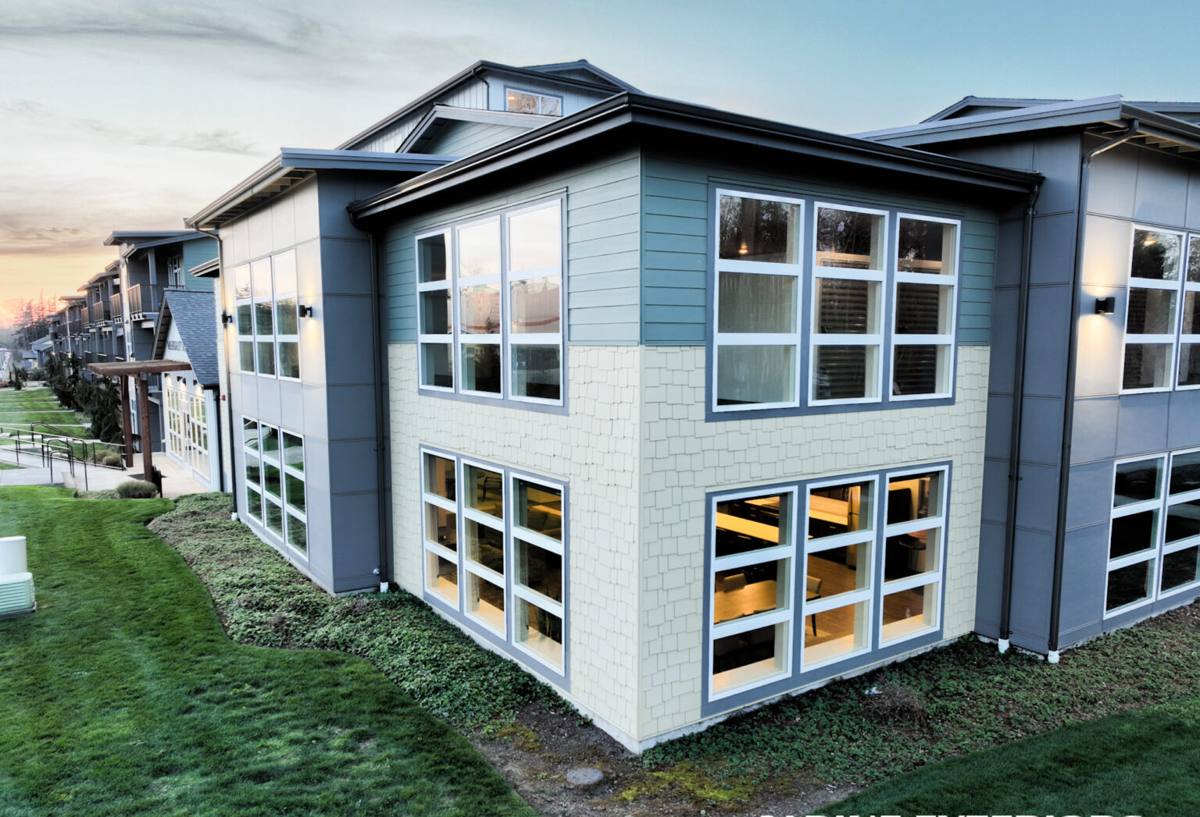
What Blaine Harbor Homes Actually Need From a Siding Installation
A siding job near the harbor needs to address three things at once: water management, salt exposure, and sustained moisture from shade and moss. That's a different priority order than a siding job in, say, a dry inland subdivision, where appearance and basic weatherproofing might be the main concerns.
Water Management First
Wind-driven rain off the water doesn't fall straight down — it drives sideways into wall assemblies, especially on west- and south-facing elevations that catch weather coming up the Strait. That means every horizontal seam, window head, and butt joint needs to be flashed as if it will see standing water pressure, not just occasional drizzle.
Salt-Air Resistance
Fasteners, trim pieces, and any exposed hardware need to be rated for coastal or marine exposure. Standard interior-grade fasteners will show corrosion streaking within a few seasons this close to saltwater, and once a fastener starts to corrode, it can telegraph rust stains through the siding face and eventually lose holding strength.
Moisture-Stable Material
The siding material itself has to hold its shape and resist water absorption even when it stays damp for extended periods under moss or in shaded areas. A product that swells, cups, or softens when wet will fail faster here than in a drier climate, regardless of how well it's installed.
Why We Only Install James Hardie Fiber Cement
We made a deliberate decision to install James Hardie fiber cement siding exclusively, and a harbor-front climate like Blaine Harbor's is a big part of why. Hardie's fiber cement composition is non-combustible and dimensionally stable — it doesn't absorb and release moisture the way wood-based or engineered-wood products do, which matters enormously in a location where siding stays damp for days at a time during our wet season. The factory-applied ColorPlus finish is baked on under controlled conditions and is formulated to hold up under UV and moisture cycling far longer than field-applied paint, which is one less maintenance headache on a home that already has to fight salt air and moss.
Hardie also engineers specific product lines (the HZ5 designation, for example) for harsher climate zones, which is relevant for any home directly exposed to marine weather. We don't carry LP SmartSide, vinyl, Cemplank, Allura, primed spruce, or cedar, because each of those comes with a trade-off we're not willing to build a harbor-area installation around — whether that's moisture sensitivity at the substrate, a shorter service life under UV and salt exposure, or a maintenance burden that falls back on the homeowner every few years. Hardie's transferable warranty and track record when installed to spec are why it's the only product we put on a home.
What a Correct Installation Actually Involves
A siding installation is only as good as the layers homeowners never see once the job is done. On a harbor-exposed home, we treat these steps as non-negotiable:
- Full inspection and removal of old siding down to the sheathing, checking for hidden rot or moisture damage before anything new goes up
- Repair of any compromised sheathing or framing found during tear-off — covering over a problem is how small rot pockets become structural repairs later
- Installation of a continuous weather-resistant barrier (house wrap or equivalent) with all seams properly lapped and taped
- Correct flashing at every window, door, and horizontal penetration, integrated with the weather barrier so water is directed out, not trapped behind the siding
- Rain-screen or drainage gap detailing where appropriate, to let incidental moisture drain and the wall assembly dry
- Fastening with corrosion-resistant, manufacturer-approved fasteners at the correct spacing and depth
- Proper clearance at grade, decks, and roof lines so siding never sits in standing water or constant shade-dampness
- Caulking and sealing only at the joints Hardie's install specs call for — over-caulking traps moisture just as badly as under-caulking
Skipping or rushing any one of these steps is usually invisible on installation day and expensive five years later, which is exactly the kind of shortcut that shows up first on homes exposed to salt air and driving rain.
Our Process, Step by Step
1. On-Site Assessment
We walk the exterior with you, note which elevations take the worst weather (usually the water-facing sides), check for existing moss or moisture damage, and identify any trim, window, or flashing issues that need attention before new siding goes on.
2. Tear-Off and Sheathing Check
Old siding comes off and we inspect the sheathing underneath. This is the point where hidden problems — usually moisture-related on harbor-adjacent homes — get found and fixed, not covered up.
3. Weather Barrier and Flashing
We install a continuous drainage plane and flash every penetration before a single piece of Hardie board goes up. This layer does more to determine how the siding performs in driving rain than the siding itself does.
4. Hardie Installation
Panels or planks go up per James Hardie's installation guidelines, with attention to fastener spacing, butt-joint treatment, and clearances — details that matter more on a home fighting salt air and sustained dampness than on a sheltered inland lot.
5. Trim, Caulking, and Finish
Trim is installed and sealed only where the manufacturer's specs call for it, and we do a final check of every seam and penetration before calling the job done.
6. Walkthrough and Cleanup
We walk the finished job with you, answer questions about maintenance, and clean the site thoroughly — old siding, packaging, and debris don't get left for the homeowner to deal with.
How Siding Materials Compare in a Harbor Climate
| Material | Moisture Behavior | Salt-Air Durability | Maintenance Burden |
|---|---|---|---|
| James Hardie fiber cement | Dimensionally stable, resists swelling | Strong when installed and fastened correctly | Low — factory finish holds up over time |
| Vinyl | Doesn't absorb water, but can warp/distort with temperature swings | Fasteners and trim pieces still vulnerable | Low to moderate, but limited repair options if damaged |
| Cedar | Absorbs moisture, prone to cupping and rot if not maintained | Needs frequent refinishing near salt air | High — regular staining/sealing required |
| Primed spruce / engineered wood | Vulnerable to moisture at cut edges and seams | Prone to swelling if finish is compromised | Moderate to high, finish maintenance critical |
This is a general comparison, not a claim that every alternative product fails on every home — plenty of factors affect real-world performance. It's simply why, when we weighed these trade-offs against what a Blaine Harbor climate demands, fiber cement is what we chose to stand behind.
Living With Moss, Shade, and Salt Air After Installation
Even the right siding benefits from a little homeowner attention, especially this close to the water. A simple annual routine keeps a Hardie installation performing the way it's designed to:
- Rinse siding annually with a garden hose to clear accumulated salt residue, especially on water-facing walls
- Trim back vegetation and tree limbs that keep any wall in constant shade — reducing shade reduces moss growth
- Check gutters and downspouts each fall so overflow doesn't run down the siding face during heavy rain
- Look at caulked joints once a year for cracking or separation and have them addressed before water gets behind the siding
- Address any moss or algae growth with a gentle wash rather than pressure-washing directly into seams
None of this is unusual maintenance — it's the same kind of basic upkeep any coastal home needs, and it's far less demanding than what wood-based siding requires in the same conditions.
Signs Your Siding May Be Overdue for Replacement
Because damage in a marine climate often starts hidden behind the siding face, it helps to know what to watch for from the outside:
- Soft spots or visible give when you press on the siding, especially near the bottom courses
- Persistent moss or algae staining that returns quickly after cleaning
- Bubbling, peeling, or chalking paint that wasn't there a few years ago
- Rust streaking near fasteners or trim, a sign of fastener corrosion
- Visible gaps, warping, or separation at seams and corners
- A musty smell or interior moisture signs on exterior walls
Any one of these is worth a look before it becomes a bigger repair, particularly on a harbor-facing wall that's taken the brunt of the weather for years.
Why It Matters to Hire a Crew That Already Works Blaine Harbor
Siding installation isn't a one-size-fits-all trade, and a harbor-adjacent home is not the same job as an inland install. A crew that regularly works this area already knows which elevations catch the worst wind-driven rain, how much shade-driven moss pressure to expect on north-facing walls, and how quickly salt air corrodes the wrong fastener choice. That familiarity shows up in the details — flashing decisions, fastener selection, drainage detailing — that don't get specified on a generic install checklist but make the difference in how the siding performs ten years in.
It also means a contractor who's seen how previous installations in this specific area have held up, and who can talk through what's worked and what hasn't without guessing. For a Whatcom County home this close to the water, that local track record is worth as much as the product itself.
If you're considering new siding for a Blaine Harbor home, we're happy to walk the exterior with you, look at what your walls are dealing with, and talk through what a correct James Hardie installation would involve — no pressure, no obligation. Use the form below to request a free estimate.