 Blaine Exterior
 Why Blaine Harbor Roofs Age Differently
Blaine Harbor sits about as close to saltwater and open weather as a Whatcom County roof can get. That combination — salt-laden air off the water, wind-driven rain, and long stretches of shade and dampness that feed moss — wears roofs down in ways that inland Whatcom County homes rarely deal with. A roof repair here isn't just patching a leak. It's addressing the specific reasons that leak started in the first place, and making sure the fix holds up under the same conditions that caused the problem.
We work on roofs in and around Blaine Harbor regularly, and the failure patterns repeat: corroded fasteners before the shingles themselves are worn out, flashing that's lifted or rusted at the edges, and moss that's worked its way under shingle tabs on the north- and west-facing slopes. None of that is unusual for the area. It's just what saltwater exposure and a long wet season do over time, and it's exactly what a competent repair needs to account for.
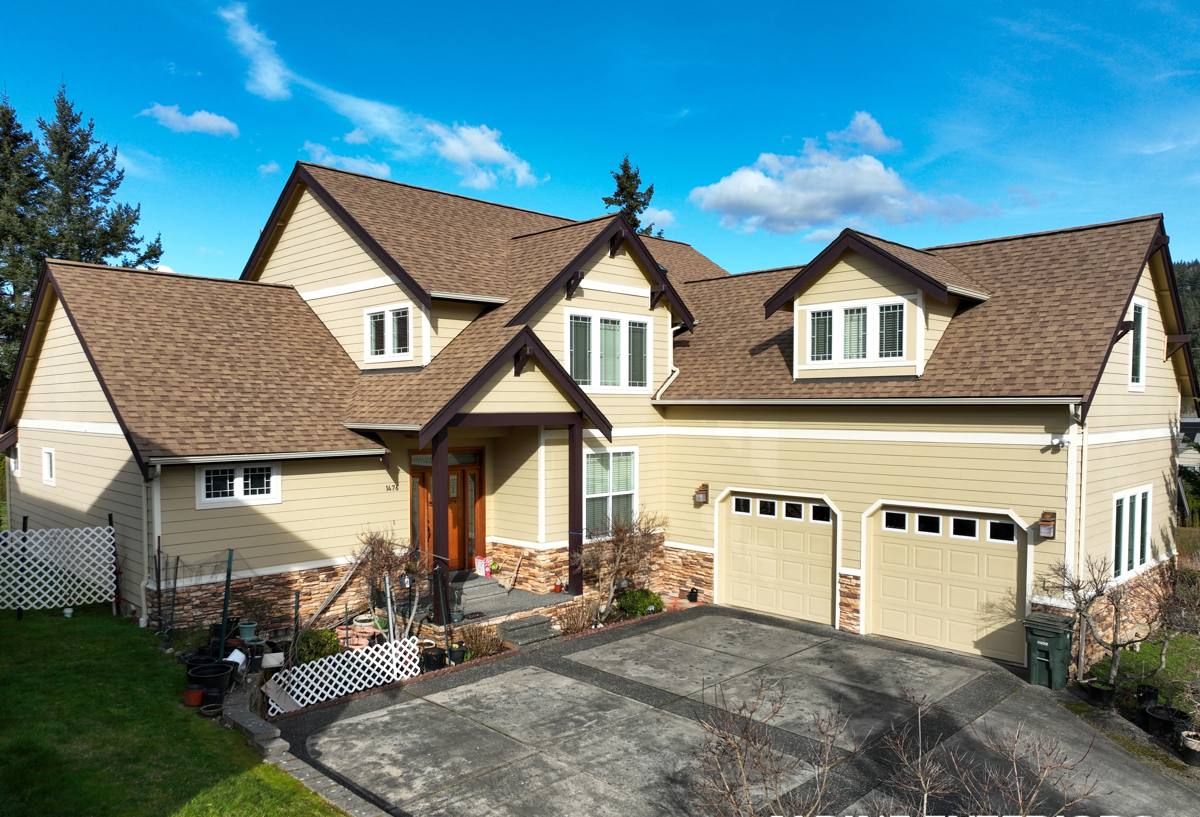
What Salt Air, Rain, and Moss Actually Do to a Roof
Salt Air
Airborne salt is corrosive to metal, and a roof has more exposed metal than most homeowners realize — nails, staples, flashing, drip edge, vent stacks, and any exposed fastener heads. Standard electro-galvanized fasteners can start rusting years before the shingles they're holding down have reached the end of their service life. Once a fastener corrodes and loses its grip, the shingle above it lifts slightly, and that's an open door for wind and water.
Driving Rain
Blaine's exposure means rain doesn't always fall straight down — wind off the water pushes it sideways, up under shingle edges and into any gap that a calmer climate would never test. This is why flashing detail matters more here than in sheltered inland areas. A roof that would perform fine in a low-wind location can leak in Blaine Harbor if the flashing laps and sealant weren't installed with wind-driven rain in mind.
Moss
Shade, moisture, and mild temperatures are ideal moss conditions, and Blaine Harbor's tree cover and marine humidity check every box for most of the year. Moss doesn't just sit on top of shingles — it roots into the granule surface, holds moisture against the roof deck, and physically lifts shingle edges as it grows. A roof that looks "mossy but fine" from the ground is often holding water against the deck underneath, which is where rot actually starts.
Repair vs. Replacement: Reading the Signs
Not every roof problem in Blaine Harbor needs a full replacement, and we don't push one when a targeted repair will genuinely hold. The honest answer depends on how much of the roof is affected and whether the underlying deck is still sound.
- Isolated leak at a single flashing point (chimney, vent, skylight, wall step) — usually a repair.
- Corroded fasteners in one section, rest of the field intact — usually a repair.
- Heavy moss coverage across most of the roof with soft or spongy decking underneath — often points toward replacement.
- Multiple unrelated leaks appearing in the same season — a sign the whole roof's underlying materials are reaching end of life, not just isolated failures.
- Shingles that are curling, cracking, or losing granules broadly rather than in one weathered spot — replacement territory.
We'll tell you plainly which category your roof falls into. If a repair will hold for several more years, that's what we recommend — a roof replacement is a bigger investment and shouldn't be sold to someone who doesn't need one yet.
What a Correct Roof Repair Involves
A repair that actually lasts in this climate isn't just swapping a shingle or caulking a gap. It means:
Finding the Real Source
Water travels before it shows up as a stain on your ceiling. A leak that appears in one room can originate several feet away at a flashing point, a nail pop, or a moss-choked valley. We trace the path back to the actual entry point rather than patching where the water happened to surface.
Matching Materials to the Environment
Where corrosion is a factor, that means using fasteners and flashing rated for coastal exposure rather than whatever's cheapest at the yard. Where moss has been an issue, it means clearing growth properly — not just scraping the surface — and addressing what's kept that section damp (overhanging branches, poor airflow, a low spot that holds water).
Rebuilding the Detail, Not Just the Surface
Flashing needs to be re-lapped correctly, not just re-sealed with caulk over a bad joint. Caulk is a short-term fix; correct lapping and fastening is what actually sheds wind-driven rain over the long term. If the underlying decking has taken on moisture damage, that gets replaced before new roofing goes over it — covering rotten decking with new shingles just hides the problem.
Our Roof Repair Process
- Inspection. We get on the roof (not just a ground-level look) and check the suspect area plus the rest of the roof for related issues — fastener corrosion, moss, flashing condition, and deck integrity.
- Honest diagnosis. We explain what's actually wrong, why, and whether it's a repair or a sign of broader wear. No pressure toward a bigger job than what's needed.
- Written scope and estimate. You know exactly what's being done and roughly what it costs before we start.
- The repair itself. Deck repair if needed, correct flashing and fastener work, matching shingle or roofing material, and moss removal/treatment where relevant.
- Final check. We confirm the fix addresses the actual source, not just the visible symptom.
Fastener and Flashing Material Comparison
Since corrosion resistance matters more in Blaine Harbor than in most of Whatcom County, material choice on a repair is worth understanding:
| Material | Corrosion Resistance Near Saltwater | Typical Use | Trade-off |
|---|---|---|---|
| Standard electro-galvanized | Lower — can show rust within a few years in salt air | Common on budget or non-coastal builds | Lowest upfront cost, shortest service life here |
| Hot-dip galvanized | Better — thicker zinc coating | Common upgrade for coastal repairs | Modest cost increase for meaningfully longer life |
| Stainless steel | Best — resists salt corrosion well | Recommended for flashing and fasteners in direct salt exposure | Higher material cost, longest service life |
| Aluminum flashing | Good if isolated from dissimilar metals | Common for step and valley flashing | Can corrode if in contact with certain other metals — installation detail matters |
We'll recommend the material that fits the repair's exposure and your budget honestly — a full stainless upgrade isn't always necessary for every section, but it's worth discussing for the areas taking the most direct salt and rain exposure.
What Drives Repair Cost
Roof repair costs vary based on a handful of real factors, not a flat per-square-foot number:
- Size and number of affected areas — one flashing point versus several separate issues.
- Whether the decking underneath needs replacement or just the surface roofing.
- Roof pitch and accessibility.
- Material match — matching an existing roof's shingle color and style can add time versus a straightforward re-roof section.
- Extent of moss removal and any related cleaning or treatment needed before repair work starts.
Small, isolated repairs are often a modest expense measured in a few hundred dollars; larger repairs involving deck replacement or multiple sections climb from there. We give you a real number after seeing the roof, not a guess over the phone.
A Homeowner's Between-Visit Maintenance Checklist
A repair holds longer when it's not fighting the same conditions unassisted year-round. Between professional visits:
- Keep gutters clear so water isn't backing up under the roof edge.
- Trim back branches that shade a section of roof and keep it damp longer than the rest.
- Watch for dark streaking or green growth starting on north- or west-facing slopes — early moss is far easier to address than established moss.
- After a windstorm, do a visual check from the ground for lifted or missing shingles.
- Don't ignore a small ceiling stain — trace it early, before it becomes deck rot.
Why a Crew That Works Blaine Harbor Already Matters
A roof repair crew that mainly works inland or in drier parts of Whatcom County can still do competent general roofing work — but they may not default to coastal-grade fasteners, or think to check for the corrosion patterns that show up specifically near the water. Working Blaine Harbor regularly means we're not guessing at what the salt air and driving rain do to a roof over a few seasons — we're seeing it, repairing it, and adjusting the approach based on what actually holds up here versus what fails early.
That local pattern recognition is the real value in hiring a crew already familiar with the area: fewer repairs that need to be redone in three years, and a repair that's built for the conditions your roof actually faces rather than a generic specification.
If you've got a leak, visible moss, or a section of roof that's just starting to look worn near Blaine Harbor, we're happy to take a look. Fill out the form below for a free, no-pressure estimate — we'll tell you honestly what's needed and what isn't.