 Blaine Exterior
 Building New in Birch Point Means Building for the Water
Birch Point sits close enough to the water that every new-construction decision on the exterior envelope has to account for it. Salt-laden air, wind-driven rain off the Strait, and a moss season that can stretch from October well into spring aren't occasional nuisances here — they're the baseline conditions a window install has to survive, year after year, starting from the day the framing crew hands off the rough openings. When we install new-construction windows in this neighborhood, we're not treating it like a generic Whatcom County build. We're accounting for the specific exposure this stretch of shoreline gets.
New construction is actually the easiest time to get windows right. Unlike a replacement job, where we're working around existing finishes and whatever flashing decisions were made decades ago, new construction lets us control the whole assembly — rough opening, weather-resistive barrier, flashing sequence, window unit, and interior finish — as one integrated system. Getting that sequence right in a place like Birch Point matters more than it does inland, because the margin for error against wind-driven rain is smaller.
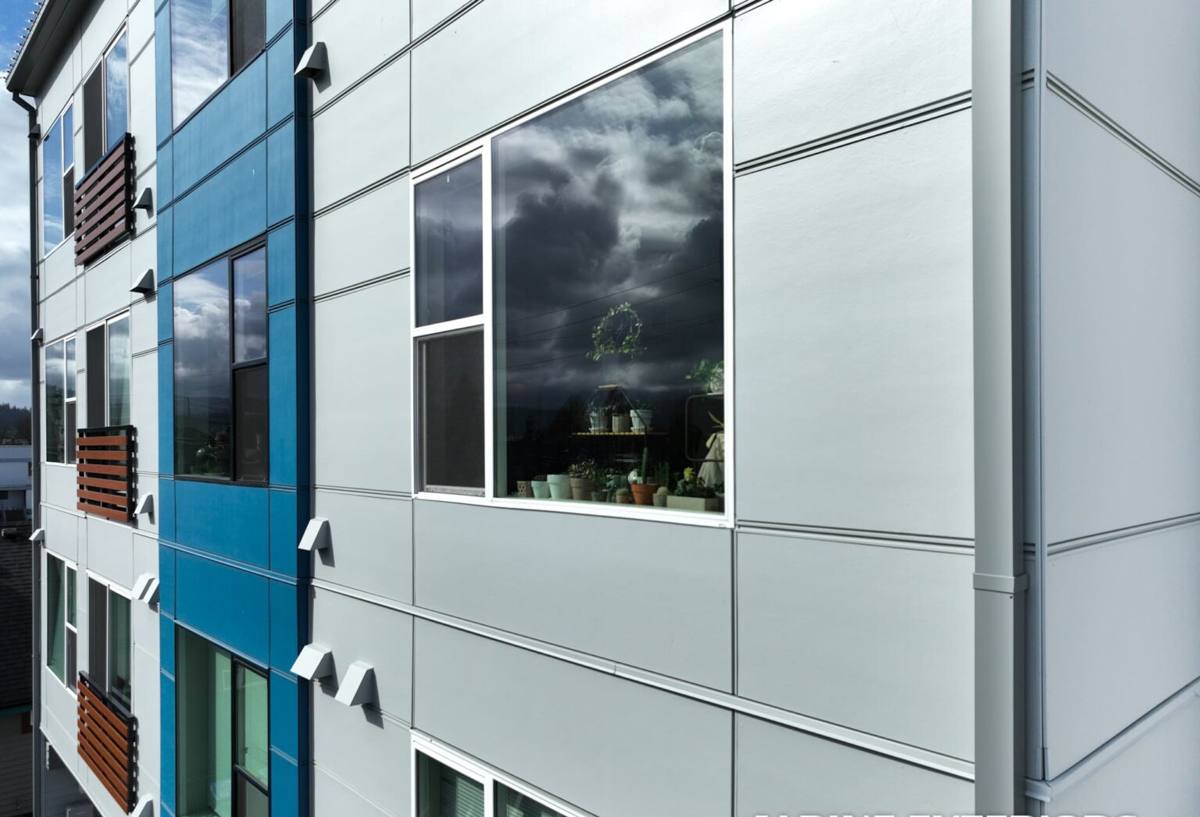
What This Climate Actually Demands From a Window Install
A few things separate coastal Whatcom County builds from inland ones, and they all show up in how we spec and install windows:
- Wind-driven rain exposure — Birch Point catches weather directly off the water. Flashing details that would be adequate on a sheltered inland lot need to be more rigorous here, particularly at sill pans and head flashing.
- Salt air corrosion — hardware, fasteners, and cladding finishes all degrade faster near saltwater. Material and hardware choices matter more here than they would 20 miles inland.
- Sustained moisture and moss season — long stretches of damp, low-light weather mean any water that does get behind the window assembly has more time to do damage before it dries out. Correct drainage and vapor management aren't optional details, they're the difference between a window that lasts decades and one that causes rot inside the wall in under ten years.
- Wind loading — waterfront and near-waterfront lots see higher sustained wind than sheltered inland sites, which affects unit selection and anchoring, not just the flashing.
None of this means Birch Point needs exotic products. It means ordinary good practice — done correctly and not skipped under schedule pressure — matters more here than it does in a lot of other places.
What a Correct New-Construction Install Involves
Rough Opening and Sizing
Every window opening gets checked for square, plumb, and correct size before units ever arrive on site. Undersized or out-of-square openings get shimmed or corrected before installation — not compensated for with extra caulk after the fact, which is a common shortcut that fails early in this climate.
Weather-Resistive Barrier and Flashing Sequence
This is the part that actually determines whether a window leaks in five years or thirty. The sequence matters: sill pan flashing first, sloped to drain outward, then the window unit, then jamb flashing that laps over the sill pan, then head flashing that laps over the jamb flashing and integrates with the weather-resistive barrier above. Every layer has to shed water down and out — never trap it. On a Birch Point lot facing open water or exposed wind, we pay particular attention to head flashing and any transition points where the water-resistive barrier meets window flanges, since that's where wind-driven rain finds its way in first.
Window Selection for the Site
Not every lot in Birch Point has identical exposure — some sit more sheltered by trees or terrain, others face the water directly. We factor actual site exposure into unit selection, hardware finish, and cladding recommendations rather than treating every new build the same.
Sealing and Insulation
Low-expansion foam or backer rod and sealant around the perimeter, sized correctly for the gap — too much foam can bow frames, too little leaves air and moisture paths. Interior air sealing is finished before trim goes on, not left as an afterthought.
Our Process for New-Construction Window Jobs
1. Plan Review and Site Visit
We look at the actual plans and, where possible, the lot itself before ordering anything. Orientation, exposure to prevailing wind and rain, and roof overhang all factor into what we recommend for that specific opening.
2. Ordering and Lead Times
New-construction windows are typically special-ordered to the plan's sizes and configurations, which means lead times need to be built into the build schedule early. We coordinate with the general contractor or builder so windows arrive when the framing is actually ready for them — not weeks early sitting exposed on site, and not late enough to hold up the dry-in schedule.
3. Installation
Flashing and installation happen in sequence, unit by unit, with each opening checked before moving to the next. We don't install a whole house's worth of windows and flash them all afterward — the flashing has to go in as part of the same sequence as the unit itself.
4. Final Check and Walkthrough
Before we consider a job finished, every unit gets checked for operation, seal, and squareness, and we walk the job with the builder or homeowner so everyone's looking at the same finished product.
Comparing Window Materials for Near-Water New Construction
Material choice affects long-term performance more in a salt-air, high-moisture environment than it does inland. Here's how the common options compare for a Birch Point build:
| Material | Salt Air / Corrosion Resistance | Maintenance Burden | Typical Trade-offs |
|---|---|---|---|
| Vinyl | Good — won't corrode, though hardware finish still matters | Low | Wide product range and price points; performance depends heavily on installation quality |
| Fiberglass | Very good — dimensionally stable, resists warping in temperature and moisture swings | Low | Higher upfront cost; strong long-term option for exposed sites |
| Aluminum-clad wood | Good exterior protection, but any breach in the cladding exposes wood beneath to moisture | Moderate | Attractive interior wood finish; needs careful flashing and sealant maintenance in wet climates |
| Bare wood | Poor without diligent, ongoing maintenance | High | We generally steer new builds near the water away from this unless the homeowner commits to a real maintenance schedule |
We'll walk through these trade-offs against your actual plans and budget rather than defaulting to one material for every job — the right call depends on exposure, architectural style, and how much upkeep you want to take on.
Cost Factors for New-Construction Window Packages
New-construction window costs vary by unit count, size, glazing package, and material — there's no single number that applies to a whole house. The factors that move the price most are:
| Factor | How It Affects Cost |
|---|---|
| Unit size and configuration | Larger units, custom shapes, and multi-panel combinations cost more than standard operable windows |
| Material | Vinyl is typically the most budget-friendly; fiberglass and clad-wood options cost more upfront |
| Glazing package | Upgraded glass for wind, sound, or thermal performance adds cost per unit |
| Site exposure | Waterfront-facing openings may warrant upgraded flashing details or hardware, adding modest labor cost |
| Number of openings | Total window count is the single biggest driver of overall project cost |
We provide detailed, itemized quotes once we've reviewed your plans — broad ballpark ranges without seeing the actual window schedule tend to be more misleading than helpful.
Common Mistakes We See on New Builds Near the Water
Most of the window problems we get called to fix in coastal Whatcom County homes trace back to a handful of avoidable errors during the original construction:
- Sill pan flashing skipped or installed flat instead of sloped to drain
- Head flashing that doesn't properly lap over the weather-resistive barrier above it
- Windows installed before the weather-resistive barrier is fully lapped and taped around the opening
- Gaps sealed with caulk alone instead of proper flashing, as a shortcut
- Hardware or cladding finish chosen without accounting for salt air exposure
- Rough openings left out of square and compensated for with excess shim or sealant instead of correction
Every one of these is preventable with the right sequence and a crew that isn't rushing to move to the next opening.
Why Hire a Crew That Already Works Birch Point
General best practice for window installation doesn't fully translate to every lot. A crew that already works this specific stretch of Whatcom County has seen how wind and rain actually behave on these sites, which openings tend to take the worst of the weather, and where a standard flashing detail needs extra attention because of local exposure. That local pattern recognition doesn't come from a manual — it comes from doing the work here, on homes with the same salt air and the same long wet season your new build will have to stand up to.
It also matters for coordination. New-construction window work has to slot into a builder's schedule at the right moment — after framing and weather-resistive barrier, before siding closes things up. A crew familiar with the area's builders and typical timelines is easier to schedule around and less likely to create a bottleneck in your build.
Getting Started
If you're building new in Birch Point and want windows specified and installed to actually hold up against this coastline's weather, we're happy to look at your plans and talk through options. Reach out for a free, no-pressure estimate — there's a form below to get started.