 Blaine Exterior
 Building a Deck That Actually Holds Up in Birch Point
Birch Point sits right up against the water in Blaine, Whatcom County, and that waterfront position is exactly what makes deck building here different from a typical inland project. Homes out here catch salt spray off the water, take driving rain straight off the Salish Sea, and sit under a moss season that can stretch from early fall well into spring. A deck that would hold up fine in a sheltered inland yard can start showing problems in Birch Point within a couple of seasons if it wasn't built with these conditions in mind.
This page covers what actually matters for a deck built in this specific stretch of Whatcom County: the material and fastener choices, the framing details that keep water out, the permit process, and the maintenance rhythm that keeps a coastal deck looking and performing the way it should for decades instead of years.
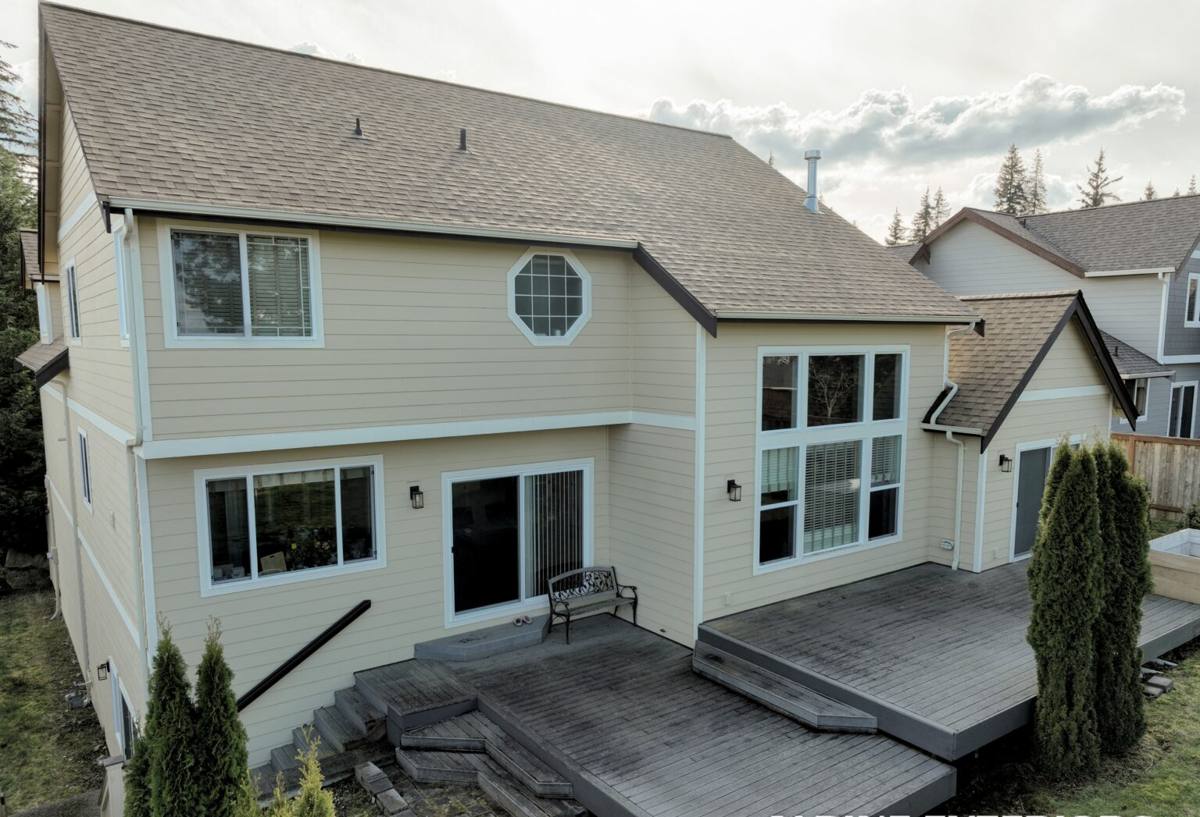
What Salt Air and Driving Rain Do to a Deck Over Time
Salt air is corrosive, and it doesn't take a direct ocean-front lot to feel the effect — wind off the water carries fine salt spray well inland along this shoreline. Over time that salt attacks unprotected metal fasteners, hinges, and connectors, causing rust streaks, weakened joints, and in some cases galvanic corrosion where two dissimilar metals are in contact. Standard interior-grade or lightly coated screws that would be fine on a covered porch somewhere landlocked will start failing years ahead of schedule here.
Driving rain adds a second stress. Wind-driven rain doesn't just fall on a deck surface — it gets pushed sideways into gaps, under railings, and against the house where the deck ledger board attaches. Wood that stays wet longer between drying cycles swells, then shrinks as it dries, and that repeated cupping and checking is what eventually opens boards up to rot. The connection point where a deck meets the house is usually the first place this shows up, because it's shaded from sun and slow to dry.
Why This Matters More at Birch Point Specifically
Because Birch Point is a shoreline community, most homes here get more direct wind and spray exposure than properties even a mile or two inland in Blaine. That means the margin for cutting corners on fasteners, flashing, and material selection is smaller. A deck built to a generic spec sheet, rather than to the actual conditions on this stretch of coastline, is the deck that needs premature repairs.
Moss, Shade, and the Long Wet Season
Whatcom County's moss season is long, and shoreline properties with mature trees or north-facing exposures often have the worst of it. Moss needs three things to take hold: moisture, shade, and something to grip. A deck surface that stays damp and shaded for days at a stretch is close to ideal moss habitat, and once moss establishes itself it holds even more moisture against the decking, which accelerates whatever wood decay or algae growth is already happening underneath it.
Moss on a walking surface is also a real slip hazard, which matters on a deck that's often used barefoot or in wet shoes coming off a boat, yard, or beach access.
Design Choices That Reduce Moss Buildup
A few decisions made at the design and framing stage make an outsized difference in how much moss and algae a deck develops over the years:
- Board spacing and gap width sized to let water drain through rather than pool on the surface
- Open or vented skirting instead of solid skirting, so air can move underneath the deck and it can actually dry out
- Joist framing kept a few inches above grade or gravel rather than sitting flush with damp soil
- Decking material chosen with moss and algae resistance in mind, not just looks
- Trimming back overhanging branches where practical to get more sun and airflow onto the deck surface
Choosing the Right Decking Material for a Birch Point Home
There's no single "correct" decking material for every home here — it depends on budget, how much annual maintenance you want to take on, and how close to the water the deck actually sits. What matters is picking with the local conditions in mind rather than picking on looks or price alone.
| Material | Upfront Cost | Maintenance | Salt Air / Moisture Resistance | Moss & Algae Resistance |
|---|---|---|---|---|
| Pressure-treated fir/hem-fir | Lowest | Annual cleaning, periodic sealing | Good if fasteners and flashing are corrosion-rated | Fair — needs upkeep to stay ahead of it |
| Cedar | Moderate | Regular sealing to hold color and resist checking | Naturally rot-resistant, but surface still needs care | Fair to good |
| Capped composite | Higher | Low — occasional washing | Very good, doesn't absorb moisture the way wood does | Good, though algae can still film the surface if it stays shaded and wet |
| Tropical hardwood (e.g. ipe) | Highest | Periodic oiling to maintain color | Excellent natural density and rot resistance | Good |
Composite has become a popular choice for waterfront homes here because it removes the annual sealing task and handles repeated wet-dry cycling well — that's a real advantage for a low-maintenance lifestyle. It's not maintenance-free, though; it still needs to be kept clear of standing debris and occasionally washed, since anything organic sitting on any decking surface long enough will eventually support moss or mildew. Wood, done right with the correct fasteners and a realistic sealing schedule, still performs well and is the right call for homeowners who want that traditional look and don't mind the upkeep.
Framing, Footings, and Flashing — The Parts You Don't See
Most of what determines whether a Birch Point deck lasts is invisible once the project is finished. Footing depth has to meet code frost-depth requirements, and soil conditions on shoreline lots can vary from sandy and well-draining to poorly draining clay pockets within the same neighborhood, so footings get sized to the actual soil, not a generic assumption.
Ledger board flashing — the metal and membrane detail where the deck attaches to the house — is one of the most important and most commonly under-built parts of any deck. Done correctly, it directs water away from the house framing instead of letting it wick into the rim joist. On a property that takes regular driving rain off the water, this detail is not optional.
Fastener and hardware grade matters just as much as the visible decking material. Structural screws, joist hangers, and post connectors should be rated for both the treated lumber they're going into (many modern treated woods are more corrosive to certain metals) and for coastal exposure — generally hot-dip galvanized or stainless steel rather than standard coated hardware.
Permits and Code Requirements in Whatcom County
Most attached decks and any deck above a certain height off grade require a building permit in Whatcom County, whether the property sits within Blaine city limits or in unincorporated county jurisdiction — which one applies changes the specific process and contact, so it's worth confirming before design work starts. Guardrails are required above a code-defined height threshold and have to meet minimum height and baluster spacing rules, and stairs have their own tread, rise, and handrail requirements.
Shoreline-adjacent properties can also have additional setback or shoreline management considerations depending on proximity to the water. This is very site-specific, so it's not something to assume either way without checking the actual property.
What We Handle for You
We prepare the plans, submit for permit, and coordinate any required inspections as part of the build — you're not left figuring out which office to call or what the drawings need to show.
Our Deck Building Process
- Site visit and consultation: We walk the property, look at sun/shade exposure, wind direction, drainage, and how the deck will actually be used.
- Design and material selection: We talk through the material comparison above in the context of your budget and maintenance preference, not just what looks good in a showroom.
- Permitting: We handle the drawings and the Whatcom County or City of Blaine permit submission.
- Construction: Footings, framing, ledger flashing, decking, and railing, built with the corrosion-rated hardware and drainage details this climate calls for.
- Final walkthrough and finish: Inspection sign-off, cleanup, and any sealing or finish work the material calls for.
Maintaining a Coastal Deck After It's Built
A well-built deck at Birch Point still needs a maintenance rhythm suited to salt air and a long wet season. None of this is difficult, but skipping it is how a well-built deck ages faster than it should.
- Rinse salt residue off the surface and railings periodically, especially after windy weather off the water
- Keep gaps between boards clear of leaves and debris so water and air can move through
- Check visible fasteners and connectors once a year for early rust or looseness
- Reseal wood decking on the schedule the product calls for — don't wait until it looks dry and gray
- Address moss as soon as it appears in fall rather than waiting until spring
- Keep nearby vegetation trimmed back so the deck gets sun and airflow
- Confirm ledger flashing and any caulking at the house connection still looks intact each year
Why Hiring a Crew That Already Works Birch Point Matters
A deck built to a generic spec, by a crew that hasn't worked this stretch of coastline before, is the deck most likely to need early repairs. A crew that already builds decks around Birch Point and the rest of Blaine knows which fastener grades actually hold up to the wind and salt exposure here, understands how the local permit process works whether a property is in city limits or unincorporated Whatcom County, and has a realistic sense of how bad the moss season gets on shaded, north-facing lots versus open, sun-exposed ones.
That local experience shows up in decisions you won't necessarily notice until years later — the flashing detail that keeps your rim joist dry, the hardware that isn't rusting at year three, the board spacing that sheds water instead of holding it. It's the difference between a deck that needs attention every season and one you mostly forget about.
If you're thinking about a new deck or replacing one that's showing its age, we're happy to come take a look and talk through what makes sense for your specific property. The estimate is free, there's no pressure, and you'll leave the conversation with a clear idea of what the job actually involves — just fill out the form below to get started.