 Blaine Exterior
 Why Birch Bay Siding Wears Differently Than Homes Inland
Birch Bay sits right on the water, and that changes what siding has to survive day to day. Homes a few miles inland in Whatcom County deal with rain and cold, but they don't get the constant low-grade salt exposure that comes off Birch Bay's shoreline. Salt-laden air settles on exterior walls, works into seams and fastener heads, and accelerates corrosion and finish breakdown in ways that inland siding rarely experiences. Add in driving rain that comes in sideways off the water during winter storms, plus a moss season that can run from fall through spring in this climate, and you've got three separate stressors working on the same wall assembly at the same time.
That combination is why siding repair in Birch Bay isn't just "patch what's broken." A repair that doesn't account for salt exposure, wind-driven moisture, and moss growth will usually fail again within a few years, sometimes faster. We've built our repair process around what actually happens to siding out here, not a generic checklist.
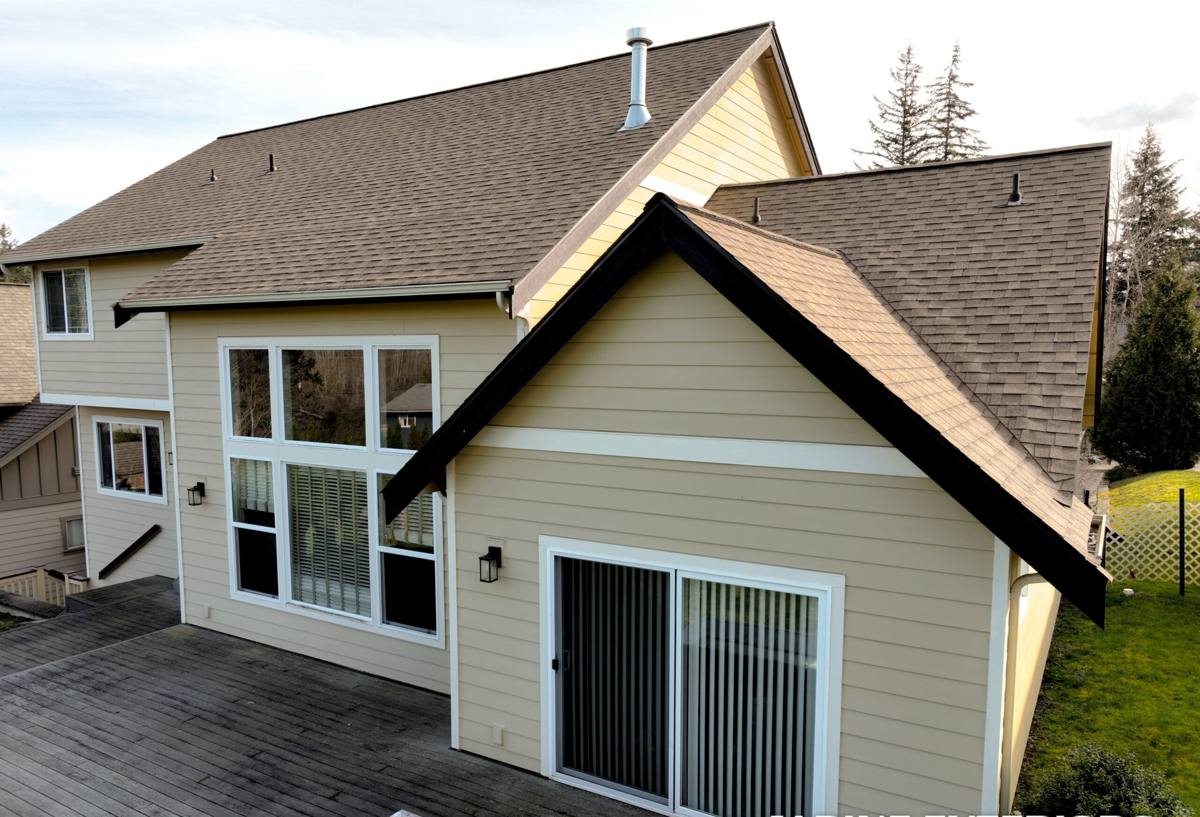
What Salt Air Actually Does to Siding Over Time
Salt air is corrosive to metal fasteners, flashing, and trim components, and it can also degrade certain paint and coating systems faster than a standard exterior finish is rated for. On older or lower-grade siding materials, salt exposure shows up as:
- Rusting or corroding nail heads and fasteners that eventually stain the siding face or lose their grip
- Premature chalking, fading, or breakdown of paint film, especially on the ocean-facing side of a house
- Accelerated corrosion of metal flashing and trim at butt joints, corners, and window heads
- Softening or swelling of wood-based or composite products where the finish has been compromised and moisture gets underneath
This is one of the reasons we standardized on James Hardie fiber cement siding rather than continuing to install products more vulnerable to this kind of exposure. Fiber cement doesn't corrode, and Hardie's factory-applied ColorPlus finish is engineered to resist fading and chalking far longer than field-applied paint typically holds up, which matters a lot on a shoreline property that gets salt exposure every single day of the year.
Driving Rain and Water Intrusion at the Details
Birch Bay homes take wind-driven rain straight off the water, and that kind of rain doesn't behave like a normal vertical downpour. It gets pushed sideways and upward into laps, seams, and penetrations that would stay dry in calmer weather. Most of the siding repair calls we run in this area trace back to water finding its way in at one of a handful of predictable spots:
Common failure points we check first
- Butt joints between siding panels where caulking has failed or was never properly back-primed
- Window and door trim intersections, especially on walls facing the prevailing weather
- Bottom courses near grade, where splashback and standing water shorten the life of any siding material
- Inside corners and any spot where two roof or wall planes meet
- Areas around exterior fixtures, vents, and hose bibs where the original flashing was undersized or missing
A correct repair doesn't just replace the damaged board. It traces the water path back to the entry point, fixes the flashing or sealant detail that let water in, and confirms the water-resistive barrier behind the siding is intact before anything new goes back on the wall. Skipping that step is the single most common reason a "repaired" wall shows the same rot or staining again within a couple of seasons.
Moss, Algae, and the Long Wet Season
Whatcom County's wet season runs long, and Birch Bay's proximity to the water and tree cover in many yards keeps humidity and shade levels high on north- and west-facing walls for much of the year. That's ideal growing conditions for moss and algae, which do more than look bad. Moss holds moisture directly against the siding surface, and on materials that aren't dimensionally stable or properly sealed, that sustained moisture contact leads to swelling, soft spots, and eventually rot at the affected boards.
When we're called out for a moss-related repair, we look at more than the mossy boards themselves. We check the grading and drainage nearby, any tree or shrub cover that's keeping the wall shaded and damp, and whether the siding material itself is holding moisture or shedding it. Fiber cement resists moisture absorption far better than wood-based or composite siding, which is a real advantage in a spot where a section of wall might stay damp for weeks at a stretch during winter.
What a Correct Siding Repair Involves
A siding repair that's built to last in Birch Bay's climate follows the same sequence every time, regardless of what material is currently on the house:
- Diagnose the actual cause — not just the visible damage, but why that section failed (flashing, sealant, grading, ventilation, or material breakdown)
- Open up the area enough to inspect the water-resistive barrier, sheathing, and framing behind the damaged siding
- Repair or replace compromised sheathing or framing before any new siding goes back on — patching over hidden rot just hides the problem for another season
- Correct the water management detail that caused the failure: reflash, re-seal, or redirect water as needed so the same spot doesn't fail again
- Match or replace siding using a compatible material, with attention to how the repair will weather against the rest of the wall over time
- Finish and seal to the same standard as new installation, not a shortcut version
Where the damage is limited to one section and the rest of the siding is sound, a targeted repair makes sense. Where we find repeated failures across multiple walls, widespread moisture damage, or a material that's simply not holding up to this location's exposure, we'll tell you honestly when replacement is the more cost-effective long-term answer rather than continuing to chase repairs on a losing material.
Repair vs. Replacement: How We Help You Decide
| Situation | Repair usually makes sense | Replacement usually makes sense |
|---|---|---|
| Damage extent | Isolated to one or two sections | Recurring across multiple walls or elevations |
| Underlying material | Fiber cement or sound original material | Wood-based or composite siding that's chronically absorbing moisture |
| Cause | A single identifiable flashing or sealant failure | Systemic exposure issues (salt, shade, drainage) affecting the whole house |
| Age of siding | Well within expected service life | Near or past the material's realistic lifespan for this climate |
| Repair history | First repair in this area | Same spots have needed repair more than once |
We don't push replacement when a repair will genuinely hold up. But we also won't sell you a repair we know won't last in this environment just to make a smaller invoice. If a home is on its second or third round of patching the same wall, replacement with a material actually suited to shoreline exposure is usually the more honest recommendation.
Why We Install Only James Hardie Fiber Cement
When a Birch Bay repair does turn into a replacement conversation, our answer is James Hardie fiber cement siding, and we're upfront about why. It's non-combustible, which matters given wildfire smoke and ember exposure has become a more regular concern across the Pacific Northwest in recent summers. It doesn't rot, doesn't feed moss the way wood-based products can when moisture sits against them, and Hardie's ColorPlus factory finish is built to hold color and resist the chalking and fading that salt air accelerates on field-painted surfaces. Hardie also offers HZ5 product engineering aimed at climates with significant moisture exposure, which fits Birch Bay's conditions well, and the warranty is transferable if you sell the home, which matters to buyers in a coastal market.
We don't install vinyl, LP SmartSide, Cemplank, Allura, or primed wood siding, and we're straightforward with clients about why: in a location with this much combined salt, rain, and moss exposure, those materials each carry maintenance burdens or moisture vulnerabilities that we're not willing to put our name behind. That's a standard we apply to every home we work on in Blaine and the surrounding communities, not just Birch Bay.
Why Local Experience with Birch Bay Homes Matters
A repair crew that hasn't worked this specific stretch of coastline will often treat a Birch Bay job like any other siding repair, and that's how you end up with a fix that looks fine for a season and fails again the next winter. Knowing which walls take the worst of the wind-driven rain, how far moss creep typically runs before it becomes a structural issue, and how quickly salt exposure degrades certain fasteners and finishes changes how we diagnose a problem and what we recommend to fix it correctly the first time.
We work throughout Blaine and Whatcom County, and Birch Bay's shoreline exposure is a regular part of that work. That means when we're on your property, we're not guessing at what the local climate does to a wall over five or ten years — we've already seen it.
Before you call anyone for a siding repair, a quick self-check
- Is the damage limited to one area, or showing up in more than one spot on the house?
- Do you see staining, streaking, or bubbling near seams, corners, or window trim?
- Is there moss or algae buildup on shaded or water-facing walls?
- Does any section of siding feel soft, spongy, or noticeably different when pressed?
- Has this same area been repaired before?
If you're seeing any of these signs on a Birch Bay home, it's worth having someone look at the cause, not just the symptom, before more moisture gets behind the wall. We're happy to take a look and give you a straightforward, no-pressure assessment of whether a repair will hold up out here or whether it's time to talk about a longer-term fix — just fill out the form below to get started.