 Blaine Exterior
 Why Birch Bay Decks Wear Differently
Birch Bay sits right on the water, which means the decks out here take a beating that decks even a few miles inland don't see. Salt-laden air off the bay accelerates corrosion on fasteners, hinges, and any exposed metal hardware. Combine that with Whatcom County's long, wet shoulder seasons — where a deck can stay damp for days at a stretch — and you get a moss season that runs longer than most homeowners expect, sometimes from October clear through April. That moss isn't just an eyesore. It holds moisture against the wood surface, blocks sunlight and airflow that would otherwise help boards dry out, and turns stair treads and low-traffic corners into a slip hazard.
We've repaired decks up and down this stretch of coastline, and the failure patterns are consistent: ledger boards that pull moisture from the house wall, joists that rot from the top down under trapped debris, and rail posts that loosen because the post base was never properly flashed. None of this means Birch Bay decks are poorly built — it means they need repair and maintenance timed to the actual conditions here, not a generic maintenance schedule pulled from a drier climate.
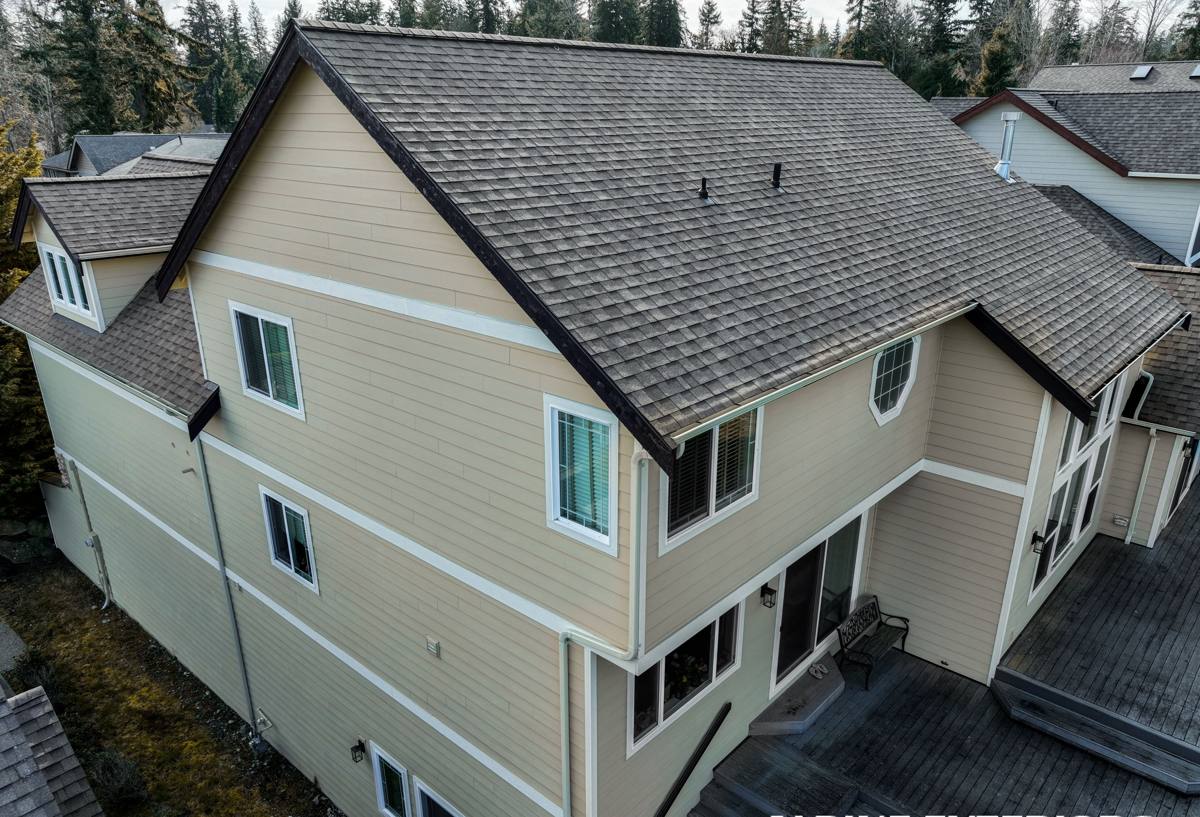
What a Correct Deck Repair Actually Involves
A lot of deck "repair" in this region amounts to replacing a board or two and calling it done. That's a patch, not a repair. A correct repair starts with figuring out why the damage happened, because if the underlying moisture path isn't addressed, the same spot fails again in a season or two.
Diagnosis Before Demolition
Before we pull a single board, we probe the structure — joists, beams, posts, and especially the ledger board where the deck attaches to the house. Soft wood, dark staining, or a screwdriver that sinks in easily all tell us rot has already set in below the surface. We also check flashing at the ledger, since a failed or missing ledger flashing is one of the most common — and most expensive to ignore — causes of structural rot on decks along this coastline.
Structural Versus Cosmetic Repairs
Not every repair is the same scope of work. We separate the two clearly so homeowners know what they're paying for:
- Structural repairs: rotted joists or beams, failing ledger connections, undersized or corroded fasteners, loose or leaning posts, footings that have shifted or heaved
- Cosmetic and surface repairs: individual board replacement, refastening loose deck boards, sanding and refinishing weathered surfaces, cleaning and sealing after moss removal
Structural issues get fixed first and to code — that's non-negotiable, since a deck rail or stair that fails is a safety issue, not just a maintenance one. Cosmetic work follows once the frame underneath is sound.
The Moss and Moisture Problem Specific to This Area
Moss on a deck surface is more than slippery footing. As it establishes, it holds a wet layer against the wood fibers even on days when the rest of the deck has dried. Over a full winter, that constant dampness softens wood, breaks down finish coatings, and gives fungal decay exactly the environment it needs. In Birch Bay's marine climate, north-facing decks and any area shaded by trees or the house itself are the worst offenders — they simply don't get enough sun or wind to dry out between rain events.
Salt air compounds this. Airborne salt accelerates corrosion on nails, screws, and structural connectors — including hardware rated for exterior use, if it isn't rated specifically for coastal or marine exposure. We've opened up decks where the boards looked fine but the joist hangers underneath had corroded to the point of failure. That's why hardware selection matters as much as the lumber itself out here.
Signs You Need Repair, Not Just Cleaning
- Boards that feel spongy or flex more than neighboring boards when you walk on them
- Persistent moss or algae that returns within weeks of cleaning
- Rust streaks running down from screw heads or metal connectors
- Railings or posts that wiggle when pushed
- Gaps opening up between the deck and the house wall (ledger separation)
- Stair stringers that feel uneven or bouncy underfoot
Repair Materials: What We Use and Why
Material choice matters more in a coastal environment than almost anywhere else in Whatcom County. Here's how the common options stack up for repair work specifically — not new builds, but patching into an existing deck.
| Material | Best Use in a Repair | Trade-Off to Know |
|---|---|---|
| Pressure-treated lumber | Joists, beams, framing repairs | Needs a true marine-grade or coastal-rated treatment level near the water; standard interior-rated PT corrodes fasteners faster in salt air |
| Cedar | Board replacement on a cedar deck, rail caps | Naturally rot-resistant but still needs sealing; unsealed cedar grays and softens faster in constant damp |
| Composite decking | Board-for-board replacement on composite decks | Low maintenance but matching an older composite's color/profile can be difficult — we're upfront if a perfect match isn't possible |
| Stainless or coated coastal fasteners | Any repair within reach of salt air | Costs more up front than standard exterior screws, but standard hardware is the single most common repeat-failure point we see |
We don't push composite or any other product as a blanket upgrade during a repair — sometimes matching the existing material is the right call, and sometimes a homeowner is better off knowing the trade-offs and choosing to switch a section over. Either way, we explain the reasoning rather than just recommending what's easiest for us to install.
How Our Repair Process Works
1. On-Site Assessment
We walk the full deck structure, not just the area you called about. A soft board near the stairs is often a symptom of a moisture problem that's also affecting the ledger or a joist nearby — we'd rather find that now than have you call back in six months.
2. Written Scope and Estimate
You get a clear breakdown of what's structural, what's cosmetic, and what it costs — no vague "repair the deck" line item. If we find something once we open up a section that wasn't visible during the walk-through, we stop and talk to you before proceeding, not after.
3. The Repair Itself
Structural fixes come first: sistering or replacing joists, correcting flashing at the ledger, resetting or replacing posts and footings as needed. Surface work — board replacement, refastening, sanding — follows once the frame is solid.
4. Finish and Protection
Where wood is exposed, we seal or finish it before we consider the job done. A repair that leaves fresh-cut lumber unprotected through a Birch Bay winter is a repair that starts failing again almost immediately.
Cost Factors for Birch Bay Deck Repair
Every deck is different, so we won't quote a number without seeing the structure, but these are the main factors that move a repair estimate up or down:
- Extent of hidden rot: what's visible on the surface is often a fraction of what's underneath
- Ledger board condition: ledger and flashing repairs involve opening up the connection to the house, which adds labor
- Access: decks over slopes, water features, or tight side yards take longer to work safely
- Material match: matching existing decking (especially older composite or stained cedar) can add cost versus a straightforward like-for-like board swap
- Hardware upgrade: swapping to coastal-rated fasteners and connectors during the repair, rather than reusing what's there
Why Hire a Crew That Already Works This Coastline
A contractor who mostly works inland jobs isn't wrong about deck repair in general — but they may not think to check for the specific failure patterns that show up near the bay: corroded hangers under boards that still look fine, ledger flashing that was adequate for a drier site but not this one, or moss growth patterns that point to a drainage issue rather than just needing a wash. We work in Birch Bay and the surrounding Blaine area regularly, so we know where to look first, and we don't need to relearn the local conditions on your dime.
We also know what holds up here versus what looks fine for a season and then doesn't. That's the difference between a repair that lasts and one you're paying for again in a year or two.
Maintenance That Extends a Repair's Lifespan
Once a repair is done right, a little seasonal attention keeps it that way:
- Clean moss and algae off the surface before it establishes, ideally at the start and end of the wet season
- Check and clear debris from between boards, where moisture and organic matter collect
- Inspect fasteners and hardware annually for rust staining or looseness
- Re-seal or refinish exposed wood on the manufacturer's recommended schedule, not just when it looks weathered
- Keep an eye on the ledger connection and post bases, since that's where hidden moisture problems start
If your deck has soft spots, persistent moss, loose railings, or you just want an honest read on what shape it's really in, we're happy to take a look. Fill out the form below for a free, no-pressure estimate — we'll tell you what actually needs fixing and what can wait.