 Blaine Exterior
 Roof Repair Built for Bellingham's Climate
Bellingham roofs work harder than roofs in drier parts of the country. Between the marine air rolling in off Bellingham Bay, the long wet season that runs from fall through spring, and the shade cover from mature conifers in so many neighborhoods, a roof here is under near-constant moisture pressure. That combination is exactly why "small" roof problems in this area don't stay small for long. A little bit of trapped moisture under a lifted shingle in July can turn into soft decking by the following spring.
We repair roofs on homes throughout the Bellingham area as part of our regular service territory out of Blaine. This page covers what actually goes wrong with roofs here, what a repair should include if it's going to hold, and how we approach the job.
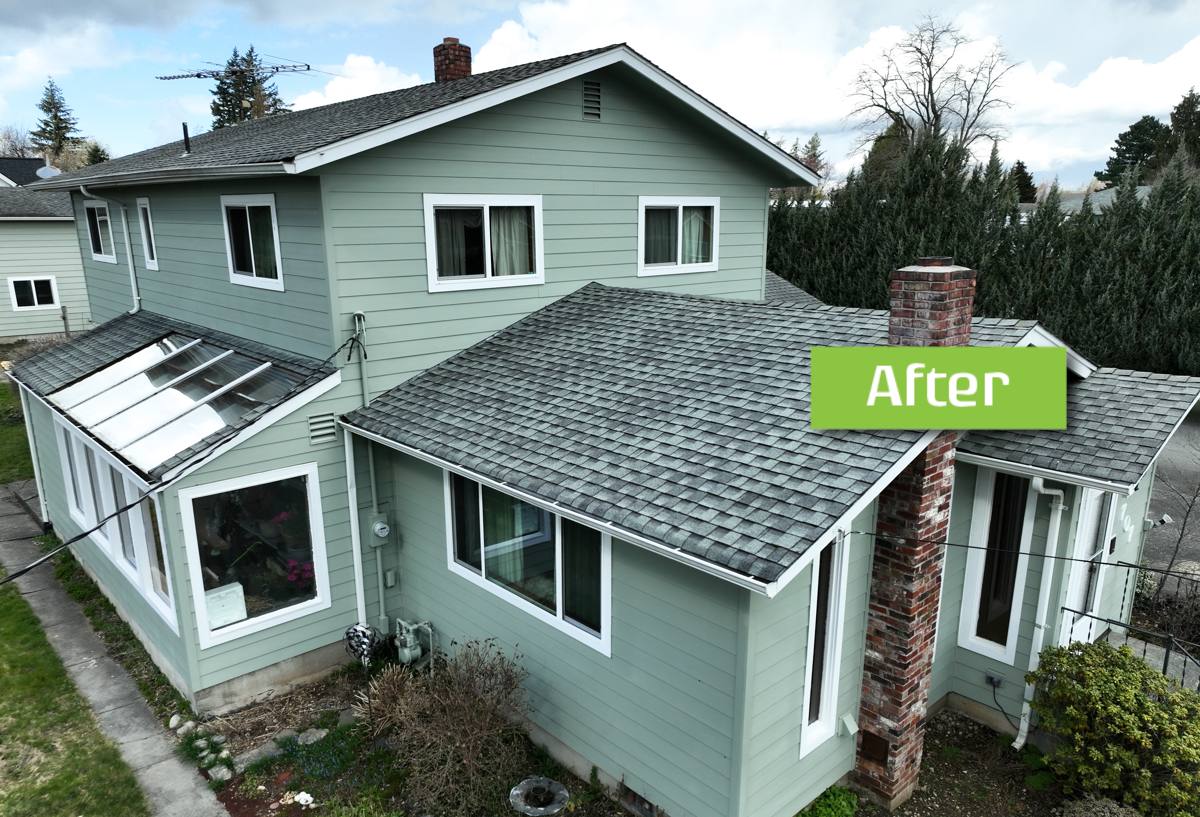
What Whatcom County Weather Does to a Roof
Salt Air and Driving Rain
Homes closer to the water deal with salt-laden air that accelerates corrosion on exposed metal — flashing, fasteners, gutter hardware, and vent caps all age faster near the coast than they would inland. Driving rain, which is common with the wind patterns off the Strait of Georgia and the Sound, doesn't just fall straight down — it gets pushed sideways and upward under laps in shingles, around chimney flashing, and into any gap that a calmer rain would never find. A repair that looks fine in dry, still weather can still leak the first time a real Pacific storm rolls through sideways.
Moss Season
Whatcom County's moss season is long — shade, humidity, and mild temperatures give moss and moss spores months of good growing conditions on north-facing and tree-shaded roof slopes. Moss doesn't just look bad. It holds water against the roofing material, works its way under shingle tabs and shakes as it grows, and slowly lifts and separates roofing layers that are supposed to stay tight together. A roof that sheds moss regularly and one that's never had it treated can be the same age and be in completely different condition underneath.
Temperature Swings and Wind
Even though Whatcom County doesn't see the extreme heat of other regions, the freeze-thaw cycle still happens here, especially at elevation or during cold snaps. That cycling stresses sealants and fastener holes. Add in wind gusts off the water and you get granule loss, lifted shingle tabs, and loosened flashing over time — all of it slow and cumulative, not dramatic.
Signs a Bellingham Roof Needs Repair
- Moss growth on shaded or north-facing slopes, especially where it's thick enough to hold visible moisture
- Dark streaking or staining on the roof surface (often algae, sometimes an early sign of trapped moisture)
- Granules collecting in gutters or at downspout outlets
- Curling, cupping, or lifted shingle edges, especially in areas exposed to prevailing wind and rain
- Soft or spongy spots when walked (a sign the deck underneath may already be wet)
- Rusted, lifted, or separated flashing around chimneys, skylights, and roof-wall intersections
- Water stains on interior ceilings, especially near exterior walls or after a heavy wind-driven rain
- Daylight visible through the roof deck from inside an attic space
Any one of these on its own might be minor. Several together, or any sign paired with an interior stain, usually means it's time for a real inspection rather than a wait-and-see approach.
What a Correct Roof Repair Actually Involves
A roof repair that holds up in this climate is more than patching the spot where a leak showed up inside the house. Water travels — it can enter at a flashing seam and track along the deck before dripping through the ceiling several feet away. That's why we treat every repair as a diagnosis first, patch second.
Finding the Real Source
We trace the leak path from the interior stain or the visible damage back to its actual entry point, checking flashing, shingle laps, vent boots, and valleys along the way. Repairing the wrong spot means the homeowner pays for a fix and still has the leak.
Checking What's Underneath
Once we're into the repair area, we check the condition of the underlayment and the roof deck itself. Salt air and long-term moisture exposure can leave fasteners corroded and wood softened even when the shingles on top still look serviceable. A repair that reuses a compromised deck section is a repair that will need to be redone.
Matching Materials and Technique
We match shingle type, exposure, and color as closely as possible so a repair doesn't stand out or create a mismatched patch that ages differently than the surrounding roof. Flashing gets rebuilt to shed water correctly — not just caulked over, which is a short-term cover-up that driving rain will eventually find a way around.
Addressing Moss and Growth, Not Just Symptoms
If moss is part of what caused the damage, we address the moss itself — treatment and removal — as part of the repair, not as an afterthought. Repairing a roof section without dealing with the moss nearby just means the same failure happens again in the same spot.
Our Repair Process
- Inspection and photo documentation — we walk the roof (or inspect from the eave and attic when conditions call for it) and document what we find before recommending anything.
- Honest scope discussion — we explain what's actually failing, what caused it, and whether a targeted repair is the right call versus a larger section replacement.
- Written estimate — clear about materials, scope, and price before any work starts.
- The repair itself — proper tear-back of the affected area, deck inspection and replacement of any compromised sections, correct flashing and underlayment work, and matched roofing material installed to manufacturer specifications.
- Cleanup and final check — site cleaned, debris and old material hauled off, and a final walk-through so the homeowner knows exactly what was done.
Repair vs. Replacement: How We Help You Decide
| Factor | Leans Toward Repair | Leans Toward Replacement |
|---|---|---|
| Age of roof | Well within expected service life | At or past expected lifespan for the material |
| Extent of damage | Isolated to one section or slope | Recurring issues across multiple areas |
| Deck condition | Solid, dry decking under the affected area | Widespread soft spots or rot found during inspection |
| Moss/algae history | First occurrence, treatable | Long-term, repeated growth with layered damage |
| Material availability | Matching material still obtainable | Discontinued product, poor match likely |
We'll always tell you honestly which side of this table your roof falls on. There's no benefit to us selling a full replacement when a proper repair will hold, and there's no benefit to patching a roof that's genuinely at the end of its service life — that just costs money twice.
Why a Local Bellingham Crew Matters
Roofing crews that don't work this area regularly tend to treat every job like it's in a dry climate — quick patches, minimal flashing work, no real plan for moss. A crew that works Whatcom County roofs consistently knows which slopes hold moisture longest, which roof styles common in this area (older cedar-shake homes, mixed-age composition roofs, homes shaded by mature trees) need extra attention at valleys and transitions, and how to build a repair that's actually rated to handle another wet season of driving rain off the water. That local pattern recognition is the difference between a repair that lasts and one you're calling about again next winter.
We also understand that Bellingham homeowners want a straight answer, not a sales pitch. We tell you what we see, what it means, and what your real options are — including when the honest answer is "this can wait" or "this is a small fix, not a big one."
Maintaining Your Roof Between Repairs
- Keep gutters and downspouts clear so water isn't backing up under the roof edge during heavy rain
- Trim back overhanging branches where practical to reduce shade and debris buildup that feeds moss
- Have moss treated before it spreads widely, rather than after it's already lifted shingles
- Check attic ventilation — poor airflow traps moisture and speeds up deck and shingle deterioration
- Schedule a roof check after any major windstorm, even if nothing looks obviously wrong from the ground
Get an Honest Look at Your Roof
If you're seeing moss, staining, granule loss, or an interior leak on a Bellingham-area home, it's worth having someone look at it before the next round of driving rain makes the problem worse. We offer free, no-pressure estimates — we'll walk the roof, tell you what we find, and give you a straight recommendation, whether that's a targeted repair or something more. Fill out the form below to get started.