 Blaine Exterior
 Deck Replacement in Bellingham: Built for a Wet, Salt-Air Climate
Bellingham sits on Bellingham Bay, and that setting shapes how decks age here more than almost anything else about the house. Salt-tinged marine air moves through the city on a near-constant basis, rain comes in sideways as often as it falls straight down, and the moss and mildew season on a shaded deck can run most of the year rather than just the wettest months. A deck is a horizontal, largely unprotected surface sitting directly under all of that, which is why decks in Bellingham tend to show wear years before the siding or roof on the same house does.
We're a Whatcom County exterior crew, and deck replacement is regular work for us in Bellingham specifically. This page covers what a Bellingham deck actually needs to hold up, what a correct replacement involves, and how we approach the job so a homeowner isn't back in the same position in five or six years.
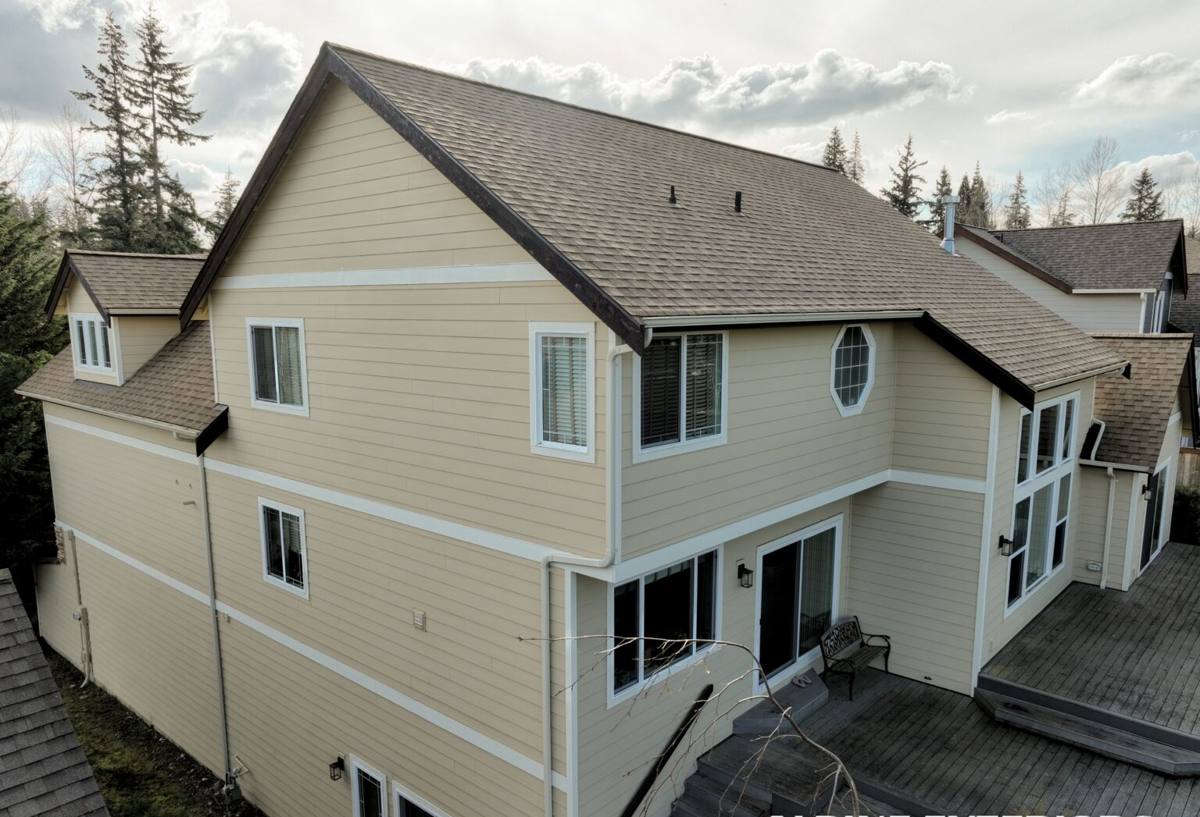
What Bellingham's Climate Does to a Deck
Salt Air Off the Bay
Salt-laden air accelerates corrosion on fasteners, joist hangers, and any exposed metal hardware, and it wears down lower-grade coatings and sealants faster than a dry inland climate would. On a deck, that hardware is structural, not decorative, so corrosion here isn't a cosmetic issue — it's a slow hit to the thing holding the deck together.
Driving Rain
Wind off the bay pushes rain sideways into railings, ledger connections, and stair stringers, not just straight down onto the deck boards. That means water finds its way into joints and fastener holes that a purely vertical rainfall pattern would mostly miss, which is part of why decks here rot from the inside — at the ledger board, joists, and post bases — before the surface boards look obviously bad.
A Long Moss Season
Mild temperatures combined with near-constant moisture give moss and algae a long growing season on any deck surface that doesn't get much direct sun, which describes a lot of shaded lots and north-facing decks around Bellingham. Moss holds moisture against the board surface, and on top of the slip hazard, that sustained dampness is exactly the condition that breaks down wood fiber and finish coatings fastest.
Why Deck Failure Often Starts Where You Can't See It
The most common deck problems we find in Bellingham aren't on the surface — they're at the connections. The ledger board, where the deck attaches to the house, is a frequent trouble spot because it sits against the wall in a location that's hard to flash correctly and easy to get wrong. Post bases sitting in standing water or buried in soil rot from the ground up. Joist hangers with corroded or undersized fasteners lose holding strength quietly, with no visible warning until there's a soft spot or, in a worse case, a failure under load.
A deck that looks fine from the yard can still have real structural problems underneath. That's a big part of why we treat a deck replacement as a full evaluation of the structure, not just a matter of swapping old boards for new ones on top of whatever framing is already there.
Signs a Bellingham Deck Needs Replacement, Not Just Repair
- Soft, spongy, or spring-feeling boards, especially near the house or in shaded areas
- Persistent moss or algae that returns quickly after cleaning
- Visible gaps, cracking, or separation at the ledger board where the deck meets the house
- Rust staining around fasteners or joist hangers
- Wobbly or loose railings and posts
- Deck boards that have cupped, warped, or separated significantly at the seams
- A deck original to a home more than 20-25 years old that hasn't had structural framing replaced
Any one of these on its own might point to a repair. Several together, or anything involving the ledger connection or support posts, usually points to a full replacement being the more honest recommendation.
What a Correct Deck Replacement Involves
Ledger Board and Flashing
The ledger board carries a significant share of the deck's structural load and sits directly against the house wall, which makes it one of the highest-risk points for water intrusion if it's flashed incorrectly. A correct installation uses proper flashing that directs water away from the wall assembly rather than behind it, with the ledger mechanically fastened to solid framing, not just sheathing.
Framing and Structural Hardware
Joists, beams, and posts need to be sized correctly for the deck's span and intended use, and every connection point should use corrosion-resistant, code-rated hardware rather than standard fasteners that will start losing strength faster in this climate's salt air. Post bases should sit above grade and drain, not sit in soil or standing water.
Decking Material Choice
The board on top of the frame is the most visible part of the deck, but it's also where a homeowner has real tradeoffs to weigh between upfront cost, maintenance, and how the material handles Bellingham's moisture load.
| Material | Maintenance | Moisture Behavior | Typical Lifespan |
|---|---|---|---|
| Pressure-treated wood | Regular sealing/staining needed | Prone to checking, warping, and rot if maintenance lapses | 10-15 years before major issues surface |
| Cedar | Periodic sealing to maintain appearance and resistance | Naturally rot-resistant but still absorbs moisture over time | 15-20 years with upkeep |
| Composite decking | Occasional cleaning, no staining or sealing | Resists rot and moisture absorption well; surface can still hold moss if shaded | 25-30+ years, backed by manufacturer warranty |
We don't push one material on every homeowner. Composite tends to make the most sense for shaded, moisture-heavy lots where upkeep is a real concern, while wood species still have a place for homeowners who prefer that look and are willing to keep up with sealing. What we won't do is install any decking material on framing or fasteners that don't match its expected lifespan — a 30-year composite board on 10-year hardware doesn't actually get you a 30-year deck.
Railings and Stairs
Railing posts and stair stringers see constant load and constant weather exposure, and they need the same attention to fastener corrosion resistance and secure connection as the rest of the frame. Loose railings are one of the more common complaints we hear about aging decks, and it usually traces back to undersized or corroded connection hardware rather than the railing material itself.
Our Deck Replacement Process
- On-site evaluation: We walk the existing deck, check the ledger connection, probe framing and posts for soft or rotted wood, and talk through what you actually use the deck for.
- Straightforward estimate: You get a written scope and price based on what we actually find, not a phone quote based on square footage alone.
- Removal: The old deck comes out, including framing and posts that don't meet current structural standards, not just the surface boards.
- Rebuild: New framing, flashing, and hardware go in to code, sized for the deck's actual use, followed by decking, railings, and stairs in the material you've chosen.
- Final walkthrough: We go over the finished deck with you before calling the job done.
Cost Factors for a Bellingham Deck Replacement
| Factor | Why It Matters |
|---|---|
| Deck size and shape | More square footage and multiple levels or angles add material and labor |
| Framing condition | Rotted joists, beams, or posts found during teardown add scope beyond a surface-only estimate |
| Decking material | Composite costs more upfront than pressure-treated wood but requires far less ongoing maintenance |
| Railing style and code requirements | Height, baluster spacing, and material all factor into both cost and safety compliance |
| Ledger and flashing work | Correcting an existing bad connection to the house adds work but is not optional in this climate |
These are general drivers, not a quote. Every deck we look at in Bellingham has a slightly different history, sun exposure, and framing condition, so we walk the site before putting a real number on the job.
Timing a Deck Replacement in Whatcom County
Whatcom County's wettest months typically run from late fall through winter, and building a new deck in that window means working around rain more than anything else. Spring and summer generally give the driest, most workable conditions for framing, flashing, and finish work, which matters because lumber, hardware, and coatings all perform better installed under dry conditions rather than between storm systems. That said, a deck with active rot at the ledger or posts is a safety issue worth addressing on its own timeline rather than waiting for the ideal season.
Why Hiring a Crew That Already Works Bellingham Matters
A crew that replaces decks across Whatcom County regularly sees how salt air, driving rain, and moss actually play out on real Bellingham homes over years, not just how a product performs on paper. That experience shapes practical choices on the job: where the ledger flashing needs extra attention, which framing connections corrode first in this air, and which decking material actually fits a specific lot's sun and shade pattern. Bellingham's bay-side exposure isn't the same as a more sheltered, inland property, and a deck built without that difference in mind tends to show problems earlier than it should.
If your Bellingham deck is showing soft spots, loose railings, persistent moss, or is simply old enough that you're not sure what's happening under the surface boards, we're glad to take a look. Reach out using the form below to schedule a free, no-pressure estimate.