 Blaine Exterior
 Deck Building in Bellingham's Marine Climate
Bellingham sits close enough to Bellingham Bay and the Salish Sea that homes here deal with a different set of conditions than decks built further inland. Salt-laden air moves off the water, rain falls steadily for months at a time, and shaded, tree-covered lots hold moisture long after a storm has passed. A deck built without that reality in mind will look fine the first year and start showing problems by the third or fourth. We build decks for Whatcom County homeowners with that climate as the starting point, not an afterthought.
This page covers what a deck actually needs to hold up in Bellingham, what a correct build involves from the framing up, and how we approach the job from first look to final walkthrough.
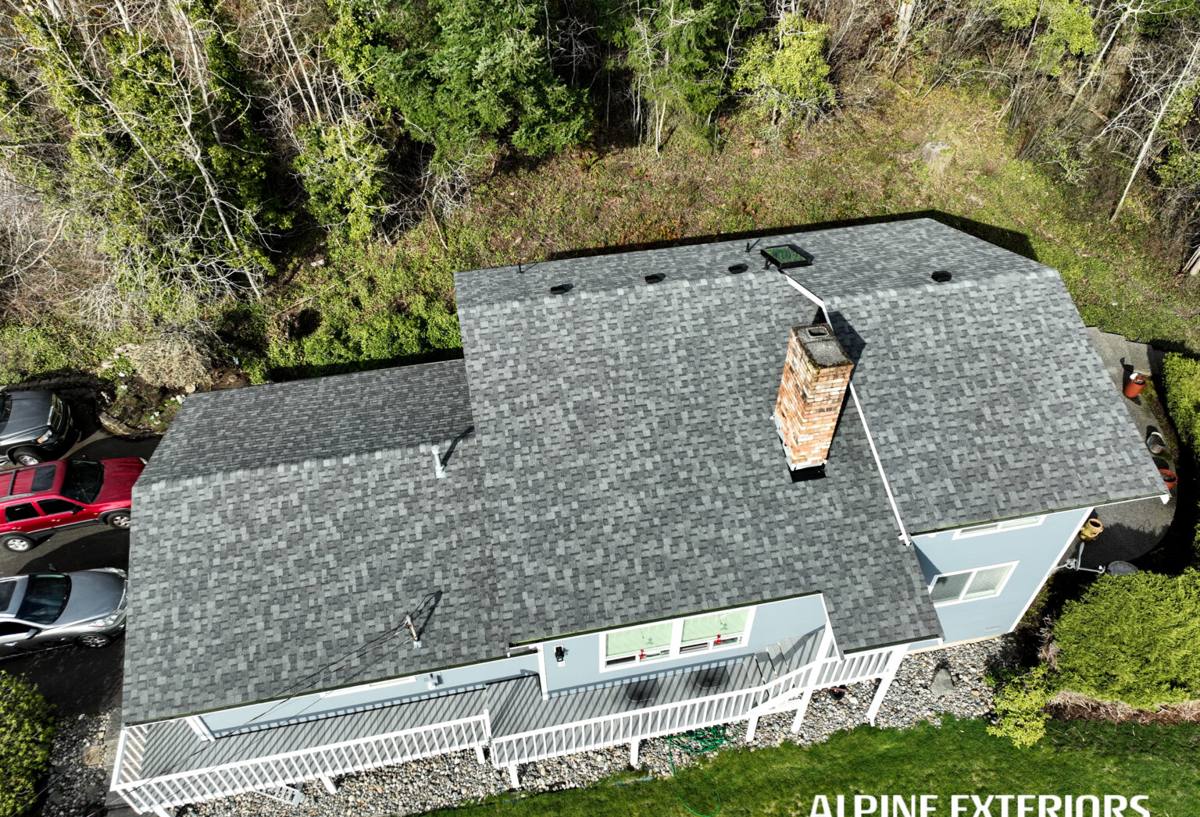
What Bellingham's Climate Does to a Deck
Three things drive almost every deck failure we see in this area, and they compound each other.
Driving rain and standing moisture
Rain in this region isn't just frequent, it often comes in sideways with wind, which pushes water into joints, fastener holes, and ledger connections that a dry-climate deck design never has to account for. Any place water can collect against wood or hidden framing becomes a rot starting point.
Salt air near the water
Proximity to Bellingham Bay means airborne salt settles on metal hardware, fasteners, and railing components. Standard hardware corrodes faster here than it would twenty miles inland, and corroding fasteners are one of the most common hidden causes of a deck that feels "loose" or starts to sag at connection points.
Moss and algae season
Shaded lots, tree cover, and the long stretch of wet months from fall through spring give moss and algae a real head start on any horizontal wood surface. Beyond looking bad, a mossy deck surface holds moisture against the boards and gets slick and dangerous underfoot, which matters on stairs and landings especially.
None of this means a deck can't be built to last here. It means the decking material, the fasteners, the flashing, and the drainage details all have to be chosen for this climate specifically, not treated as generic choices.
Decking Material Options for This Climate
There's no single "best" decking material for every Bellingham project — it depends on budget, how close the lot is to the water, how much shade the deck gets, and how much upkeep the homeowner actually wants to do. Here's how the common options compare for this specific climate:
| Material | How it handles moisture & salt air | Moss/algae behavior | Upkeep |
|---|---|---|---|
| Pressure-treated wood | Good if properly sealed and re-coated; end cuts and fastener holes need extra sealant | Prone to moss without regular cleaning; rough grain holds spores | Annual cleaning and re-sealing recommended |
| Cedar | Naturally moisture and insect resistant, but still needs finish maintenance near salt air | Still needs cleaning, though tighter grain sheds moss somewhat better than PT lumber | Periodic re-staining to hold appearance and protection |
| Composite (capped) | Very stable in wet, salty conditions; won't rot or absorb moisture the way wood does | Moss and algae can still form on the surface film but don't damage the board | Occasional washing; no sealing or staining |
| PVC decking | Fully synthetic, handles moisture and salt exposure with essentially no degradation | Same surface growth as composite, cleans off easily | Lowest upkeep of the group |
We'll walk through these trade-offs honestly rather than steering every homeowner to the highest-margin product. A shaded, moss-prone lot near the water is a different conversation than a sunny, more sheltered yard on the same street.
The Part That Actually Determines Lifespan: The Substructure
Decking boards are the visible part of the job, but the framing underneath is what determines whether a deck lasts ten years or thirty. This is where we spend the most attention, because it's also where corner-cutting is hardest to spot after the fact.
Footings and post bases
Footings need to be sized and set below frost depth per Whatcom County code, with post bases that keep the post end off standing water rather than sitting directly in it.
Ledger flashing
Where a deck attaches to the house, the ledger board and its flashing are the single most common source of hidden rot in this climate. Water that gets behind an improperly flashed ledger doesn't dry out quickly given how long our wet season runs, and by the time it shows on the surface, the framing damage is often already extensive.
Joist protection and fasteners
Joist tape or an equivalent moisture barrier on top of the joists keeps water from wicking into end grain through the deck board fastener holes. Given the salt air exposure in this area, we use corrosion-resistant, coastal-rated fasteners and hardware rather than standard-grade hardware that's rated for a drier, inland climate.
Airflow underneath
Proper height above grade and clear airflow underneath the deck let framing dry out between rain events instead of staying damp for weeks. On lower decks or ground-level platforms, this often means grading or drainage work below the structure, not just building on top of existing grade.
Design Considerations Specific to Bellingham Homes
Beyond materials and framing, a few design decisions matter more here than they would in a drier climate:
- Drainage slope: Decking needs a slight pitch away from the house so water sheds instead of pooling against the ledger.
- Sun and shade exposure: Lots with heavy tree cover benefit from decking choices and gap spacing that shed moisture faster, since these areas dry out slower after rain.
- Stair and railing hardware: Near the water, we spec hardware rated for coastal exposure rather than standard interior-grade fasteners.
- Permits and setbacks: Whatcom County and City of Bellingham permitting requirements vary by lot, especially for decks attached to the house or built above a certain height — we handle this as part of the project rather than leaving it to the homeowner.
- Surface texture: On shaded, moss-prone lots, a board profile with better traction underfoot matters for stairs and landings that see algae buildup.
How We Approach a Bellingham Deck Build
- On-site assessment: We look at sun exposure, drainage, soil, proximity to water, and how the deck ties into the existing structure before recommending materials.
- Honest material conversation: We walk through the wood-versus-composite-versus-PVC trade-offs above based on your specific lot and budget, not a one-size answer.
- Permitting: We handle the permit process for the jurisdiction your property falls under.
- Framing built for this climate: Proper footing depth, ledger flashing, joist protection, and coastal-rated fasteners, regardless of which decking material goes on top.
- Decking installation: Installed with the fastening method and gap spacing appropriate to the material and the wet-season conditions here.
- Final walkthrough: We go over how the deck was built, what maintenance it needs, and what to watch for as the seasons change.
Maintenance That Actually Matters Here
Whatever material you choose, a short seasonal routine goes a long way in this climate:
- Clear leaves and debris from between boards before the wet season sets in, so they don't trap moisture against the surface all winter.
- Wash off moss and algae buildup at least once a year, more often on shaded sections or stairs.
- Check and re-seal wood decking on the schedule appropriate to that product; don't wait for visible graying or cracking.
- Inspect ledger flashing and fastener heads periodically for early signs of corrosion or water staining.
- Keep gutters and downspouts near the deck clear so runoff isn't dumping extra water onto or under the structure.
Why a Crew That Already Works Bellingham Matters
A deck built to a generic national spec sheet is not the same as a deck built for Whatcom County's rain totals, salt exposure, and moss season. Crews who work this area regularly already know which framing details fail first here, which hardware grade actually holds up near the bay, and what the local permitting process requires before a single post gets set. That local experience shows up in decisions you won't see on the surface — flashing details, fastener spec, drainage grading — but that determine whether the deck is still solid in fifteen years or needs major repair in five.
If you're planning a new deck or replacing one that's showing its age, we're happy to take a look and talk through what makes sense for your lot. There's no pressure and no cost to get an estimate — just a straightforward look at your options and an honest recommendation.