 Blaine Exterior
 Window Installation in Lynden: What the Climate Actually Demands
Lynden sits inland in the Nooksack River valley, in the northern reach of Whatcom County near the Canadian border. It's not a waterfront town, but it still sits inside the same marine-influenced weather system that shapes exterior work across this whole corner of Washington. Salt-tinged air moves in off the Salish Sea and up the valley, rain arrives wind-driven more often than straight down, and mild, damp winters give moss and mildew a long season to work on anything shaded or slow to drain. None of that is unique to Lynden, but it's real enough that a window installed without accounting for it can start showing problems within a few winters instead of holding up for decades.
We're based in Blaine, on the water, and we work throughout Whatcom County, including regular jobs out in Lynden's agricultural valley. This page is specifically about window installation — not repair, not a general product overview — because installation is the single step that determines whether a good window performs the way it's supposed to. A well-made window installed with sloppy flashing will leak. A modest window installed correctly, with the flashing, sill pan, and air sealing done right, usually won't.
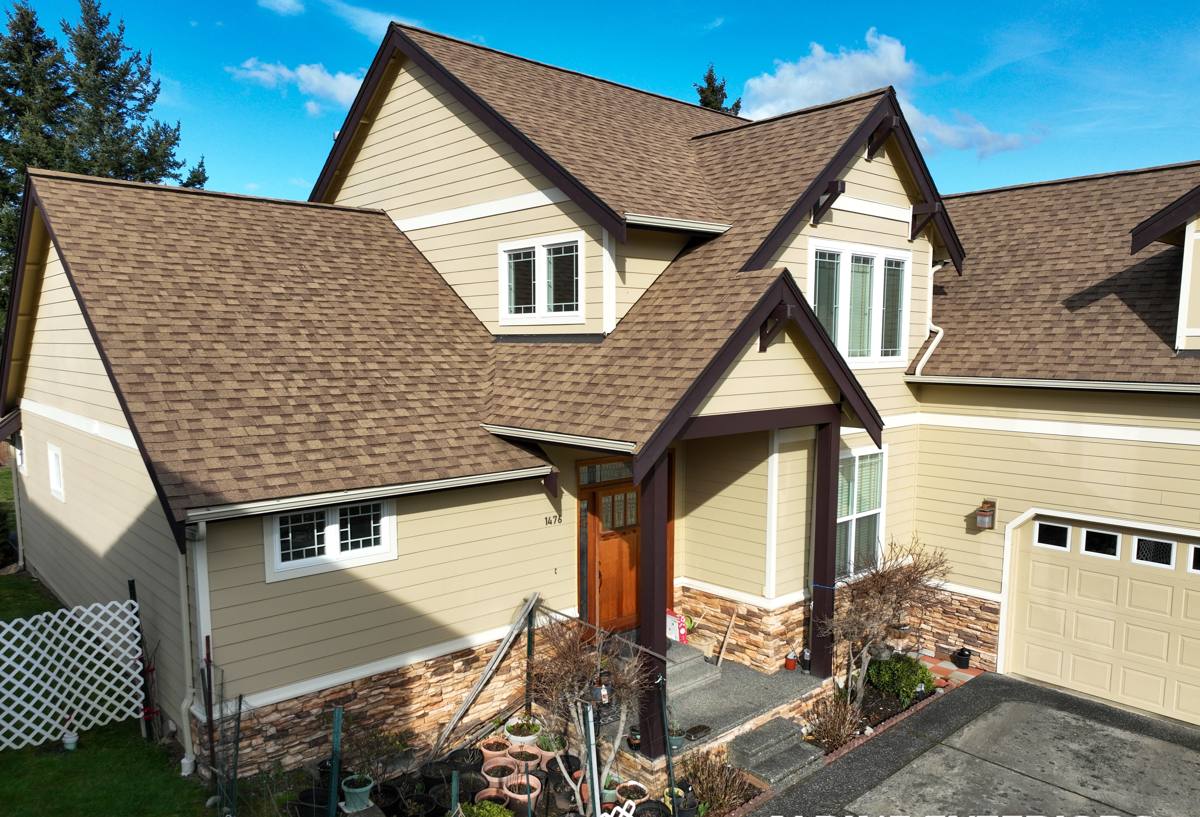
What a Correct Window Installation Involves
Most window failures we get called out to inspect aren't failures of the window itself. They're shortcuts taken during installation that don't show up until a wet season or two later, once water has already found its way behind the siding. Here's what we treat as non-negotiable on every job.
Opening Prep and the Sill Pan
Before a new window ever goes in, the rough opening gets cleaned up and inspected for hidden rot or damage from the old unit. A sill pan goes in beneath the frame, pitched slightly outward so any water that does get past the window sheds away from the house instead of pooling under it. Skipping the sill pan, or installing one flat instead of pitched, is one of the most common shortcuts we find when we open up an older installation.
Flashing Sequencing
Flashing has to be layered in a specific order — sill, jambs, then head — so that water sheds down and out at every layer, the way shingles on a roof overlap downhill. Get the sequence backward and you've built a path for water to travel behind the window instead of around it. This is where wind-driven rain in this region does the most damage when it's done wrong, because sideways-blown rain tests seams and laps that would never see water in a calmer climate.
Fasteners and Hardware
Salt-influenced marine air accelerates corrosion on lower-grade fasteners and hardware over time, even well inland. We use corrosion-resistant fasteners rated for this kind of exposure rather than whatever is cheapest, because a corroded fastener at a structural attachment point is a problem that's expensive to fix once it's sealed up behind trim.
Insulation and Air Sealing
The gap between a window frame and the rough opening needs to be insulated and air-sealed without trapping moisture against the framing. Overfilling that gap with the wrong material, or relying on caulk alone to do a sealing job that should be handled with proper flashing and backer rod, is a shortcut that causes problems years down the road rather than on install day.
New Construction vs. Replacement Installation
"Window installation" covers more than one kind of job, and the right approach depends on what's already there. The table below lays out the two main paths.
| Installation Type | What It Involves | Best For | Trade-offs |
|---|---|---|---|
| Full-frame (new construction) | Removes the old window down to the rough opening, including exterior trim; flashing and sill pan rebuilt from scratch | Openings with existing moisture damage, older homes with never-properly-flashed windows, or true new construction | Costs more, takes longer, and disturbs surrounding siding or trim |
| Insert (pocket) replacement | New window fits into the existing frame, which stays in place | Frames that are structurally sound and were properly flashed originally | Faster and less invasive, but it can't fix a flashing problem that's already behind the existing frame |
We'll tell you which situation your home is actually in during the on-site assessment, rather than defaulting to the faster, cheaper option and sealing a moisture problem up behind a new window. On older Lynden homes where the original windows were installed decades ago, we see enough undersized flashing and caulk-only sealing that full-frame is often the more honest recommendation, even though it costs more upfront.
Our Window Installation Process
- On-site assessment. We look at every opening, check for existing moisture damage or rot, and take precise measurements. This is also when we tell you whether a given window is a good insert-replacement candidate or needs full-frame work.
- Written scope and ordering. You get a clear, itemized scope before anything is ordered. Custom-sized windows built for a specific opening are common in older homes and can take several weeks to arrive, so we set expectations on timing upfront.
- Careful removal. Old windows and any damaged trim come out without unnecessary disruption to surrounding siding.
- Sill pan and flashing installation. This is the step that determines long-term performance, and it's not treated as optional or rushed to save time.
- Setting and shimming the window. The unit is set level and plumb, shimmed correctly so the frame doesn't rack or bind, and fastened with corrosion-resistant hardware.
- Insulation, air sealing, and trim. The gap around the frame is properly insulated and sealed, and interior and exterior trim is finished to match the home.
- Final check. We test operation, confirm weep holes and drainage paths are clear, and walk the job with you before calling it done.
Installation Mistakes We See in Older Lynden Homes
When we're called out to look at a leaking or drafty window in an older Lynden home, a handful of installation shortcuts come up again and again:
- Caulk used as the primary seal instead of proper flashing, which fails once the caulk ages and cracks
- Flashing lapped in the wrong order, directing water inward instead of out
- Weep holes sealed shut during installation, trapping water inside the frame
- Undersized or missing shims, leading to a frame that binds, doesn't latch cleanly, or has racked out of square over time
- No sill pan, or a flat sill pan that doesn't shed water outward
None of these are visible once the job is finished and the trim goes back on, which is exactly why they can sit undetected for years before showing up as a leak, a draft, or soft trim.
Cost Factors for Window Installation in Lynden
Every home is different, so we won't quote a number without seeing the job, but these are the factors that actually move the price.
| Factor | Why It Matters |
|---|---|
| Full-frame vs. insert replacement | Full-frame involves more labor, more materials, and more finish trim work |
| Number and size of openings | More openings and larger or custom-sized units add material and labor time |
| Frame material | Vinyl, fiberglass, wood, and aluminum carry different material costs and installation requirements |
| Existing damage | Rot or moisture damage found once the old window is out adds framing repair before the new one can go in |
| Glass package | Low-E coatings, argon or krypton gas fill, and triple-pane options add cost over standard double-pane glass |
| Access and site conditions | Upper-story windows or limited access can add time and equipment needs |
What to Expect From a Correctly Installed Window
If you're comparing quotes or just want to know what a properly installed window should look and feel like, this is a reasonable checklist to hold any contractor to:
- A written scope that separates the manufacturer's product warranty from the contractor's installation warranty
- A pitched sill pan, not a flat one, beneath every window
- Flashing lapped sill-to-jamb-to-head so water sheds down and out at every layer
- Weep holes and drainage paths left open and functional, not sealed during installation
- Corrosion-resistant fasteners and hardware appropriate for a damp, salt-influenced climate
- A window that opens, closes, and locks smoothly with no binding or racking
- Clean, finished interior and exterior trim that matches the rest of the home
Why a Crew That Already Works in Lynden Matters
Lynden's inland, agricultural setting is a different exposure profile than a waterfront property closer to Blaine — less direct salt spray, but the same driving rain, the same long moss season, and shade from surrounding farmland and trees that can keep certain walls damp longer than an open, wind-exposed site would. A crew that installs windows across this variety of conditions throughout Whatcom County, rather than in one narrow setting, knows to ask about a home's specific sun and shade exposure instead of applying the same approach to every job. That shows up in small decisions on install day — how much lap a flashing detail gets, how a sill pan is pitched for the amount of water a given elevation actually sees — and those decisions are what determine whether an installation holds up for one wet winter or several decades.
We travel out to Lynden regularly as part of our normal service area, not as a special trip, so scheduling and follow-up are straightforward whether the job is a single window or a full-home replacement.
If you're planning a window installation for a Lynden home — whether it's a full-frame job on an older house or replacing a handful of aging units — we're happy to take a look and give you a straightforward, honest assessment. Reach out using the form below for a free, no-pressure estimate.