 Blaine Exterior
 Roofing in Sandy Point Comes With Its Own Set of Problems
Sandy Point sits out on its own low, sandy peninsula between Drayton Harbor and the Strait of Georgia, and that location shapes what a roof has to deal with here. You're closer to open water than most of Blaine, which means more salt-laden air, more direct wind exposure, and, on the tree-covered lots tucked back from the water, heavier moss growth than you'd see further inland in Whatcom County. A roof that would hold up fine in a sheltered subdivision can wear out years early on a lot like this if it wasn't built for the exposure.
We install roofs across Blaine and the surrounding county, and Sandy Point is one of the areas where we adjust our approach the most. This page covers what that adjustment actually looks like: what tends to go wrong, what a correct installation involves, and how we handle it.
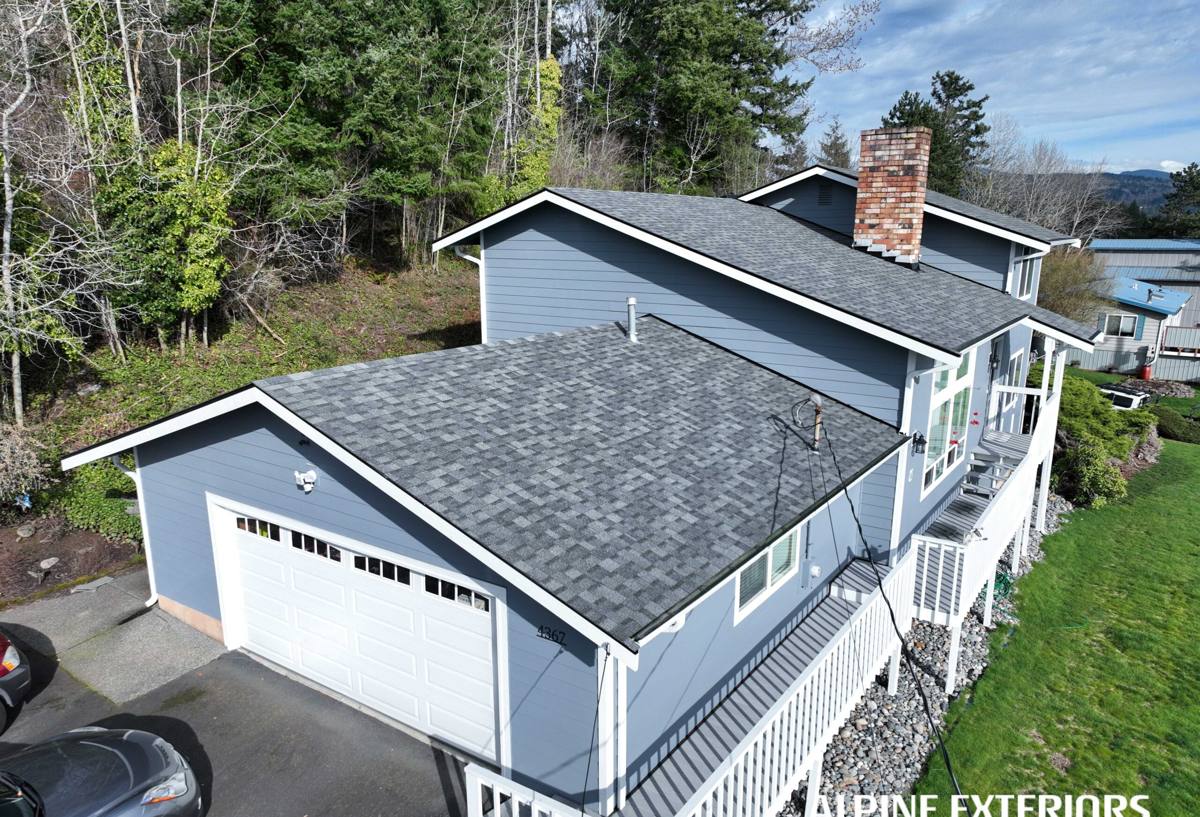
How Salt Air, Rain, and Moss Each Attack a Roof
Salt Air
Airborne salt accelerates corrosion on anything metal: nail heads, flashing, drip edge, roof vents, and the fasteners holding it all together. On a standard-grade roofing package, that corrosion shows up as rust streaking and, eventually, fasteners that back out or flashing seams that fail well before the shingles themselves are worn out. The fix isn't complicated, but it does mean choosing corrosion-resistant hardware and flashing from the start rather than treating it as an upgrade later.
Driving, Wind-Driven Rain
Open water exposure means rain doesn't just fall straight down here; it comes in sideways during a real blow. That pushes water up under shingle tabs, into valleys, and around any penetration such as vent pipes, chimneys, and skylights that isn't flashed and sealed correctly. A roof detailed for a calm, sheltered site can leak in exactly these spots even though the shingles themselves are in good shape.
Moss
Whatcom County's long, wet, mild winters make for moss weather generally, but shaded lots near the water, where fir and cedar canopy keeps roof sections damp for days after a storm, grow moss faster than open, sun-exposed roofs do. Moss holds moisture against the roofing material, works its way under shingle edges as it grows, and can lift tabs enough to let water in underneath. Left alone over a few seasons, it shortens the life of an otherwise sound roof.
Signs a Sandy Point Roof Needs Replacing, Not Patching
Not every roof problem out here calls for full replacement; plenty of issues are legitimate repairs. But when several of these show up together, or the roof is already well into its expected lifespan, replacement is usually the more honest recommendation:
- Granule loss heavy enough that you're finding grit in the gutters every time it rains
- Shingles that are curling, cupping, or cracking, especially on south- and west-facing slopes
- Rusted or failing flashing around chimneys, vents, and skylights
- Moss coverage thick enough to have lifted shingle edges, not just surface staining
- Soft spots in the roof deck, or daylight visible through the attic sheathing
- Repeated leaks in different spots after storms, rather than one isolated point
- A roof original to the home and past 20 to 25 years old, regardless of visible damage
What a Correct Installation Involves in This Location
A roof replacement on a coastal Whatcom County property isn't just a standard inland install with better-looking shingles. Several details change once you're this close to open water:
Fasteners and Flashing
We use corrosion-resistant fasteners and flashing rated for coastal exposure rather than standard-grade hardware. It costs a little more up front and makes a real, visible difference in how long the metal components last before they become the weak point in an otherwise good roof.
Underlayment and Water-Shedding Details
Self-adhered membrane at eaves, valleys, and around every penetration gives the roof a second line of defense against wind-driven rain that gets past the shingles. We pay particular attention to valley construction and penetration flashing, since that's where sideways rain finds its way in first on an exposed roof.
Ventilation
Balanced intake and exhaust ventilation keeps the underside of the roof deck dry and closer to outside temperature, which matters for both moisture control and shingle life. It also reduces the damp, shaded microclimate that helps moss take hold in the first place.
Ridge and Edge Detail
Drip edge, ridge caps, and starter courses all get extra attention on a wind-exposed site. These are the pieces most likely to lift or fail first if they're installed to a bare minimum standard instead of a coastal one.
Roofing Material Options for Sandy Point Homes
There's no single correct material for every home here; it depends on the roof's slope, how much tree coverage it sits under, your budget, and how the house is used. Here's how the common options generally stack up against this specific combination of salt, wind, and shade:
| Material | Salt Air Resistance | Moss Resistance | Typical Lifespan Here |
|---|---|---|---|
| Architectural asphalt shingle | Good, with coastal-rated fasteners and flashing | Moderate; benefits from occasional cleaning | 20 to 25 years |
| Standing seam metal | Very good with proper coating and fastener spec | Good; shedding surface discourages growth | 40-plus years |
| Synthetic or composite shingle | Good | Moderate to good, depending on the product | 30 to 40 years |
| Cedar shake | Fair; needs regular maintenance near salt air | Poor without upkeep; moss-prone | 15 to 25 years with upkeep |
We install asphalt and metal roofing most often out here because they hold up well against this specific combination of conditions without demanding constant upkeep. Cedar shake can look great, but on a shaded, salt-exposed lot it needs more regular maintenance to keep moss and rot from shortening its life. That's a trade-off we'll walk through honestly if it's a material you're considering, rather than talk you out of it or oversell it.
Our Installation Process
- On-site assessment. We look at the existing roof, deck condition, ventilation, and how exposed the specific slopes are to wind and shade before recommending anything.
- Written scope and material selection. You get a clear breakdown of materials, underlayment, flashing, and ventilation work, laid out plainly rather than buried in vague line items.
- Tear-off and deck inspection. Old roofing comes off down to the deck, and any soft or damaged sheathing gets identified and replaced before anything new goes down.
- Underlayment and flashing. Self-adhered membrane at vulnerable areas, new flashing throughout, and corrosion-resistant fasteners.
- Roofing installation. Installed to manufacturer specification, with extra attention to the edge and penetration details that matter most in wind-driven rain.
- Ventilation check. Intake and exhaust balanced for the attic space, and adjusted if the existing system was inadequate.
- Cleanup and final walkthrough. Site cleared, a magnetic sweep for stray fasteners, and a walkthrough so you know what was done and why.
What Affects the Cost
Every roof is different, but the main variables we price around are consistent from job to job. The broad ranges below are for general planning; your actual number depends on the specifics of your roof.
| Factor | Why It Matters |
|---|---|
| Roof size and number of slopes and valleys | More cuts and seams mean more labor and material |
| Deck condition | Rotted or soft sheathing found during tear-off adds repair cost |
| Material choice | Asphalt, metal, and synthetic products carry different material and labor costs |
| Roof pitch and access | Steeper roofs and limited site access add time and safety measures |
| Existing ventilation | Bringing inadequate ventilation up to standard is easier during a full tear-off |
| Current roofing layers | Removing multiple existing layers takes longer than a single-layer tear-off |
For most Sandy Point homes, a full roof replacement runs somewhere in the mid-to-high five figures, with the specifics of size, pitch, material, and what we find once the old roofing comes off moving that number up or down. We'll give you a firm number in writing before any work starts, not a ballpark that changes later on.
Why Local Experience in This Neighborhood Matters
A roofing crew that mostly works sheltered, inland neighborhoods can still do competent work, but they may not default to coastal-rated fasteners, extra flashing attention, or the ventilation adjustments that make sense on a wind- and salt-exposed lot unless you specifically ask for it. We work this stretch of Whatcom County regularly enough that those details are just how we build a roof out here, not an upsell we mention halfway through a bid.
There's also a practical side to it. We know what permitting and inspection typically look like for properties in unincorporated Whatcom County near Blaine versus inside city limits, and we plan the job around that from the start instead of finding out mid-project and losing time to it.
Keeping a New Roof Performing Out Here
A correctly installed roof still benefits from basic upkeep in this climate. A short seasonal checklist:
- Clear gutters and downspouts before the fall rains start, so water isn't backing up under the roof edge
- Have moss growth removed gently, not pressure-washed, before it spreads or lifts shingle edges
- Trim back tree limbs that keep sections of the roof shaded and damp longer than the rest
- Check flashing around chimneys, vents, and skylights every year or two for early rust or lifting
- After any major windstorm, do a quick visual check for lifted, cracked, or missing shingles
None of this is complicated, and a roof that was built with the right materials and details to begin with needs far less of it than one that wasn't.
If you're weighing a roof replacement in Sandy Point, we're glad to come take a look and give you a straight, no-pressure estimate: what we'd recommend, why, and what it costs. There's a form below to get that started.