 Blaine Exterior
 Siding Decisions Hit Different in This Part of Whatcom County
Homes in and around Sumas deal with a specific combination of weather that wears siding down faster than most manufacturers' marketing brochures let on: salt-laden air moving in off the water, long stretches of driving rain, and a moss season that can run most of the year in shaded, north-facing spots. None of that is exotic or rare for northwest Washington — but it does mean the siding choice you make here has to hold up to conditions that a lot of national "one size fits all" product lines simply weren't engineered around.
Blaine Exterior Co. installs James Hardie fiber cement siding exclusively. Not because it's the only decent product on the market, but because after years of tear-offs, warranty claims, and callbacks on other materials in this climate, it's the one we can stand behind without hedging. This page walks through what Sumas-area homes actually need from their siding, what a correct Hardie installation involves, and why the installer matters as much as the product.
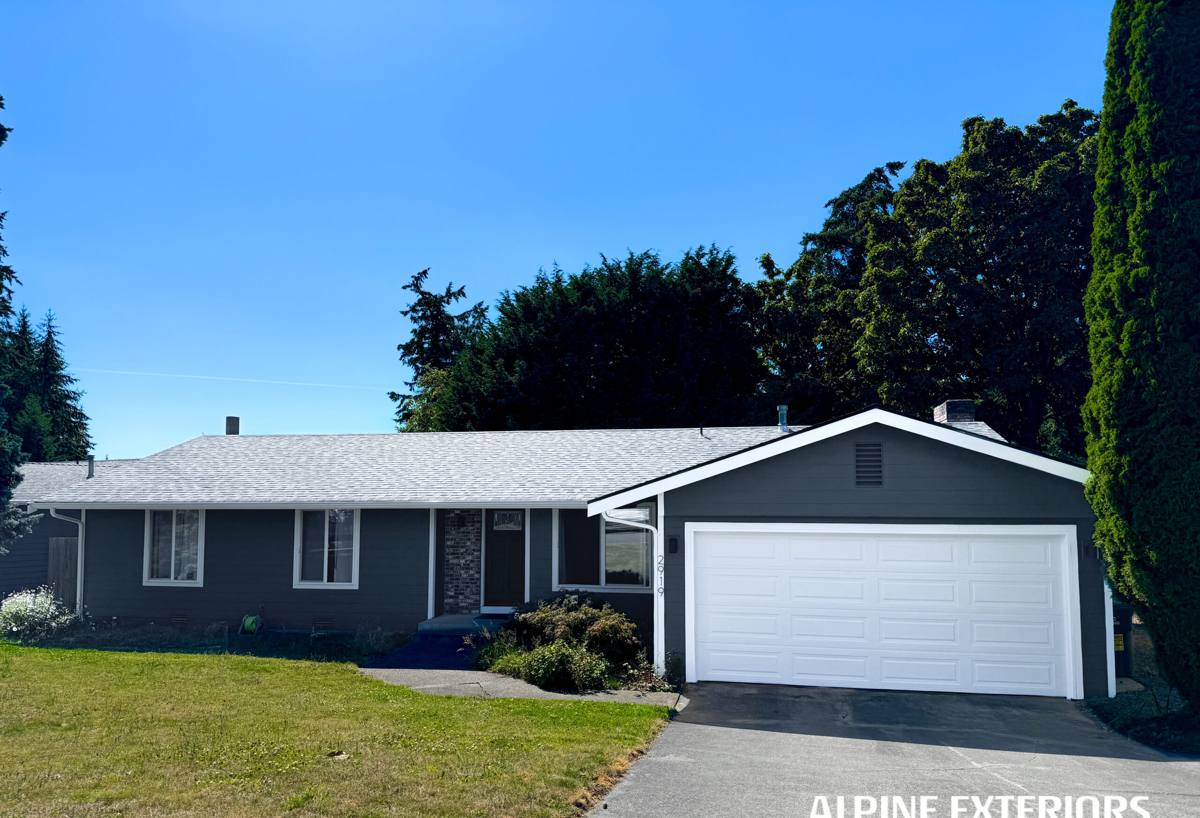
What Whatcom County Weather Actually Does to Siding
Salt Air and Corrosion
Properties closer to the water pick up airborne salt that settles on exterior surfaces, fasteners, and trim. Over time this accelerates corrosion of exposed metal fasteners and flashing, and it can degrade paint films and coatings that weren't formulated to resist it. Siding that relies on a thin factory coat or field-applied paint tends to chalk, fade, or fail at the surface years before the underlying material does.
Driving Rain and Wind-Driven Moisture
Rain in this part of the Pacific Northwest rarely falls straight down. Wind pushes it sideways into wall assemblies, which means water intrusion problems usually start at the details — laps, seams, penetrations, trim joints — not the open field of the wall. A siding product that swells, cups, or delaminates when it takes on moisture at those joints is going to show it here faster than it would in a drier climate.
Moss, Mildew, and Shade
Combine persistent moisture with the mature tree cover common around Sumas properties and you get long-running moss and mildew growth on north- and west-facing walls, especially anywhere siding stays damp between rain events. Moss doesn't just look bad — it holds water against the surface and, on products sensitive to sustained moisture, can contribute to rot or coating breakdown underneath it.
Why James Hardie Is Built for This Specific Set of Problems
James Hardie's fiber cement is a mix of cement, sand, and cellulose fibers, engineered and pressed to be dimensionally stable and non-combustible. That composition matters here for a few concrete reasons:
- It doesn't feed moss and mildew the way wood-based products can. Fiber cement isn't an organic food source, so growth on the surface is a cleaning issue, not a structural one.
- It's dimensionally stable when wet. It doesn't swell and shrink with humidity cycles the way wood or wood-composite sidings do, which reduces the joint movement that eventually opens gaps for water.
- ColorPlus factory finish is baked on, not brushed on. It's cured under controlled conditions and holds color and adhesion far better in salt air and UV exposure than field-applied paint, and it comes with its own finish warranty separate from the substrate warranty.
- HZ5 climate-engineered formulation is built specifically for wetter, harsher climates like ours, versus the HZ10 formulation sold in hot, dry regions. Getting the right HZ designation for this region is part of what a Hardie-focused installer should already know without you having to ask.
None of this means Hardie is maintenance-free — it isn't. It means the maintenance it does need (occasional washing, caulk inspection, repainting on a much longer cycle if ever needed) is manageable, predictable, and doesn't put the structure at risk if it slips for a season.
What a Correct Installation Actually Involves
Fiber cement siding is only as good as the installation behind it. Hardie publishes detailed installation requirements, and skipping them is the single biggest reason siding jobs fail early — regardless of the product on the wall. A correct job in this climate includes:
- A weather-resistive barrier installed and lapped correctly, with all seams and penetrations sealed before siding goes up
- Proper flashing at every window, door, and roof-to-wall intersection — the exact spots where wind-driven rain finds a way in
- Correct fastener type, spacing, and penetration depth per Hardie's specifications, not generic nail-gun settings
- Minimum clearance gaps at the bottom of the siding, at grade, and at roof lines so water has somewhere to go instead of wicking upward
- Field-cut edges sealed or primed before installation, since raw cut edges are the most vulnerable point on the board
- Caulking only at specified joints — not as a substitute for correct flashing and gapping
- Panel and lap orientation that sheds water outward at every course, especially around any changes in wall plane
Any one of these done wrong can undercut the product's climate advantages entirely. Hardie siding installed without correct flashing behaves no better in driving rain than a cheaper product installed the same sloppy way.
Siding Options Compared for This Climate
| Factor | James Hardie Fiber Cement | Vinyl | Engineered Wood (e.g. LP SmartSide) | Cedar |
|---|---|---|---|---|
| Moisture behavior | Dimensionally stable, doesn't swell | Won't absorb water, but can warp/buckle with heat and poor fastening | Wood-based core is moisture-sensitive if the coating is breached | Absorbs moisture; requires diligent finish maintenance |
| Moss/mildew resistance | Non-organic, doesn't feed growth | Resistant, but growth sits on the surface film | Organic core vulnerable if surface is compromised | Organic material, prone to moss and rot without upkeep |
| Coastal/salt air durability | Baked-on ColorPlus finish holds up well | Can fade and become brittle over time | Coating wear exposes core to salt-driven decay | Finish breaks down faster near salt air |
| Fire resistance | Non-combustible | Combustible, can melt/deform | Combustible | Combustible |
| Typical repaint/refinish cycle | Long — factory finish rated in years, not seasons | Doesn't repaint well; replacement is common | Shorter, coating-dependent | Frequent, often every few years |
Our Process on a Sumas-Area Home
Every job starts with a walk-around assessment, not a sales pitch. We look at existing moisture damage, trim condition, roof-to-wall details, and anywhere shade and tree cover have created chronic damp zones — those areas usually dictate extra attention during install, not just a different siding color. From there:
- Removal of existing siding and inspection of the sheathing underneath for hidden rot or moisture damage before anything new goes up
- Repair of any compromised sheathing or framing — covering up a problem is not an option we offer
- Installation of a correctly lapped weather-resistive barrier
- Flashing at all penetrations, windows, doors, and transitions
- Hardie panel or lap installation per manufacturer fastening and clearance specs
- Trim, caulking, and paint touch-up (if using non-ColorPlus trim) to finish the envelope
- Full site cleanup, including magnetic sweep for stray fasteners
We also walk the finished job with the homeowner and go over what maintenance actually looks like going forward — it's a short list, but skipping it is how good installs turn into avoidable problems five years down the road.
Living With Hardie Siding in This Climate
Maintenance on a correctly installed Hardie exterior is light compared to wood or vinyl, but it isn't zero. In a moss-prone, damp climate like ours, the practical checklist looks like this:
- Rinse siding annually (garden hose pressure is enough) to clear pollen, salt residue, and surface grime before it builds up
- Keep gutters clear so overflow doesn't run down the wall face and create a permanent damp stripe
- Trim back vegetation that keeps a wall section shaded and damp longer than the rest of the house
- Inspect caulking at trim joints every year or two and re-caulk as needed — caulk is a maintenance item, not a lifetime seal
- Address any moss on the surface with a soft wash rather than pressure-washing, which can force water behind panels
Why the Installer Matters as Much as the Product
James Hardie sells the material; the installer determines whether it performs the way it's designed to. A crew that regularly works the Sumas and greater Blaine area already understands which wall orientations take the worst weather, where moss pressure tends to concentrate, and which flashing details get skipped by crews used to drier climates. That local pattern recognition is the difference between a siding job that looks right at handoff and one that still looks right in year fifteen.
It also matters for warranty support. Hardie's product warranty and any labor warranty from your installer are only as good as the paperwork and installation record behind them. A local, established crew that's still around — and still installing to spec — is what makes that warranty something more than a document in a drawer.
Get a Straight Answer for Your Home
If you're weighing a siding replacement in Sumas or anywhere else around Blaine, we're happy to take a look, walk you through what we're seeing, and give you a straightforward estimate — no pressure, no upsell script. Use the form below to request a free assessment.