 Blaine Exterior
 Storm Damage Roof Repair for Sandy Point
Sandy Point sits right on the water, and that location cuts both ways. The views are part of why people love living there, but the same exposure that gives you a front-row seat to the Strait also means your roof takes a harder hit every time weather rolls through. Wind-driven rain, salt-laden air, and a moss season that runs longer than most homeowners expect all work on a roof at once, and storm damage rarely shows up as one clean, obvious problem. It's usually a handful of smaller failures that add up.
This page is about one job, done right, in this one place: storm damage roof repair for homes in and around Sandy Point. Not a general roofing pitch — the specific work of assessing what a storm actually did to your roof, fixing it correctly, and leaving the roof in better shape to handle the next one.
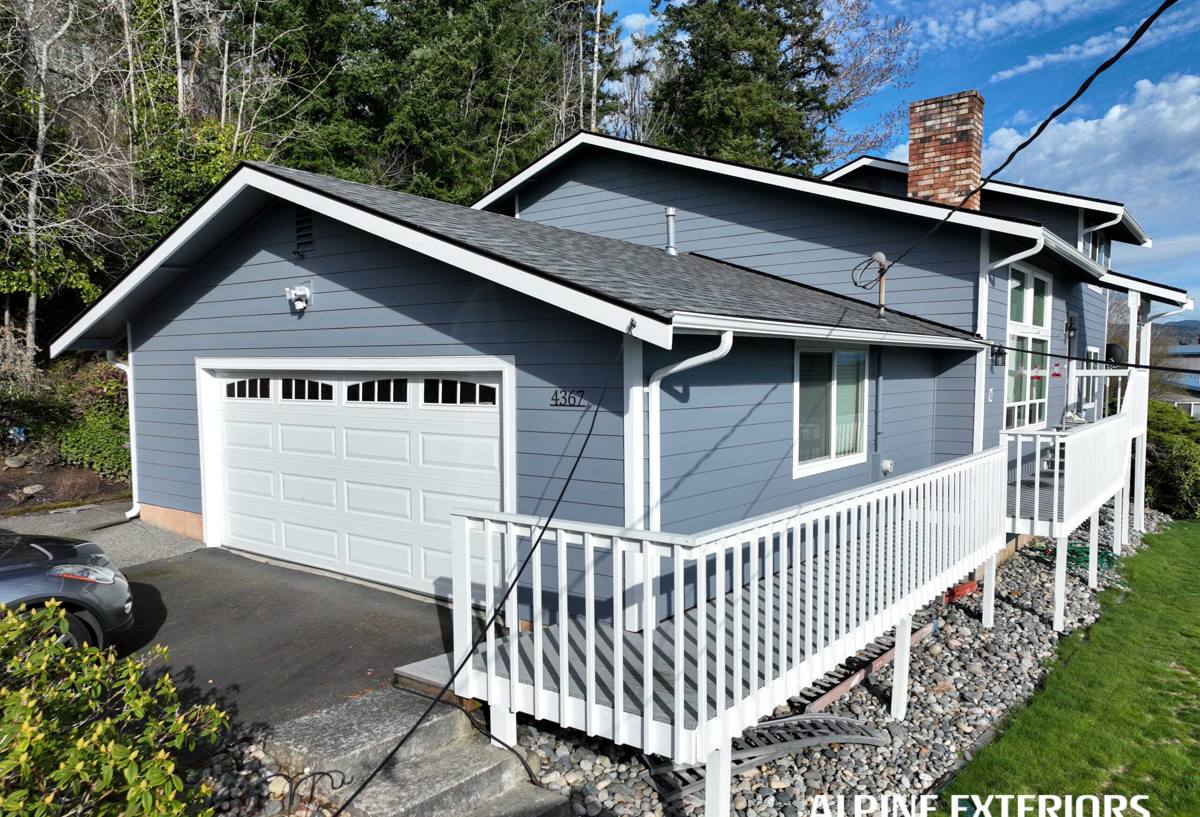
Why Sandy Point Roofs Take a Different Kind of Beating
Every roof in Whatcom County deals with rain. Sandy Point roofs deal with rain coming sideways off open water, plus the corrosive effect of salt air on metal components, plus a growing season for moss that barely slows down in a marine climate. None of these alone is unusual for the Pacific Northwest. Together, in a wind-exposed waterfront setting, they change what "storm damage" actually looks like and how fast small problems turn into bigger ones.
Wind-Driven Rain
Rain that falls straight down mostly runs off a properly shingled roof without incident. Rain pushed sideways by wind off the water behaves differently — it gets driven up under shingle tabs, into exposed nail heads, and along ridge and hip lines where wind uplift is strongest. A roof that's watertight in a normal rain can still leak in a wind-driven storm because the water is attacking it from an angle the roofing wasn't tested against.
Salt Air and Corrosion
Salt in the air accelerates corrosion on anything metal — flashing, fasteners, gutter hardware, vent caps. A fastener that would last decades a few miles inland can start rusting and losing grip years sooner near the water. Corroded fasteners back out slightly over time, which is exactly the kind of small, easy-to-miss failure that turns into a leak the next time a storm puts real pressure on the roof.
Extended Moss Season
Moss needs moisture and shade, and a marine climate with mild temperatures gives it both for most of the year. Moss holds water against the roof surface, works its way under shingle edges, and adds weight. On its own it's a maintenance issue. Combined with storm damage, it's often the thing that turns a small leak into a hidden one, because moss and debris can mask a damaged shingle or a lifted flashing edge until water has already found its way into the roof deck.
What Actually Counts as Storm Damage
Homeowners sometimes wait to call because they're picturing dramatic damage — a tree limb through the roof, or shingles littering the yard. Most storm damage is quieter than that. It's worth having a roof looked at after any significant wind or rain event if you notice any of the following:
- Shingles that are cracked, curled, creased, or missing entirely, even just a few
- Granules collecting in gutters or at downspout outlets after a storm
- Flashing around chimneys, vents, or skylights that looks lifted, bent, or separated
- Soft spots, sagging, or discoloration on interior ceilings, especially near exterior walls
- Gutters pulling away from the fascia or showing new dents from wind-blown debris
- Daylight visible through the roof deck from inside the attic
- A sudden increase in moss or standing debris concentrated in one area of the roof
Any one of these by itself might be minor. Several at once, or any sign of active water intrusion, means the roof needs a real inspection, not a guess from the ground.
What a Correct Storm Repair Actually Involves
The quality of a storm repair comes down to whether the crew treats the roof as a system or just patches the visible damage. A patch that ignores what's underneath tends to fail again in the next storm.
Inspection Before Anything Else
A proper inspection covers the full roof, not just the area where damage is visible from the ground. Wind damage in particular tends to concentrate at edges, ridges, and hips — areas that are easy to miss without getting up on the roof. We check the shingles, the flashing, the underlayment where it's exposed, and the roof deck itself for soft or delaminated areas.
Deciding Between a Patch and a Larger Repair
Not every storm-damaged roof needs a full section torn off. If the damage is isolated and the surrounding shingles and underlayment are still in good condition, a targeted repair — replacing the damaged shingles and re-securing or replacing the affected flashing — is the honest answer. If the damage is spread out, or if pulling back the damaged area reveals a compromised deck or saturated underlayment, patching over it just hides a problem instead of fixing it. We tell you which situation you're in and why, before any work starts.
Flashing Gets Extra Attention Here
Given how hard salt air is on metal, flashing is often the actual point of failure even when shingles look intact. Any storm repair on a Sandy Point home should include a close look at chimney, valley, and vent flashing, since corroded or loosened flashing is one of the most common causes of leaks that show up well after the storm that actually caused them.
Matching Materials Correctly
Repairs should match the existing roofing as closely as possible — not just for appearance, but because mismatched shingle types or incompatible flashing metals can create new problems, including accelerated corrosion where dissimilar metals meet.
Our Process for Storm Damage Repairs
- Initial contact and triage. If there's active leaking, we talk through immediate steps to limit interior damage before we're even on site.
- On-site inspection. A full roof walk, not a drive-by estimate, covering shingles, flashing, ventilation, and visible deck condition.
- Written findings and options. You get a clear explanation of what the storm actually did, what's cosmetic versus structural, and what your repair options are, in plain language.
- Documentation for insurance, if needed. Photos and a written scope of damage that you can submit to your insurer, organized the way adjusters expect to see it.
- The repair itself. Damaged materials removed, deck condition verified, correct underlayment and flashing installed, matching shingles applied, and the work area cleaned up.
- Final walkthrough. We show you what was done and why, and flag anything else worth keeping an eye on.
Repair or Replace? What Actually Drives That Decision
This is one of the most common questions after a storm, and the honest answer depends on more than just how bad the damage looks.
| Factor | Points Toward Repair | Points Toward Replacement |
|---|---|---|
| Extent of damage | Isolated to one section or a handful of shingles | Spread across multiple roof planes |
| Roof age | Roof is well within its expected service life | Roof was already nearing the end of its lifespan |
| Deck condition | Deck is dry and solid under the damaged area | Deck shows soft spots, rot, or repeated past leaks |
| Underlayment condition | Underlayment intact where exposed | Underlayment brittle, torn, or saturated |
| Storm history | First significant damage event | Pattern of repeat storm damage over recent years |
We'll never push a full replacement when a repair is the honest fix, and we won't recommend patching a roof that's genuinely past the point where repairs make sense. Our job is to give you an accurate read, not the answer that's easiest to sell.
Insurance and Documentation
Many storm repairs are covered in whole or in part by homeowner's insurance, especially when the damage traces back to a specific wind or storm event. What insurers generally want to see is clear documentation: dated photos, a written description of the damage and its likely cause, and a repair scope that matches what was actually found. We provide that documentation as part of the inspection, whether or not you end up filing a claim. We're not a public adjuster and don't handle the claim itself, but we make sure you're not walking into that conversation with your insurer empty-handed.
After the Storm: What to Check Before You Call
A little bit of homeowner observation, done safely, helps speed up the process and gives us a head start on the inspection.
- Walk the interior and check ceilings and upper closets for new stains or soft spots
- Check the attic, if accessible, for daylight, damp insulation, or water trails
- Look at gutters and the ground below roof edges for granules or shingle fragments
- From the ground, note any visibly missing or lifted shingles — do not get on the roof yourself
- Take photos of anything you notice, with a date, before any cleanup happens
- Note roughly when the damage likely occurred, tied to a specific storm if possible
That last point matters more than people expect. Tying damage to a specific weather event makes both the repair scope and any insurance claim much more straightforward.
Why It Matters to Hire a Crew That Already Works Sandy Point
Storm damage repair isn't a specialty product — it's a skill set built from having actually worked on roofs in conditions like these. A crew that mostly works inland jobs may not think to check flashing corrosion as a first suspect, or may not recognize how far moss has masked shingle damage in a spot exposed to constant moisture off the water. Working regularly in Whatcom County's waterfront communities means we're not guessing at how salt air, wind exposure, and a long wet season interact on a roof — we're accounting for it as a matter of course, on every inspection and every repair.
It also means faster response. After a significant storm, roofing crews get busy fast, and out-of-area contractors are often the last to show up in the neighborhoods that need them most. Being local means we're not driving in from somewhere else to assess damage on a roof type and exposure we don't see regularly.
Get a Free, No-Pressure Estimate
If a recent storm has you wondering about the condition of your roof, or you've spotted any of the warning signs above, it's worth having someone take an honest look before small damage turns into a bigger repair. Use the form below to request a free estimate — no pressure, no obligation, just a clear read on where your roof actually stands.