 Blaine Exterior
 Siding Repair in Lynden: What Local Homes Are Up Against
Lynden sits inland from Blaine but still feels the same weather pattern that moves through Whatcom County all winter: long stretches of driving rain, heavy morning dew, and a moss season that can run from October into May. Add in the salt-tinged air that drifts in off the Strait of Georgia on windy days, and you've got a climate that is genuinely hard on exterior siding — even siding that looks fine from the curb. We work on homes throughout the Lynden area regularly, and the repair calls we get tend to follow a predictable pattern tied directly to this weather.
Siding repair isn't just cosmetic patchwork. Done right, it's a diagnostic process: figuring out why a section failed, whether the damage is isolated or a symptom of something bigger, and fixing the actual cause instead of just covering it up. Done wrong, a repair can trap moisture behind new material and turn a small problem into a wall-sheathing problem within a couple of years.
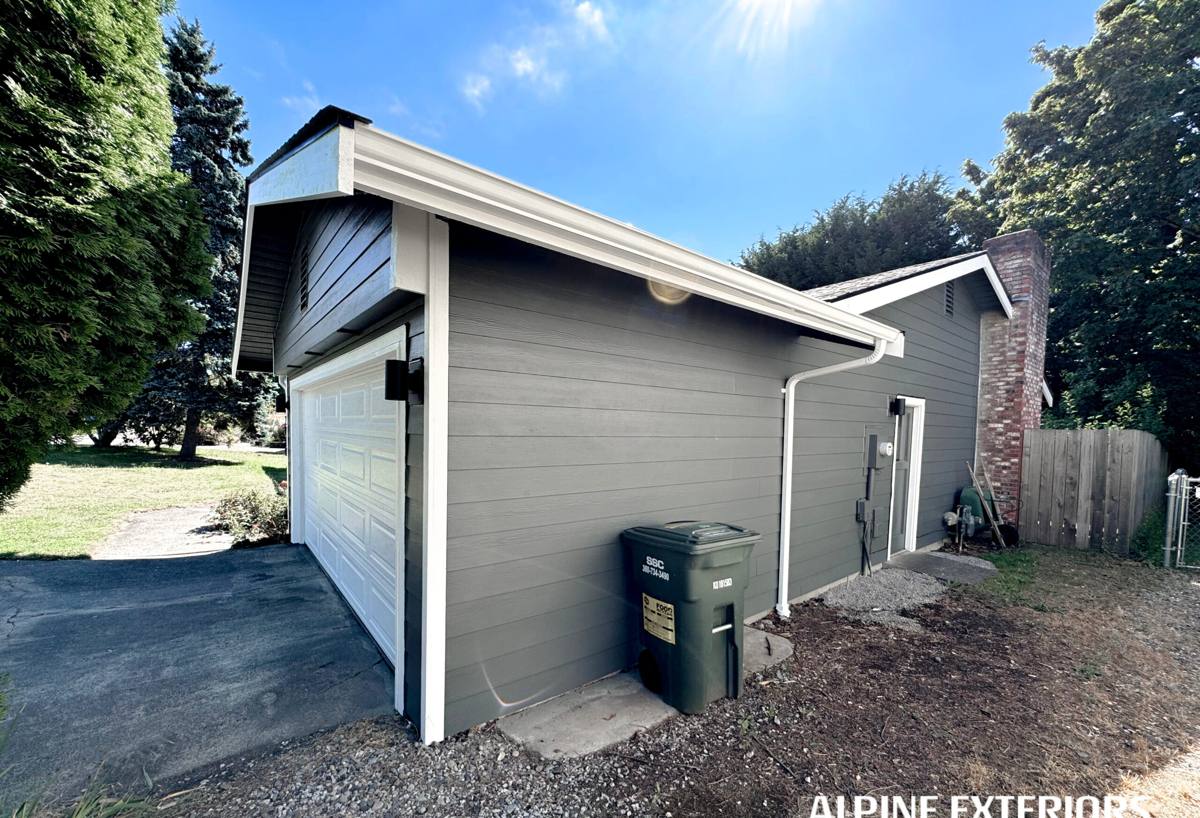
Why Siding Fails Faster Here Than in Drier Climates
Moisture Is the Root Cause of Almost Everything
Most of the siding repair work we see in Lynden traces back to water finding a way behind the cladding — through a failed caulk joint, a cracked panel, a poorly flashed window, or a spot where two materials meet without proper overlap. Once moisture gets behind siding, it doesn't evaporate quickly in our climate. Cool, humid air and long rainy stretches mean trapped water sits against sheathing and framing for weeks at a time.
Moss and Organic Growth Add a Second Layer of Damage
Moss holds moisture directly against a siding surface and keeps it wet long after the rest of the wall has dried out. On wood-based products (cedar, primed spruce, engineered wood), that constant dampness accelerates rot at seams, butt joints, and anywhere moss has a foothold. Even on more moisture-resistant materials, heavy moss buildup traps debris and organic acids that break down caulk and paint film over time.
Salt Air Accelerates Fastener and Finish Failure
Homes closer to the water deal with airborne salt that speeds up corrosion on exposed fasteners and can degrade lower-quality paint finishes faster than inland siding would wear. Rusting nail heads bleeding through paint, and finish that's chalking or fading unevenly, are both signs we look for during a repair inspection.
What a Correct Siding Repair Actually Involves
A repair that just replaces the visibly damaged board and moves on is a repair that will likely need to be done again. Here's what we actually check and do:
- Pull back or remove the damaged section fully, including material that looks intact but is adjacent to the failure point
- Inspect the house wrap or building paper underneath for tears, gaps, or staining that indicates prior water intrusion
- Check the sheathing for soft spots, discoloration, or fungal growth — sheathing damage changes the scope of the job
- Identify the original entry point (failed caulk, missing flashing, improper panel overlap, damaged J-channel, etc.) and correct it, not just the symptom
- Replace with matching material and profile so the repair doesn't stand out as a visible patch
- Re-flash and re-seal penetrations, seams, and trim intersections using materials rated for our climate
- Confirm proper drainage plane and clearance at the bottom edge so water sheds away from the wall instead of wicking back in
Skipping the sheathing check is the most common shortcut in low-cost repairs, and it's the one that costs homeowners the most down the road — because rot that isn't caught early spreads along framing members, not just at the surface.
Patch, Repair, or Replace: How We Make That Call
Not every damaged section needs a full re-side, and not every "just replace a board" job is actually that simple. We look at three things: how much of the wall is affected, whether the underlying sheathing is sound, and how old and how well-installed the existing siding is.
| Situation | Typical Approach | Why |
|---|---|---|
| Isolated impact damage, sheathing dry and sound | Localized repair, matched material | Root cause is mechanical, not moisture-driven — no need to open up more wall than necessary |
| Moisture staining at one or two seams, early-stage rot | Repair the affected section, correct the flashing/sealing detail that failed | Catching it early keeps the job contained and affordable |
| Rot found in sheathing across multiple wall sections | Broader tear-off and sheathing repair, then re-side that elevation | Patching over compromised sheathing just hides a structural problem |
| Siding is 20+ years old with widespread moss staining, cracking, or fading | Discuss full replacement rather than repeated repairs | At some point repair costs stack up faster than a one-time replacement, and old material rarely matches new patches well anyway |
Material Matters More in a Repair Than People Expect
We install James Hardie fiber cement exclusively, and it shows up in how repair conversations go. On existing Hardie siding, a correct repair is usually straightforward: the material doesn't rot, doesn't absorb water into its core, and the ColorPlus factory finish holds up well against the fading and chalking we see on field-painted products in this climate. Repairs are typically limited to fixing what actually happened — an impact crack, a poorly sealed joint, damaged trim — rather than chasing rot through multiple boards.
On homes with vinyl, LP SmartSide, cedar, or primed wood siding, repair calls in Lynden more often involve moisture that's already traveled beyond the visibly damaged spot, because those materials are more sensitive to sustained dampness, seam failure, or UV and moss exposure over time. We're not going to tell a homeowner their existing siding is garbage — plenty of it was installed reasonably well and has held up fine. But when we're asked to repair it, we tell you honestly what we find, including if the smarter long-term move is a partial or full transition to Hardie rather than repeatedly patching a material that's fighting the climate.
If You're Repairing Non-Hardie Siding
We'll still do the repair correctly and match it as closely as possible. But we'll also flag it plainly if we see a pattern — repeated moss-driven rot at the same wall, seam failures every few years, finish that won't hold paint — because that pattern usually means the next call is going to be about the same wall again.
Our Repair Process
- On-site inspection: We look at the damaged area and the surrounding siding, not just the spot you called about.
- Diagnosis: We identify the actual cause — moisture entry point, mechanical damage, fastener failure, or material breakdown.
- Scope and estimate: You get a clear explanation of what needs to happen and why, including what we find once we open up the wall if that's necessary to see sheathing condition.
- Repair: Matching material, correct flashing and sealing, and attention to drainage so the fix holds.
- Walkthrough: We show you what was wrong and what we did about it before we consider the job finished.
A Quick Self-Check Before You Call
- Is there a section of siding that looks discolored, soft, or bowed compared to the rest of the wall?
- Do you see moss concentrated at one seam or corner more than the rest of the house?
- Are there rust streaks running down from nail heads or fasteners?
- Does paint or finish look like it's peeling or bubbling in one specific area rather than evenly across the house?
- Has a window or door trim area ever had a leak, even a minor one, that was "fixed" without opening the wall to check?
Any "yes" answer is worth having looked at before it's a bigger job — small moisture problems in this climate don't stay small for long.
Why Local Experience Matters for a Repair Call
Siding repair is one of those jobs where local knowledge changes the outcome. A crew that regularly works homes in Lynden and the surrounding Whatcom County area knows which wall orientations take the worst weather, how fast moss builds back if it's not addressed at the root, and what proper flashing and sealing details actually need to look like to hold up through another wet season — not just pass a quick visual check. That local pattern recognition is how we catch sheathing damage early, match repairs so they don't stand out, and give you an honest answer about whether a repair is the right call or whether it's time to talk about replacement.
If you've got a section of siding that needs attention — or you're just not sure whether what you're looking at is a quick fix or something bigger — we're happy to take a look. Reach out for a free, no-pressure estimate, and we'll give you a straight answer about what's going on and what it'll take to fix it right.