 Blaine Exterior
 Why Decks in Peace Arch Wear Out Faster Than You'd Expect
Peace Arch sits close enough to the water and the border that its decks take a beating most homeowners don't fully appreciate until they're down on their hands and knees checking a joist. Salt-laden air off the Strait works its way into fastener heads and hardware, driving rain gets pushed sideways under railings and against ledger boards, and Whatcom County's long, grey stretch of fall-through-spring keeps every horizontal surface damp enough for moss and algae to take hold. A deck built for a drier inland climate simply doesn't hold up the same way here.
That's the backdrop for almost every deck replacement we look at in this neighborhood. The boards on top might look fine from a distance, but the structure underneath — ledger connections, joists, footings, and the fasteners holding it all together — is usually where the real damage lives.
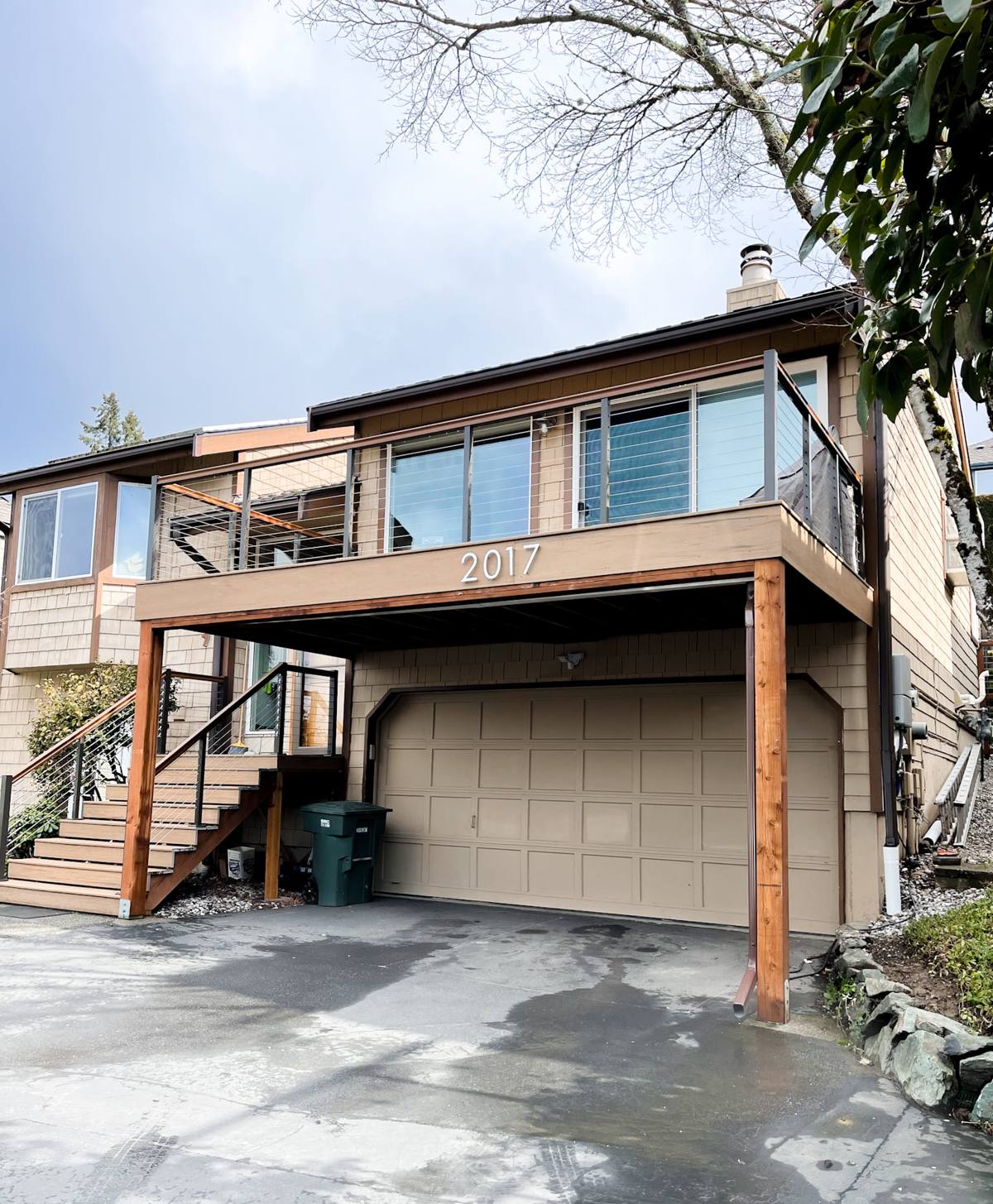
Repair or Replace? Reading the Signs
Not every tired-looking deck needs to come out entirely. But there are a handful of signs that tell us replacement is the honest answer rather than another round of patching.
Structural red flags
- Soft or spongy spots in the decking, especially near the house or at board ends
- A ledger board that's separating from the house rim joist, or shows dark staining around lag bolts
- Joists or beams with visible rot, splitting, or fungal growth when you look underneath
- Railings or posts that flex noticeably when you lean on them
- Footings that have shifted, heaved, or show cracking at grade
Cosmetic issues that don't require full replacement
- Surface graying or weathering on wood that's otherwise structurally sound
- Isolated board replacement where only a few boards have failed
- Moss and algae staining that cleans up with the right treatment
The distinction matters because replacing decking on a compromised frame just buys you a nicer-looking problem. A correct assessment starts underneath, not on top.
What a Correct Deck Replacement Actually Involves
A deck replacement done right in this climate isn't just tearing off old boards and screwing down new ones. It's a full look at everything that keeps water out of the wood.
Tear-off and inspection
We remove the old decking and railings and inspect the ledger, joists, beams, posts, and footings before deciding what stays and what gets rebuilt. In a lot of Peace Arch homes, the framing is older than the decking itself, so this step often changes the scope of the project once we can actually see what's there.
Ledger flashing done properly
The ledger board — where the deck attaches to the house — is the single most common failure point we find in this area, because it's the spot most exposed to wind-driven rain and the hardest to inspect without opening things up. A correct replacement includes proper flashing between the ledger and the house, not just caulk, and structural bolts rather than nails.
Footings and framing
Undersized or shifted footings get addressed to current structural standards, and joists are sized and spaced to handle the loads and spans involved. This is also where local frost depth and soil conditions come into play, which is why we don't reuse footings we can't verify are sound.
Fasteners and hardware
Salt air accelerates corrosion on standard fasteners faster than most homeowners expect. We use corrosion-resistant, coastal-rated hardware and fasteners throughout — hangers, screws, and structural connectors — rather than mixing in whatever was left over from a hardware store trip.
Choosing Decking Material for a Salt Air, High-Moisture Climate
There's no single right answer here — it depends on budget, maintenance appetite, and how much sun exposure the deck gets. But the tradeoffs are worth laying out honestly.
| Material | Moisture Behavior | Maintenance | Typical Lifespan Here |
|---|---|---|---|
| Pressure-treated wood | Absorbs and releases moisture; prone to checking and cupping in wet-dry cycles | Annual cleaning and re-staining/sealing recommended | 10-15 years before major issues surface |
| Cedar | Naturally rot-resistant but still needs sealing to fight moss and graying | Regular cleaning, periodic oil or sealer | 15-20 years with upkeep |
| Capped composite | Won't absorb water or rot; surface layer resists staining and moss growth | Periodic washing, no sealing or staining | 25+ years, backed by manufacturer warranty |
| Cellular PVC | Fully moisture-proof, no wood fiber to feed rot or moss | Lowest maintenance of the group | 25-30+ years |
In a moss-heavy, salt-air environment like Peace Arch, we lean toward capped composite or PVC decking for most replacements simply because they remove moisture absorption from the equation entirely. Wood and cedar are still good options for homeowners who want that specific look and are willing to keep up with sealing — we're honest about that maintenance commitment up front rather than glossing over it.
The Details That Actually Prevent Future Failure
Most deck problems don't start with the decking boards — they start with water getting somewhere it shouldn't and staying there. A handful of details separate a deck that lasts from one that needs attention again in five years.
- Joist tape or a moisture barrier on top of joists, so fasteners don't create a wicking point for water into the wood
- Proper gapping between boards for drainage and airflow, sized correctly for the material
- Post bases that keep wood posts off concrete or grade, breaking the path for standing moisture
- Railing posts through-bolted rather than surface-mounted where the structure allows it
- Stair stringers and ledgers flashed the same way as the main ledger connection
None of this is visible once the project is finished, which is exactly why it's worth asking a contractor about before work starts, not after.
Our Process, Start to Finish
We keep the process straightforward because homeowners deserve to know what's happening at each stage of a project on their own home.
1. On-site assessment
We walk the deck, check underneath where possible, and talk through what we're seeing — including anything that might change the scope once we open things up.
2. Written estimate
You get a clear breakdown of materials, structural work, and timeline before anything is scheduled.
3. Permitting
Where the scope requires it, we handle the permit process with Whatcom County so the work is documented and inspected correctly.
4. Tear-off and rebuild
Old decking and any compromised framing come out, the structure gets rebuilt to current standards, and new decking, railings, and hardware go in.
5. Final walkthrough
We go over the finished deck together before calling the job done, including basic care guidance specific to the material you chose.
Keeping a New Deck in Good Shape Through Blaine's Wet Season
Whatever material you choose, a few habits go a long way toward protecting the investment.
- Sweep leaves and debris off the deck regularly through fall — trapped organic matter is what feeds moss and mildew
- Keep gutters and downspouts near the deck clear so runoff isn't dumping directly onto or under it
- Rinse off salt residue after storms, especially on hardware and railings
- Check underneath once a year for standing water, soft spots, or signs of pests
- Reapply sealant on wood decking on the schedule the product actually calls for, not just when it looks dry
Permits and Local Considerations in Whatcom County
Deck replacements in Blaine often require a permit, particularly when the deck is attached to the house, elevated above a certain height, or involves structural changes to framing or footings. Requirements can vary depending on the specifics of the project, so this is something we confirm with Whatcom County as part of the estimate rather than assuming either way. Skipping a required permit can create real problems down the line, from insurance issues to complications at resale, so we treat it as a standard part of the job rather than an optional add-on.
Why It Matters to Hire a Crew That Already Works This Neighborhood
Peace Arch isn't a generic building site. A crew that's replaced decks up and down this area already knows which details of the coastal climate actually cause failures here — the ledger flashing that gets skipped, the fastener corrosion that shows up early, the moss buildup patterns tied to shade and exposure. That experience shows up in fewer surprises during tear-off and fewer callbacks after the project's done. It also means we're familiar with the local permitting process and typical site conditions in this part of Blaine, which keeps the project moving instead of stalling on paperwork or guesswork.
If your deck is showing its age, or you just want an honest read on whether it needs repair or full replacement, we're happy to take a look. Reach out for a free, no-pressure estimate using the form below.