 Blaine Exterior
 Siding Repair in Grandview: A Different Kind of Wear
Grandview sits close enough to the water that homes here take a different kind of beating than siding fifteen miles inland. It's not one dramatic storm that does the damage — it's the slow, steady combination of salt-laden air, wind-driven rain that finds its way sideways under trim, and a moss season that runs longer than most homeowners realize. Siding that would coast along fine in a drier part of Whatcom County can start failing years early out here if it wasn't installed right, or if small problems were left to grow.
This page is about one job, done right, in one area: repairing siding on Grandview homes so it actually holds up to the next twenty winters, not just looking patched for the next one.
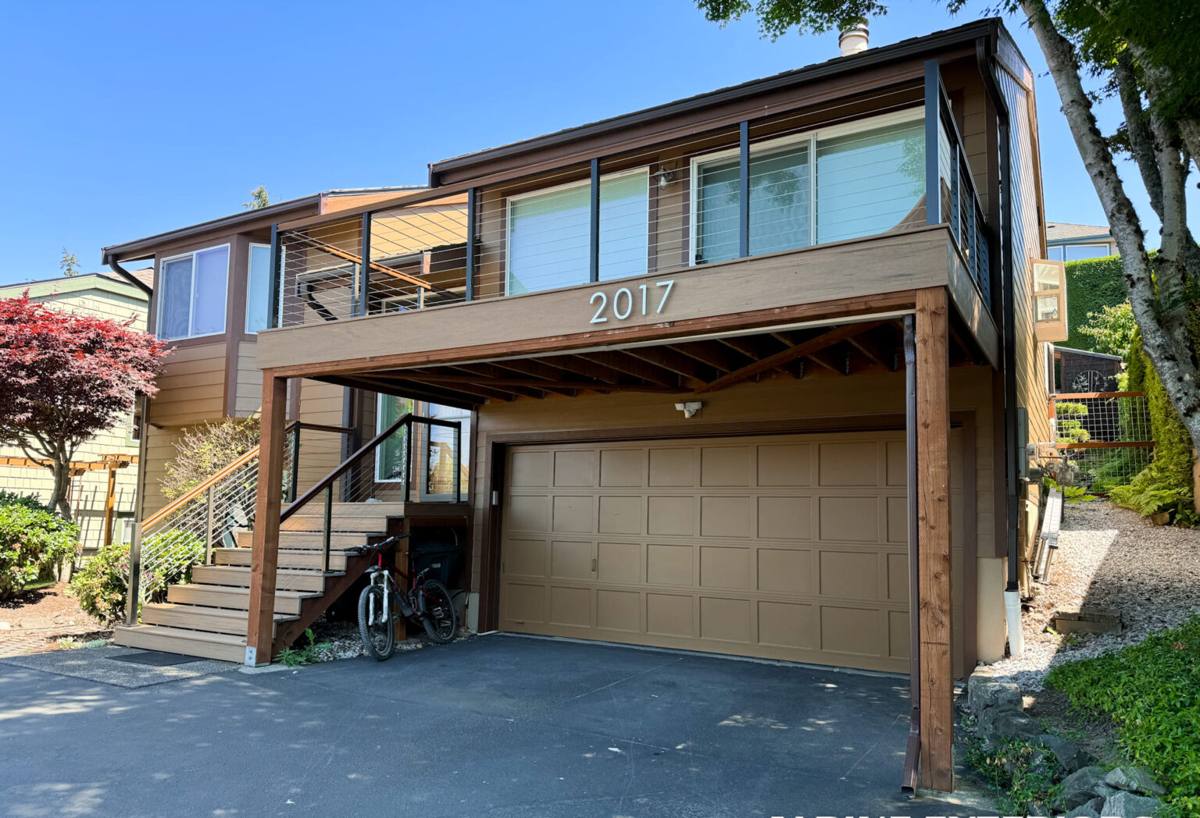
What Blaine's Climate Actually Does to Siding
Salt Air and Finish Breakdown
Airborne salt from the Salish Sea settles on exterior surfaces constantly, even when you can't smell it. Over time it accelerates the breakdown of paint film and caulking, and it's particularly hard on fasteners and any exposed metal trim that isn't rated for a marine-adjacent environment. Siding with a weak factory finish, or repairs that were caulked and painted rather than properly flashed, tend to show chalking, fading, and edge deterioration noticeably sooner here than they would twenty or thirty miles inland.
Driving Rain and Wind Exposure
Blaine gets more than its share of wind off the water, and wind-driven rain behaves differently than a straight-down downpour — it gets pushed up and under laps, around window trim, and into any gap that wasn't properly lapped or sealed during the original install. A lot of what looks like a small cosmetic issue on the surface is actually evidence of water finding a path it shouldn't have.
The Long Moss Season
Shaded north and east walls, tree-lined lots, and the region's damp shoulder seasons all add up to moss and algae growth that can persist for much of the year. Moss holds moisture against the siding surface far longer than open air would, which is exactly the condition that lets rot get started in wood-based products and lets water tracking work its way behind panels that have lost their seal.
Signs a Grandview Home Needs Siding Repair, Not Just Paint
Homeowners often call us about a cosmetic issue — a discolored patch, a soft spot, a section that looks "off" — and the real problem turns out to be underneath the surface. Here's what we actually look for:
- Soft, spongy, or crumbling siding when pressed — usually a sign of moisture intrusion, not just surface wear
- Persistent dark streaking or moss growth that returns quickly after cleaning
- Visible gaps, buckling, or warping at panel seams and corners
- Peeling or bubbling paint concentrated around windows, doors, or roof-to-wall transitions
- Stains on interior walls or ceilings near exterior corners, which often trace back to a siding or flashing failure
- Fastener rust or streaking bleeding down from nail heads or trim screws
- A musty smell near exterior walls, especially in a closet or room that backs onto a shaded side of the house
Any one of these on its own might be minor. Several together, especially on a shaded or water-facing wall, usually means water has been getting in for a while.
Repair or Replace? How We Make That Call
Not every damaged section needs a full re-side, and we don't push replacement when a proper repair will genuinely hold. But we also won't patch over a problem that's going to resurface in two years. The honest answer usually comes down to how much of the wall assembly is actually affected.
| Situation | Repair Usually Makes Sense | Replacement Usually Makes Sense |
|---|---|---|
| Damage extent | Isolated to one or two sections, walls, or corners | Recurring across multiple walls or the whole exterior |
| Underlying sheathing | Sound once the failed section is removed | Soft, delaminated, or rotted over a wide area |
| Cause | Impact damage, isolated flashing failure, aging trim | Systemic original installation errors (poor lapping, missing house wrap, wrong fasteners) |
| Material | James Hardie fiber cement in good condition elsewhere | Original material is vinyl, LP SmartSide, or bare wood nearing end of life |
| Age of siding | Well within expected service life | Already past the point where repeated repairs cost more than replacement over time |
If your home currently has vinyl, LP SmartSide, or old cedar and the damage is more than isolated, we'll say so plainly rather than patching a product we wouldn't install new. More on why below.
What a Correct Siding Repair Actually Involves
A repair that just covers the visible damage is not the same as a repair that fixes the reason the damage happened. Here's what we check and do on every job, not just the parts a homeowner would notice:
- Diagnose the actual cause — a failed section is almost always a symptom. We look at flashing, caulking, panel spacing, and drainage before we touch a single board.
- Check moisture behind the surface — using a moisture meter on the sheathing and framing near the damaged area, not just eyeballing the exterior.
- Remove damaged material back to sound substrate — patching over rot or saturated wood just hides the problem for a season.
- Correct the water path — reflashing around windows, doors, and penetrations so water sheds outward instead of finding a gap again.
- Replace with matching, climate-rated material — for us, that means James Hardie fiber cement, cut and lapped to the same reveal and pattern as the surrounding siding.
- Seal and finish properly — the right caulk in the right joints, not caulk used as a substitute for correct flashing.
- Final walk-through — we show you what we found, what we fixed, and why, before we call the job done.
Why We Only Repair With James Hardie Fiber Cement
We install James Hardie exclusively, and that carries through to repair work. When we're patching into existing Hardie siding, matching material and matching ColorPlus factory finish means the repair blends in and performs the same as the rest of the wall — not a mismatched patch that ages differently.
When a home has vinyl, LP SmartSide, primed wood, or another product we don't install new, we'll tell you honestly what a repair on that material can and can't do. Vinyl repairs are often about matching color that's already faded and finding discontinued profiles. LP SmartSide and wood-based products carry ongoing moisture sensitivity at any cut edge, which is exactly the kind of vulnerability that shows up worst in a climate like Blaine's. We're not going to tell you a patch will solve a problem the underlying material is prone to in the first place. Fiber cement doesn't absorb water into its core the way wood-based products can, doesn't require the same repainting cycle as it ages, and holds its factory finish through the kind of salt exposure and driving rain Grandview sees year-round. That's the whole reason we standardized on it, for new installs and for the repair work we stand behind.
Our Process, Start to Finish
We keep the process straightforward because most homeowners just want a clear answer and a job done right the first time.
- Free on-site assessment — we look at the damage, the surrounding siding, and anything that might be contributing (grading, gutters, plantings against the wall)
- Honest scope — a written explanation of what needs to happen and why, including if we think replacement makes more sense than repair
- Material match — sourcing the correct Hardie profile, reveal, and ColorPlus color to blend with your existing siding
- The repair itself — done to the same flashing and sealing standard as a new install, not a shortcut version
- Walk-through and cleanup — you see the finished work and understand what was fixed before we leave
Why It Matters That We Already Work in Grandview
Siding failures in this area tend to follow patterns — which walls get hit hardest by wind-driven rain, which sides stay shaded and mossy longest, where salt exposure tends to accelerate finish wear first. A crew that's already done repair work in Grandview isn't guessing at those patterns; we've seen how homes in this specific pocket of coastal Whatcom County actually age, not just how a textbook says siding should behave. That local familiarity shows up in small but real ways — knowing to check a particular corner detail more carefully, or recognizing early moss return as a drainage issue rather than just a cleaning problem.
It also means we're not disappearing after the invoice. We live and work in this area, and repair work we do here is work our name stays attached to.
Get a Straight Answer on Your Siding
If you're seeing soft spots, recurring moss, streaking, or damage on your Grandview home, it's worth having someone look before it spreads further into the wall. We'll give you a free, no-pressure estimate and an honest read on whether repair or replacement is the right call — no upsell, just what your home actually needs. Fill out the form below to get started.