 Blaine Exterior
 Sandy Point Is a Different Kind of Exposure
Sandy Point sits right up against the water, and that changes everything about how siding ages. Homes here don't just deal with rain — they deal with wind-driven rain coming off open water, near-constant salt air, and long stretches of gray, damp weather that keep exterior walls wet far longer than homes even a mile or two inland in Blaine. Add in Whatcom County's extended moss season, and you have a climate that actively works against whatever is nailed to the outside of your house.
We've replaced siding on enough homes in this neighborhood to know the failure patterns aren't random. They're predictable, and they show up in the same spots year after year: corners exposed to prevailing wind, low walls close to grade where salt-laden moisture sits, and north-facing sides that never get enough sun to dry out between storms. A siding replacement done right here has to account for all of that — not just match what was there before.
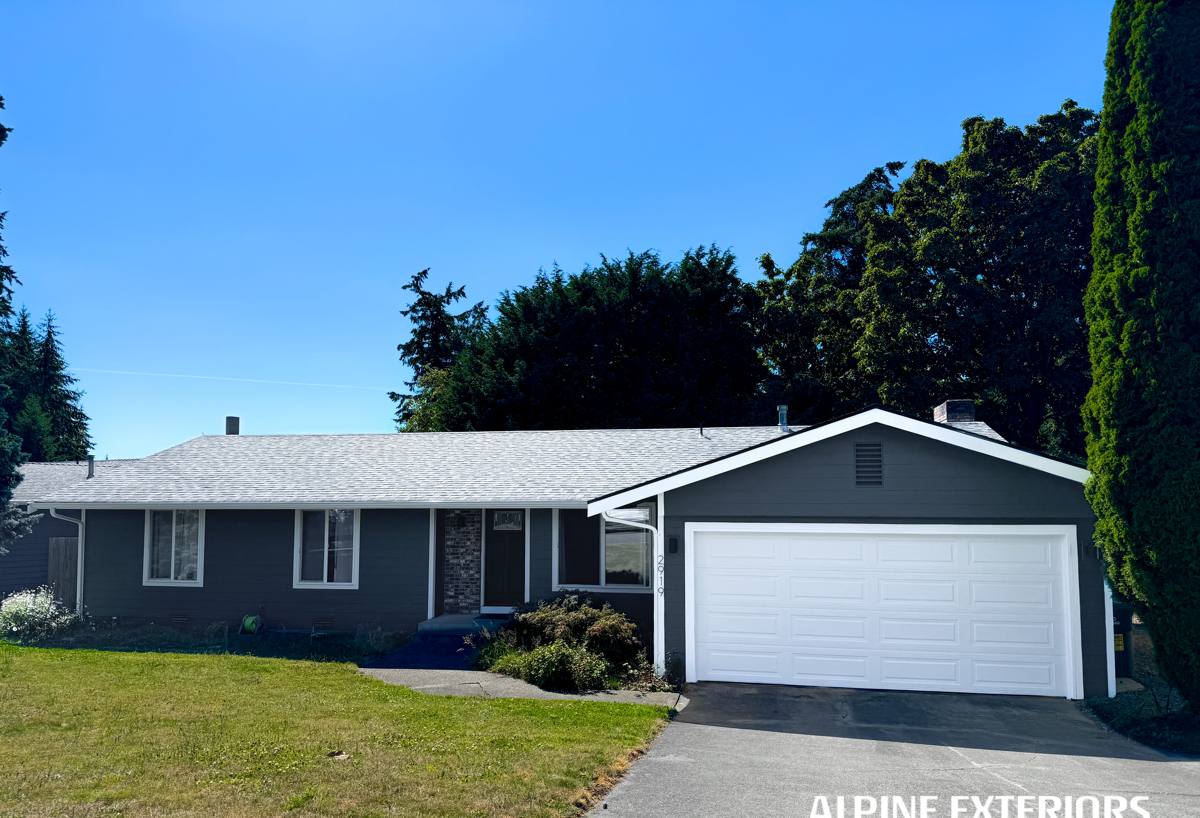
What Salt Air and Moisture Actually Do to Siding
Salt Air Accelerates Everything
Airborne salt doesn't just sit on the surface — it works into seams, fastener heads, and any place two materials meet. Over years, it accelerates corrosion of exposed fasteners and metal trim, breaks down paint films faster than inland exposure would, and leaves a fine residue that holds moisture against the wall longer than plain rainwater does. Siding that isn't engineered or finished to resist this simply ages faster in Sandy Point than the same product would in a drier part of the state.
Driving Rain Finds the Weak Points
Wind off the water doesn't let rain fall straight down — it drives it sideways into laps, corners, and trim joints. Any gap in the water-resistive barrier, any short flashing detail, or any caulked joint that was never meant to be a long-term seal becomes an entry point. Once water gets behind the cladding, it doesn't dry out quickly in this climate, and that's when sheathing rot and hidden framing damage start.
Moss and Algae Take Hold Fast
Shade, moisture, and mild temperatures are exactly what moss and algae need, and Sandy Point has all three for a large part of the year. On siding with a soft or absorbent surface, growth can establish within a couple of seasons, trapping additional moisture against the material and accelerating whatever decay process has already started.
Why We Only Install James Hardie Fiber Cement
Blaine Exterior Co made a deliberate decision to install only James Hardie fiber cement siding — no vinyl, no LP SmartSide, no primed spruce or cedar, no other fiber cement brands. That's not a marketing position, it's a response to what we consistently see fail on exposed, marine-climate homes in this part of Whatcom County.
Non-Combustible and Dimensionally Stable
Fiber cement doesn't expand and contract with moisture the way wood-based products do, and it won't ignite the way vinyl or wood siding can. On a spit community where homes sit close together and wind can push a fire fast, non-combustible cladding is a meaningful advantage, not a footnote.
Engineered for Wet, Marine Climates
James Hardie's HZ5 product line is specifically engineered for regions with heavy moisture exposure, which is exactly the environment Sandy Point sits in. That engineering shows up in how the product handles repeated wet-dry cycles without the swelling, cupping, or edge deterioration that softer materials experience over time.
ColorPlus Finish Resists What This Climate Throws At It
The factory-applied ColorPlus finish is baked on under controlled conditions, which gives it better fade and moisture resistance than field-applied paint. That matters here because it means fewer repaints, less chalking from salt exposure, and a finish that's less hospitable to the moss and algae growth that plagues softer or more porous sidings in this climate.
A Warranty Backed by the Manufacturer, Not Just Us
James Hardie backs its products with a strong transferable warranty. That matters to homeowners who plan to sell — a documented, manufacturer-backed warranty on a fiber cement install is a real selling point in a coastal market where buyers are increasingly asking about exterior condition.
What a Correct Siding Replacement Actually Involves
Siding replacement is not just pulling off old boards and nailing up new ones. On an exposed site like Sandy Point, every layer behind the visible siding matters as much as the siding itself.
- Full tear-off of old siding and trim, not overlay installation
- Sheathing inspection at every wall, with rot or soft spots repaired before anything new goes up
- A continuous, properly lapped water-resistive barrier installed shingle-style so water sheds downward and out
- Correct flashing at every window, door, and penetration — not caulk used as a substitute for flashing
- A drainage gap or rain-screen detail where wall assembly and budget allow, so incidental moisture can escape instead of sitting against the sheathing
- Fastener placement and spacing that follows James Hardie's published installation instructions, not generic siding nailing patterns
- Factory-mitered or properly caulked joints using products rated for the exposure, minimizing open seams where wind-driven rain can enter
Skipping any one of these steps is usually invisible on install day and only shows up as a callback two or three winters later — which is exactly the timeline we see on homes where a previous installer cut corners.
How Materials Compare for a Home Like This
| Factor | Vinyl Siding | Wood / Primed Spruce | James Hardie Fiber Cement |
|---|---|---|---|
| Salt air / corrosion resistance | Can become brittle over time in coastal exposure | Prone to moisture absorption and rot without diligent maintenance | Engineered for wet, coastal climates (HZ5) |
| Moss/algae resistance | Moderate; surface can support growth in shaded, damp areas | Low; porous surface holds moisture | Factory finish sheds moisture, slower growth onset |
| Fire resistance | Melts/burns under heat exposure | Combustible | Non-combustible |
| Finish longevity | Color can fade; not repaintable in the same way | Requires regular repainting | ColorPlus factory finish, long fade resistance |
| Typical maintenance | Low, but limited repair options if damaged | High — recurring paint, caulk, and rot checks | Low — periodic caulk/paint touch-up only |
Our Process for Sandy Point Homes Specifically
Working on the Point comes with logistics that don't apply to a typical Blaine street job. Access can be tighter, homes are closer to the water table and to each other, and weather windows for tear-off need to be managed carefully so a home isn't left exposed when a system rolls in off the water.
- On-site walkthrough to assess existing siding, sheathing condition, and wall exposure by elevation
- Written scope covering tear-off, repair allowances, water-resistive barrier, flashing details, and the specific James Hardie product and color
- Material staging planned around site access and weather, so open wall sections are minimized
- Tear-off and sheathing repair, with any rot addressed before the barrier goes on — never covered over
- Installation to James Hardie's specifications, including fastener pattern, clearances, and joint treatment
- Final walkthrough with the homeowner before we consider the job complete
Because we've worked this neighborhood before, we already know which elevations tend to need extra attention and we plan the job around that instead of discovering it mid-project.
What Drives Cost on a Job Like This
| Cost Factor | Why It Matters |
|---|---|
| Extent of sheathing repair needed | Hidden rot from prior water intrusion adds labor and material once walls are opened up |
| Home size and number of stories | More square footage and elevation height affect labor, staging, and access |
| Trim and detail complexity | Multiple gables, dormers, or trim profiles take more time to flash and finish correctly |
| Product line and color selection | James Hardie offers multiple plank profiles and ColorPlus color options at different price points |
| Site access | Tight lots or limited staging space on the Point can affect crew efficiency and timeline |
We give homeowners a written, itemized estimate rather than a single lump figure, so it's clear what's driving the number.
Signs Your Sandy Point Home May Need Replacement Now
- Persistent moss or algae staining that returns shortly after cleaning
- Soft, spongy, or bubbling spots anywhere on the siding surface
- Visible warping, cupping, or buckling of individual boards or panels
- Paint or finish that's failing faster than a normal repaint cycle would suggest
- Rust streaking from fasteners or trim, a sign salt exposure is reaching metal components
- Rising maintenance costs — repainting, caulking, or patching more than once every couple of years
Any one of these on its own might just need monitoring. Several together, especially on wind- or water-facing walls, usually mean the siding system has reached the point where repair is a temporary patch rather than a real fix.
Why Local Experience on This Site Matters
A crew that has only worked inland Whatcom County jobs can still install siding competently, but they haven't necessarily seen how quickly salt air and driving rain expose a shortcut. We've been back to Sandy Point enough times — for new installs and for fixing other contractors' work — to know which details can't be skipped here, even if they'd hold up fine on a drier, more sheltered lot elsewhere in Blaine.
If you're weighing a siding replacement on a Sandy Point home, we're happy to walk the property, look at what's actually happening to your walls, and give you a straightforward, no-pressure written estimate using the form below.