 Blaine Exterior
 Building Decks for Sandy Point's Waterfront Climate
Sandy Point sits close enough to the water that every deck built here has to answer to conditions a few miles inland don't deal with. Salt-laden air moves through constantly, wind-driven rain finds its way into joints and fastener heads that would stay dry elsewhere, and the shady, damp stretches of the year let moss and algae take hold on any surface that doesn't shed water well. A deck built to a generic spec sheet might look fine the first summer. Whether it still looks and performs fine in year five is a different question, and that's the question we build around.
We work in Sandy Point regularly, which matters more than it sounds like. Knowing how a specific street sits relative to wind and moisture, how the soil drains on a given lot, and what inspectors in this jurisdiction expect to see on a permit set saves real time and rework compared to a crew building here for the first time.
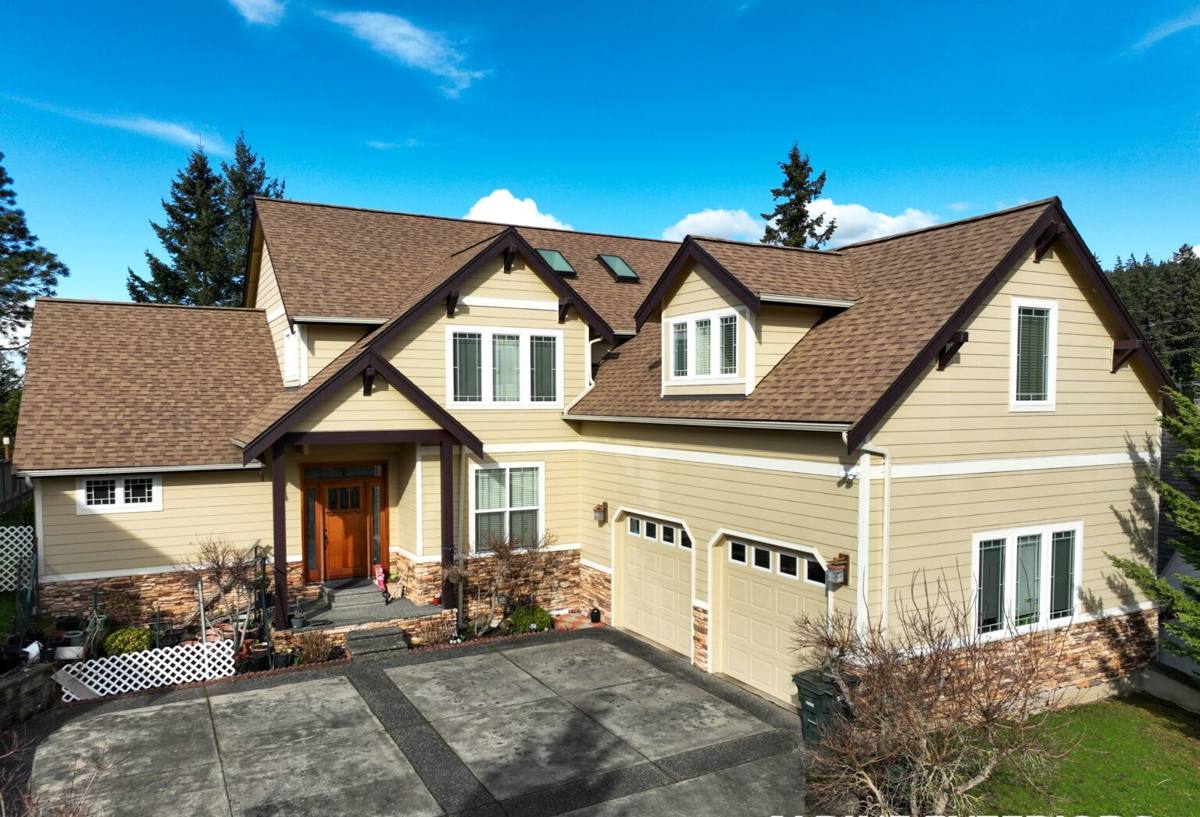
What Salt Air, Rain, and Moss Actually Do to a Deck
Salt Air and Corrosion
Airborne salt accelerates corrosion on anything metal — fasteners, joist hangers, railing hardware, and structural connectors. Standard galvanized coatings can wear through faster near the water than they would a few miles inland, and once corrosion starts on a hidden fastener, the failure usually shows up as a wobble or a soft spot long before anyone sees rust.
Driving Rain and Wind-Driven Moisture
Rain that comes in sideways gets pushed into places a vertical downpour never reaches — under railing caps, behind ledger boards, into end-grain cuts that weren't sealed. Wood that stays wet longer between dry spells is wood that rots faster, and end grain is always the first place it shows.
Moss Season
Shaded, north-facing, or low-airflow deck areas hold moisture long enough for moss and algae to establish. Beyond the maintenance headache, a mossy deck surface is a slip hazard, and moss holding water against wood or composite boards shortens the life of whatever's underneath it.
Material Choices That Make Sense for This Neighborhood
There's no single "right" decking material for Sandy Point — there's a right material for a given budget, sun exposure, and how much upkeep a homeowner actually wants to do. Here's how the common options stack up against this specific climate.
| Material | Salt air / corrosion behavior | Moss & moisture resistance | Maintenance |
|---|---|---|---|
| Pressure-treated wood | Fine with stainless or coated fasteners; standard hardware corrodes faster | Needs regular cleaning and sealing to resist moss | Annual cleaning, periodic sealing/staining |
| Cedar | Naturally decent rot resistance; fasteners still need to be corrosion-rated | Still needs cleaning; moss will grow on any wood left damp | Regular sealing to hold color and resist moisture |
| Composite decking | No corrosion in the board itself; use corrosion-rated fasteners and hidden clips | Better moisture resistance than wood, but moss and mildew can still grow on the surface film if it's not cleaned | Periodic washing, no sealing/staining required |
| PVC / cellular decking | Fully inert to salt and moisture | Best surface-level resistance to moss and mildew buildup of the common options | Occasional washing |
Whatever the board material, the hardware underneath it matters just as much in a salt-air environment. We default to stainless steel or marine-grade coated fasteners and connectors on waterfront and near-waterfront builds regardless of what decking is chosen, because that's the part that fails first if it's undersized for the environment.
What a Correctly Built Deck Looks Like Here
Fasteners and Structural Hardware
Every hanger, bolt, and screw should be rated for the exposure it's actually going to see. This isn't an upsell — it's the difference between hardware that's still sound in a decade and hardware that's the reason a deck needs structural repair years before the boards themselves wear out.
Flashing and Ledger Attachment
The ledger board connection — where the deck attaches to the house — is the single most common source of hidden rot on any deck, anywhere. Proper flashing that sheds water away from the house band board is non-negotiable, and it matters more here because wind-driven rain hits that joint from angles a calm-climate deck never sees.
Drainage and Airflow Underneath
Ground-level and low-clearance decks need real drainage planning — grading away from the foundation, gapping that lets air move under the deck, and joist tape or capping that keeps standing water off the framing. Poor airflow underneath is exactly the condition that grows moss and rot fastest.
Footings for the Local Ground
Soil composition varies lot to lot in waterfront neighborhoods, and footing depth and design need to match what's actually in the ground on that property, not a one-size assumption. This is one of the areas where local experience shortens the guesswork.
Design Considerations Specific to a Waterfront Lot
- Wind exposure — railing and privacy screening choices affect how much wind load the structure sees, especially on elevated or view-oriented decks
- Sightlines to the water versus shade and prevailing wind direction, which often pull in different directions on the same lot
- Grade and drainage — waterfront lots often have less margin for error on where runoff goes
- Proximity to shoreline, which can bring setback rules under Washington's shoreline management regulations into play and is worth checking before design work goes too far
- Any community association guidelines that apply to exterior structures in Sandy Point — worth confirming early rather than after a design is finalized
Permits and Local Requirements
Deck permitting in the Blaine area runs through the appropriate local building department, and requirements depend on deck height, attachment to the structure, and footprint. Waterfront and near-waterfront lots can also trigger additional review under shoreline regulations. We handle the permit submission as part of the job so homeowners aren't the ones tracking down requirements — but it's worth knowing up front that a waterfront lot in Whatcom County isn't always a rubber-stamp permit, and building that timeline in avoids surprises.
Our Process
- On-site assessment — we look at sun exposure, wind direction, drainage, existing structure (if replacing a deck), and how the lot sits relative to the water
- Design and material selection — matched to budget, maintenance appetite, and the specifics of that lot, not a default package
- Permitting — submitted and tracked through the local jurisdiction before any work starts
- Site prep and footings — sized and placed for the actual soil conditions on site
- Framing with corrosion-rated hardware — no standard-grade fasteners on a waterfront build
- Ledger flashing and drainage detailing — the parts that don't show but determine how long the deck lasts
- Decking, railing, and finish work
- Walkthrough and maintenance guidance — what to clean, when, and what to watch for given this specific climate
Keeping a Sandy Point Deck in Good Shape Year to Year
- Rinse or sweep the surface regularly during the wetter, shadier months to keep moss from getting a foothold
- Check railing hardware and fastener heads once a year for early corrosion signs, especially on lower and more exposed sections
- Keep gutters and downspouts clear so runoff isn't being directed onto or under the deck
- Reseal wood decking on the schedule the product calls for — skipping a cycle in this climate costs more than doing it on time
- Confirm underdeck drainage and ventilation gaps stay clear of leaves and debris that trap moisture
- Address any soft spots, discoloration, or hardware rust promptly rather than waiting for the next inspection cycle
Why a Local Crew Matters for This Job
A deck built without accounting for salt exposure, wind-driven rain, and moss season isn't necessarily built wrong in an obvious way — it just wears out faster than it should have, in ways that don't show up until the hardware or framing is already compromised. Crews that already work Sandy Point know which fastener grade actually holds up here, how the permitting process runs locally, and what a given lot's drainage and soil tend to look like before the first shovel goes in the ground. That familiarity shows up as fewer surprises during the build and a deck that's still solid well past the point a lower-spec build would be showing problems.
Cost Factors to Expect
| Factor | Why it moves the price |
|---|---|
| Decking material | Pressure-treated wood is the lowest upfront cost; composite and PVC cost more upfront but reduce maintenance |
| Size and footprint | Larger decks and multi-level designs mean more framing, footings, and labor |
| Height and structure | Elevated decks need more substantial framing, railing code compliance, and often stairs |
| Hardware grade | Corrosion-rated fasteners and connectors cost more than standard-grade but are the right call this close to salt air |
| Site conditions | Soil, grade, and access on a given lot affect footing work and prep time |
| Permitting scope | Waterfront-adjacent lots can require additional review, which affects timeline more than it does material cost |
Exact numbers depend on the lot and the design, which is really something to walk through in person rather than guess at from a general range.
If you're planning a new deck or replacing an aging one in Sandy Point, we're glad to come take a look and walk through what your lot actually needs. There's a free, no-pressure estimate form below — reach out whenever you're ready.