 Blaine Exterior
 Roofing a Home on Sandy Point Isn't the Same as Roofing One Inland
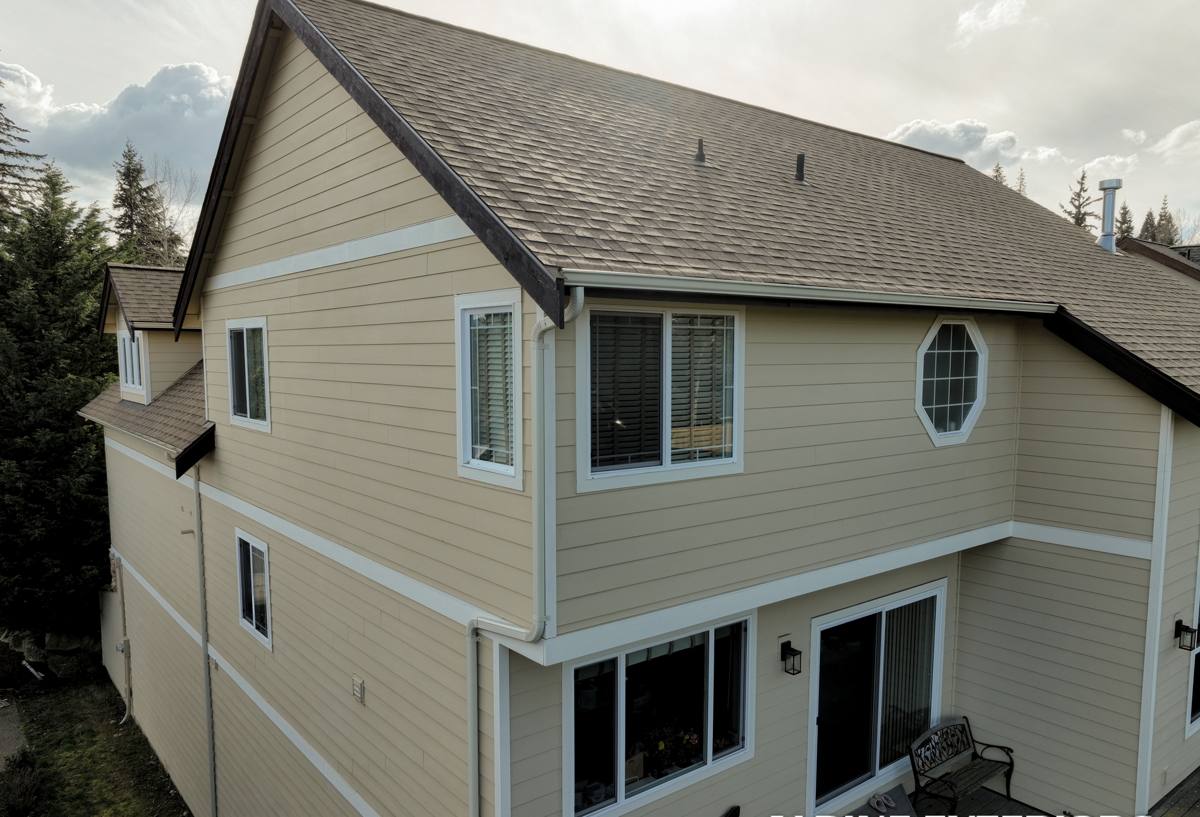
Sandy Point sits right on the water, and that changes what a roof has to deal with day in and day out. Homes a few miles inland in Blaine catch some of the same weather, but a roof out on the Point takes it straight on: salt-laden air off the water, wind gusts with nothing to break them, and driving rain that hits shingles at an angle instead of falling straight down. Add in the tree cover and shade that keep parts of these roofs damp for days after a storm, and you've got a combination that ages an asphalt shingle roof faster than the manufacturer's warranty paperwork assumes.
None of that means asphalt shingles are the wrong choice for Sandy Point — they're still the most practical, cost-effective option for the vast majority of homes here. It means the install has to account for the site, not just follow a generic spec sheet. That's the difference between a roof that looks fine for two years and one that actually holds up through a decade of Whatcom County winters.
What Salt Air, Wind, and Rain Actually Do to a Shingle Roof
Salt Air and Metal Components
Asphalt shingles themselves tolerate salt air reasonably well, but the metal parts of a roofing system — flashing, drip edge, nail heads, vent stacks — are where salt exposure shows up first. Standard galvanized fasteners and flashing corrode faster this close to Semiahmoo Bay than they would a few miles inland. Once a fastener starts to corrode, it loses holding strength, and that's how you end up with lifted shingle tabs or leaks at flashing points years before the shingles themselves are worn out.
Wind Uplift
Waterfront exposure means fewer windbreaks. A shingle roof on Sandy Point sees more sustained wind and more uplift stress on the tabs and edges than the same roof set back in a wooded lot. Sealant strips need full sun exposure and proper nailing to activate and hold — a roof installed in cool, damp conditions without attention to nailing pattern can end up with tabs that never fully seal down, which is an invitation for wind to get underneath them.
Driving Rain
Wind-driven rain doesn't just fall on a roof, it pushes sideways and works its way under shingle edges, around vent boots, and into any gap in the flashing. This is why underlayment choice and flashing detail work matter more here than on a calmer inland roof — a roof that would be fine with minimal underlayment somewhere sheltered needs a fuller moisture barrier on Sandy Point.
Moss: The Slow Damage That Adds Up
Whatcom County's moss season runs long, and shaded, north-facing roof slopes near tree lines are exactly where moss takes hold fastest. Moss isn't just cosmetic. It holds moisture against the shingle surface, which accelerates granule loss, and its root structures work into shingle edges and lift tabs over time. A roof with heavy moss growth is aging faster than its calendar age suggests, even if it isn't leaking yet.
The fix isn't power-washing shingles, which strips granules and does its own damage. It's a combination of the right shingle product, proper attic ventilation to reduce the moisture that feeds moss growth, and a periodic gentle cleaning and inspection routine — not a one-time scrub.
Choosing an Asphalt Shingle That's Built for This Site
Standard three-tab shingles are the least suited to Sandy Point's conditions — thinner, lower wind ratings, and no algae resistance. For a waterfront Whatcom County home, we generally steer homeowners toward:
- Algae-resistant (AR) shingles — copper-infused granules that resist the blue-green algae staining common in our damp climate, which also happens to be the same growth that precedes moss.
- Architectural (laminate) shingles with a higher wind rating — typically rated for stronger sustained winds than standard three-tab, which matters directly on an exposed lot.
- Manufacturer-matched components — starter strips, hip and ridge caps, and underlayment from the same product line, so the warranty covers the whole system rather than just the field shingles.
We don't push a specific brand as "the only option" — several manufacturers make solid AR, high-wind-rated products, and the right pick often comes down to warranty structure, color availability, and what performs well on the specific slope and exposure of your roof. What we won't do is install a bargain three-tab shingle on an exposed waterfront roof and call it a good outcome, because the maintenance burden and shortened lifespan land on the homeowner, not on us.
What a Correct Installation Actually Involves
A shingle roof is a system, and skipping any layer of it shows up later as a leak or premature wear. On a Sandy Point re-roof, our install includes:
Deck Inspection and Repair
Once the old roofing is off, we inspect the decking for soft spots, delamination, or rot — common where moss or trapped moisture has been sitting for years. Bad decking gets replaced before anything new goes down; shingling over a compromised deck just hides the problem.
Ice and Water Barrier at Vulnerable Points
Eaves, valleys, and around penetrations get a self-adhering water barrier, not just standard felt. This is the layer that protects against wind-driven rain finding its way under the shingles at the roof's weakest points.
Flashing
New flashing at chimneys, walls, valleys, and vent penetrations — corrosion-resistant material given the salt air exposure. Reusing old flashing on a re-roof is a common shortcut we don't take.
Ventilation
Balanced intake and exhaust ventilation keeps the attic dry and temperature-regulated, which reduces the moisture that feeds moss and premature shingle aging from underneath. This gets checked and corrected on every project, not just new construction.
Nailing Pattern and Sealant Activation
Correct nail placement (not staples, not overdriven or underdriven nails) is what keeps shingles wind-resistant. We install with attention to the manufacturer's high-wind nailing spec, which matters more here than on a sheltered inland roof.
Our Process for Sandy Point Roofing Projects
- On-site inspection — we walk the roof and attic, not just look from the ground, and check for moss, flashing condition, deck integrity, and ventilation.
- Written estimate — a clear scope covering materials, tear-off, disposal, and any deck repair, so there are no surprise add-ons mid-project.
- Scheduling around weather — we work with Blaine's rain patterns rather than against them, aiming for dry-in on the same day tear-off starts wherever possible.
- Tear-off and deck prep — old roofing removed, deck inspected and repaired as needed.
- Underlayment, flashing, and shingle installation — done in the sequence and detail described above.
- Cleanup and magnetic nail sweep — job site and yard cleared of debris and stray fasteners.
- Final walk-through — we go over the finished roof with you before considering the job done.
Cost Factors for Sandy Point Asphalt Shingle Roofing
Every roof is different, but the factors that most often move the price on a Sandy Point project are consistent. Broad ranges below are for general planning — your written estimate will reflect your actual roof.
| Factor | Why It Matters Here |
|---|---|
| Roof size and pitch | Steeper pitches and larger footprints mean more material and labor time |
| Shingle grade | AR, high-wind-rated architectural shingles cost more upfront than standard three-tab but hold up better against wind and algae |
| Deck condition | Rot or soft decking found during tear-off adds material and labor to replace it properly |
| Number of penetrations and valleys | More vents, chimneys, and valleys mean more flashing work and labor time |
| Ventilation upgrades | Adding or correcting intake/exhaust venting is a smaller cost that pays off in shingle lifespan |
| Access and site conditions | Waterfront lots with limited staging area or steep driveways can affect equipment and disposal logistics |
A Maintenance Checklist for Salt-Air, Moss-Prone Roofs
Whatever shingle product you have, a little regular attention goes a long way on a Sandy Point roof. Between professional inspections, homeowners can watch for:
- Moss or dark streaking building up on shaded or north-facing slopes
- Granules collecting in gutters after storms, a sign of accelerated shingle wear
- Lifted or curling shingle tabs, especially near roof edges and ridges
- Rust staining at flashing, vent boots, or nail heads
- Gutters and downspouts staying clear so water isn't backing up under the eaves
- Attic checks for moisture, musty smell, or daylight through the decking
Catching any of these early is almost always a repair. Ignoring them for a season or two on an exposed waterfront roof tends to turn into a replacement.
Why It Matters That the Crew Already Works Sandy Point
A roofing crew that hasn't worked waterfront properties before will often default to standard practice — standard underlayment, standard fasteners, standard nailing pattern — because that's what works most places. On Sandy Point, "most places" isn't the right baseline. A crew that already knows this stretch of Blaine's coastline knows which slopes hold moss longest, which corners of a roof take the worst wind-driven rain, and which fastener and flashing choices actually hold up against the salt air instead of just meeting minimum code. That's the difference between a roof installed to spec and a roof installed for this specific site.
Repair or Replace?
Not every roofing problem on Sandy Point means a full replacement. Isolated flashing failures, a few damaged shingles from a storm, or localized moss damage on one slope are often repairable if the rest of the roof is in reasonable shape. A full replacement makes more sense when granule loss is widespread, multiple areas show wind or moisture damage, or the roof is old enough that a repair would just be a short-term patch on a system nearing the end of its service life. An honest inspection should tell you which situation you're in before any work starts — not after.
If you're dealing with moss buildup, storm damage, or just want an honest read on how much life is left in your Sandy Point roof, we're glad to come take a look. Reach out using the form below for a free, no-pressure estimate.