 Blaine Exterior
 Roof Replacement Built for Ferndale's Weather, Not a Generic Climate
Ferndale sits close enough to the water and to the Nooksack lowlands that its roofs take on a specific combination of stress: salt-laden air drifting in off the Strait, long stretches of driving rain in the fall and winter, and shaded, damp conditions that let moss get a foothold and stay there for most of the year. A roof spec written for a dry inland climate doesn't hold up the same way here. When we replace a roof in Ferndale, we're accounting for all three of those factors from the tear-off stage through the final ridge cap, not just swapping old shingles for new ones in the same pattern.
This page is about one job — full roof replacement — for one area. If you're dealing with a leak, a few lifted shingles, or storm damage, that's a repair conversation, not necessarily a replacement one. But if your roof is aging out, showing widespread granule loss, or has been patched more times than makes sense, this is what a correct replacement looks like for a home in this part of Whatcom County.
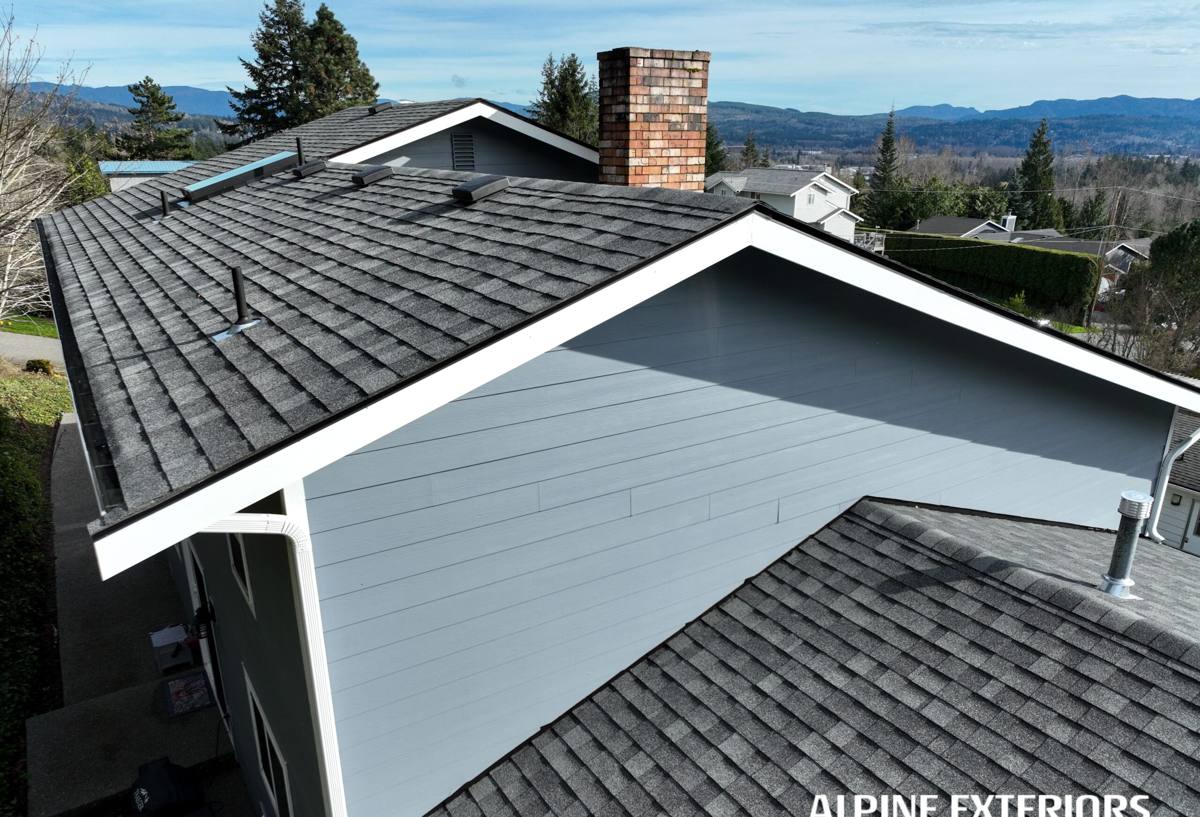
What Ferndale's Climate Actually Does to a Roof
Salt Air and Metal Fatigue
Proximity to Puget Sound and the Strait of Georgia means airborne salt reaches further inland than most homeowners assume, especially on days with onshore wind. Salt exposure accelerates corrosion on exposed metal — flashing, fasteners, gutter hardware, and any exposed nail heads. Over years, this shows up as rust streaking, pitted metal, and fasteners that back out or fail well before the shingles around them are due for replacement. It's one of the most common reasons a roof that "still has some shingle life left" is actually failing at the metal components first.
Driving Rain and Wind-Driven Water
Ferndale doesn't just get rain — it gets rain pushed sideways by wind off the water, which behaves differently than a straight downpour. Wind-driven rain finds its way under shingle tabs, around poorly lapped flashing, and into any gap that a calmer climate could get away with. This is why underlayment choice, flashing detail, and proper shingle nailing pattern matter more here than in a lot of the country — the margin for error during installation is smaller.
Moss, Shade, and Moisture Retention
Between tree cover and the extended damp season, moss growth on north-facing slopes and shaded roof planes is close to a given in this area. Moss itself doesn't just sit on top of shingles — its root structure lifts shingle edges and holds moisture directly against the roofing material, which shortens the life of the shingle underneath it. A roof that isn't detailed or maintained with moss in mind will age faster on its shaded side than its sunny side, sometimes by years.
Signs a Ferndale Roof Is Ready for Replacement
- Granule loss heavy enough that you're finding grit in gutters or at downspout outlets
- Shingles that are cupping, curling at the edges, or cracking when walked on
- Persistent moss lines on shaded slopes that come back within a season of cleaning
- Rust staining or visibly corroded flashing around chimneys, vents, or valleys
- Daylight visible through the roof deck from inside the attic
- Multiple past repairs in different areas rather than one contained problem
- Roof age at or past the manufacturer's stated lifespan for the original material
Any one of these alone might just mean a repair. Several at once, especially combined with the roof's age, is usually the point where replacement is the more honest recommendation than another round of patching.
What a Correct Roof Replacement Includes Here
A roof replacement is more than removing old material and laying down new. In this climate, the components underneath and around the shingles do as much of the protective work as the shingles themselves.
Tear-Off and Deck Inspection
We remove the existing roofing down to the deck rather than layering over it. This is the only point in the job where we can actually see the plywood or plank sheathing underneath, check for soft spots or rot from long-term moisture intrusion, and replace any damaged sections before they're sealed under new material for another 20-plus years.
Underlayment Suited to Wind-Driven Rain
Given how often rain here arrives at an angle instead of straight down, underlayment selection and lap direction matter. We install underlayment with attention to the prevailing wind and water path on each slope, not just a uniform default across the whole roof.
Flashing and Metal Detail
Because salt air is hard on exposed metal, we pay particular attention to flashing at valleys, chimneys, skylights, and wall intersections — these are the points where a roof most commonly fails first, well before the field shingles do. Properly lapped, corrosion-resistant flashing here is not an upgrade; it's the baseline for a roof that's supposed to hold up near the water.
Ventilation
Attic ventilation affects both moisture control and shingle life. Poor ventilation traps humid air against the underside of the roof deck, which contributes to premature aging from the inside out — a problem that's easy to miss because it doesn't show up on the surface until it's advanced. We check intake and exhaust balance as part of every replacement, not as an add-on sale.
Moss-Conscious Detailing
On shaded or north-facing slopes, we consider added protection at the ridge and in valleys where moss tends to establish first, and we talk through realistic maintenance expectations so moss doesn't get the multi-year head start that shortens roof life.
Material Options and Honest Trade-Offs
There's no single "best" roofing material for every Ferndale home — it depends on the roof's pitch, sun exposure, budget, and how the homeowner wants to handle long-term maintenance. Below is a general comparison of the main options we install, focused on how each performs under this area's specific conditions.
| Material | Salt Air Behavior | Moss Resistance | Maintenance |
|---|---|---|---|
| Architectural asphalt shingle | Good with corrosion-resistant flashing and fasteners | Moderate — benefits from periodic cleaning on shaded slopes | Low to moderate |
| Metal (standing seam or panel) | Strong when properly coated/finished; fasteners are the weak point if not corrosion-rated | High — sheds moss more readily due to smooth, sloped surface | Low |
| Composite/synthetic shake | Good; less prone to metal-specific corrosion issues | Moderate to high depending on product | Low to moderate |
| Wood shake | Requires diligent maintenance near salt air and moisture | Low — retains moisture, moss-prone in shaded areas | High |
We don't install every product on this list for every home. Where a material carries a maintenance burden that doesn't match a homeowner's expectations, or where its moisture behavior doesn't suit a particular roof's shade and slope, we'll say so directly and explain the trade-off rather than upselling something that isn't the right fit.
Our Replacement Process
- On-site assessment — we inspect the current roof, attic ventilation, and any problem areas, and take measurements for an accurate material estimate.
- Written estimate — a clear scope of work and material options, with pricing broken out so you know what you're paying for and why.
- Scheduling around weather — given how much rain this area gets, we plan tear-off and dry-in around forecast windows to minimize the time your roof deck is exposed.
- Tear-off and deck repair — full removal of old roofing, deck inspection, and replacement of any damaged sheathing.
- Underlayment, flashing, and ventilation work — the components that do the real long-term protective work, installed to the details above.
- Roofing installation — shingles, panels, or shakes installed to manufacturer spec and proper nailing/fastening pattern for wind exposure.
- Final walkthrough — cleanup, debris/magnet sweep for stray fasteners, and a review of the completed work with you before we consider the job done.
Cost Factors for a Ferndale Roof Replacement
Roof replacement cost varies with roof size, pitch, layers to remove, deck condition, and material choice. Rather than quote a number that won't reflect your actual roof, here's what tends to move the price up or down.
| Factor | Effect on Cost |
|---|---|
| Steep or complex roof geometry (multiple valleys, dormers) | Increases labor time and flashing detail work |
| Deck damage found at tear-off | Adds sheathing replacement cost, not knowable until tear-off |
| Material choice (asphalt vs. metal vs. composite) | Metal and composite generally cost more upfront, less in upkeep |
| Number of existing layers to remove | More layers means more tear-off labor and disposal |
| Ventilation upgrades needed | Modest addition if intake/exhaust balance needs correcting |
We won't know your exact number until we've seen the roof in person, but we'll walk through these factors with you so the estimate makes sense rather than arriving as a black box.
Why a Crew That Already Works Ferndale Matters
A roofing crew that mainly works drier, inland climates can install a technically correct roof that still underperforms here, simply because the details that matter in a coastal, high-moss, wind-driven-rain environment aren't the ones they're used to prioritizing. Working regularly in Whatcom County means we're not guessing at how a roof needs to be detailed for salt exposure, valley design for heavy rain, or slope treatment for moss — it's the baseline of every job we do in this area. That local familiarity shows up less in the sales pitch and more in the parts of the roof you don't see once the job is done: the flashing laps, the fastener choice, the underlayment direction.
Maintaining Your New Roof
- Have gutters cleared at least twice a year to prevent water backing up under the roof edge
- Keep overhanging branches trimmed back to reduce shade, debris, and moss pressure on the roof
- Schedule periodic moss treatment on shaded slopes rather than waiting until growth is heavy
- Have flashing and fasteners visually checked every year or two, particularly after major windstorms
- Address small leaks or lifted shingles promptly — small issues near the coast escalate faster than inland due to constant moisture exposure
A correctly installed roof still benefits from basic upkeep in this climate. None of it is intensive, but skipping it tends to shorten the roof's effective life more here than in drier regions.
If your roof in Ferndale is showing its age or you just want a straight answer on whether repair or replacement makes more sense, we're happy to take a look and put together a free, no-pressure estimate using the form below.