 Blaine Exterior
 Roofing on Cherry Point Isn't the Same Job as Roofing Inland
Cherry Point sits right up against the Strait of Georgia, and that location shapes everything about how a roof ages out here. Homes just a few miles inland in Whatcom County deal with rain and cold, but they don't get the same steady dose of salt-laden marine air, the same wind-driven rain coming straight off the water, or the same shaded, damp conditions that keep moss growing for most of the year. A roof replacement done right for this area has to account for all three, not just swap old shingles for new ones.
We work this stretch of coastline regularly, from Blaine down through Cherry Point and the surrounding rural properties. That matters less because of any secret technique and more because we've seen firsthand which roofing choices hold up here and which ones start showing problems in year four or five instead of year fifteen.
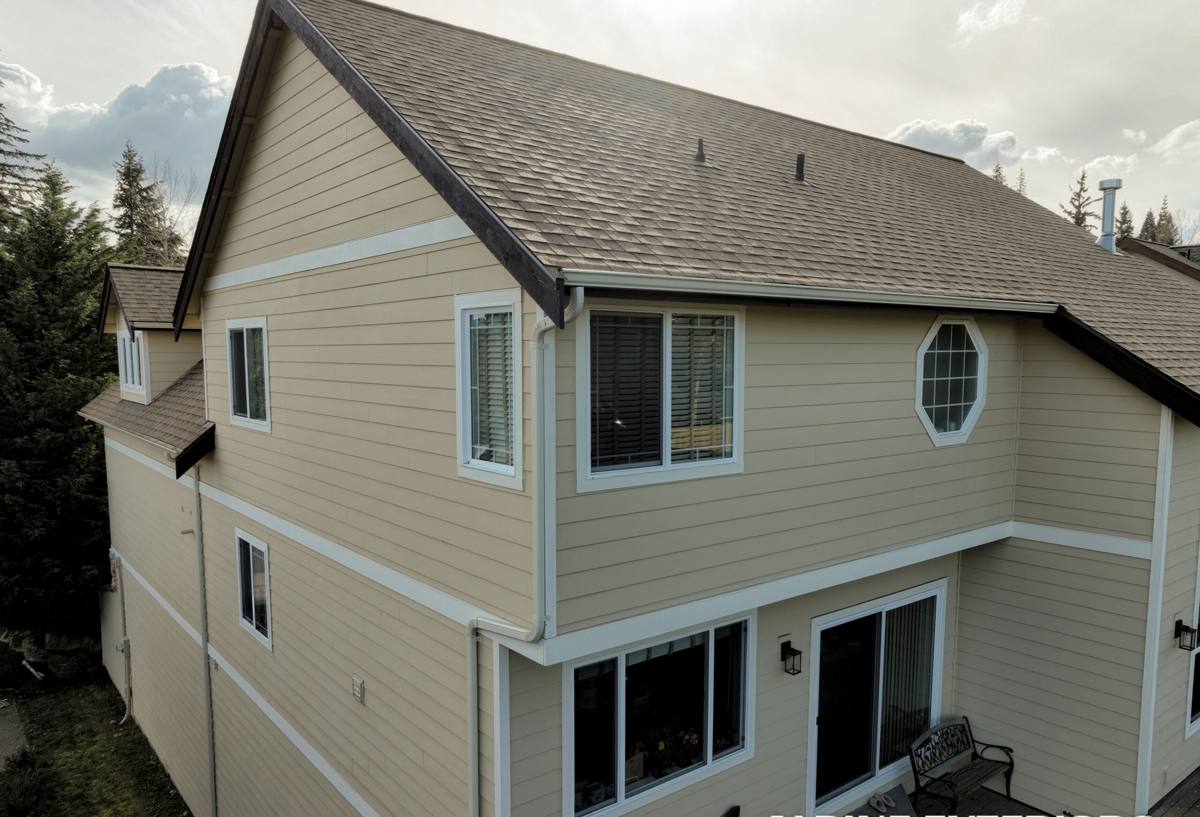
What Salt Air, Driving Rain, and Moss Actually Do to a Roof
Salt Air
Airborne salt accelerates corrosion on any exposed metal — flashing, fasteners, vent caps, gutter hardware. Standard galvanized fasteners and lower-grade flashing can start pitting and rusting well before the shingles themselves are due for replacement. On a coastal property, the metal components of your roof system need to be treated as a durability decision, not an afterthought.
Driving Rain
Storms coming off the water tend to push rain sideways, not straight down. That means water gets forced up under shingle tabs, into gaps around vents and chimneys, and along roof-to-wall transitions that would stay dry in a calmer inland rain. Underlayment quality and flashing detail work matter more here than they would on a roof that only ever sees vertical rainfall.
Moss Season
Whatcom County's wet, mild winters and shaded lots give moss a long growing window — often eight months or more depending on tree cover and sun exposure. Moss isn't just cosmetic. It holds moisture against the roofing material, lifts shingle edges as it grows, and can work its way into fastener holes over time. A roof replacement is the right moment to build in real moss resistance, not just clean the old roof off and start the clock over.
Signs a Cherry Point Roof Needs Replacement, Not Another Repair
Repairs make sense for isolated damage. Replacement makes sense when the roof's overall condition means repairs are just delaying the same problem in a new spot. Watch for:
- Granule loss heavy enough that you're finding grit in gutters every time it rains
- Shingles that are cupping, curling, or cracking across multiple sections of the roof, not just one area
- Moss or algae staining that comes back within a season or two of cleaning
- Soft spots in the decking when walked on, or visible sagging along the roofline
- Rusted, pitted, or lifting flashing around chimneys, skylights, and roof-wall joints
- Daylight visible through the roof deck from inside the attic
- Interior water stains that show up after wind-driven storms specifically
- A roof already at or past the manufacturer's expected service life for this climate
If you're only seeing one or two of these, a targeted repair may still be the honest answer — we'll tell you that. Replacement gets recommended when the underlying material is failing broadly, not when a single flashing joint needs attention.
What a Correct Replacement Involves Out Here
Tear-Off and Deck Inspection
We remove the old roofing down to the deck rather than layering over it. That's the only way to actually see what's underneath — soft or rotted decking, especially near eaves and valleys where water sits longest, needs to be found and replaced before anything new goes down. Covering over a compromised deck just hides the problem.
Underlayment
For a coastal property, we treat underlayment as a real second line of defense, not a formality. Ice-and-water membrane in vulnerable areas — eaves, valleys, around penetrations — plus a quality synthetic underlayment across the field gives the roof a backup layer if wind-driven rain does get past the surface material.
Flashing and Fasteners
Given how salt air treats standard metal, we use corrosion-resistant flashing and fasteners on coastal replacements rather than the minimum-grade hardware that's fine for an inland job. It costs a bit more up front and pays for itself by not needing re-flashing in five years.
Ventilation
Proper intake and exhaust ventilation keeps the attic dry and temperature-stable, which does double duty here: it reduces the moisture buildup that feeds moss growth from underneath, and it protects the decking and insulation from condensation damage over a long wet winter.
Choosing a Roofing Material for Cherry Point's Climate
There's no single "best" roofing material for every house — it depends on your roof's pitch, sun exposure, tree cover, and budget. Here's how the common options actually perform in this specific environment:
| Material | Salt Air Resistance | Moss Resistance | Typical Lifespan Here |
|---|---|---|---|
| Architectural asphalt shingle | Good, with quality flashing/fasteners | Fair — benefits from algae-resistant granules | 20–25 years |
| Standing seam metal | Very good with coastal-rated coatings | Very good — sheds moisture, little for moss to grip | 40+ years |
| Synthetic (composite) shake/slate | Good | Good, low water absorption | 30–50 years |
| Cedar shake | Fair — needs regular maintenance near salt air | Poor without diligent upkeep | 15–25 years, maintenance-dependent |
We don't push one material on every homeowner. Cedar shake can look great and plenty of people love it, but we're upfront that it's a higher-maintenance choice in a moss-heavy, salt-air environment — it needs more frequent cleaning and treatment to hold up, and we'd rather set that expectation honestly than sell a look that turns into ongoing upkeep you weren't expecting. Architectural asphalt with algae-resistant granules is the most common practical choice for Cherry Point homes because it balances cost, appearance, and coastal durability well. Metal is the strongest long-term performer against both salt and moss if the upfront cost fits your plans.
Our Process, Start to Finish
- On-site inspection. We walk the roof and attic, check the decking, flashing, and ventilation, and identify what's actually driving the need for replacement.
- Honest written estimate. You get a clear scope of work and price — no vague allowances that turn into surprise add-ons mid-job.
- Material selection. We go over the tradeoffs for your specific roof and exposure so you're picking a material that fits your home and budget, not just what's easiest for us to install.
- Scheduling around the weather. Coastal jobs need realistic weather windows. We plan tear-off and dry-in carefully so your home isn't left exposed longer than necessary.
- Tear-off, deck repair, and install. Old material off, deck inspected and repaired as needed, underlayment and flashing installed to coastal standards, then the new roofing system.
- Cleanup and walkthrough. Magnetic sweep for stray fasteners, full debris haul-off, and a final walkthrough so you know exactly what was done.
Keeping Moss From Coming Right Back
A new roof in a shaded, damp Cherry Point yard can still grow moss again if nothing changes about the conditions feeding it. A few things help long term: zinc or copper strips near the ridge let rain carry trace metal down the roof surface, which discourages moss growth over time; keeping overhanging branches trimmed back improves sun exposure and airflow; and clearing gutters and valleys before the wet season keeps standing water and debris — moss's favorite starting point — from accumulating. None of this eliminates moss entirely in a climate this wet, but it meaningfully slows it down and protects the investment you just made in a new roof.
Why Hiring a Crew That Already Works This Area Matters
A roofing crew that mainly works drier, inland areas can still do competent work, but they may not default to coastal-grade flashing and fasteners unless you specifically ask, and they may underestimate how much wind-driven rain protection a Cherry Point roof actually needs. Working this part of Whatcom County regularly means we're not guessing at what holds up here — we're applying what we've already seen fail and what's held up instead. That shows up in small decisions throughout the job: which underlayment goes where, how flashing gets detailed at wall transitions, and which fastener grade actually makes sense for a house that catches salt air off the water most days of the year.
Being local also means we're reachable after the job is done. If a question comes up two winters from now during the first big wind-driven storm, you're not calling a company that's moved on to a different region.
What Affects the Cost of a Cherry Point Roof Replacement
Every roof is different, so we don't quote sight-unseen prices — but the main cost drivers are consistent:
- Roof size and complexity (number of valleys, dormers, penetrations)
- Pitch and accessibility, which affect labor and safety setup
- Extent of decking repair needed once the old roof comes off
- Material choice — asphalt, metal, and synthetic options carry different material costs
- Upgrades like coastal-grade flashing, added ventilation, or ice-and-water membrane coverage
- Removal and disposal of the existing roofing layers
We'll walk through each of these with you during the estimate so you understand exactly what you're paying for and why, rather than getting a single number with no explanation behind it.
If your roof is showing its age or you're just not sure whether repair or replacement makes more sense, we're happy to take a look and give you a straight answer. Reach out for a free, no-pressure estimate using the form below.