 Blaine Exterior
 Roof Repair Built for Dakota Creek Conditions
Dakota Creek sits close enough to the water that the air itself works against your roof year-round. Salt-laden marine air off the Salish Sea corrodes exposed metal, driving rain off Whatcom County's winter storms finds every weak seam, and a long, damp moss season keeps organic growth working into your shingles for months at a time. A roof repair here isn't the same job as a roof repair in a dry inland town. The materials fail differently, the moisture gets in differently, and the fix has to account for all of it or you'll be calling someone back out within a year or two.
This page is about one thing: doing roof repair correctly for homes in and around Dakota Creek, near Blaine, Washington. Not a full tear-off, not a sales pitch for replacement you don't need — just an honest look at what local roofs need, what a correct repair actually involves, and why local experience changes the outcome.
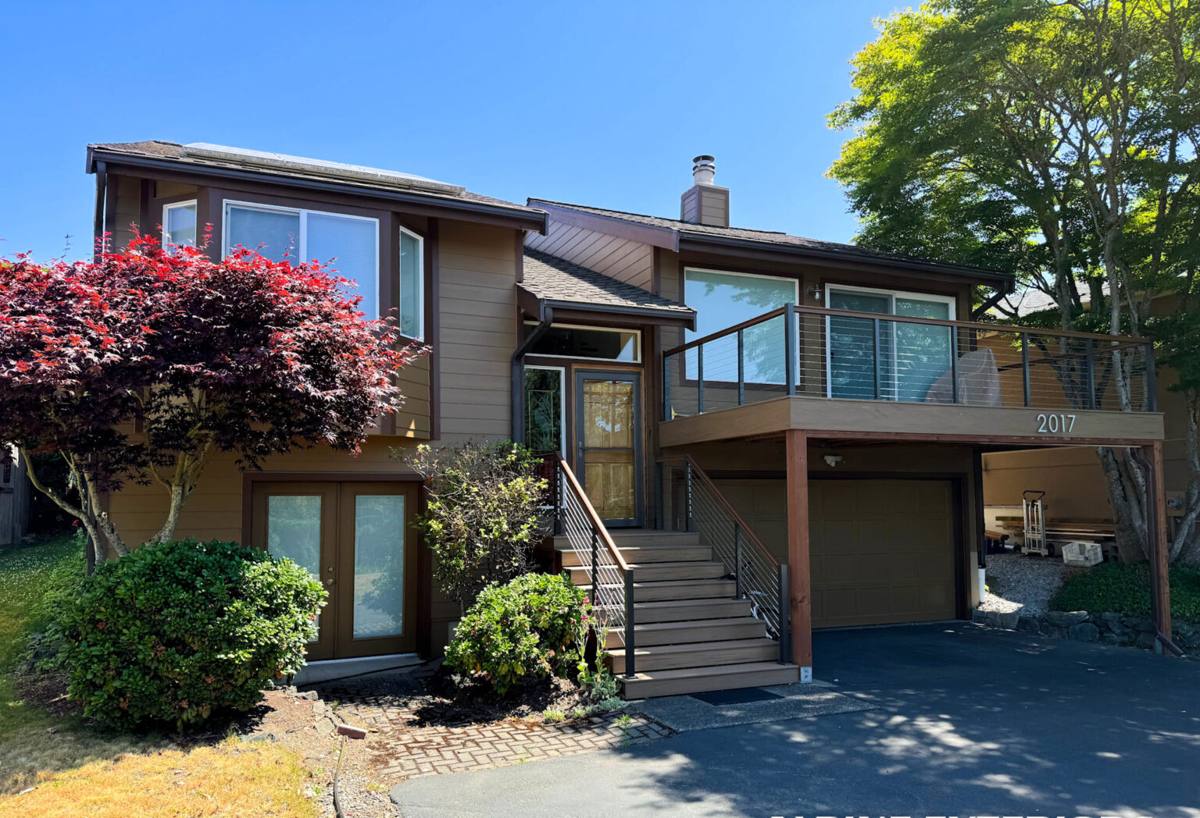
Why This Climate Is Hard on Roofs
Three things define roofing conditions around Dakota Creek, and each one attacks a roof differently.
Salt Air
Proximity to Semiahmoo Bay and the broader Salish Sea means airborne salt settles on every exterior surface, including your roof. Salt accelerates corrosion on exposed fasteners, metal flashing, and any galvanized hardware that isn't properly coated or stainless. A repair that ignores this and uses standard-grade fasteners or flashing will corrode faster here than the same repair would inland.
Driving Rain
Blaine's winter storms don't just fall straight down — wind-driven rain gets pushed sideways under shingle edges, around chimney flashing, and into any gap that a calmer climate would tolerate. Repairs need to account for wind-driven water intrusion, not just gravity-fed runoff.
Long Moss Season
Shade, moisture, and mild temperatures make this region nearly ideal for moss and algae growth on roofing for much of the year. Moss holds water against the roofing surface, lifts shingle edges as it grows, and works its root structure into granule layers and seams. Left alone, a mossy patch becomes the starting point for a leak.
Signs a Dakota Creek Roof Needs Repair
Homeowners often wait for an active drip before calling, but the earlier signs are usually visible from the ground or the attic well before water shows up on a ceiling.
- Dark streaking or thick moss patches, especially on north-facing slopes that stay shaded and damp longer
- Granules collecting in gutters or at the base of downspouts, signaling shingle wear
- Curling, cupping, or lifted shingle edges, often where moss has pushed underneath
- Rust staining or visible corrosion around flashing, vents, or metal valleys
- Soft or discolored spots on attic decking, visible with a flashlight from inside
- Daylight visible through roof boards at eaves or ridge lines
- Water stains on interior ceilings or upper walls, even faint ones that come and go with weather
Any one of these on its own might be minor. Several together usually mean the roof has been dealing with moisture longer than it looks.
What a Correct Repair Actually Involves
A roof repair that holds up in this climate is more than swapping out a few damaged shingles. It's a diagnostic process first, then a materials-matched fix.
Find the Real Source, Not Just the Symptom
Water travels. A stain on a ceiling might trace back to a flashing failure several feet away, not the spot directly above the stain. A proper repair starts by tracing the path of intrusion — checking flashing, underlayment, valleys, and penetrations near the damage, not just the visible surface.
Match Materials, Not Just Color
Shingle repairs need to match not only appearance but also material generation — an older roof may use a discontinued shingle profile, and forcing a mismatched patch can create a new weak point rather than a seamless fix. Where an exact match isn't available, we'll walk you through the honest options rather than pretending a mismatch won't be visible.
Address What Let the Moisture In
If moss caused the failure, the repair has to include moss removal and treatment, not just a shingle swap — otherwise the same growth returns to the same spot. If corroded flashing caused the leak, the flashing gets replaced with material suited to a marine-air environment, not just recoated.
Check the Decking
Any repair involving removed shingles is a chance to inspect the roof decking underneath. Soft, delaminating, or water-stained decking needs to be addressed before new roofing goes back down — covering damaged decking with new shingles just hides a structural problem.
Roofing Materials Around Blaine: Repair Considerations
Homes in this area are roofed in a mix of materials, and each one has different repair behavior in salt air and moss-prone conditions.
| Material | Common Failure Point Locally | Repair Consideration |
|---|---|---|
| Asphalt composition shingle | Granule loss, moss lifting edges, nail corrosion | Widely available for matching; fastener quality matters more near salt air |
| Cedar shake/shingle | Moisture retention, moss and fungal growth, splitting | Needs breathable repair approach; trapped moisture accelerates rot |
| Metal roofing/flashing | Corrosion at fastener heads and cut edges | Repairs should use corrosion-resistant fasteners and sealants rated for coastal exposure |
| Low-slope/flat membrane | Seam separation, ponding water, UV and moisture cycling | Seam repairs need membrane-specific adhesives; patch compatibility matters |
This is a general guide, not a diagnosis — the right repair approach depends on the specific roof, its age, and how it was originally installed.
Repair or Replace? How to Think It Through
Not every damaged roof needs replacing, and not every roof is worth repairing indefinitely either. The honest answer depends on a few factors we walk through with you during an inspection.
| Factor | Leans Toward Repair | Leans Toward Replacement |
|---|---|---|
| Roof age | Under roughly 15-20 years, depending on material | At or past the material's typical service life |
| Extent of damage | Isolated to one area or component | Widespread across multiple slopes |
| Decking condition | Solid, no rot or delamination found | Soft spots or water damage found in multiple areas |
| Repair history | First or second repair in this area | Same spot repaired repeatedly without resolution |
| Moss/algae involvement | Surface growth, shingles otherwise intact | Growth has caused granule loss and mat deterioration |
We'll always give you the repair option when it's the honest recommendation. We're not in the business of selling a full roof to someone who needs a flashing fix.
Our Repair Process
- Inspection. We walk the roof and attic where accessible, trace the water path, and document what we find — including anything unrelated to the original complaint that's worth flagging.
- Written scope and estimate. You get a clear explanation of what's damaged, why, and what the repair involves, along with pricing before any work starts.
- Material matching. We source shingles, flashing, or membrane material to match your existing roof as closely as possible, and we tell you upfront if an exact match isn't realistic.
- Removal and repair. Damaged material comes off, decking gets inspected and repaired if needed, and new material goes in with underlayment and flashing details suited to driving rain and salt exposure.
- Moss and debris treatment. Where moss contributed to the failure, we clear growth from the repair area and surrounding roof surface as part of the job, not as a separate upsell.
- Final check and cleanup. We check the repair for a clean, weathertight finish and clear the site of debris and old material before we consider the job done.
Why Local Experience in Dakota Creek Matters
Roofing crews who mainly work drier, inland areas don't always account for the specific way marine air and moss attack a roof over time. A crew that regularly works Dakota Creek and the greater Blaine area already knows which flashing details tend to fail first in this exposure, which north-facing slopes will need moss attention sooner, and which older shingle profiles are still findable for a matching repair versus which ones require a different approach. That knowledge shows up as fewer callbacks and a repair that's built for the conditions it actually faces, not generic conditions.
It also means we're familiar with the practical side of working in Whatcom County — permitting expectations, typical roof pitches and access on homes in this area, and the weather windows that actually allow a repair to be done right without rushing a job into a rain system.
Between Professional Visits: What Homeowners Can Do
You don't need to climb on your roof to keep an eye on it, and we'd rather you didn't without the right footing and equipment. But a few ground-level habits catch problems early.
- Look at north- and shade-facing slopes a couple of times a year for developing moss or dark staining
- Keep gutters clear so water doesn't back up under the shingle edge, especially before the fall rains start
- Trim back overhanging branches that keep sections of roof shaded and damp longer than the rest
- Check the attic after a heavy storm for any new staining, dampness, or daylight at the eaves
- Note the date of any repair or moss treatment so you and your roofer have a maintenance history to work from
None of this replaces a professional inspection, but it means small issues get caught while they're still small.
Get an Honest Look at Your Roof
If you're seeing moss buildup, granule loss, a stain that keeps reappearing, or you just want a second opinion before committing to a bigger project, we're happy to take a look. We'll tell you plainly whether it's a repair, what it involves, and what it costs — no pressure toward a bigger job than the roof actually needs. Use the form below to request a free estimate for your Dakota Creek home.