 Blaine Exterior
 Why Roofs in Peace Arch Wear Differently Than Roofs Inland
Peace Arch sits close enough to the water and the border that its roofs deal with a specific combination of stresses most inland Whatcom County homes don't see in the same intensity. Salt-laden air off the surrounding marine environment, wind-driven rain that comes in sideways during winter storms, and a moss season that can stretch from October well into spring all work on a roof at the same time. None of these alone is unusual for western Washington. Together, on a consistent basis, they shorten the life of fasteners, flashing, and shingles faster than a textbook maintenance schedule would predict.
Salt Air and Metal Fatigue
Roofing metal — flashing, drip edge, vent caps, and exposed fasteners — is the first thing to show it. Salt in the air accelerates oxidation on unprotected or lower-grade metal, and once a fastener head starts to corrode, it loses its grip and its seal at the same time. A repair that only patches the visible rust without addressing the metal underneath tends to fail again within a season or two.
Wind-Driven Rain and Roof Penetrations
Rain that falls straight down is forgiving. Rain that's pushed sideways by wind isn't — it finds every gap around a pipe boot, a chimney chase, a skylight curb, or a valley that's slightly under-lapped. Most of the leaks we're called out for in this area aren't from a "hole in the roof." They're from a penetration or transition point that was fine in calm weather and only leaks when the wind is driving rain uphill under the shingles.
The Long Moss Season
Shaded north-facing slopes and roofs near mature trees hold moisture longer here than they would in a drier climate, and moss takes hold in that moisture. Moss itself doesn't punch holes in a roof, but it lifts shingle edges, holds water against the surface, and clogs the granule layer that protects the shingle from UV and abrasion. Left alone through a full wet season, it turns a cosmetic problem into a repair problem.
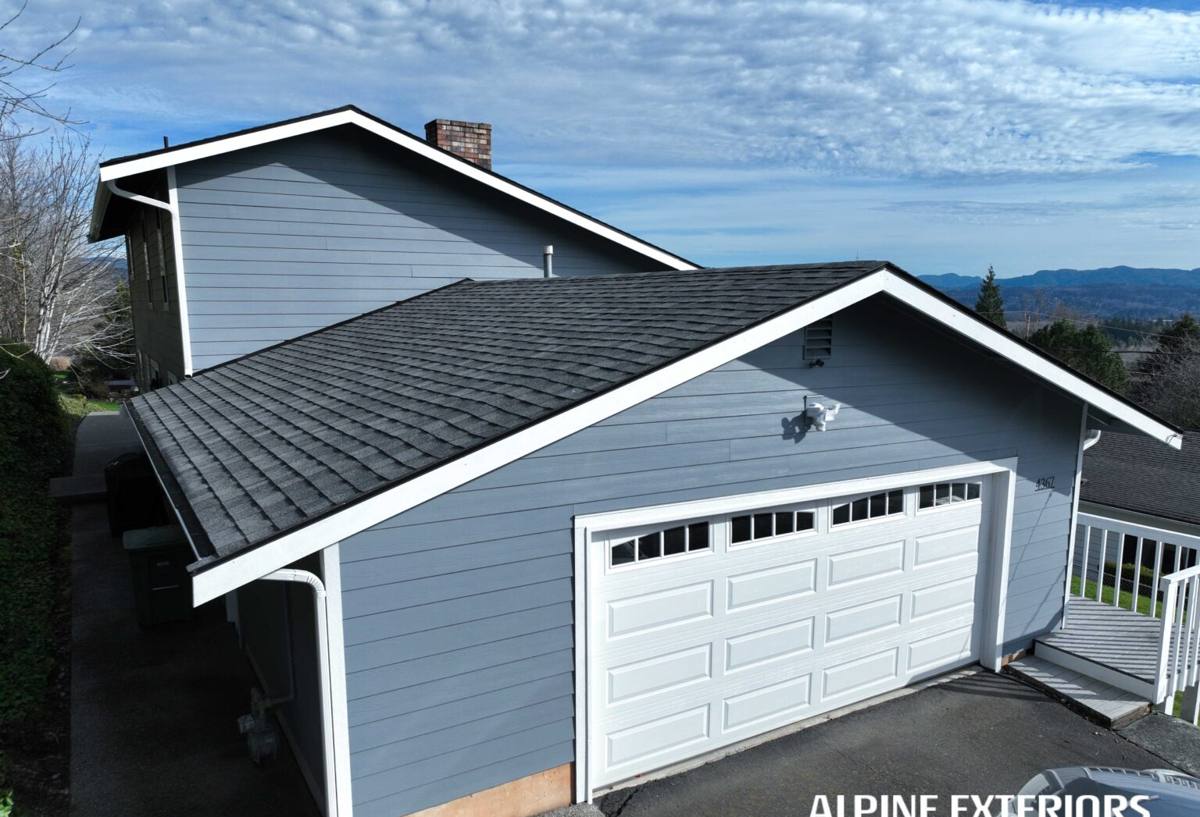
Signs a Peace Arch Roof Needs a Repair — Not Just a Look
Most homeowners don't get on their own roof, and they shouldn't. But there are signs visible from the ground or the attic that mean it's worth having someone qualified take a look before the next storm.
- Water staining or a damp smell in the attic, especially near a chimney, skylight, or where two roof planes meet
- Granules collecting in gutters or at downspout outlets after rain
- Shingles that look curled, cupped, or darker in patches (often a sign of trapped moisture underneath)
- Visible moss or algae streaking on north-facing slopes
- Rust staining below a vent pipe, chimney flashing, or metal valley
- A ceiling stain that appears only during heavy wind-and-rain events, not steady rain
- Sagging or soft-feeling spots along an eave or valley
What a Correct Roof Repair Actually Involves
Diagnosing the Real Source of a Leak
The most common mistake in roof repair isn't poor workmanship — it's fixing the wrong spot. Water travels along the underside of the decking before it shows up as a stain, so a leak that appears over a bedroom closet might actually originate a few feet upslope, at a flashing joint or nail pattern that has nothing to do with where the ceiling looks wet. A correct repair starts with tracing the path of the water, not just patching where it surfaced.
Matching Materials and Techniques to the Problem
A repair is only as good as its weakest transition. That means using flashing and fasteners rated for coastal exposure, lapping new material correctly with what's already there, and not relying on caulk or roofing cement as a long-term substitute for proper flashing — those are short-term fixes that tend to fail quietly, under a shingle, where you won't see it happening until it's already inside the house.
Common Roof Repair Types We Handle Near the Border
Not every roof problem calls for the same fix. Here's how the most common repair types compare.
| Repair Type | When It's Needed | What's Involved | Typical Fix Lifespan |
|---|---|---|---|
| Flashing repair or replacement | Leaks at chimneys, skylights, walls, or valleys | Remove old flashing, correct the lap sequence, install new corrosion-resistant flashing | Long-term if done correctly |
| Localized shingle replacement | Storm damage, isolated wind lift, cracked or missing shingles | Matching shingle type and color as closely as possible, re-securing surrounding courses | Matches remaining roof life |
| Moss and debris treatment | Visible moss growth, granule loss, shaded slopes | Careful removal (not aggressive scraping), treatment, and clearing valleys and gutters | Ongoing — needs seasonal upkeep |
| Pipe boot and vent seal replacement | Cracked rubber boots, rusted vent caps | Swap the boot or cap, check surrounding shingles for water intrusion | 5–10 years depending on material |
| Decking repair | Soft or spongy spots, visible sagging | Remove affected roofing, replace damaged sheathing, rebuild the section properly | Long-term, addresses root cause |
Our Process for Roof Repair Calls in Peace Arch
- Inspection first. We look at the roof surface, the attic if accessible, and the specific area where symptoms are showing up — not just the spot you point to.
- Honest diagnosis. We explain what we found, what's actually causing it, and whether it's a contained repair or a sign of something bigger.
- Written estimate. You get a clear scope of work and price before anything happens — no surprise add-ons once we're up there.
- The repair itself. Done with materials suited to this climate, not whatever's cheapest or fastest.
- Follow-up check. We confirm the fix is holding, particularly after the first heavy wind-driven rain following the repair.
Repair or Replace? What Actually Drives That Decision
Homeowners often assume any leak means a full replacement is coming. Usually it doesn't — but the decision depends on a few real factors, not guesswork.
| Factor | Why It Matters |
|---|---|
| Age of the roofing material | A 5-year-old roof with a flashing leak is a repair; a 22-year-old roof with the same leak may be nearing the end of its service life anyway |
| Extent of decking damage | Soft or rotted sheathing under one section can be repaired locally; widespread soft decking usually points to a bigger problem |
| Number of past repairs in the same area | Repeated leaks at the same spot often mean the underlying flashing detail was never right, not that the patch failed |
| How the roof was originally built | Older or undersized flashing details common on homes built before certain code updates sometimes need correcting, not just patching |
| Overall moss and moisture history | A roof with years of untreated moss buildup has usually lost more granule protection than it looks like from the ground |
Why Hiring a Crew That Already Works Peace Arch Matters
Roofing crews that mostly work drier, inland areas sometimes underestimate how hard salt air and driving rain are on flashing and fasteners here, and they'll spec materials or techniques that hold up fine elsewhere but come loose faster this close to the water. A crew that regularly works roofs in and around Blaine and the border area already knows which slopes hold moss the longest, which flashing details tend to fail first in this exposure, and how to sequence a repair so it survives the next windstorm off the water — not just the next dry week.
There's also a practical side to local familiarity: a crew based nearby can get to a leak faster during an active storm, which matters when water is actively getting into a house and every hour counts.
Keeping a Repair From Becoming a Recurring Job
A well-done repair should hold — but a few habits extend its life significantly in this climate:
- Clear gutters and valleys before the fall rains start, not after
- Have moss treated before it spreads across a full slope, not once it's already visible from the street
- Trim back branches that keep a section of roof shaded and damp longer than the rest
- Get a quick visual check after any major windstorm, especially one with sustained gusts off the water
- Don't ignore a small stain — attic moisture almost always gets worse over a wet season, not better
If you're dealing with a leak, storm damage, or a roof that just doesn't seem to be drying out the way it used to, we're happy to take a look. Estimates are free, there's no pressure, and you'll get a straight answer about what's actually going on — use the form below to get started.