 Blaine Exterior
 Asphalt Shingle Roofing Built for the Peace Arch Stretch of Blaine
Peace Arch sits close enough to the water and the border that its roofs take a different kind of beating than homes ten miles inland. Salt-laden air moves through on the marine breeze, driving rain comes in sideways off the Strait during winter storms, and the tree cover and damp shoulder seasons keep moss active for most of the year. Asphalt shingle roofing can handle all of that — but only when it's specified and installed with this specific exposure in mind. A roof detailed for a dry inland lot doesn't perform the same way here, and the difference shows up as granule loss, moss colonies, and leaks years earlier than it should.
This page covers what we actually look at when we're pricing and installing asphalt shingle roofs for Peace Arch homes — the climate stresses, the install details that matter, the shingle options worth considering, and how our process is set up around this particular pocket of Whatcom County.
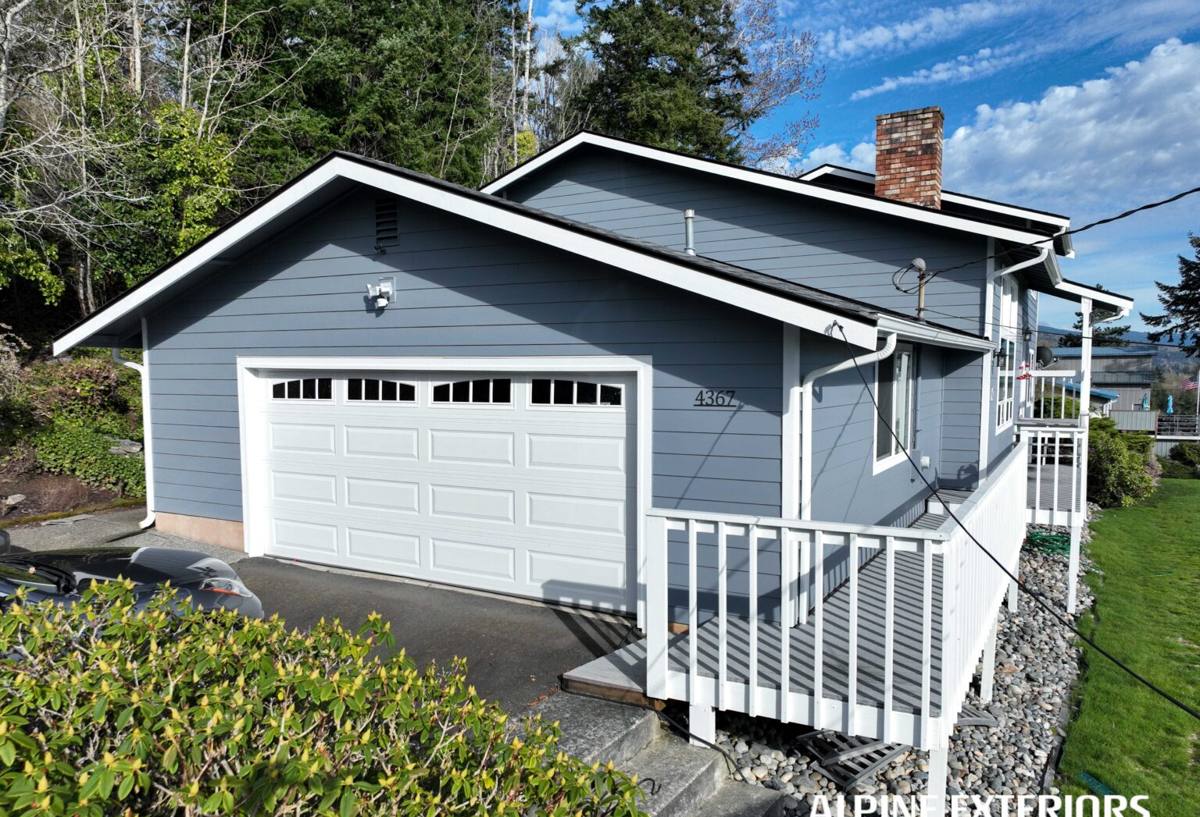
What This Climate Does to a Shingle Roof Over Time
Three conditions do most of the damage to asphalt shingle roofs in this part of Blaine, and they don't act alone — they compound each other.
Salt Air and Corrosion of Metal Components
Asphalt shingles themselves tolerate salt air reasonably well, but the metal that supports them doesn't. Nail heads, drip edge, valley flashing, and pipe boot collars are all vulnerable to accelerated corrosion when they're sitting a short distance from saltwater. Once flashing starts to pit or a fastener corrodes, water finds a path long before the shingles themselves show any wear. We spec corrosion-resistant fasteners and flashing for anything this close to the water — it's a small cost difference at install time and a much bigger one if it's skipped.
Wind-Driven Rain and Underlayment Demands
Storms coming off the water don't just drop rain — they push it sideways and force it up under shingle edges, especially at eaves, rakes, and low-slope sections. A roof that relies on the shingles alone as the water barrier will eventually leak in these conditions. The underlayment system underneath the shingles is what actually stops wind-driven rain from reaching the deck, and it needs to be chosen and installed with that specific threat in mind, not just as a generic layer between deck and shingle.
Moss, Shade, and Trapped Moisture
Between the tree cover common in Peace Arch's residential lots and the region's long damp season, moss has months at a time to establish itself. Moss does more than look bad — it holds moisture against the shingle surface, works its way under tabs and edges, and can lift shingles as it grows. North-facing slopes and anything shaded by mature trees are the areas we watch most closely, both during install planning and on any inspection.
What a Correctly Installed Asphalt Shingle Roof Includes Here
"Correct" for this location isn't the same checklist you'd use for a dry, open, inland roof. For Peace Arch, a properly built asphalt shingle roof includes:
A Real Water-Shedding System, Not Just Shingles
Ice-and-water barrier at eaves, valleys, and around every penetration, synthetic underlayment across the full field, and starter strip at every edge — not just the ones that are visible. This is the layer doing the actual work when wind pushes rain uphill under a shingle tab.
Ventilation Matched to the Attic, Not Guessed At
Balanced intake and exhaust ventilation keeps the underside of the deck dry and keeps attic temperatures from swinging enough to stress the shingles from below. Poor ventilation is one of the most common reasons a shingle roof fails early in this climate, and it's invisible from the ground — it has to be checked, not assumed.
Flashing Detail at Every Transition
Valleys, chimneys, skylights, sidewalls, and pipe penetrations are where the large majority of shingle roof leaks actually start — the field of shingles rarely fails first. Each of these needs step flashing, counter-flashing, or a boot rated for the material it's meeting, sealed and layered correctly rather than caulked over as a shortcut.
Fastening That Matches the Wind Exposure
Nail placement, nail count per shingle, and fastener type all affect wind resistance. We fasten to the shingle manufacturer's high-wind specification as standard practice for this area rather than the minimum pattern, given how exposed some Peace Arch lots are to wind off the water.
Choosing the Right Shingle for This Location
Not every asphalt shingle product is worth the same consideration here. The table below reflects how we walk homeowners through the tiers we install, weighing them specifically against salt air, wind, and moss exposure rather than generic performance numbers.
| Shingle Type | Algae/Moss Resistance | Wind Performance | Relative Material Cost | Best Fit For |
|---|---|---|---|---|
| Standard 3-tab | Low unless algae-resistant granules specified | Adequate on sheltered roofs | $ | Budget-driven projects on sheltered, low-exposure roofs |
| Standard architectural/laminate | Moderate | Good | $$ | Most Peace Arch homes; solid all-around choice |
| Algae-resistant architectural | High (copper- or zinc-infused granules) | Good | $$ | Shaded lots and north-facing slopes prone to moss |
| Impact-rated / high-wind architectural | High | Excellent | $$$ | Fully exposed, waterfront-adjacent, or storm-prone lots |
For most homes in this area, we lean toward algae-resistant architectural shingles by default rather than as an upgrade — given how much of Peace Arch has at least partial shade and moisture exposure, the extra resistance tends to pay for itself in avoided moss treatments and earlier replacement.
Our Process for a Peace Arch Roofing Project
The steps are the same fundamentals used everywhere, but the emphasis shifts based on what this exposure does to a roof:
- On-site assessment — we walk the roof and attic, checking existing ventilation, flashing condition, moss patterns, and how exposed the roof is to wind and salt air.
- Deck inspection — once tear-off starts, we check the sheathing for soft spots or rot, particularly around valleys and any area that's had moss sitting on it for a while.
- Underlayment and ice/water barrier installation — full coverage at eaves, valleys, and penetrations, not just the code minimum.
- Flashing replacement — we replace rather than reuse flashing in most cases, since corroded or worn flashing is a common hidden failure point in this climate.
- Shingle installation — fastened to high-wind spec, with attention to starter strips and ridge detail.
- Ventilation check and correction — intake and exhaust balanced for the attic, not just left as-found.
- Final walkthrough — we go over what was found, what was changed, and what maintenance will keep the new roof performing as expected.
Keeping a Peace Arch Roof Healthy Between Installs
A well-built shingle roof still needs some seasonal attention in this climate. Homeowners who stay ahead of these items consistently get more years out of a roof than those who don't:
- Clear gutters and valleys of debris before the fall rains start — clogged valleys are a direct path to wind-driven rain getting under the shingles.
- Have moss growth addressed early rather than left to spread — light growth is a simple treatment, established colonies can mean lifting shingles.
- Trim back branches that shade the roof where practical, since shade is the single biggest driver of moss growth here.
- Check attic ventilation isn't blocked by insulation or storage — this is easy to overlook and directly affects shingle lifespan.
- Have flashing and fasteners inspected periodically, especially on homes with more direct exposure to salt air off the water.
- Address any granule loss in gutters or downspouts as an early sign worth a closer look, not something to ignore.
Repair or Replace: How We Help You Decide
Not every issue on a Peace Arch roof means a full replacement, and we don't push one when a repair is the honest answer. Roughly speaking:
Repair usually makes sense when: the issue is isolated to flashing, a small section of storm damage, or an area affected by moss that hasn't compromised the deck. Replacement usually makes sense when: granule loss is widespread across multiple slopes, the underlayment has clearly failed in more than one area, the deck shows rot in more than an isolated spot, or the roof is old enough that repairs would just be chasing the next failure. We'll tell you plainly which category your roof falls into rather than defaulting to the larger job.
Why It Matters That We Already Work This Stretch of Blaine
A crew that's worked roofs across Peace Arch and the rest of Blaine knows which streets sit exposed to wind off the water, which lots hold shade and moss longer into the season, and which flashing details tend to fail first on homes with this kind of salt exposure. That's not something you get from a general specification sheet — it comes from having done the work here repeatedly. It also means we're a known, reachable local business if a question comes up two or five years after the job is done, not a name that only shows up for the sale.
We're familiar with Whatcom County's building requirements for roofing work and handle that side of the process as part of the job, so it's not something a homeowner has to sort out separately.
Get a Straightforward Estimate
If you're dealing with moss buildup, a leak that keeps coming back, or a roof that's simply due, we're glad to take a look and give you a clear, no-pressure estimate — including an honest read on whether repair or replacement is the right call for your specific roof. Use the form below to get started.