 Blaine Exterior
 Metal Roofing Around the Peace Arch: Built for Blaine's Border Weather
Peace Arch sits right at Blaine's international border crossing, close enough to the open water of Semiahmoo Bay and Drayton Harbor that homes in this part of town deal with the same salt-laden air and marine weather as the rest of Blaine's waterfront. It's an exposed spot, and roofs here take a steadier beating from wind, rain, and moisture than a lot of inland Whatcom County properties ever see. That's the exact condition metal roofing was designed to handle well, and it's why we get asked about it regularly from homeowners around Peace Arch specifically.
This page is about one thing: metal roofing for homes in the Peace Arch area of Blaine. Not a general rundown of every roofing material on the market, and not a generic metal roofing pitch that could apply anywhere. What follows is what this climate actually does to a roof, what a correctly installed metal roof needs to hold up here, and how we approach that work for the homes we serve close to the border.
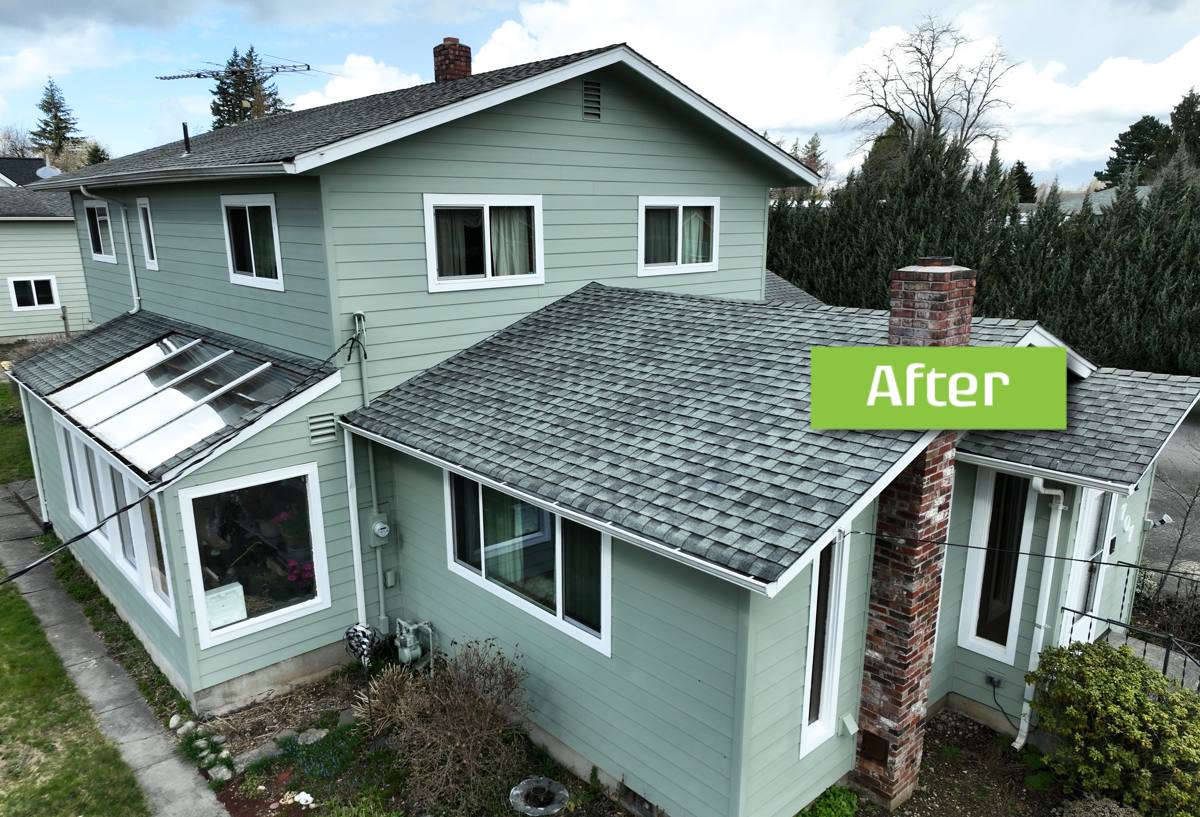
What Blaine's Coastal Climate Does to a Roof
Salt Air Off the Water
Being this close to Semiahmoo Bay means Peace Arch homes get a steadier dose of salt-laden air than properties set further inland in Whatcom County. Salt speeds up corrosion on any exposed metal — fasteners, flashing, valleys, vent caps — and it breaks down lower-grade coatings and finishes faster than they'd wear in a drier climate. On a metal roof, the fastener and coating choices matter more here than almost anywhere else in the region, because the whole point of the material is to resist exactly this kind of exposure, and a poor coating or the wrong fastener defeats that advantage.
Driving Rain and Wind Off the Border
Storm systems coming ashore near the border don't just drop rain straight down. Wind pushes it sideways into roof-to-wall transitions, valleys, and panel seams, and that sideways load is harder on a roof than the same total rainfall would be somewhere calmer. A metal roof's seams and fastener pattern are what stand between that wind-driven rain and the roof deck underneath, so how those details get installed matters more than the panel material itself.
A Long Moss Season
Mild temperatures and near-constant moisture give moss and algae a growing season that runs most of the year on shaded or north-facing roof planes around Blaine. Metal sheds that risk better than porous roofing materials because there's no granule layer or rough surface for spores to take hold in, but a roof with poor drainage, debris buildup in valleys, or a shallow pitch can still hold moisture long enough for moss to get a foothold at the seams and fastener points.
Why Metal Roofing Fits Homes Near the Peace Arch
Metal isn't the right choice for every roof or every budget, and we say that plainly rather than oversell it. But for homes taking the kind of salt air and driving rain that comes with being this close to the water and the border, it holds real advantages:
- Smooth, non-porous surface: Water sheds fast instead of soaking in, and there's no granule layer for moss and algae to colonize the way there is on asphalt shingles.
- Long service life: A correctly installed metal roof commonly runs 40 to 60 years, well beyond the typical lifespan of an asphalt shingle roof in this climate.
- Coating technology built for coastal exposure: Modern PVDF (Kynar 500-type) finishes resist fading, chalking, and corrosion far better than older paint systems, which matters directly in a salt-air setting like this one.
- Steep water-shedding profile: Panel seams are engineered to move water down and off the roof quickly, which counts for more here than in a drier, calmer climate.
- Fire resistance: Metal doesn't burn, which some insurers factor into coverage and premiums.
The trade-off is upfront cost — metal typically runs higher than asphalt shingles for the same roof — and a different look than a traditional shingle roofline. For homeowners planning to stay in their Peace Arch home long-term, or anyone tired of repeat moss cleanup and shingle repairs, that trade-off usually pencils out. For others, a well-installed architectural shingle roof remains a reasonable option, and we'll say so honestly during an estimate rather than push metal on every roof.
Standing Seam vs. Exposed Fastener: Which Fits This Climate
Not all metal roofing is built the same way, and the difference matters more in a high-moisture, salt-air setting like Peace Arch than it does inland.
| Panel Type | How It's Fastened | Coastal Performance | Typical Service Life |
|---|---|---|---|
| Standing seam | Concealed clips; no fastener penetrations through the panel face | Excellent — no exposed screw heads for salt air to corrode or rain to work loose over time | 40–60 years |
| Exposed fastener (corrugated/ribbed) | Screws driven directly through the panel face into decking or purlins | Good when installed with marine-grade, gasketed fasteners, but those fasteners are the first thing to fail if skipped or spaced wrong | 25–40 years, largely dependent on fastener condition |
Standing seam costs more upfront because of the labor and the concealed clip system, but it removes the single biggest long-term weak point of a metal roof in this climate — exposed fasteners that loosen, corrode, and eventually leak. Exposed fastener panels are a legitimate, more affordable option for outbuildings, garages, and some house roofs, provided the fasteners are the right grade and get inspected periodically. We'll walk through which one makes sense for a given roof, pitch, and budget rather than defaulting to one system for every home.
Gauge and Metal Choice
Panel thickness (gauge) and base metal — typically steel or aluminum — also affect how a roof holds up here. Heavier gauge steel resists denting and oil-canning better, while aluminum offers strong natural corrosion resistance without relying entirely on the coating. Either can perform well close to the water when specified correctly; the mistake is choosing a lighter, budget-grade panel to save money upfront on a roof that's going to take this much wind and salt exposure over its lifetime.
What a Correct Metal Roof Installation Involves
A metal roof performs the way it's supposed to only when the details underneath and around the panels are done right. In a border-adjacent, high-moisture spot like Peace Arch, we don't skip any of these:
- Deck inspection and repair: Any soft, rotted, or water-damaged decking gets replaced before new roofing goes down — installing metal over a compromised deck just guarantees problems later.
- High-quality synthetic or self-adhered underlayment: A secondary moisture barrier that keeps the deck dry if wind-driven rain ever gets past the panel seams.
- Correct fastener spacing, type, and torque: Whether it's clips or exposed screws, spacing and fastener grade are specified for a reason, and getting them wrong is one of the most common causes of early metal roof leaks we see on service calls.
- Properly lapped flashing at valleys, walls, and penetrations: Every seam and transition needs to shed water downward and outward, especially on planes that catch wind-driven rain directly off the water.
- Panel expansion allowance: Metal expands and contracts with temperature swings, and clip systems and trim need room to move without binding or tearing loose over time.
- Adequate ventilation: Intake and exhaust venting keep moisture from building up under the deck, which matters year-round in a climate this consistently damp.
None of this is unusual or exotic — it's the manufacturer's installation spec, followed consistently on the parts that are hardest to see once the roof is finished and hardest to fix without pulling panels back up.
Cost Factors for a Peace Arch Metal Roof
| Factor | Why It Matters |
|---|---|
| Roof size and pitch | More square footage and steeper or more complex pitches mean more material and labor |
| Panel type | Standing seam costs more than exposed fastener due to labor and concealed clip hardware |
| Gauge and coating | Heavier gauge and coastal-rated PVDF finishes cost more but hold up longer against salt air |
| Tear-off vs. overlay | Removing old roofing and inspecting the deck adds labor but avoids covering hidden damage |
| Number of valleys and penetrations | Each one needs custom flashing, which adds material and installation time |
These are general drivers, not a quote. Every roof near the Peace Arch sits under a slightly different mix of sun, shade, and wind exposure, and the only way to give an honest number is to walk the roof and look at the deck condition in person.
Signs a Peace Arch Roof Needs Attention
- Rust staining or visibly corroding fasteners, valleys, or flashing
- Moss or dark streaking on shaded or north-facing roof planes that returns quickly after cleaning
- Loose, lifting, or missing panels, especially after a windstorm off the water
- Water stains on ceilings or in the attic near valleys or roof-to-wall transitions
- Oil-canning (visible waviness) worsening across panel faces over time
- Gaps or separation at flashing around chimneys, vents, or skylights
A roof showing any of these is worth a look sooner rather than later. Moisture problems in this climate rarely stay small, and catching a loosened fastener or a gap in flashing early is a fraction of the cost of repairing the water damage it eventually causes.
Why a Crew That Already Works Peace Arch Matters
A roofing crew that works this stretch of Blaine regularly sees how salt air, driving rain, and moss actually behave on real roofs near the border year over year, not just how a panel performs on a spec sheet. That experience shapes real decisions on install day — which valleys need extra flashing attention, which fastener grade is worth the added cost on a given roof, and which planes stay wet longest and need closer attention to ventilation and drainage. Peace Arch's exposed, waterfront-adjacent position isn't identical to more sheltered parts of Whatcom County, and a crew that's worked here enough to know the difference builds accordingly instead of applying a one-size-fits-all approach.
Get a Free, No-Pressure Estimate
If your Peace Arch home needs a new metal roof, a repair, or just an honest inspection to see where things stand, we're glad to take a look. Reach out using the form below to schedule a free estimate — no pressure, no upsell script, just a straightforward assessment of what your roof actually needs.