 Blaine Exterior
 Storm Damage Roofing in Lynden: A Local Problem With Local Patterns
Lynden sits inland from Blaine along the Nooksack River, but it doesn't escape the weather that defines this corner of Whatcom County. The same Pacific storm systems that push through Blaine and the Strait of Georgia roll east and drop wind and rain on Lynden roofs just as hard, sometimes harder, since open farmland and fewer windbreaks mean gusts hit rooflines with less to slow them down. Add in a long, wet moss season that runs from fall through spring, and Lynden roofs deal with a steady combination of wind stress, saturation, and organic growth that most drier climates never see.
We're a Blaine-based crew that works Lynden regularly, not a company that shows up once after a big storm and disappears. That matters for storm damage repair specifically, because the difference between a roof that gets fixed right and one that leaks again in six months usually comes down to whether the contractor understands how this county's weather behaves over a full year, not just what a single wind event looked like.
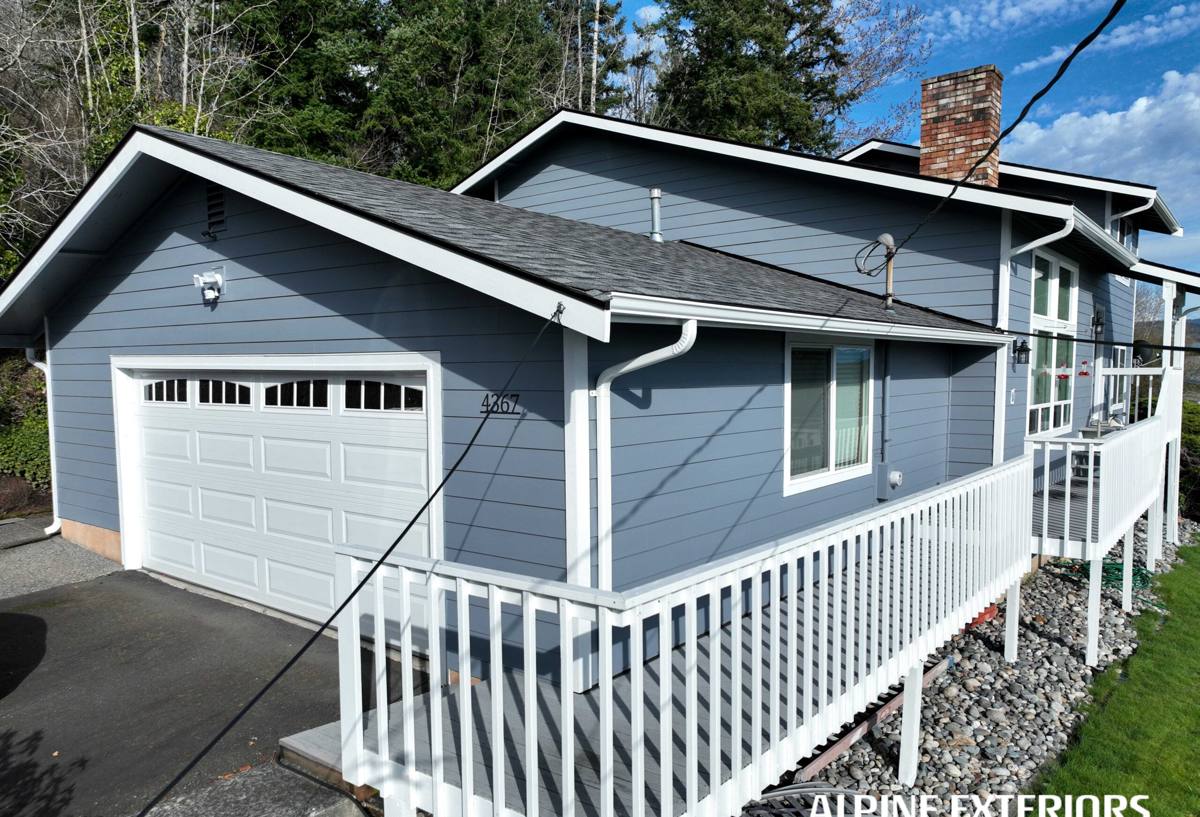
What Actually Counts as Storm Damage
Homeowners often assume storm damage means a hole in the roof or shingles scattered across the yard. Sometimes it's that dramatic. More often it's subtler, and it's the subtle damage that causes the most expensive problems down the road because it goes unreported and unrepaired.
Common storm damage patterns we see in Lynden
- Wind-lifted or creased shingles, especially along ridges, edges, and any area exposed to open field wind
- Torn or missing shingle tabs after a gust event, sometimes just a handful, sometimes an entire slope
- Flashing pulled loose around chimneys, vents, and skylights where wind uplift works metal loose over time
- Debris impact from broken branches, especially on properties with mature trees near the roofline
- Granule loss from wind-driven rain, which shows up as bare patches or excess grit in gutters
- Soaked or compressed underlayment where wind drove rain sideways under lifted shingles
None of these always look urgent from the ground. That's exactly why a proper inspection after a significant wind or rain event is worth doing even when nothing looks obviously wrong.
Why Waiting Costs More Than the Repair
A lifted shingle or open seam doesn't stay a small problem. Every rain event after the initial damage pushes more water under the roofing system, and Whatcom County doesn't give roofs long dry stretches to recover between storms. Water that gets under shingles in October can be soaking into decking and insulation by December, and by the time a stain shows up on a ceiling inside the house, the damage is usually well past a simple patch.
We treat storm damage repair as time-sensitive work. A tarp-and-schedule approach for a genuine emergency, followed by a real repair as soon as weather allows, protects the house far better than waiting for a "convenient" time that this climate rarely offers.
Signs a Lynden homeowner should call after a storm
- Shingles visible in the yard or gutters after high wind
- A new stain, drip, or damp spot on a ceiling or interior wall
- Visible daylight or gaps around a chimney, vent pipe, or skylight from the attic
- Loose, curling, or missing flashing at roof edges or valleys
- A sudden increase in granules collecting in gutters or downspouts
Our Storm Damage Repair Process
We keep this straightforward because homeowners dealing with storm damage are usually stressed enough already.
1. Inspection
We walk the roof (or use elevated photography where a walk isn't safe) and check the attic from inside where accessible. We're looking for the full extent of damage, not just the spot you called about, since wind damage rarely stays in one place.
2. Honest assessment
We tell you what's actually damaged, what's cosmetic, and what needs attention now versus what can be monitored. We don't pad a storm repair into a full replacement recommendation unless the roof's age and condition genuinely call for it.
3. Temporary protection if needed
If there's an active leak or exposed decking, we get it covered and protected before anything else, even if the full repair has to wait a day or two for materials or weather.
4. The repair
We match materials to what's already on the roof wherever possible, replace damaged decking or underlayment rather than roofing over it, and reseal flashing points properly instead of just re-nailing what's there.
5. Documentation
We provide photos and a written description of the damage and repair, which matters if you're working with an insurance claim.
Repair, Partial Re-Roof, or Full Replacement?
Not every storm-damaged roof needs the same response. The right call depends on the roof's age, how widespread the damage is, and what condition the rest of the roofing system is in.
| Situation | Typical Approach | Why |
|---|---|---|
| Isolated wind damage, roof under 10 years old | Spot repair | Surrounding material is still sound and can be matched |
| Damage spread across multiple slopes, roof 10-15 years old | Partial re-roof of affected sections | Balances cost against remaining roof life |
| Widespread damage on a roof near or past its expected service life | Full replacement | Patching an aging roof often costs more over time than replacing it once |
| Damage plus signs of long-term moss or moisture issues | Repair plus remediation | Fixing the storm damage without addressing moss growth invites repeat problems |
We'll walk you through where your roof falls on that table and explain the reasoning, not just hand you a number.
Working With Insurance on Storm Claims
Most storm damage repairs in this area involve an insurance claim, and the process goes smoother when the documentation is solid from the start. We provide clear photos of the damage, a written scope of what needs to be done, and we're available to meet with an adjuster on site if that's useful. We don't inflate estimates to "help" a claim along, and we don't advise anyone to file a claim for damage that doesn't warrant one, since that can affect future premiums for a repair that wasn't necessary in the first place.
Materials That Hold Up to This Climate
Storm repairs are only as good as the materials and technique behind them. In a climate with this much sustained moisture, a few things matter more here than they might in a drier region:
- Underlayment quality — synthetic underlayment resists the wicking and degradation that older felt products suffer under constant damp conditions
- Proper flashing technique — flashing that's sealed and stepped correctly, not just caulked, holds up through repeated freeze-thaw and wet-dry cycles
- Matching shingle products — mismatched granule color or profile isn't just cosmetic; poorly matched repairs can create water flow issues at the seams
- Ventilation — a repair that doesn't account for attic ventilation can trap moisture and shorten the life of the whole roof, not just the repaired section
We use established shingle and underlayment lines with clear manufacturer warranty terms rather than lesser-known products with vague or thin warranty coverage. That's a practical decision, not a brand endorsement: a warranty is only useful if the manufacturer stands behind it and local supply exists for matching materials later.
Moss Season and Long-Term Roof Health
Storm damage and moss growth are connected more often than homeowners expect. Moss holds moisture against the roof surface, and a roof already stressed by wind damage or lifted shingles gives moss an easier foothold. Left unaddressed, moss works under shingle edges and accelerates the exact kind of deterioration that turns a small storm repair into a bigger one.
Practical moss and storm-season maintenance checklist
- Keep gutters and downspouts clear so water isn't backing up under roof edges
- Trim back tree branches that overhang the roof to reduce debris and shade that encourages moss
- Have the roof looked at after any significant wind event, even if nothing is visibly wrong from the ground
- Address moss growth before it spreads across a full slope, not after
- Check attic ventilation periodically, since poor airflow speeds up both moss growth and moisture damage
Why a Crew That Already Works Lynden Matters
A roofer who only shows up in Whatcom County after a major storm event doesn't know how a specific roof has weathered the years before that storm, and doesn't have a track record to check locally. We're based in Blaine and work Lynden as part of our regular service area, which means faster response after a storm, familiarity with how local roofing systems typically age under this climate, and accountability that doesn't disappear once the insurance check clears. If we repair your roof this year, we're the same crew you can call next year if something else comes up.
If you've got storm damage, suspected storm damage, or just want a roof checked out before the next front moves through, we're glad to take a look. Fill out the form below for a free, no-pressure estimate.