 Blaine Exterior
 Sandy Point's Climate Is Harder on Siding Than Most of Whatcom County
Sandy Point sits right up against the water, and that changes what a home's exterior has to deal with day in and day out. Homes a few miles inland in Blaine still get plenty of rain and moss, but Sandy Point adds salt-laden air, near-constant wind off the water, and driving rain that hits siding at an angle instead of falling straight down. That combination accelerates almost every failure mode siding is prone to: coatings break down faster, fasteners corrode sooner, and moisture finds its way behind panels that would hold up fine somewhere more sheltered.
We install James Hardie fiber cement siding across Whatcom County, but Sandy Point is one of the areas where the product choice and the installation details matter the most. A siding system that's marginal in a typical Blaine neighborhood can fail outright a few blocks from the water.
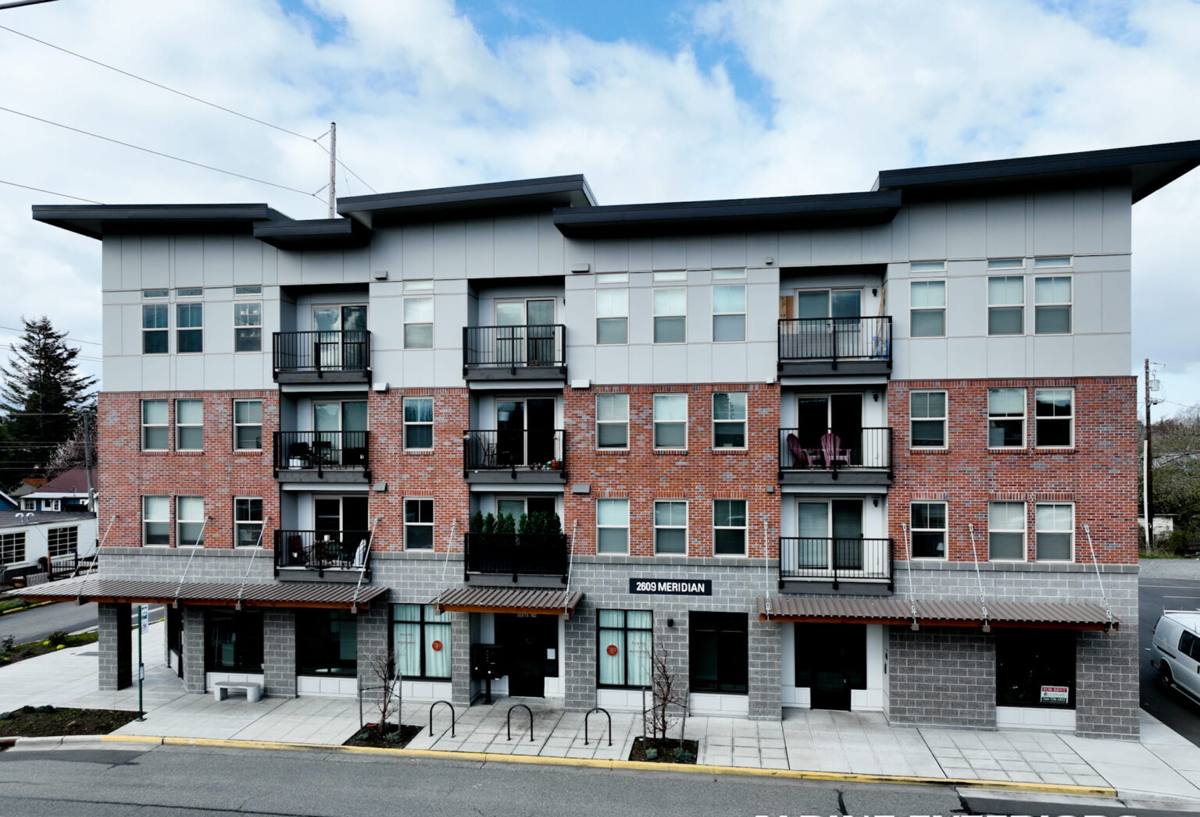
What Salt Air, Wind-Driven Rain, and Moss Actually Do
Salt Air
Airborne salt is corrosive to metal and abrasive to painted surfaces. Over years, it degrades cheap coatings, pits exposed fasteners, and accelerates rust on anything not rated for coastal exposure. Siding systems that rely on field-applied paint tend to chalk and fade faster here than the same product would inland.
Wind-Driven Rain
When rain comes in sideways instead of straight down, it gets pushed into laps, seams, and butt joints that would stay dry in calmer conditions. This is a water-management problem as much as a materials problem — the siding system, the flashing, and the water-resistive barrier behind it all have to work together, not just the panel itself.
Moss and Sustained Dampness
Whatcom County's long wet season already favors moss and algae growth on north-facing and shaded walls. Add the extra humidity that comes off open water and Sandy Point stays damp longer after storms than drier inland lots. Siding that traps moisture behind it, or that softens when it stays wet, is a much bigger liability here than it would be in a drier part of the state.
Why We Install Only James Hardie on Homes Like These
We don't install vinyl, LP SmartSide, primed wood, or other fiber cement brands. That's a deliberate standard, not a sales pitch, and it matters more in a place like Sandy Point than almost anywhere else we work.
Non-Combustible, Dimensionally Stable Material
James Hardie siding is fiber cement — it doesn't rot, it isn't a food source for moss the way wood-based products can be, and it doesn't expand and contract with moisture the way engineered wood does. That stability matters when a wall is absorbing more ambient humidity than the average home a few miles inland.
ColorPlus Factory Finish
Where budget allows, ColorPlus finished siding uses a factory-baked finish that's more consistent and more resistant to fading and chalking than field-applied paint, with a longer finish warranty than typical repaint cycles. In a salt-air environment, the difference in how long a finish holds up is not subtle.
HZ Climate-Engineered Product Lines
James Hardie makes region-specific HZ formulations engineered for different climate zones. For the Pacific Northwest, that means a product built around our wet, moderate climate rather than a one-size-fits-all formulation. It's one more reason we don't substitute a generic fiber cement product — the engineering behind the material is part of what you're paying for.
Warranty Backing
James Hardie's transferable product warranty is a meaningful backstop on a coastal property, where premature siding failure is a realistic risk with the wrong product. A warranty is only as good as the installation behind it, which is why correct installation practices matter as much as the material choice.
What a Correct Installation Looks Like at Sandy Point
Rainscreen and Drainage Details
On a site this exposed, we pay close attention to the drainage plane behind the siding — proper weather-resistive barrier lapping, flashing at every horizontal transition, and clearances that let any water that does get behind the panels drain and dry out instead of sitting against sheathing. This is standard good practice everywhere, but it's non-negotiable this close to the water.
Fastening and Hardware
We use fasteners and flashing components rated for coastal, high-moisture exposure rather than standard-grade hardware. Corroding fasteners are one of the more common causes of premature siding problems in salt-air areas, and it's a detail that's invisible once the job is finished — which is exactly why it has to be right the first time.
Joint and Penetration Sealing
Every seam, corner, and penetration (vents, hose bibs, light fixtures, and similar) is a potential entry point for wind-driven rain. We follow James Hardie's installation specifications for gapping, caulking, and flashing at these points rather than treating them as an afterthought.
Comparing Siding Options for a Waterfront Property
| Factor | James Hardie Fiber Cement | Vinyl | Engineered Wood (e.g. LP SmartSide) |
|---|---|---|---|
| Salt air / coastal exposure | Non-combustible, stable, built for moisture exposure with HZ engineering | Can become brittle and discolor faster under UV and salt exposure | Wood-based core is more vulnerable to sustained moisture and swelling |
| Wind-driven rain resistance | Strong when paired with correct flashing and drainage details | Adequate but panels can flex and loosen under sustained wind loads | Dependent on maintaining an intact factory coating; edge swelling is a known risk |
| Moss and algae resistance | Doesn't feed organic growth; cleans up well | Doesn't feed growth but can trap moisture behind panels | Wood-based substrate is more susceptible if coating is compromised |
| Finish longevity | ColorPlus factory finish holds color well over time | Color is through-body but can chalk and fade | Relies on maintained factory coating; touch-ups needed if damaged |
| Fire performance | Non-combustible material | Combustible | Combustible wood-based product |
We install James Hardie exclusively, so this comparison isn't about which brand to hire us for — it's context for why we made that call, and why we think it's the right one for exposed sites like Sandy Point specifically.
Signs Your Current Siding Is Losing the Fight
If your home is in Sandy Point or another exposed spot near the water, watch for these signs that siding is starting to fail:
- Soft or spongy spots when you press on siding, especially near the bottom courses or below windows
- Paint that's chalking, peeling, or fading noticeably faster than the rest of the house
- Visible corrosion streaks below fasteners or trim
- Moss or dark staining that returns quickly after cleaning, especially on north- or west-facing walls
- Gaps opening up at seams, corners, or trim boards
- Warping, bowing, or panels that no longer sit flat against the wall
Any of these can mean water is already getting behind the siding, which is a bigger and more expensive problem than the surface damage alone suggests.
Our Process for Sandy Point Jobs
Because of the exposure this area gets, we treat every Sandy Point estimate as a full assessment, not just a measure-and-quote visit.
- On-site inspection — we look at current siding condition, existing moisture damage, and how the specific lot is oriented to wind and water exposure.
- Water-management review — we check flashing, existing drainage details, and any trouble spots (window heads, deck ledgers, roof-to-wall transitions) before quoting the job.
- Product and line selection — we walk through James Hardie's plank, panel, and ColorPlus options so you know what you're choosing and why, given your home's exposure.
- Installation to spec — correct fastening, gapping, flashing, and drainage detailing, following James Hardie's published installation requirements rather than shortcuts.
- Final walkthrough — we go over the finished work and what maintenance, if any, to expect going forward.
Maintenance in a Salt-Air, Moss-Prone Environment
James Hardie siding is low-maintenance compared to wood or engineered wood products, but "low-maintenance" isn't "no-maintenance" on a waterfront lot. A periodic gentle rinse to clear salt residue and organic buildup, along with keeping gutters and drainage clear so water isn't running down the wall face, goes a long way toward protecting the finish and the details behind it. We're happy to walk through a simple maintenance routine appropriate for your specific site during the estimate.
Why Hiring a Crew That Already Works Sandy Point Matters
Siding installation isn't uniform across Whatcom County. A crew that mostly works sheltered inland lots may not think twice about hardware grade, drainage detailing, or joint sealing the way it needs to be handled on an exposed waterfront property. We work this area regularly, so the coastal-specific details — fastener selection, flashing sequencing, drainage clearances — aren't an adjustment we make on the fly. They're just how we build the job from the start.
If you're weighing a siding replacement or repair on a Sandy Point home, we're glad to take a look and give you an honest read on what your home actually needs. Reach out for a free, no-pressure estimate using the form below.