 Blaine Exterior
 Grandview's Exposure: What Blaine's Marine Climate Does to Siding
Homes in the Grandview area near Blaine sit close enough to saltwater that the air itself becomes part of the maintenance equation. Salt-laden moisture rides in on the wind and settles on every exterior surface, where it accelerates corrosion in fasteners, flashing, and any coating that isn't built to resist it. Add Whatcom County's driving rain — wind-blown, not just falling straight down — and siding here has to do more than shed water. It has to resist water being pushed sideways into seams, laps, and trim joints under real wind pressure.
Then there's moss season, which in this part of Washington runs long. Shaded walls, north-facing elevations, and anywhere airflow is restricted stay damp for weeks at a stretch. Moss and algae don't just look bad — they hold moisture against the siding surface far longer than an exposed, sun-dried wall ever would. Over years, that constant damp cycle is what breaks down materials that aren't engineered for it.
None of this is unique to any one street or block in Grandview — it's the baseline condition for any home in Blaine's coastal reach. But it does mean the siding material and installation details matter more here than they would forty miles inland.
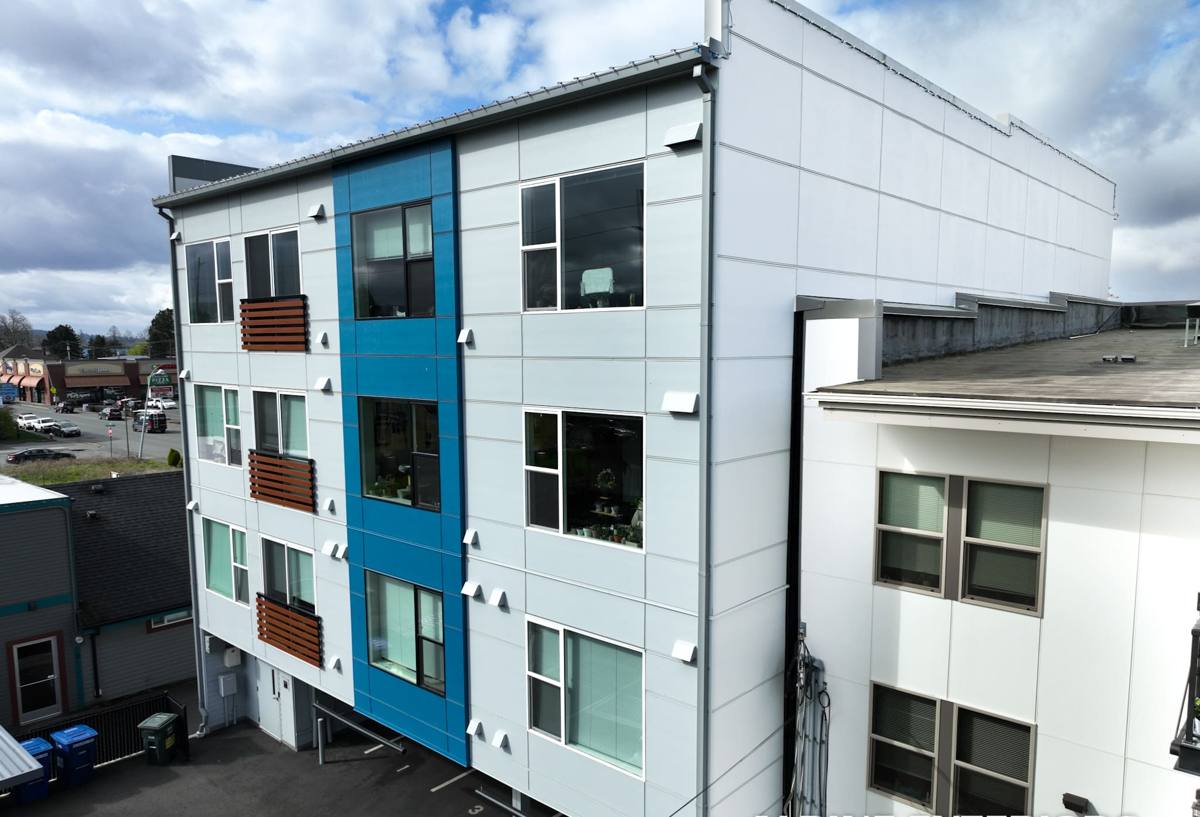
Why Fiber Cement Is the Right Material for This Exposure
Where Wood and Engineered Wood Fall Short
Cedar and primed spruce look good on day one, but both are organic materials that absorb moisture. In a climate with a long wet season and salt air working against any protective coating, that absorption cycle — swell, dry, swell again — is what eventually leads to cupping, splitting, and rot at butt joints and end cuts. Engineered wood products close some of these gaps with resin treatment, but the core is still wood, and the failure mode when moisture does get past the coating is the same: the material breaks down from the inside.
Where Vinyl Falls Short
Vinyl doesn't rot, but it isn't rigid, and it isn't fireproof. In driving rain and coastal wind, vinyl panels can flex and let water track behind them at the laps, especially over time as the material fatigues from UV and temperature swings. It also can't hold factory color the way a baked-on finish can — coastal salt exposure and sun tend to fade and chalk vinyl faster than homeowners expect.
Fiber cement made from Portland cement, sand, and cellulose fiber doesn't share either weakness. It's dimensionally stable, non-combustible, and holds paint or factory finish far longer under UV and salt exposure than wood or vinyl. That's why it's the material we install, full stop — it's built for exactly the conditions Grandview homes deal with every year.
The James Hardie System We Install in Grandview
We install James Hardie fiber cement exclusively. We don't install LP SmartSide, vinyl, Cemplank, Allura, primed spruce, or cedar. That's not brand loyalty for its own sake — it's a professional standard built on how each product performs over a full service life in this specific climate, and on the manufacturing consistency and warranty backing Hardie brings that some competing fiber cement products don't match as reliably.
HardiePlank Lap Siding vs. HardiePanel
HardiePlank lap siding is the most common choice for Grandview homes — horizontal boards installed with overlapping laps that shed water down and away from the wall. HardiePanel is a vertical sheet product, often used for accent sections, gable ends, or a more modern look. Both are engineered for the Pacific Northwest through Hardie's HZ5 product line, which is formulated for wetter, cooler climates rather than the hot-dry HZ10 line built for the Southwest.
ColorPlus Factory Finish
ColorPlus is a baked-on, multi-coat finish applied at the factory under controlled conditions — a more durable and consistent result than field-applied paint, which is especially valuable in a climate where UV, salt, and moisture are all working against a coating year-round. It comes with its own finish warranty separate from the substrate warranty, and touch-up product is available so repairs match rather than leaving a visible patch.
What a Correct Installation Involves in a Climate Like This
Fiber cement is only as good as the installation behind it. In a marine climate, a handful of details separate a siding job that lasts decades from one that fails early — and the failures are almost always installation issues, not material issues.
Clearance and Drainage
Hardie's specifications call for minimum clearances above roof lines, decks, and grade, plus a drainage plane behind the siding so any moisture that does get past the surface has somewhere to go. Skipping the water-resistive barrier or rainscreen detail is one of the most common corner-cutting mistakes we see on older installs in wet climates — and it's the kind of thing you can't tell from the street.
Fastening and Flashing
Every fastener penetration is a potential entry point for moisture and, near saltwater, a potential corrosion site. Correct installation means corrosion-resistant fasteners driven to the manufacturer's spec — not overdriven, not underdriven — and flashing integrated correctly at every window, door, and roofline penetration so water is directed out, not trapped behind the cladding.
Caulking: Use It Sparingly, Use It Right
Caulk is a maintenance item, not a structural seal. Over-reliance on caulk to close gaps that should have been flashed or lapped correctly is a common shortcut that fails within a few years, especially with the temperature swings and constant damp this area gets. Where caulk is used, it should be a high-quality, paintable, flexible sealant applied to manufacturer spec — not a substitute for proper detailing.
Our Process for Grandview Siding Projects
- Assessment: We walk the exterior, check for existing moisture damage, evaluate the current water-resistive barrier if accessible, and note shaded or low-airflow areas prone to moss.
- Written scope and product plan: We specify HardiePlank, HardiePanel, or a combination, along with trim and ColorPlus color selection, and put it in writing before work starts.
- Prep and drainage plane: Old siding removed, sheathing inspected and repaired as needed, and a code-compliant water-resistive barrier and drainage plane installed.
- Installation to spec: Siding, flashing, and fasteners installed to Hardie's published specifications for our climate zone — not generic best guesses.
- Final walkthrough: We review the completed exterior with the homeowner and cover basic care specific to a coastal, moss-prone property.
Cost Factors for Fiber Cement Siding in Grandview
Every home is different, so we don't quote sight-unseen — but these are the factors that most often move a project's scope and price:
| Factor | Why It Matters | Typical Cost Impact |
|---|---|---|
| Condition of existing sheathing | Rot or moisture damage found during tear-off needs repair before new siding goes on | Medium to High |
| Home size and wall complexity | More corners, dormers, and trim details mean more cutting and labor | Medium |
| Plank vs. panel vs. mixed system | Combining lap siding with panel accents adds material and layout time | Low to Medium |
| ColorPlus vs. field-painted finish | Factory finish costs more upfront but reduces future repainting | Low to Medium |
| Access and site conditions | Tight lots, slopes, or limited staging area affect labor time | Low |
We'll walk your specific home and give you a real, written number rather than a rough estimate based on square footage alone.
Keeping Moss and Moisture From Becoming a Problem
Even correctly installed fiber cement benefits from a little seasonal attention in a climate like this. A few habits go a long way toward protecting your investment:
- Rinse siding annually, especially shaded and north-facing walls, to keep moss and algae from establishing
- Trim back vegetation and tree limbs that keep siding shaded and damp
- Check and clear gutters before the wet season so water isn't overflowing onto siding below
- Watch for soft spots, staining, or bubbling paint near ground level or roof intersections — early signs of a flashing or drainage issue
- Repaint or touch up field-painted trim before the finish fully breaks down, not after
Why a Crew That Already Works in Grandview Makes a Difference
Installing fiber cement correctly in a coastal climate isn't guesswork — it's following manufacturer specs that were written for exactly this kind of exposure. A crew that regularly works homes in and around Blaine already knows what driving rain and a long moss season do to a wall over time, and installs with those conditions in mind rather than treating every job like it's in a dry, sheltered inland neighborhood. That local familiarity shows up in the details: where flashing gets extra attention, how clearances are handled near grade and decks, and which areas of a home need the most drainage consideration.
If you're planning a siding project in Grandview or elsewhere around Blaine, we're happy to take a look at your home and walk you through what a correctly installed James Hardie system would involve — no pressure, no obligation. Use the form below to request a free estimate.