 Blaine Exterior
 Board & Batten Siding Built for Grandview's Coastal Climate
Board and batten siding has a clean, vertical look that works well on both older farmhouse-style homes and newer builds around Grandview. It's one of the more distinctive siding profiles we install, and it's also one of the least forgiving when it's installed wrong. In a marine climate like Blaine's, with salt air drifting in off the water, long stretches of driving rain, and a moss season that can run most of the year, a vertical siding system either sheds water the way it's supposed to or it doesn't. There isn't much middle ground. This page covers what board and batten siding needs to hold up on a Grandview home, what correct installation actually involves, and why we only install it in James Hardie fiber cement.
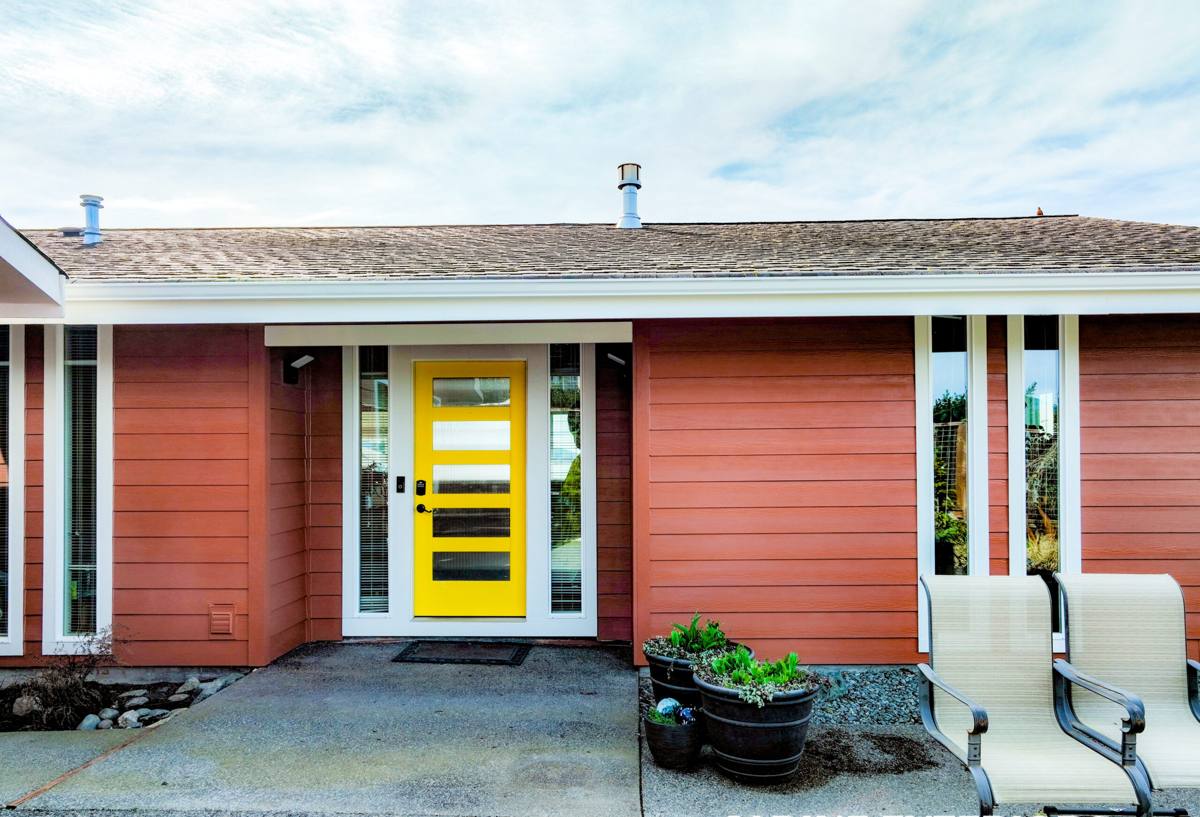
Why Grandview's Weather Is Hard on Vertical Siding
Salt Air and Corrosion
Homes in and around Blaine sit close enough to the water that salt-laden air is a real factor in material selection, not a theoretical one. Salt air accelerates corrosion on fasteners, flashing, and any metal trim that isn't rated for it, and it speeds up the breakdown of finishes that aren't built to handle it. On a board and batten wall, the battens themselves create dozens of extra seams and fastener points compared to standard lap siding — every one of those needs to be detailed with the coastal exposure in mind.
Driving Rain and Wind-Driven Moisture
Whatcom County gets its share of wind-driven rain, and vertical siding profiles are more exposed to that than horizontal lap siding because water runs straight down the face of the panel rather than shedding off overlapping courses. If the battens aren't fastened and gapped correctly, or the panel behind them isn't given a way to dry out, water finds its way behind the siding and stays there.
A Long Moss and Mildew Season
Western Washington's damp, mild winters and cool, wet shoulder seasons keep moss and mildew active on north-facing and shaded walls for much of the year. Board and batten's vertical battens create ledges and shadow lines that hold moisture longer than a flat wall does if the material underneath isn't dense and stable. Over years, that constant damp cycle is what breaks down siding that wasn't built for it.
What Board & Batten Siding Actually Is
Board and batten is a vertical siding system: wide flat panels (or individual boards) installed vertically, with narrower strips — the battens — covering the seams between them. The result is a rhythmic, shadow-lined wall that reads as more architectural than standard horizontal lap siding, and it pairs well with gable ends, accent walls, and full-elevation applications alike.
The look has been around for well over a century, originally as a practical way to cover gaps between rough-sawn boards on barns and early homes. Today it's chosen mostly for appearance, which means the structural logic behind the original design — shedding water off a vertical seam — still has to be respected even though the materials have changed completely.
Why We Only Install James Hardie for Board & Batten
We get asked fairly often why we don't offer board and batten in vinyl, engineered wood, or real cedar boards. Each of those has genuine strengths, and we're upfront about them. But for a coastal Whatcom County climate, we've standardized on James Hardie fiber cement because it's the material that holds its shape, its finish, and its fastening integrity through decades of salt air and wet weather without the maintenance burden the alternatives carry.
| Material | Where it's strong | Trade-off in Grandview's climate |
|---|---|---|
| James Hardie fiber cement | Non-combustible, dimensionally stable, factory-baked ColorPlus finish, engineered for wet marine climates | Heavier material, requires correct fastening pattern and installer experience |
| Vinyl board and batten | Lower material cost, no repainting | Panels can warp or oil-can in temperature swings; batten reveals are often less crisp; limited color depth |
| Real cedar boards | Authentic wood grain and warmth | Needs regular refinishing, more prone to moisture absorption, checking, and moss growth in damp shade |
| Engineered wood (LP-type) | Lighter weight, easier to cut | Wood-fiber core is more sensitive to sustained moisture exposure at cut edges and seams than fiber cement |
Fiber cement doesn't rot, doesn't attract insects, and won't warp the way vinyl or engineered wood panels can when they're exposed to repeated wet-dry cycling. James Hardie's HZ5 product line in particular is engineered for climates like ours, and the factory-applied ColorPlus finish holds color and resists moisture intrusion at the surface far better than a field-applied paint job — which matters a great deal on a profile with this many exposed seams and edges.
What a Correct Board & Batten Installation Involves
A Working Rainscreen Gap
Vertical siding needs a drainage gap behind it so any moisture that does get past the surface can drip out and the wall can dry between rain events. Skipping this gap is one of the most common shortcuts we see on board and batten jobs that fail early — it turns the wall assembly into a sponge instead of a shedding surface.
Fastening the Panel and the Batten Separately
The base panel and the battens need to be fastened correctly relative to each other so the wall can move slightly with temperature and moisture changes without cracking the finish or pulling fasteners loose. Batten spacing and fastener placement follow James Hardie's published specifications — this isn't a place to eyeball it.
Flashing Every Transition
Windows, doors, roof lines, and the bottom termination of the siding all need proper flashing and clearance, not caulk standing in for flashing. On a vertical profile, water runs straight down to these transition points, so they carry more of the workload than they would on lap siding.
Factory Finish, Field-Sealed Cuts
ColorPlus panels arrive with the finish baked on at the factory, which is why the color holds up so much better than site-applied paint. Every field cut still needs to be sealed with the manufacturer-specified product so raw edges aren't left exposed to Blaine's rain and salt air.
Our Process, Start to Finish
- On-site assessment of the existing wall, sheathing condition, and any trouble spots specific to the home's exposure
- Removal of old siding and inspection of the sheathing and framing underneath before anything new goes up
- Installation of a weather-resistant barrier and a proper rainscreen drainage gap
- Installation of James Hardie panels, followed by battens set to correct spacing and fastening pattern
- Flashing and detailing at every window, door, corner, and roofline transition
- Sealing of all field-cut edges per manufacturer specification
- Final walk-through with the homeowner and registration of the manufacturer warranty
Cost Factors for Grandview Homeowners
We don't publish flat per-square-foot pricing because board and batten projects vary a lot based on the condition of the home and the scope of the job. These are the main factors that move the number:
| Factor | Why it matters |
|---|---|
| Condition of existing sheathing | Rot or damage found during tear-off has to be repaired before new siding goes on |
| Wall height and roofline complexity | Multi-story walls, steep gables, and dormers add labor time and equipment needs |
| Amount of trim and transition detail | Windows, corners, and roof intersections each require individual flashing and fitting work |
| Color and finish selection | Factory ColorPlus finishes vary slightly in price by color depth and line |
| Full-wall vs. accent application | Board and batten used as a full elevation costs more than an accent gable or feature wall |
Maintaining Board & Batten Siding in a Marine Climate
Correctly installed fiber cement board and batten is low-maintenance, but "low" isn't "none," especially this close to the water. A short annual routine keeps it performing the way it's designed to:
- Rinse the siding down once or twice a year to clear salt residue, pollen, and airborne grime before it builds up
- Check shaded and north-facing walls for early moss growth and remove it gently before it spreads
- Inspect caulking at window and door trim annually and re-seal any joints that have cracked or pulled away
- Keep gutters clear so overflow isn't running down the face of the siding during heavy rain
- Trim back landscaping that keeps battens and lower courses shaded and damp
- Have any impact damage or chipped finish repaired promptly so the substrate underneath stays protected
Why Hiring a Crew That Already Works Grandview Matters
Board and batten rewards a crew that's installed it enough times in this exact climate to know where the shortcuts show up years later. We work in Blaine and the surrounding Whatcom County area regularly, which means we're already familiar with the exposure conditions, permitting expectations, and the kind of detailing that holds up against salt air and driving rain here — not generic advice pulled from a manufacturer's install guide for a drier climate. That local repetition is what keeps a vertical siding wall looking sharp and staying dry a decade or two after installation, not just on the day it goes up.
If you're considering board and batten siding for a home in Grandview, we're happy to take a look and talk through what your specific walls need. Reach out for a free, no-pressure estimate using the form below.