 Blaine Exterior
 Why Nooksack Homes Need Siding Built for This Climate
Homes in the Nooksack area sit in a stretch of Whatcom County where three things work against exterior siding at the same time: salt-tinged air moving in off the water, long stretches of driving rain, and a moss season that can run most of the year in shaded, low-airflow spots. Any one of those is manageable on its own. Together, they punish siding materials that aren't dimensionally stable or that depend on paint film alone to keep moisture out.
Wood-based products swell, cup, and eventually rot where rain drives sideways into a wall and doesn't dry out fast enough. Vinyl can hold up to moisture but tends to look tired fast under UV and salt exposure, and it doesn't take paint if you ever want to change the color. Moss and mildew find a foothold anywhere organic material stays damp, and once established, they hold moisture against the wall even longer. The siding on a Nooksack home isn't decorative — it's doing real work against a climate that doesn't let up for long.
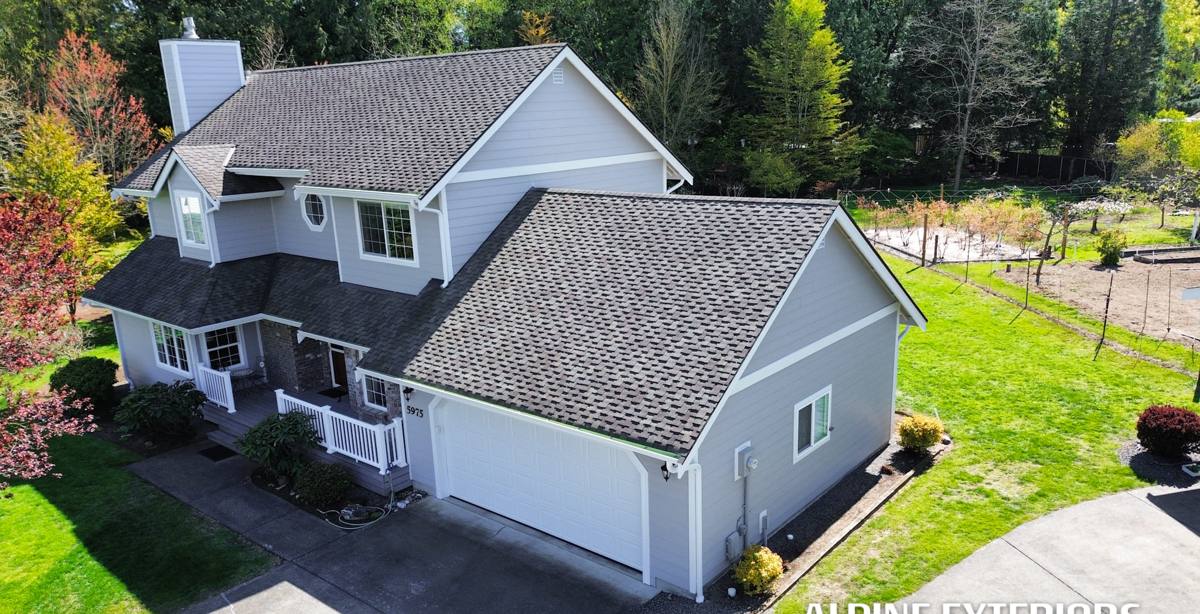
What Correct Fiber Cement Siding Installation Actually Involves
Fiber cement siding is only as good as the installation behind it. The material itself resists moisture, fire, and pests, but a sloppy install can undermine all of that. Getting it right in a wet, wind-driven climate like this one comes down to a handful of details that are easy to skip and expensive to fix later.
Flashing and Water Management
Every window, door, and horizontal trim transition needs proper flashing so water sheds outward instead of finding a path behind the siding. In a climate with this much sustained rain, a missed flashing detail doesn't show up as a problem for a year or two — by the time you see a stain or soft spot, water has usually been getting behind the wall for a while.
Gaps, Clearances, and Fastening
James Hardie specifies exact clearances — siding-to-grade, siding-to-roofline, gaps at butt joints — and a fastening pattern that keeps the material sound as it expands and contracts with temperature and moisture swings. Nailing too tight, too loose, or in the wrong location is one of the most common reasons a fiber cement installation ages poorly, regardless of how good the underlying material is.
Weather-Resistive Barrier
Behind the siding, a correctly lapped weather-resistive barrier and rainscreen gap give any moisture that does get past the cladding a way to drain and dry instead of sitting against the sheathing. This is invisible once the job is done, which is exactly why it's the detail worth asking your contractor about directly.
Why We Install Only James Hardie Fiber Cement
We don't install LP SmartSide, vinyl, Cemplank, Allura, primed spruce, or cedar. That's a deliberate standard, not a lack of options. Each of those products has legitimate strengths — cedar looks great, vinyl is inexpensive, engineered wood panels install quickly — but each also comes with a trade-off that doesn't sit well with this climate or with the kind of warranty we're willing to stand behind: wood-based products need more paint maintenance and are more sensitive to sustained moisture, vinyl can't be refinished and shows its age under UV and salt air, and not every fiber cement competitor backs their product with the same factory finish and transferable warranty structure James Hardie does.
James Hardie fiber cement is non-combustible, engineered specifically for climates like the Pacific Northwest through its HZ5 product line, and finished at the factory with ColorPlus technology rather than field-painted — which means a more consistent, longer-lasting finish with less on-site variability. Installed correctly, it's a product we can put our name behind for the long haul, which is the entire reason we standardized on it instead of offering a menu of options.
James Hardie Products We Use on Nooksack Homes
Most homes in this area do well with a standard lap siding profile, though the right choice depends on the home's style and existing trim details.
HardiePlank Lap Siding
The most common choice for this region — available in several exposure widths and textures, from smooth to a more traditional cedar-grain look. It handles the transition zone between coastal and valley exposure well and gives homeowners the classic Pacific Northwest lap-siding look without the maintenance burden of wood.
HardiePanel and Trim
Used for accent areas, gable ends, or a more modern flat-panel look, paired with HardieTrim for corners, window and door casing, and fascia. Matching trim material to the field siding keeps expansion and moisture behavior consistent across the whole wall assembly instead of mixing materials that move differently.
HZ5 Engineering and ColorPlus Finish
HZ5 is Hardie's formulation for wetter, more humid climate zones — it's built to resist moisture intrusion and freeze-thaw cycling better than a generic formulation. ColorPlus finishes are baked on in a controlled factory environment and come with their own finish warranty, which matters in an area where field-applied paint tends to fail faster than it would in a drier climate.
| Siding Choice | Refinishing Needs | Moisture Behavior in This Climate |
|---|---|---|
| James Hardie (ColorPlus) | Factory finish, touch-up only | Engineered for wet/humid zones (HZ5) |
| Cedar / primed wood | Repaint every few years | Prone to swelling, rot if moisture gets in |
| Vinyl | Cannot be repainted | Sheds water but fades and can warp under UV/heat |
| Other fiber cement brands | Varies by brand/finish | Similar base material; warranty and finish quality vary |
Our Installation Process, Start to Finish
- On-site assessment — we look at existing siding, trim, moisture damage, and how the home is exposed to prevailing wind and rain before recommending anything.
- Tear-off and sheathing check — old siding comes off and we inspect the sheathing underneath for rot or damage that needs to be addressed before new material goes up. Covering up a problem is worse than finding it.
- Weather-resistive barrier and rainscreen — installed per manufacturer spec, lapped correctly, with drainage space behind the siding.
- Flashing at every penetration — windows, doors, hose bibs, light fixtures, and horizontal trim transitions.
- Siding installation — HardiePlank, panel, and trim installed to Hardie's fastening and clearance specifications, not shortcuts based on what's faster.
- Caulking and finish work — sealant only where Hardie's install guide calls for it, using compatible products so the finish doesn't fail early.
- Final walkthrough — we go over the completed job with the homeowner before calling it done.
What Affects the Cost of a Fiber Cement Siding Job
Every home is different, but a few factors consistently move the price on a Nooksack-area project:
| Factor | Why It Matters |
|---|---|
| Tear-off vs. new construction | Removing and disposing of old siding, and repairing sheathing underneath, adds labor |
| Home size and wall complexity | More corners, dormers, and trim details mean more cuts and labor time |
| Siding profile and finish | Exposure width, texture, and ColorPlus color selection affect material cost |
| Trim and accessory scope | Full trim replacement costs more than reusing sound existing trim |
| Access and site conditions | Steep lots, limited access, or multi-story walls affect equipment and labor needs |
We give a written estimate after seeing the home in person — broad ballpark numbers over the phone rarely hold up once we're actually looking at the walls.
Living With Fiber Cement Siding in Whatcom County's Climate
One of the real advantages of James Hardie siding in this area is how little day-to-day maintenance it asks for compared to wood. It doesn't need repainting on a regular cycle, and it doesn't absorb moisture the way wood substrates do. That said, no siding is maintenance-free in a climate with this much sustained moisture and shade-driven moss growth.
A periodic rinse-down — especially on north-facing walls or areas shaded by trees — keeps moss and mildew from getting a foothold, and it's worth checking caulking at trim joints every couple of years since sealant is usually the first thing to age, long before the siding itself shows wear. Keeping gutters clear and vegetation trimmed back from walls also goes a long way toward keeping moisture off the siding surface in the first place.
Why Hire a Crew That Already Works in This Area
Installation quality is what determines whether fiber cement siding performs for decades or develops problems in five years, and the details that matter most — flashing, clearances, fastening, drainage — are exactly the ones a homeowner can't easily verify after the fact. A crew that already works siding jobs in and around Blaine and the Nooksack area knows what this climate actually does to a wall assembly over time, not just what a spec sheet says in theory. That's the difference between an installer who follows the manufacturer's guide because it's required and one who understands why each step exists.
Before hiring anyone for a siding project in this area, it's worth asking a few direct questions:
- Are they a certified installer for the specific fiber cement product they're proposing?
- Will they put the flashing, clearance, and fastening details in writing as part of the scope of work?
- Do they inspect and address sheathing condition during tear-off, or just cover it up?
- What does the warranty actually cover — material only, or workmanship too — and who backs it?
- Can they explain why they recommend a specific siding product for your home instead of just offering whatever they usually sell?
If your siding is showing its age or you're planning ahead for a replacement, we're happy to take a look and walk you through what correct James Hardie installation would involve for your home — no pressure, no obligation. Use the form below to request a free estimate.