 Blaine Exterior
 Window Installation in Ferndale: Built for Salt Air, Driving Rain, and a Long Moss Season
Ferndale sits close enough to the Salish Sea and the open lowlands around it that homes here take on a specific mix of exterior stress: salt-tinged marine air, rain that comes in sideways more often than straight down, and a moss and mildew season that can run most of the year on shaded or north-facing walls. Windows take the brunt of that. A window opening is where the building envelope has the most seams, the most moving hardware, and the most places for water to find a way in, so a window installation that isn't detailed correctly for this climate tends to show it faster than almost any other part of the exterior.
Our crew is based out of Blaine and works this stretch of Whatcom County regularly, Ferndale included. That's not a marketing line — it means we're already familiar with how the local moisture and wind patterns behave on real houses before we ever measure a rough opening, and we're close enough to come back quickly if a punch-list item or a warranty question comes up after the job is done.
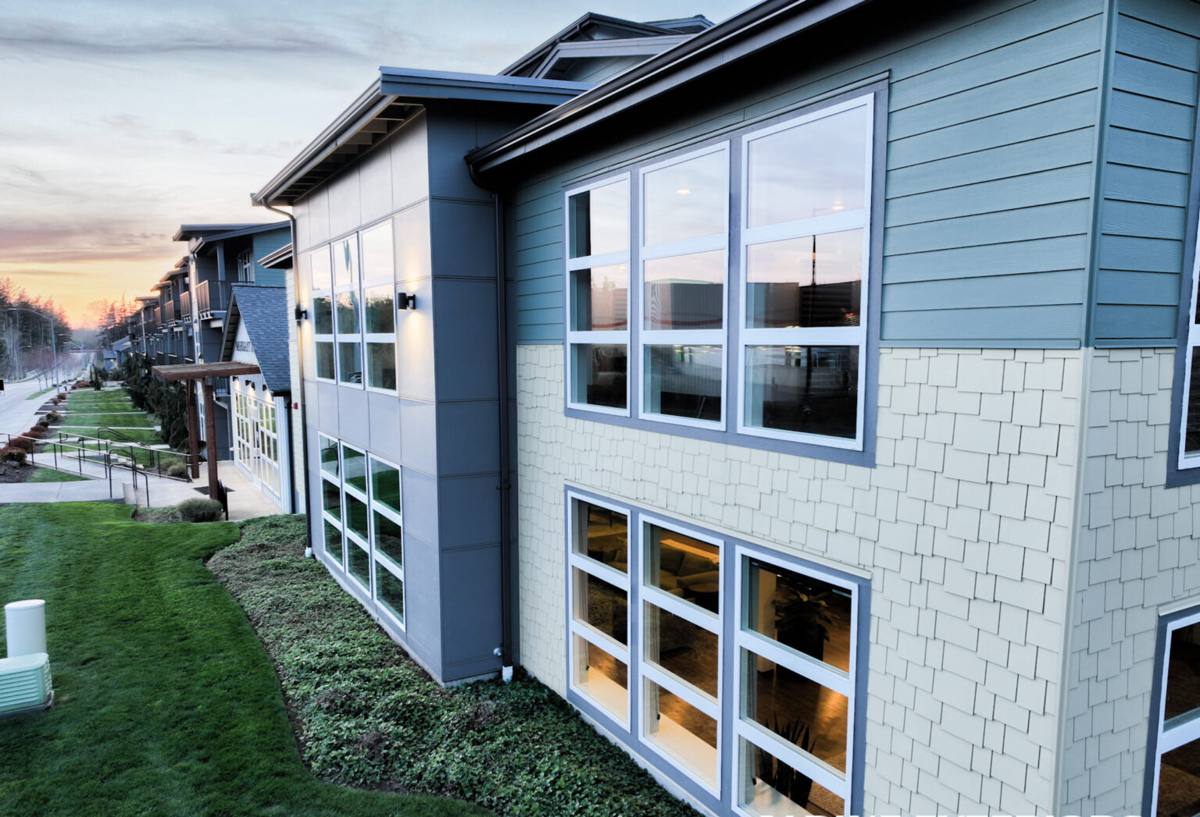
What Ferndale's Climate Does to a Window Installation
Salt Air and Marine Exposure
Even homes set back from the water get a steady dose of salt-laden air moving through this part of the county. Salt accelerates corrosion in window hardware, fasteners, and flashing, and it can degrade lower-grade finishes faster than you'd see in a drier, more inland climate. A window that would hold up fine somewhere landlocked can start showing pitted hardware or a stiff, sticky sash years earlier out here if the hardware and finish weren't specified with that exposure in mind.
Wind-Driven Rain
Rain around Ferndale rarely falls straight down. Storms moving in off the water push it sideways into wall assemblies and window openings, which is a very different load than a simple annual rainfall figure suggests. That matters enormously for windows specifically, because wind-driven rain finds its way into gaps and seams that would stay dry in a calmer setting. The window unit itself is only part of the equation — the flashing and drainage detail around it is what actually keeps that water out.
A Long Moss and Mildew Season
Mild temperatures and near-constant moisture through fall, winter, and spring create a long growth season for moss and mildew across Whatcom County, and window sills, trim, and the framing around older windows are common places it takes hold first. Anything porous, or any spot where water sits instead of draining away, becomes a growth surface given enough time — usually showing up on shaded elevations and windows tucked under eaves before it's visible from the street.
Signs a Ferndale Home Needs Window Installation
- Fogging or visible moisture trapped between the panes of a double-pane window
- Drafts or cold spots near the frame even when the window is fully latched
- Wood trim or sills that feel soft, look discolored, or show visible rot
- Difficulty opening, closing, or locking a window that used to operate smoothly
- Visible daylight or gaps where the frame meets the siding or trim
- Moss or dark staining on sills and trim that returns quickly after cleaning
What a Correct Window Installation Actually Involves
Product quality matters, but in this climate the installation detail is what decides whether a window stays dry for decades or starts leaking within a couple of wet seasons. A correct job means the rough opening is prepped and, ideally, protected with a sill pan to direct any intruded water back out rather than into the wall. It means the flashing laps correctly with the surrounding weather-resistive barrier and siding, water is shed out and away from the opening rather than trapped behind it, the unit is shimmed and leveled so it operates properly for years rather than just on install day, and every seam is sealed with materials rated for sustained moisture exposure — not caulk used as a substitute for proper flashing, which is one of the more common shortcuts we see behind failed windows on older homes.
New Construction vs. Replacement Windows
New construction windows have a nailing flange and get installed into a framed opening before siding goes on, which allows the flashing to integrate directly with the weather-resistive barrier from the start. Replacement, or "insert," windows fit into an existing frame and are common on remodels where the surrounding siding and trim are staying in place. Both approaches can perform well in Ferndale's climate, but insert installations put more weight on getting the existing frame's condition and drainage right first, since there's less opportunity to rebuild the flashing detail from scratch. We assess which situation applies to each opening rather than assuming one method fits every job.
Choosing Window Frames and Glazing for This Climate
We install vinyl and fiberglass window systems suited to the Pacific Northwest's wet, mild climate and walk homeowners through the real trade-offs rather than pushing one brand as the only right answer. What matters most for a Ferndale property is a tight, well-engineered frame, a glazing package that performs for both energy efficiency and condensation resistance, and hardware rated to hold up under sustained marine air exposure.
| Feature | Vinyl Frames | Fiberglass Frames |
|---|---|---|
| Upfront cost | Generally lower | Generally higher |
| Rot resistance | Good — doesn't absorb moisture | Good — doesn't absorb moisture |
| Dimensional stability across temperature swings | Adequate for this mild climate | More stable, less expansion/contraction |
| Color and paint options | Limited to factory colors | Can typically be painted if color flexibility matters |
| Best fit | Budget-conscious replacement projects | Larger openings or homeowners wanting paintable trim-matched frames |
On glazing, double or triple-pane options with low-E coatings help on two fronts at once: they cut down on heat loss during cold, damp stretches and reduce the interior condensation that shows up on cold glass during Whatcom County winters. Corrosion-resistant hardware is worth specifying on any window here, since standard-grade hardware tends to show wear from marine air years before it would in a drier inland climate.
Our Window Installation Process
- On-site assessment: We check existing frame condition, seal integrity, hardware function, and how current flashing ties into the surrounding siding for every opening involved.
- Written scope and measurements: Openings are measured precisely, and we give a straightforward read on new construction versus insert installation for each window before ordering anything.
- Removal and prep: Old units come out carefully, the rough opening is inspected for hidden rot or moisture damage, and any needed substrate repair happens before a new window goes in — not after.
- Installation with flashing and sealing: Sill pan, flashing lap sequence, shimming, and sealing are handled as standard practice, not an upgrade homeowners have to ask for separately.
- Interior and exterior finish: Trim is reinstalled or replaced and finished so the completed opening matches the surrounding wall.
- Final walkthrough: We check operation on every window and go over care and warranty details before calling the job done.
Why a Blaine-Based Crew That Works Ferndale Regularly Matters
A crew that works this corner of Whatcom County day in and day out sees how salt air, wind-driven rain, and moss actually behave on real houses over a full year, not just how a window performs on a spec sheet. That shows up in the small decisions on install day — how much lap a flashing detail gets, whether a sill pan is worth the extra time on a given opening, which hardware grade gets specified for a home that's more exposed to wind. Because we're based in Blaine, a few minutes away rather than a crew driving in from out of the area, coming back for a warranty check or a punch-list item isn't a scheduling headache — it's a short trip we're already making regularly.
Windows also don't fail in isolation. A window installed without attention to the surrounding siding and drainage plane can look fine for a season or two and still leak, because water that gets past a poorly integrated window travels into the wall assembly rather than staying visible. We handle siding, roofing, windows, and decks, which means the person doing the window flashing understands how it needs to tie into the siding and roof-to-wall details around it, rather than treating the window as a standalone product install.
A Few Questions Worth Asking Before Hiring for Window Work
- Ask specifically how they handle flashing and sill pan detail, not just what window brand they sell
- Confirm current Washington contractor licensing and active liability insurance
- Get a written scope that separates the manufacturer's product warranty from the contractor's installation warranty
- Ask whether new construction or insert installation applies to your openings, and why
- Ask about lead times — custom-sized windows built for a specific opening in this region can take several weeks to arrive
Get a Free, No-Pressure Estimate
If you're dealing with drafty, foggy, or hard-to-operate windows on a Ferndale home, or you're planning a full window installation and want an honest read on what your openings actually need, we're glad to take a look. Reach out using the form below to schedule a free estimate from a crew that already works this part of Whatcom County — no pressure and no upsell script.