 Blaine Exterior
 Everson's Climate Is Harder on Siding Than It Looks
Everson sits inland along the Nooksack River, and it's easy to assume that distance from the water buys a house some protection from the weather that batters the Whatcom County coastline. It doesn't buy much. The same marine air pattern that defines this corner of Washington pushes up the river valley year-round, carrying salt-tinged moisture, driving rain, and the kind of persistent dampness that keeps siding wet for days at a stretch instead of hours. Add tree cover, low winter sun angles, and a moss season that can run from October through May, and you have a climate that's genuinely tough on exterior materials — even for homes that never see a whitecap.
This isn't a reason to panic about your siding. It's a reason to be honest about what a replacement needs to do here. Everson homes need siding that resists moisture absorption at the seams, holds paint or factory finish without chalking in a few years, and doesn't give moss and algae an easy foothold. A lot of siding failures we see in this area aren't dramatic — they're slow, quiet moisture problems that started small and got expensive because nobody caught them early.
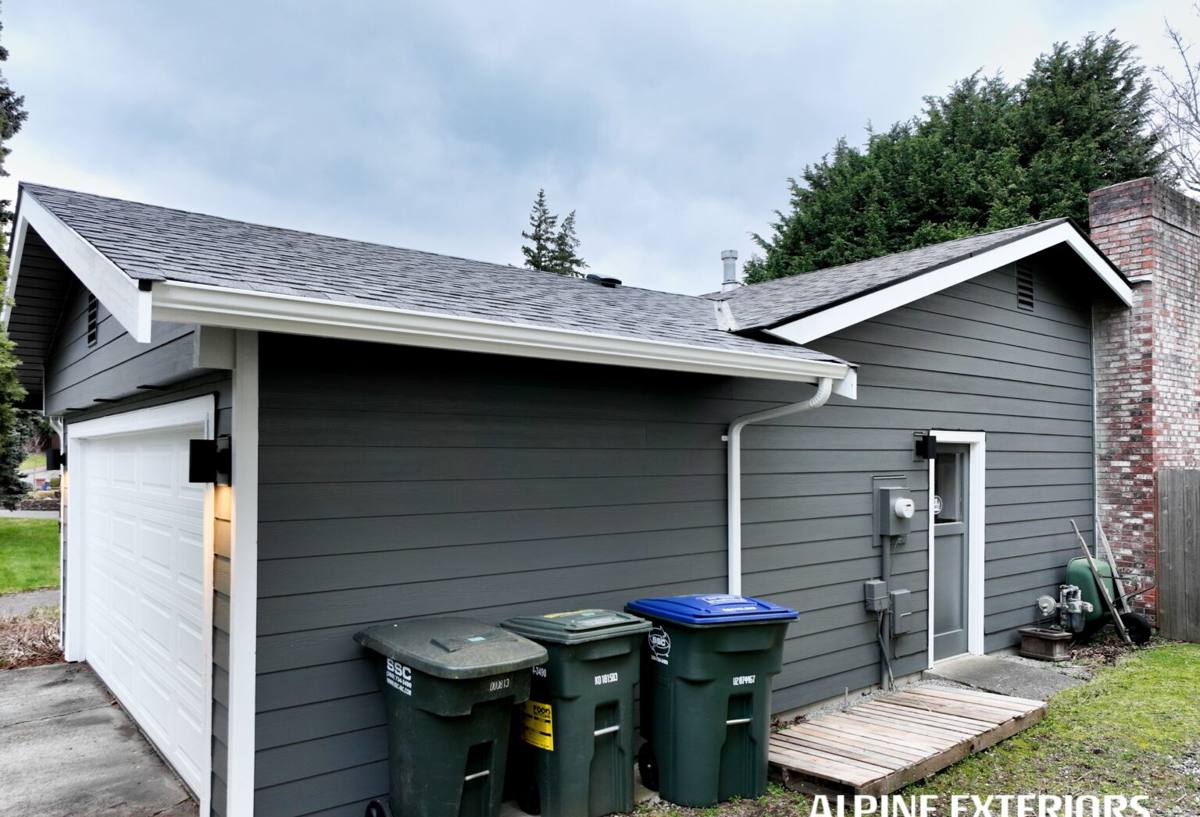
How to Tell Your Everson Home Is Due for Siding Replacement
Most siding doesn't fail all at once. It gives you warning signs first, and in a wet climate like this one, those signs show up faster than they would in a dry region. Here's what we look for, and what you can check yourself before calling anyone:
- Soft or spongy spots when you press on the siding, especially near the bottom courses and around window trim
- Paint that's bubbling, peeling, or chalking off on your hand when you wipe it
- Persistent moss, algae, or black staining that comes back within a season of cleaning
- Visible warping, cupping, or separation at panel seams
- Gaps opening up around trim, corner boards, or where siding meets the foundation
- A musty smell near exterior walls, particularly in a crawlspace or nearby closet
- Noticeably higher heating bills without another explanation, which can point to moisture-compromised insulation behind the siding
Any one of these on its own might just need a repair. Several at once, or any sign of soft sheathing underneath, usually means the siding system as a whole has stopped doing its job and it's time to talk about replacement rather than patching.
What a Correct Siding Replacement Actually Involves
Tear-Off and What's Underneath
A replacement job is only as good as what happens after the old siding comes off. Full tear-off lets us see the sheathing, framing, and any hidden rot before it's covered back up — which matters a lot in a climate where moisture problems tend to start behind the siding, not on the surface. Any soft or damaged sheathing gets cut out and replaced before anything new goes up. Skipping this step to save time is one of the most common ways a siding job looks fine for a year or two and then fails from the inside.
Weather Barrier and Flashing
In a place that gets as much driving rain as Whatcom County, the weather-resistive barrier and flashing details matter more than the siding material itself. Proper house wrap, correctly lapped and taped, plus flashing at every window, door, and roofline intersection, is what actually keeps water out of the wall assembly. We treat this layer as non-negotiable — it's the part of the job nobody sees once it's finished, but it's the part that determines whether the siding lasts.
Installation to Manufacturer Spec
Fiber cement siding is only as good as its installation. Correct fastening patterns, proper clearances at grade and roof lines, and factory-specified gaps at butt joints all affect how the material handles our wet-dry cycling and occasional winter freeze. Installed loosely or off-spec, even a top-tier product can trap moisture or crack prematurely. This is also where a crew's experience shows — installers who've done dozens of jobs in this exact climate catch details that get missed by crews used to drier regions.
Why We Install Only James Hardie Fiber Cement
We don't offer vinyl, cedar, primed spruce, or engineered wood siding like LP SmartSide. That's a deliberate standard, not a lack of options. James Hardie fiber cement is non-combustible, holds its factory-applied ColorPlus finish far longer than field-painted materials, and is engineered specifically for climate zones like ours through its HZ5 product line — built to handle sustained moisture exposure without the swelling, rot, or paint failure that wood-based products are prone to here. It also carries a strong, transferable warranty backed by a company with decades of manufacturing history, which matters when you're making a decision meant to last 30-plus years, not just through the next resale.
We're not going to tell you every other siding product is bad — plenty of them have legitimate uses in the right climate. But for the rain, humidity, and moss pressure that Everson and the rest of Whatcom County deal with every year, we've seen enough jobs over enough winters to know which material holds up without asking homeowners to babysit it. That's why it's the only thing we put on houses.
Comparing Siding Options for a Home Like Yours
| Material | How It Handles This Climate | Maintenance Burden | Typical Warranty |
|---|---|---|---|
| James Hardie fiber cement | Non-combustible, dimensionally stable in wet-dry cycling, resists moss/algae staining on the finish | Low — occasional wash, no repainting for years | Long, transferable to future owners |
| Vinyl | Sheds water but can warp or crack in temperature swings; seams are a moisture entry point | Low, but limited repair options if damaged | Varies widely by manufacturer |
| Cedar / wood | Absorbs moisture readily in a climate this wet; prone to rot and moss growth without diligent upkeep | High — regular sealing, staining, or painting | Typically none beyond material defects |
| LP SmartSide (engineered wood) | Better than solid wood but still wood-based; edge and cut-end sealing is critical in high-moisture areas | Moderate — inspection and touch-up needed at seams | Manufacturer-specific, installation-sensitive |
This isn't meant to declare every alternative unusable — it's meant to explain, plainly, why we made the call we did for homes in this specific climate.
Our Process, Start to Finish
Estimate and Assessment
We start with an on-site look at your current siding, trim, and any visible trouble spots — not a drive-by guess. That's where we identify likely sheathing damage, flag areas that need extra flashing attention, and give you a realistic scope before any work begins.
Install Week
Tear-off, sheathing repair where needed, weather barrier, flashing, and Hardie installation happen in sequence, with each stage checked before the next covers it up. We work around Whatcom County's rain patterns rather than rushing installation into a wet system.
Final Walkthrough and Cleanup
Before we consider the job done, we walk the exterior with you, check caulking and trim details, and make sure the site is cleared of debris and old material. You should be able to point at anything and get a straight answer about why it was done that way.
What Affects the Cost of a Siding Replacement Job
Every house is different, so we don't quote ranges we can't back up on your specific home. But the factors that move the number are consistent:
- Total square footage and number of stories
- How much hidden sheathing or framing repair is needed once old siding comes off
- Trim complexity — dormers, multiple gables, and detailed corner work take more time
- Accessibility of the house and yard for staging and disposal
- Whether existing siding requires special handling or disposal
The only way to get an accurate number is an in-person assessment, which is exactly what we offer before any commitment.
Why Hiring a Crew That Already Works in Everson Matters
Whatcom County's permitting and building requirements, the specific moisture challenges of the Nooksack valley, and the practical realities of scheduling around this region's rain patterns aren't things a crew learns overnight. A contractor who already works in Everson and the surrounding area has seen how houses here actually fail, not just how a textbook says siding should perform. That local track record also means accountability — we're not driving in from another region for one job and disappearing. We're going to be working nearby next month and next year, and our reputation here depends on this job holding up.
If your siding is showing any of the signs above, or you're just planning ahead for a replacement, we're happy to take a look and give you a straight assessment — no pressure, no obligation. Use the form below to request a free estimate.