 Blaine Exterior
 Deck Repair in Peace Arch: What Blaine's Coastal Climate Does to a Deck
Peace Arch sits close to the water at the northwest corner of Whatcom County, right against the US-Canada border. That location is part of what makes the area a great place to live — and part of what wears out a deck faster than it would twenty miles inland. Salt-laden air off the water works into fastener heads and metal connectors over time. Driving rain off Pacific storms pushes water sideways into gaps and seams that a drier climate would rarely test. And the long stretch of gray, damp months in Whatcom County — often five or six months where a deck barely sees direct sun — gives moss and algae plenty of time to take hold on any surface that stays wet.
None of that means a Peace Arch deck is doomed to fail early. It means the standard for what counts as a correct repair here is a little different than it would be in a drier part of the state. Fastener choice, flashing details, and even board spacing all need to account for moisture that doesn't fully leave the wood between rain events, especially from fall through spring.
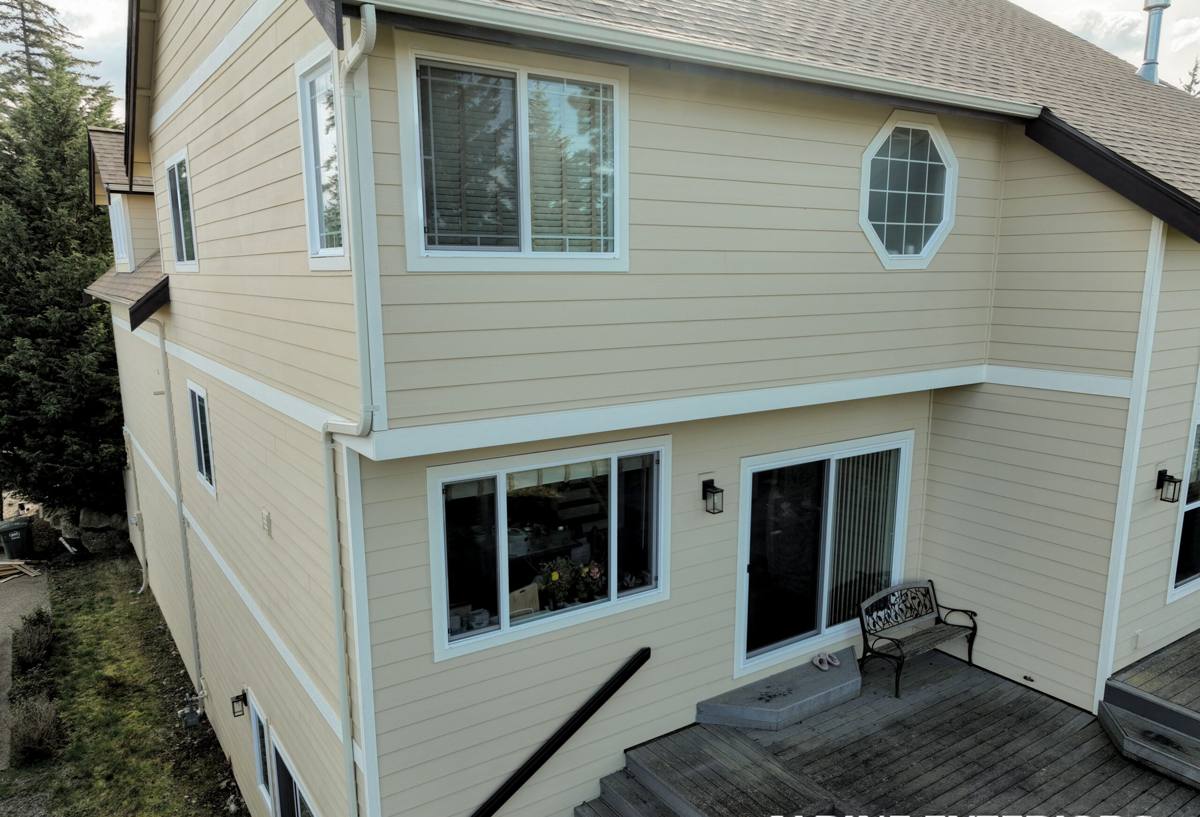
Signs a Peace Arch Deck Needs Repair, Not Just a Cleaning
A lot of homeowners in this area assume a gray, mossy deck just needs a pressure wash. Sometimes that's true. Other times the moss and staining are hiding real damage underneath that a rinse won't touch. It's worth having someone look closer if you notice any of the following:
- Soft or spongy spots underfoot, especially near the house or along the outer rim joist
- Fastener heads that have backed out, rusted, or left dark streaks bleeding down the boards
- A gap opening up where the ledger board meets the house, or visible daylight at that seam
- Moss or algae that returns within a few weeks of cleaning, particularly on shaded or north-facing sections
- Railings, posts, or stair stringers that feel loose or flex more than they used to
- Water staining on a ceiling or wall directly beneath an attached deck — almost always a sign flashing has failed
Any one of these on its own might be minor. Several together, or anything involving the ledger connection to the house, is worth a real structural look before it turns into a bigger, more expensive job.
What a Correct Deck Repair Actually Involves
Structural first, cosmetic second
A repair that only replaces a few visibly bad boards without checking what's underneath isn't a repair — it's a temporary patch. Before any decking goes back down, the framing needs to be checked: joists, beams, posts, and especially the ledger board where the deck attaches to the house. That connection carries a large share of the structural load and is also the point most exposed to water runoff from the house itself. If it's compromised, new decking on top of it is cosmetic, not structural.
Matching the fix to the cause
Rot, rust stains, and soft spots each point to a different underlying problem — trapped moisture, a missing or failed flashing detail, undersized or wrong-grade fasteners, or simply age. A correct repair identifies which of those is actually happening rather than just swapping out the board that shows it. Replacing a board over a framing member that's still wicking moisture from a missing flashing detail just means the same failure shows up again in a year or two.
Fasteners, Flashing, and Framing: The Parts You Don't See
Most of what determines whether a Blaine-area deck lasts isn't visible once the job is finished. Coastal salt air accelerates corrosion on standard fasteners, so the type of screw, nail, or bracket used matters more here than it would inland. Hot-dip galvanized and stainless steel hardware cost more up front but hold up far better against salt exposure and constant damp-dry cycling than lighter coated fasteners.
Flashing is just as important and far less glamorous. A strip of properly installed flashing at the ledger board keeps water from tracking behind the siding and rotting the rim joist or house framing from the inside — damage you often can't see until it's advanced. Given how much rain Whatcom County sees over a typical year, skipping or skimping on this detail is one of the most common reasons decks in this area fail early.
Decking Material Considerations for Salt Air and Moss
Wood decking
Cedar and pressure-treated lumber both remain common choices and both can perform well here, but they need consistent maintenance — cleaning, sealing, and periodic inspection — to keep moisture from working into the grain. In a moss-prone, shaded yard, wood decking will need more frequent attention than the same wood would in full sun.
Composite decking
Composite boards resist rot and don't need staining, which appeals to a lot of homeowners tired of yearly maintenance. The trade-off is that composite can still grow surface algae or moss in persistently shaded, damp spots, and it relies more heavily on the framing and fastening system underneath being done correctly, since the board itself won't show early warning signs of a structural problem the way wood sometimes does.
Our honest take
Neither material is a fix-all for this climate. The bigger factor in how long a deck lasts is almost always the quality of the framing, flashing, and fastener work underneath — not which decking surface sits on top.
| Factor | What drives the cost |
|---|---|
| Scope of damage | A few boards vs. structural framing, ledger, or posts |
| Deck size and height | Larger decks and elevated decks require more material and access work |
| Decking material | Wood repairs are typically less expensive per board than composite |
| Fastener and flashing upgrades | Coastal-grade hardware costs more than standard, but reduces repeat repairs |
| Access and site conditions | Tight yards, slopes, or landscaping near the deck can add labor time |
Every deck repair estimate should reflect these specific factors rather than a flat per-square-foot number — a small ledger repair can cost far less than replacing decking on a large elevated deck, and vice versa depending on what's actually damaged.
Our Deck Repair Process
- On-site inspection. We check the decking surface, framing, ledger connection, posts, and any visible flashing before recommending anything.
- Written scope and estimate. You get a clear breakdown of what's damaged, what we recommend fixing, and why — not just a total price.
- Repair work. Structural issues are addressed first, using corrosion-resistant fasteners and proper flashing details suited to this climate, followed by decking, railing, or stair repairs as needed.
- Final check. We walk the deck with you before calling the job done, so you know exactly what was repaired and what maintenance, if any, will help it last.
Maintaining a Peace Arch Deck After Repair
A repaired deck still needs some seasonal attention in this climate, especially through the wetter months. A few habits go a long way:
- Clear leaves and debris from between boards before fall rains set in, so water can drain instead of pooling
- Rinse or gently scrub moss and algae off shaded areas before it has a chance to spread
- Check that gutters and downspouts near the deck are directing water away, not onto it
- Look at the ledger board area once a year for any new gaps, staining, or soft wood
- Reseal or restain wood decking on the schedule appropriate to the product — don't wait until it's visibly gray and dry
Why a Local Peace Arch Crew Matters
A crew that regularly works decks in Blaine and the surrounding Whatcom County waterfront knows what's normal wear here versus what's an early warning sign — the difference between typical moss staining and rot that's starting underneath it, or between routine fastener corrosion and hardware that's failing structurally. That familiarity comes from repeated exposure to this specific combination of salt air, rainfall, and shade patterns, not from a general checklist that applies anywhere in the state.
It also means straightforward answers about permitting, typical timelines for this area, and what actually holds up here versus what looks fine on a spec sheet but struggles in a wet coastal climate. A deck repair done right the first time, with the right hardware and flashing for this environment, costs less over its life than one that gets patched repeatedly because the underlying cause was never addressed.
If you're noticing soft spots, rust streaks, stubborn moss, or a deck that just doesn't feel as solid as it used to, we're happy to take a look. Estimates are free, there's no pressure, and you'll get a straight answer about what actually needs fixing — use the form below to get started.