 Blaine Exterior
 Roof Repair Built for Cherry Point's Coastal Conditions
Cherry Point sits right up against the water in Whatcom County, and that location shapes everything about how a roof ages out here. Homes in this area take a different kind of beating than roofs just a few miles inland in Blaine or Bellingham — more direct exposure to salt-laden marine air, more wind-driven rain coming off the Strait of Georgia, and a moss season that runs longer than most homeowners expect. A roof repair that doesn't account for those conditions tends to fail again within a year or two. We've built our repair process around what actually happens to roofing materials in this specific stretch of Whatcom County, not a generic checklist.
This page is about roof repair specifically — patching, fixing, and restoring an existing roof rather than tearing it off and starting over. If your roof is leaking, losing shingles, or showing soft spots, this is what a correct repair looks like out here, and what to expect when you call us.
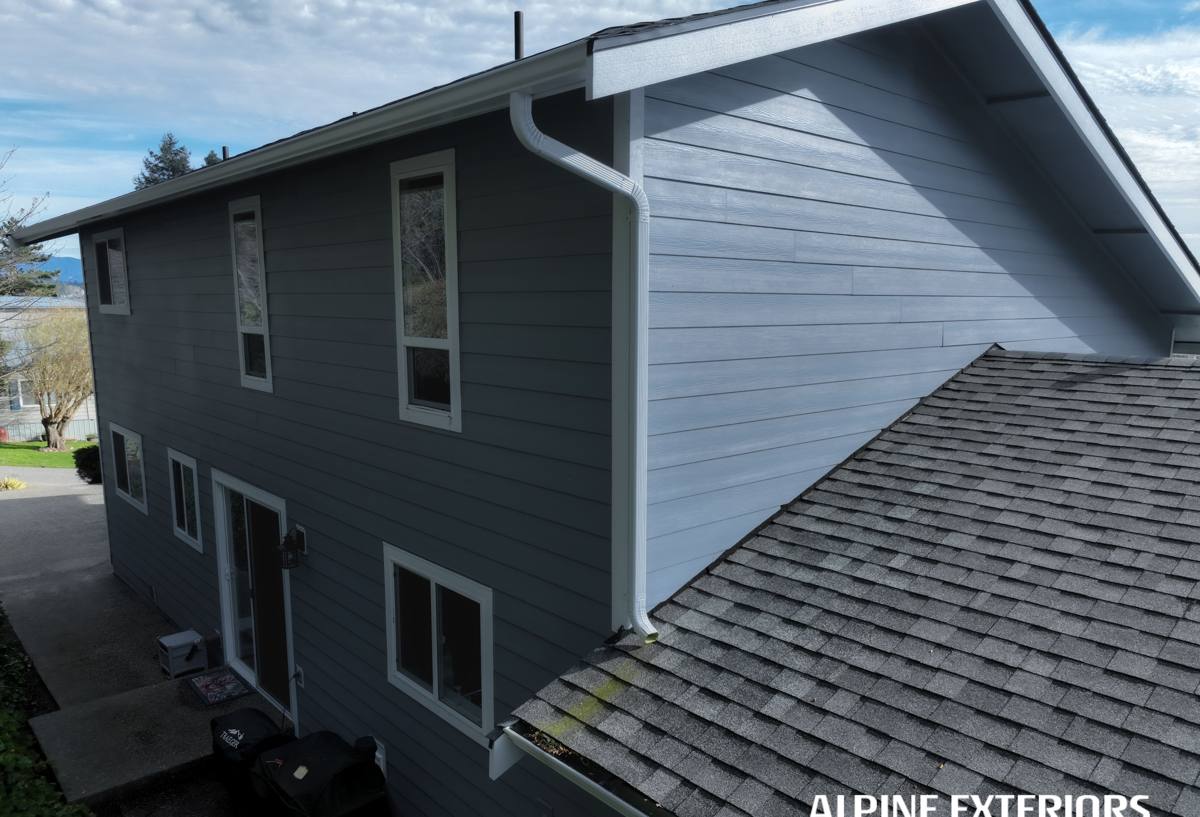
What Cherry Point's Climate Does to a Roof
Three things drive most of the repair calls we get in this part of the county:
Salt Air and Metal Fatigue
Homes near the water deal with airborne salt that settles on every exposed surface, including the roof. Over years, that salt content accelerates corrosion on exposed fasteners, flashing, and any unpainted metal components. A nail that would last decades inland can start rusting and backing out much sooner this close to the shoreline. That's usually the first thing we check when a homeowner reports a mystery leak — corroded or loosened fasteners at flashing points are a common culprit in this area.
Driving Rain and Wind-Driven Water
Rain here doesn't always fall straight down. Wind off the water pushes it sideways, which means water finds its way under shingle edges, around chimney flashing, and into valleys that would stay dry in a calmer storm. A repair that only addresses the visible leak spot and ignores how water actually moves during a coastal storm tends to leak again at the next windy front.
Extended Moss Season
Cool, damp conditions for much of the year give moss and algae a long growing window on north-facing slopes and shaded sections of roof. Moss holds moisture against the shingle surface, lifts shingle edges as it grows, and speeds up granule loss. Left alone, a moss mat can trap enough water to rot the decking underneath — turning what could have been a simple repair into a much bigger job.
Signs Your Cherry Point Roof Needs Repair
Some damage is obvious. A lot of it isn't, especially from the ground. Here's what we tell homeowners to watch for between inspections:
- Water stains or discoloration on interior ceilings, especially after a windy rainstorm
- Shingles that are curling, cracked, or missing entirely
- Granules collecting in gutters or at downspout outlets
- Visible moss or dark streaking on north-facing or shaded roof sections
- Rusted, lifted, or missing flashing around chimneys, vents, and skylights
- Soft or spongy spots underfoot when walking the roof (a sign of decking damage)
- Daylight visible through the roof deck from inside an attic
- Sagging in the roofline or along a valley
Any one of these on its own might be a quick fix. Several together usually mean water has been getting in longer than the homeowner realized.
What a Correct Roof Repair Actually Involves
Finding the Real Source, Not Just the Symptom
Water travels. A stain on a ceiling in one room often traces back to a failure point several feet away — a cracked pipe boot, a gap in step flashing, or a nail hole that's been wicking moisture along the underlayment. Repairing drywall or patching the spot directly above a stain without tracing the actual entry point is one of the most common ways a "fixed" leak comes right back.
Matching Materials, Not Just Covering the Gap
A patch that doesn't match the surrounding shingle profile, color, or age creates a new weak point where the old and new materials meet. Where we can source a reasonable match, we do. Where an exact match isn't available — common on older roofs — we explain the trade-off honestly rather than pretending it won't be visible.
Flashing First
Given how much of our repair work traces back to flashing failures at chimneys, valleys, and vent penetrations, we treat flashing as its own line item rather than an afterthought bundled into shingle work. Corroded or improperly lapped flashing gets replaced, not caulked over. Caulk is a temporary answer at best in a climate this wet.
Checking the Deck Underneath
Any repair area with signs of prolonged moisture gets the decking checked before new material goes down. Installing new shingles over rotted or soft decking just hides the problem until it fails again, usually at a worse point.
Repair Scope and What Drives the Cost
Roof repair costs vary widely because the scope varies widely — a single flashing fix and a multi-area repair after a wind event are very different jobs. Here's a general breakdown of what affects the scope and price of a repair:
| Repair Type | What's Typically Involved | General Cost Factor |
|---|---|---|
| Isolated flashing repair | Removing and replacing flashing at one chimney, vent, or valley | Lower — limited material, single access point |
| Localized shingle replacement | Removing damaged shingles, checking underlayment, installing matched replacements | Low to moderate — depends on shingle availability and roof pitch |
| Moss and algae remediation | Safe removal, treatment, and repair of any granule or shingle damage underneath | Moderate — scope depends on how long moss has been established |
| Decking repair | Removing shingles and underlayment, replacing rotted plywood or sheathing sections | Higher — labor-intensive, depends on how much decking is affected |
| Storm damage repair | Multiple repair areas, possible tarping, coordination with insurance | Variable — scope only clear after full inspection |
We give a firm number after inspecting the roof, not a phone estimate. Roofs that look similar from the driveway can have very different repair needs once we're actually up there.
Our Repair Process
- Inspection. We walk the roof, check the attic where accessible, and trace suspected leaks back to their actual source rather than the visible symptom.
- Written estimate. You get a clear scope and price before any work starts — what's being repaired, what materials we're using, and why.
- Repair. We do the work in a single visit whenever the scope allows, using materials suited to marine exposure — corrosion-resistant fasteners and flashing where salt exposure is a factor.
- Cleanup and walkthrough. We clear debris, check gutters near the repair area, and walk you through what was done.
For anything beyond a straightforward patch, we also check adjacent areas of the roof while we're up there. It doesn't cost you anything extra to flag a second problem area before it becomes its own emergency call.
Repair or Replace? How We Help You Decide
Not every roof problem needs a full replacement, and not every leak should just be patched. We look at a few honest factors before recommending either direction:
- Age of the roof relative to its expected lifespan for the material installed
- How widespread the damage is versus isolated to one section
- Decking condition — extensive rot usually shifts the math toward replacement
- How many prior repairs the roof has already had in the same area
If a repair is the honest answer, that's what we recommend and price. We don't upsell a full replacement on a roof that has years of service life left in it.
Why a Crew That Works Cherry Point Regularly Matters
Roofing crews that mostly work drier, inland areas don't always account for how much faster corrosion, moss growth, and wind-driven leaks progress on homes exposed to marine air. We work roofs across Whatcom County, including the shoreline communities near Blaine, and we price and specify repairs around what actually holds up out here — not a one-size-fits-all approach built for a different climate. That means using fasteners and flashing rated for coastal exposure by default, and not being surprised by moss damage patterns that a purely inland crew might misdiagnose.
Maintenance That Extends a Repair's Life
A good repair should last. A few habits help it last longer in this climate:
- Keep gutters clear so water isn't backing up under the roof edge
- Have moss treated before it spreads across a full slope, not after
- Trim back tree limbs that keep a roof section shaded and damp
- Schedule a roof check after any major windstorm, even without an obvious leak
We're glad to point out anything we notice during a repair visit, even if it's not part of the immediate job.
If you're dealing with a leak, missing shingles, or moss damage on a Cherry Point roof, we're happy to take a look and give you a straight answer — repair or otherwise. Use the form below to request a free, no-pressure estimate.