 Blaine Exterior
 Roof Repair for California Creek Homes
California Creek sits on the edge of Blaine, close enough to Semiahmoo Bay and Drayton Harbor that the air itself works against a roof year-round. Homes here deal with a mix of salt-laden marine air, wind-driven rain off the Strait of Georgia, and tree cover that keeps roofs shaded and damp longer than roofs just a few miles inland. That combination is exactly why roof repair in this part of Whatcom County isn't a one-size-fits-all job. A repair that holds up on a dry, open lot in eastern Washington can fail within a season out here if it wasn't done with this climate in mind.
We work on roofs throughout the California Creek area regularly, which means we're not guessing at what the local conditions do to shingles, flashing, and underlayment — we're looking at it on a weekly basis. This page covers what actually causes roof damage in this neighborhood, what a correct repair looks like, and how we approach the job so it lasts.
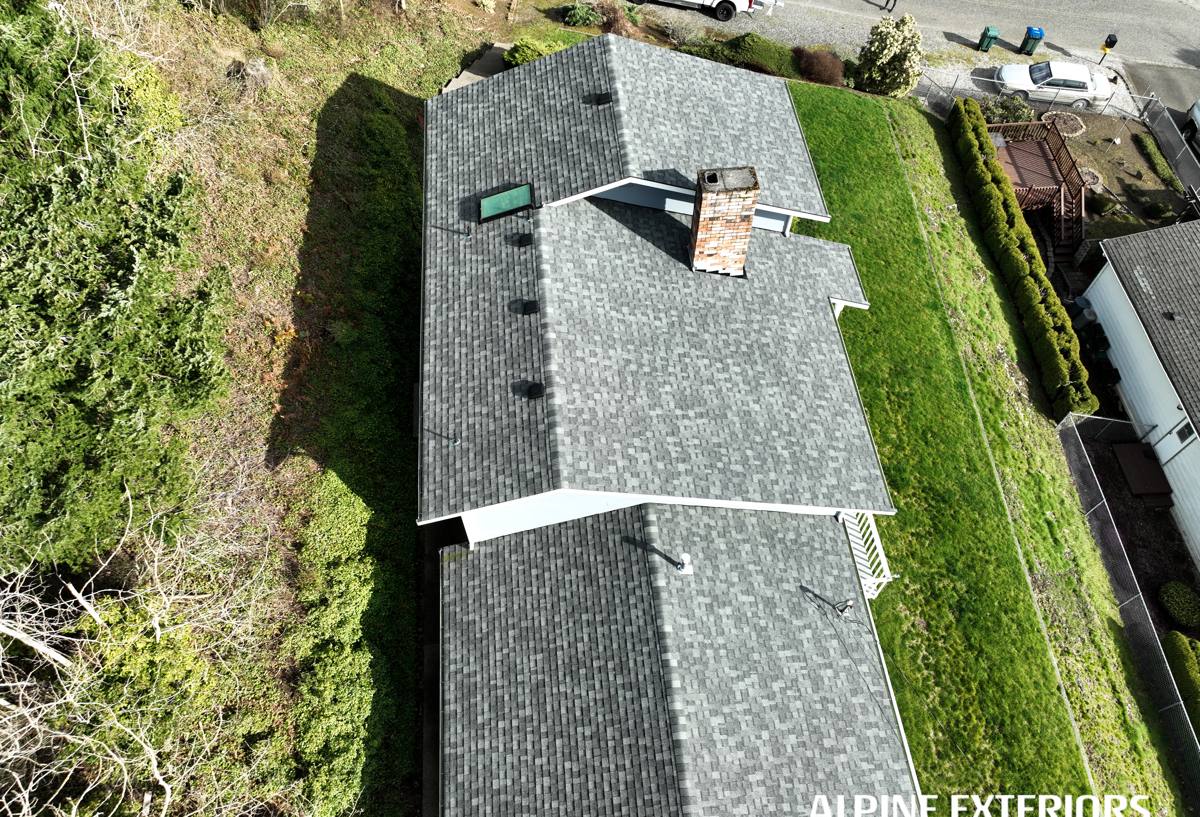
How the Local Climate Wears Down a Roof
Whatcom County's coastal weather is milder than most of the country, but "mild" doesn't mean easy on a roof. A few specific conditions do most of the damage around California Creek:
Salt Air
Proximity to the bay means airborne salt settles on roofing materials and metal components. Over time, salt exposure accelerates corrosion on exposed fasteners, flashing, and any unprotected metal edges. It also breaks down the granule coating on asphalt shingles faster than it would inland, which shortens the shingle's usable life and makes it more vulnerable to water intrusion at the surface.
Driving Rain
This isn't gentle, straight-down rainfall. Wind off the water pushes rain sideways and up under laps, edges, and flashing that would stay dry in a calmer climate. Roofs here need tighter seals and more attention to wind-driven water paths — not just water running downhill, but water being pushed sideways and even upward under shingle edges.
Moss and Shade
Tree cover common around the creek corridor keeps roof surfaces shaded and slow to dry after rain. Moss and algae take hold in those damp, shaded areas, especially on north-facing slopes and anywhere debris collects. Moss doesn't just look bad — its root structure lifts shingle edges, holds moisture against the roof deck, and opens the door for rot underneath.
Common Roof Problems We Find in California Creek Homes
Most repair calls in this neighborhood fall into a handful of recurring categories. Recognizing them early is the difference between a straightforward repair and a much bigger project.
| Problem | Typical Cause | What Happens If Ignored |
|---|---|---|
| Lifted or curling shingle edges | Moss growth, wind-driven rain working under laps | Water intrusion, deck rot, interior leaks |
| Corroded flashing or fasteners | Salt air exposure over years | Gaps open at valleys, chimneys, and vent boots |
| Soft or spongy roof deck | Long-term moisture trapped under moss or debris | Structural repair instead of surface repair |
| Granule loss on shingles | Salt exposure plus age-related wear | Reduced UV and water protection, faster aging |
| Clogged valleys and gutters | Needle and leaf debris from surrounding trees | Water backs up under shingles instead of draining |
What a Correct Roof Repair Actually Involves
A roof repair that's done right isn't just patching the spot where a leak showed up inside the house. Water rarely enters where it's found — it travels along the deck or underlayment before it drips somewhere visible. A correct repair traces the actual entry point, not just the symptom.
Diagnosis Before Repair
We start by getting on the roof and finding the real source: lifted shingles, failed flashing, a cracked vent boot, or a seam that's opened up. In a climate like Blaine's, it's common to find more than one contributing issue — for example, moss holding moisture against a section of roof that also has a flashing seam starting to corrode.
Addressing the Deck, Not Just the Surface
If water has been getting in for a while, the plywood or OSB deck underneath may be soft or delaminating. Covering that with new shingles without fixing the deck just hides the problem and guarantees a repeat failure. Any section of compromised decking gets cut out and replaced before new roofing goes back down.
Matching Materials and Fastening for This Climate
Given the salt air, we favor corrosion-resistant fasteners and flashing in repair work, and we make sure new material is properly sealed and lapped for wind-driven rain — not just laid to a standard dry-climate spec. A repair that would pass fine in a low-wind, low-moisture area isn't automatically adequate here.
Moss and Debris Removal Done Carefully
Moss needs to come off without damaging the granule surface underneath it — aggressive scraping or pressure washing can do more harm than the moss itself. We remove growth by hand where needed and treat the area to slow regrowth, rather than relying on methods that strip protective granules along with the moss.
Our Repair Process, Start to Finish
- Inspection: We walk the roof (not just look from the ground) and check attic or interior signs of moisture where accessible.
- Honest assessment: We tell you what's actually wrong, what's causing it, and whether it's a repair situation or something bigger — no upsell to a full replacement if a repair will genuinely hold.
- Written scope: You get a clear explanation of what will be done, in plain language, before any work starts.
- Repair work: Deck repair if needed, correct flashing and fastening for this climate, proper shingle or material matching, and full resealing of the repaired area.
- Cleanup and check: Debris is cleared from the roof and gutters in the repaired area, and we confirm the fix before we consider the job done.
Repair vs. Replacement: How We Help You Decide
Not every roof issue in California Creek means a full replacement, and not every repair is worth doing if the roof is near the end of its life. We look at a few honest factors with you rather than defaulting to the more expensive option.
| Factor | Leans Toward Repair | Leans Toward Replacement |
|---|---|---|
| Age of roofing | Under roughly 12-15 years, condition otherwise sound | Nearing or past manufacturer's expected lifespan |
| Extent of damage | Isolated to one section, slope, or penetration | Widespread granule loss or moss damage across multiple slopes |
| Deck condition | Solid, dry decking under the damaged area | Soft or rotted decking in multiple locations |
| Prior repair history | First real issue on an otherwise healthy roof | Repeated leaks or patches over several years |
| Cost over time | Repair cost is a small fraction of replacement cost | Repair cost approaches what a partial replacement would run |
We'll always give you our honest read on where your roof falls on that spectrum. If a repair will genuinely get you several more good years, that's what we recommend — replacement isn't the answer just because it's more profitable for us.
Materials and Methods We Use for This Area
For roof repairs in California Creek, we lean toward materials and details that hold up specifically to salt exposure and driving rain, rather than whatever is cheapest or fastest to install:
- Corrosion-resistant flashing and fasteners suited to coastal air exposure
- Ice-and-water or self-sealing underlayment at vulnerable areas like valleys, eaves, and penetrations
- Proper shingle lap and fastening patterns rated for higher wind exposure, not minimum-code shortcuts
- Vent boots and pipe flashings sized and sealed for long-term flexibility rather than the cheapest stock option
We're upfront when a particular repair approach carries trade-offs — for instance, a quick surface patch may cost less today but won't address moisture already trapped under it. We'd rather explain that clearly than let a homeowner assume a cheap fix and a proper fix are the same thing.
Why a Crew That Already Works California Creek Matters
Roofing in a marine, high-moss climate rewards familiarity. A crew that mostly works dry inland roofs can still do competent work, but they're less likely to catch the specific failure patterns that show up here — corrosion starting at a flashing seam before it's visible from the ground, or moss quietly lifting shingle edges on a shaded north slope. Working this area regularly means we know where to look first, and we're not learning Blaine's climate on your roof.
It also means faster, more accurate assessments. We're not starting from scratch figuring out how salt air and shade patterns affect a given roof design — we've seen the pattern before on similar homes nearby, which lets us give you a straight answer instead of an over-cautious worst-case estimate just to cover uncertainty.
A Roof Maintenance Checklist for California Creek Homeowners
Between repairs, a few habits go a long way toward keeping a Blaine-area roof out of trouble:
- Have moss and debris cleared before it builds up thick enough to hold moisture against the shingles
- Check and clear valleys and gutters at least once a year, more often under heavy tree cover
- After a strong windstorm off the water, do a visual check from the ground for lifted or missing shingles
- Watch for granule buildup in gutters — it's an early sign of shingle wear from salt and sun exposure
- Address small flashing or seal issues promptly rather than waiting for an interior leak to appear
- Keep an eye on any metal roof components for early corrosion, especially fasteners and flashing seams
None of this requires climbing on the roof yourself — a lot of it can be checked from the ground or through a yearly professional look.
Get a Straight Answer on Your Roof
If you're dealing with a leak, missing shingles, moss buildup, or just want an honest read on where your roof stands, we're glad to take a look. We'll tell you plainly whether it's a repair, what caused it, and what it'll take to fix it right for this climate. Fill out the form below for a free, no-pressure estimate.