 Blaine Exterior
 Roofing in California Creek Comes With Its Own Set of Problems
California Creek sits close enough to the water that salt air is a daily fact of life, not an occasional nuisance. Add in Whatcom County's long stretch of driving rain from fall through spring, and a moss season that can run eight months or more on shaded, tree-covered lots, and you have a roofing environment that punishes shortcuts. A roof system that would hold up fine in a drier inland climate can start failing early here if it wasn't built with this specific combination of exposure in mind.
We install new roofs on homes in this area regularly, and the patterns repeat: fastener corrosion on cheaper hardware, moss working its way under shingle tabs on north-facing slopes, and flashing that was installed correctly on paper but never accounted for how much wind-driven rain actually hits these roofs from the water side. A correct installation here isn't just "put shingles on a house" — it's a set of material and detail choices matched to the microclimate.
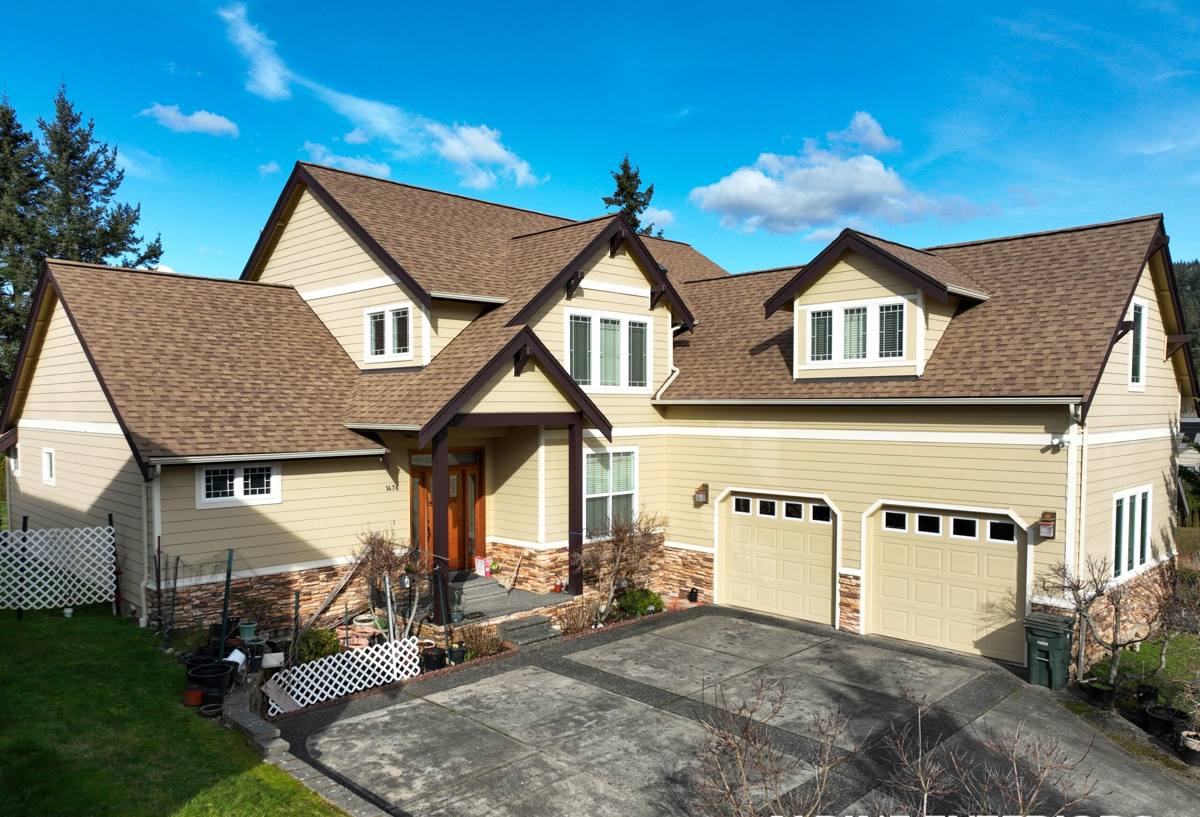
What Salt Air, Rain, and Moss Actually Do to a Roof
Salt Air
Airborne salt accelerates corrosion on any exposed metal — nail heads, flashing seams, drip edge, vent boots, and fastener systems on metal roofing. Standard galvanized fasteners can start showing rust streaks within a few years this close to the water. It's a slow problem, which is exactly why it gets ignored until it isn't: by the time you see staining on the shingles below a fastener, the metal underneath has already been compromised for a while.
Driving Rain
Rain here rarely falls straight down. Wind off the water pushes it sideways and under laps that were only designed to shed water moving vertically. That's why underlayment quality, valley detailing, and flashing overlap direction matter more here than in calmer inland areas — a roof that "looks" watertight can still leak during a sideways storm if those details were rushed.
Moss and Organic Growth
Shaded lots with mature trees hold moisture longer, and moss doesn't just sit on top of a roof looking bad — its root structure lifts shingle tabs, holds standing water against the roof deck, and opens a path for water to work under the shingle course. Left unaddressed for a few seasons, moss growth can shorten the effective life of an otherwise sound roof by years.
Signs a California Creek Roof Needs Replacement, Not Another Repair
- Granule loss heavy enough to see bare, shiny patches on multiple slopes, not just one weathered section
- Shingles that are cupping, curling at the edges, or cracking when lightly flexed
- Moss or algae streaking that comes back within months of cleaning, indicating the shingles are already losing their protective coating
- Rusted or failing fasteners, flashing, or vent boots visible from the ground or attic
- Daylight visible through the roof deck from inside the attic, or damp insulation after storms
- A roof already past 20-25 years old (asphalt) that's had more than one or two repair visits in recent years
One or two of these on their own might mean a repair is enough. Several at once, especially combined with age, usually means the underlying materials are worn out system-wide and patching one spot just shifts the problem to the next weak point.
What a Correct New Roof Installation Actually Involves
A new roof is more than the shingles you can see. The parts underneath do most of the work of keeping water out, and they're the parts that get skipped when a job is rushed or priced too low to do right.
Tear-Off and Deck Inspection
We remove the old roofing down to the deck rather than layering over it. That's the only way to actually see the plywood or plank sheathing underneath — soft spots, rot, or delamination from years of trapped moisture don't show up until the old layer is off. Any damaged decking gets replaced before anything new goes down.
Underlayment
Given how much wind-driven rain this area sees, we use a synthetic or self-adhering underlayment rated for high-wind, high-moisture exposure rather than the bare minimum felt paper. This is the backup layer that protects the deck if wind ever drives water past the shingles themselves.
Flashing and Transitions
Chimneys, skylights, dormers, and roof-to-wall transitions are where most leaks actually start — not in the open field of shingles. Flashing gets replaced, not reused, and installed with overlap oriented to shed water in the direction it actually travels here, including sideways during a storm.
Ventilation
Balanced intake and exhaust ventilation keeps the attic dry and temperature-regulated, which matters for two reasons in this climate: it reduces the condensation that feeds moss and mildew, and it protects the underside of the deck from the moisture that a sealed, poorly vented attic traps.
Fasteners and Hardware
Given the salt air, we use corrosion-resistant fasteners rather than standard galvanized where it matters — ridge caps, flashing, and any exposed metal components. It costs more up front and saves the homeowner from premature staining and loosening years down the road.
Choosing a Roofing Material for This Climate
There's no single "best" roofing material — the right choice depends on the home, the budget, and how much maintenance the homeowner wants to take on. Here's how the common options actually perform in a salt-air, high-moss environment like California Creek.
| Material | Salt Air Performance | Moss Resistance | Typical Lifespan Here |
|---|---|---|---|
| Architectural asphalt shingle | Good with proper fasteners and flashing | Moderate — benefits from algae-resistant granules | 20-25 years |
| Standing seam metal | Very good with coated, marine-rated fasteners | Excellent — sheds moss growth naturally | 40-50+ years |
| Cedar shake | Fair — needs regular maintenance near salt air | Poor without diligent upkeep; holds moisture | 15-25 years, maintenance-dependent |
| Synthetic composite shake/slate | Very good, minimal corrosion concerns | Good | 30-50 years |
We don't push one product on every home. Asphalt shingle remains the most common choice because it balances cost and performance well when installed correctly. Metal roofing costs more up front but largely sidesteps the moss and fastener-corrosion issues that drive repeat maintenance calls in this area. Cedar shake has real curb appeal, but on a shaded, moisture-heavy lot near the water it demands more upkeep than most homeowners want to commit to — that's a maintenance and moisture-behavior trade-off worth being honest about before you buy it, not a knock on the material itself.
Our Installation Process
- On-site assessment — we walk the roof, check the attic, and evaluate exposure specific to your lot (tree cover, wind direction, slope orientation)
- Written estimate — material options, scope, and a clear price before any work starts, no surprise add-ons for things that should have been caught up front
- Permitting — pulled and handled by us, not left for the homeowner to chase down
- Tear-off and deck repair — old roofing removed, deck inspected and repaired as needed
- Underlayment, flashing, and ventilation installed — the parts that determine whether the roof actually keeps water out
- Roofing material installed to manufacturer specs, with fastener and detail choices matched to salt-air exposure
- Final walkthrough — we go over the finished roof with you, including what routine maintenance to expect
- Cleanup and haul-away — old materials and debris removed from the property
What Drives the Cost of a New Roof Here
| Factor | Why It Matters in This Area |
|---|---|
| Roof size and pitch | Steeper or more complex rooflines take more labor and material |
| Material choice | Asphalt vs. metal vs. synthetic shifts cost significantly, both upfront and over the roof's life |
| Deck condition | Rot or soft decking found during tear-off adds repair cost that can't be known until the old roof is off |
| Flashing and detail complexity | Chimneys, skylights, and multiple roof planes each add labor and material |
| Corrosion-resistant hardware | Marine-grade fasteners and flashing cost more than standard but pay off in reduced staining and premature failure |
| Tree cover and access | Wooded lots common in California Creek can add setup, debris removal, and moss-cleanup time |
We'd rather give you an honest number that accounts for what your roof actually needs than a low estimate that turns into change orders once the tear-off starts. Deck repair is the one variable that genuinely can't be priced with certainty until the old roofing is off — everything else, we can scope up front.
Why Local Experience in California Creek Matters
A crew that's worked roofs throughout this part of Whatcom County already knows which slopes on which lot orientations take the worst of the wind-driven rain, which neighborhoods deal with heavier moss load from tree cover, and which flashing and fastener choices actually hold up rather than just meeting minimum code. That's not something you can fully substitute with a generic install checklist — it comes from having done the work here repeatedly and having gone back to see what failed and what didn't.
It also means faster, more accurate estimates. We're not guessing at how a Blaine-area winter treats a given roof design — we've seen it.
Maintaining Your Roof After Installation
Even a correctly installed roof needs some upkeep in this climate to hit its full lifespan.
- Keep gutters clear of needles and debris so water isn't backing up under the lower courses
- Have moss growth treated before it spreads, not after it's visibly lifting shingle tabs
- Trim back overhanging branches to reduce shade, debris, and abrasion on the roof surface
- Schedule a visual inspection after major windstorms, especially on flashing and ridge lines
- Address small leaks or flashing issues immediately rather than waiting for the next dry season
None of this is expensive or time-consuming, but skipping it is the single most common reason a well-installed roof underperforms its expected lifespan in a climate like this one.
Get a Straightforward Estimate
If your roof in California Creek is showing its age, or you just want an honest read on how many years it has left, we're happy to take a look. The estimate is free, there's no pressure attached to it, and you'll get a clear answer about what your roof actually needs — not just a sales pitch. Fill out the form below to get started.