 Blaine Exterior
 Metal Roofing Built for California Creek's Coastline
California Creek sits close enough to the water that homes here take a different kind of beating than roofs a few miles inland. Salt-laden air off the bay, wind-driven rain that comes in sideways during winter storms, and a moss season that seems to stretch longer every year all work against a roof at the same time. When we're asked about metal roofing for a home in this part of Blaine, the conversation isn't about trends or curb appeal first — it's about which metal system, coating, and installation details actually hold up to this specific stretch of Whatcom County coastline.
Metal roofing has a strong reputation for durability, but "metal roofing" covers a wide range of products, gauges, and finishes, and not all of them are a good match for a marine environment. This page walks through what California Creek homes actually need from a metal roof, what a correct installation looks like, and how we handle the job from first look to final walkthrough.
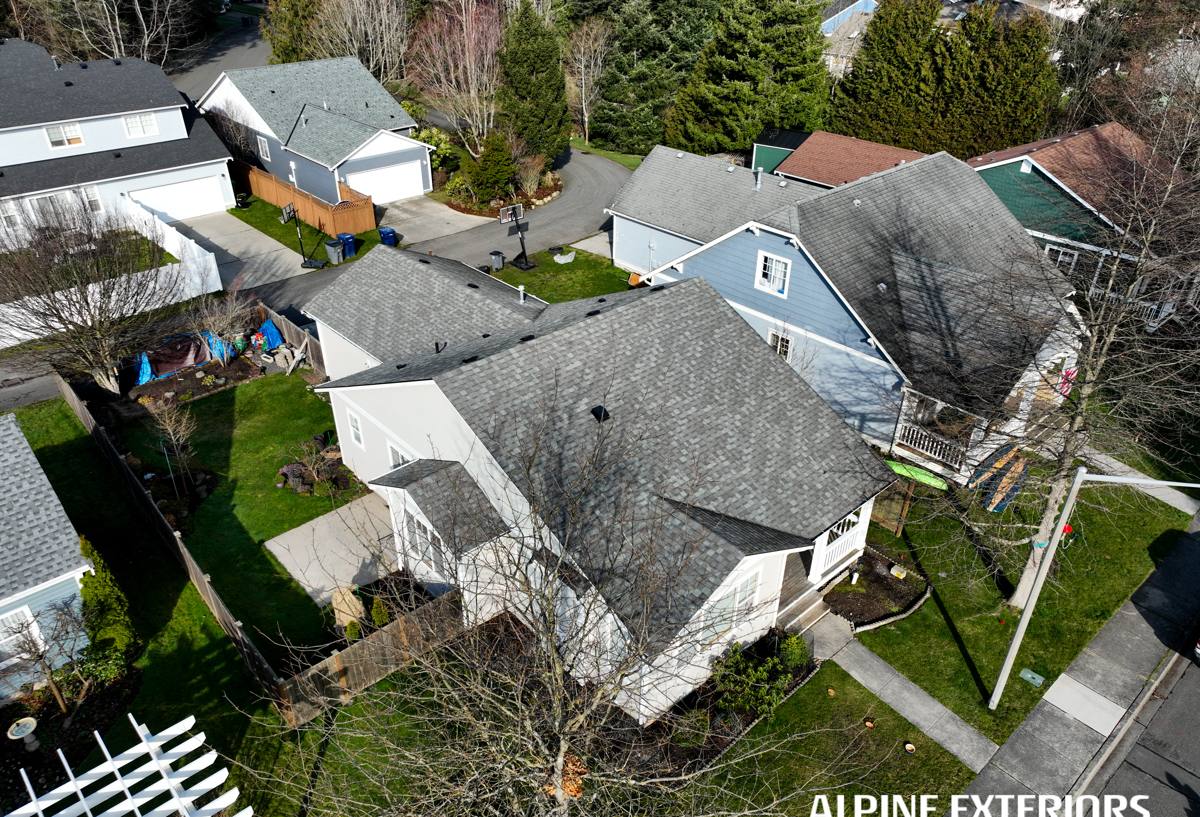
What Salt Air, Rain, and Moss Do to a Roof Here
Three things drive most of the roofing problems we see in this neighborhood, and they compound each other over time.
Salt Air and Corrosion
Airborne salt from the surrounding bay and waterways settles on every exterior surface, including the roof. On unprotected or poorly coated metal, that salt accelerates rust and pitting, especially at cut edges, fastener heads, and anywhere the factory finish has been scratched during installation. It also speeds up galvanic corrosion when two dissimilar metals touch — a steel panel against a copper vent flashing, for example — which is a detail a lot of installers miss if they don't work in coastal areas regularly.
Driving Rain and Wind
Winter storms here don't just drop rain straight down; wind pushes it sideways and up under laps, flashing edges, and fastener penetrations. A roof that would shed water fine in a calmer climate can still leak in California Creek if the underlayment, flashing, and panel overlaps aren't detailed for wind-driven moisture. Roof penetrations — vents, chimneys, skylights — are almost always where these leaks start.
The Long Moss Season
Cool, damp, and shaded conditions for much of the year give moss and algae a long window to establish themselves, particularly on north-facing slopes and under tree cover. Moss holds moisture against the roof surface, works into seams and laps, and on some materials it can lift edges or trap debris that keeps a surface wet far longer than it should be.
Why Metal Roofing Holds Up Better Here
Metal isn't automatically the right answer for every home, but for a lot of California Creek properties it addresses these three problems directly, provided it's the right system installed correctly.
Corrosion Resistance, Done Right
A quality metal roofing system for this coastline starts with the base metal and finish: aluminum or a properly coated steel (Galvalume or similar) with a baked-on PVDF finish resists salt-driven corrosion far better than bare or lightly coated products. We also match fasteners and flashing metals to avoid galvanic reactions, and we keep cut edges and exposed metal to a minimum.
Water Shedding in Wind-Driven Rain
Metal panels, particularly standing seam systems with raised, interlocking seams, shed water more reliably in wind-driven conditions than roofing materials that rely on gravity and overlap alone. The seams sit above the water plane, so wind has to work a lot harder to push moisture backward under a panel.
A Poor Surface for Moss to Take Hold
Moss needs a porous or textured surface to anchor into, and a smooth metal panel gives it far less to grip than shingles or shakes. Metal roofs still collect organic debris in valleys and against obstructions, and that debris needs to be cleared, but the roof surface itself doesn't feed moss growth the way granular or wood surfaces do.
Choosing the Right Metal Roofing System
Not every metal roofing product performs the same way in a coastal climate. Here's how the main options compare for a California Creek home.
| System | How It Sheds Water | Coastal Durability | Best Fit |
|---|---|---|---|
| Standing seam (concealed fastener) | Raised interlocking seams, no exposed fasteners | Excellent — fewest penetration points for salt and water to attack | Homes wanting the longest service life and lowest long-term maintenance |
| Exposed-fastener panel | Overlapping ribbed panels with screws through the face | Good, but fastener gaskets and screws need periodic checking and eventual replacement | Budget-conscious projects, outbuildings, simpler rooflines |
| Stone-coated steel / metal shingles | Interlocking panels styled like shingles or shakes | Good; coating and edge detailing matter more than on standing seam | Homeowners wanting a traditional look with metal's durability |
For most California Creek homes directly exposed to bay winds, we lean toward standing seam because it has no exposed fasteners for salt air to work on. Exposed-fastener panels are a reasonable option on secondary structures or where budget is the deciding factor, as long as the homeowner understands the fasteners will need attention over the roof's life.
What a Correct Metal Roof Installation Involves
The panel itself is only part of the system. Most of the leaks and premature corrosion we get called out to fix trace back to details underneath the metal or at the edges, not the panels themselves.
- Synthetic underlayment rated for the panel type, installed with proper overlap for wind-driven rain
- Ice-and-water shield at eaves, valleys, and around penetrations, where wind-driven moisture is most likely to find a way in
- Matched fasteners and flashing metals to prevent galvanic corrosion between dissimilar materials
- Proper panel fastening spacing to hold against coastal wind loads without over-penetrating the panel
- Closed or vented ridge details that keep wind-driven rain out while still allowing the roof deck to breathe
- Clean, well-formed flashing at every wall intersection, chimney, skylight, and vent — the majority of real-world leaks start here
- Ventilation planning so moisture from inside the home doesn't get trapped against the underside of the metal
Skipping or rushing any of these doesn't show up as a problem on installation day. It shows up two, five, or ten years later as a leak, a rust stain, or a panel that's starting to lift — usually during the next big storm off the bay.
Our Process for California Creek Homes
We approach every metal roofing project here the same structured way, adjusted for the specific home's exposure and roofline.
- On-site assessment. We look at roof slope, exposure to prevailing wind and salt air, existing ventilation, and any moss or moisture damage on the current roof.
- System and finish recommendation. Based on that assessment, we recommend a panel type, gauge, and coating suited to the home's specific exposure — not a one-size-fits-all package.
- Tear-off and deck inspection. We remove the old roofing and check the deck for rot or soft spots before anything new goes down; a new roof over a compromised deck is a short-term fix.
- Underlayment and flashing detail work. This is where most of the long-term performance is decided, and it's the stage we spend the most time getting right.
- Panel installation. Panels go on with fastener spacing and seam work matched to the system and the home's wind exposure.
- Final walkthrough. We check flashing, fastener torque on exposed-fastener systems, ridge and vent details, and clean up the site before calling the job done.
Maintaining a Metal Roof in a Marine Climate
Metal roofing is low-maintenance compared to most alternatives, but "low-maintenance" isn't "no-maintenance" in a coastal climate. A short annual routine goes a long way toward getting the full service life out of the system.
- Clear leaves, needles, and debris from valleys and behind chimneys or skylights before fall rains set in
- Check gutters and downspouts for blockages that can back water up under eave edges
- Look over exposed-fastener systems for screws that have backed out or gaskets that have started to compress or crack
- Watch for streaking or discoloration near flashing, which can signal a developing leak before it reaches the interior
- Trim back tree limbs that keep sections of the roof shaded and damp longer than the rest of the roof
- Have flashing and sealant points inspected every few years, since these age faster than the panels themselves
Cost Factors to Expect
Metal roofing costs more upfront than asphalt shingles, but the comparison isn't just sticker price — it's price against service life and how much attention the roof needs over the years. Actual numbers depend on your roof's size, pitch, and complexity, but these are the factors that move the price up or down.
| Factor | Effect on Cost |
|---|---|
| Panel system (exposed-fastener vs. standing seam) | Standing seam costs more per square but has fewer long-term maintenance costs |
| Roof pitch and complexity | Steep or cut-up rooflines with multiple valleys and penetrations take more labor and flashing work |
| Tear-off vs. re-roof | Removing old roofing and repairing deck issues adds cost but is often necessary for a proper install |
| Coating and gauge | Heavier gauge steel or aluminum with a premium finish costs more but performs better in salt air |
| Ventilation upgrades | Adding or correcting ridge and soffit ventilation adds modest cost but protects the whole system |
We give straightforward, itemized estimates so you can see exactly where the money is going — not just a single lump number.
Why Hiring a Crew That Already Works California Creek Matters
A lot of roofing problems in this area aren't the result of bad materials — they're the result of a correct product installed by someone who didn't account for the local conditions. A crew that hasn't worked coastal Whatcom County before might not think twice about mismatched flashing metals, might under-detail a ridge vent, or might not flag that a north-facing slope under tree cover needs different attention than the rest of the roof.
We work on homes throughout Blaine and the surrounding coastline, including California Creek, and we see the same salt air, the same driving rain patterns off the bay, and the same moss conditions on a regular basis. That familiarity shows up in the details — fastener choice, flashing sequencing, underlayment selection — that don't get noticed until years later, when they either hold up or don't.
Ready for a Straightforward Look at Your Roof?
If you're weighing a metal roof for your California Creek home, we're happy to take a look, walk you through what your specific roof needs, and put together a clear, no-pressure estimate. Fill out the form below and we'll get in touch to schedule a time.