 Blaine Exterior
 Decks in California Creek Take a Different Kind of Beating
If you own a deck in the California Creek area, you already know it doesn't age the way a deck would in a drier, inland climate. This part of Whatcom County sits close enough to the Salish Sea and Boundary Bay that salt-laden air is a constant, low-grade stressor on wood, fasteners, and hardware. Add in the driving rain that blows through this region for much of the fall, winter, and spring, plus a moss season that can stretch six months or longer under tree cover and on shaded north-facing structures, and you've got a combination that ages an unmaintained deck faster than most homeowners expect.
None of that means a deck here is doomed — it means a deck here needs to be built and repaired with those specific stresses in mind. A repair that would hold up fine in a dry, low-humidity climate can fail within a couple of seasons out here if it ignores moisture management, fastener corrosion, and organic growth. That's the gap we focus on closing.
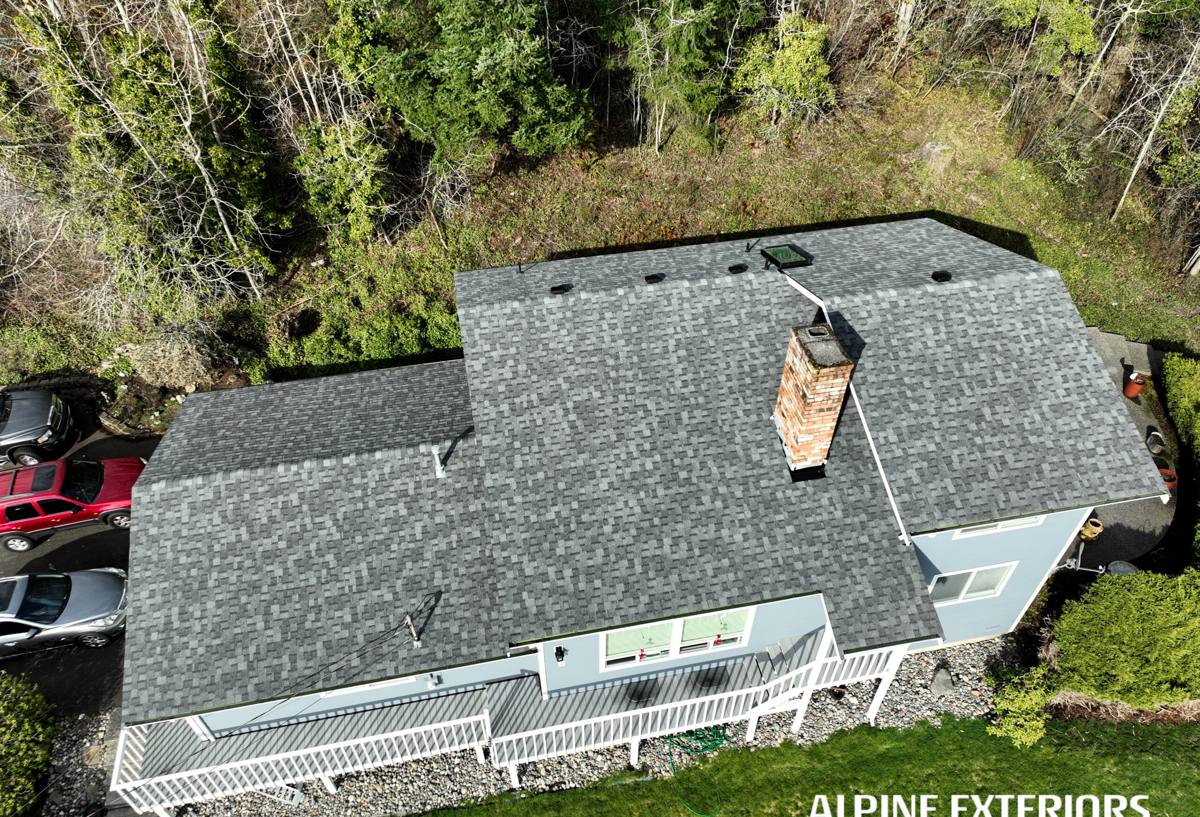
What We See Most Often on California Creek Decks
Every deck we look at in this area tells a slightly different story, but a handful of problems show up again and again. Recognizing them early is the difference between a straightforward repair and a much bigger project.
Moisture and Rot at the Ledger and Joists
The ledger board — where the deck attaches to the house — is almost always the first place we check, because it's the most common failure point on older or poorly flashed decks. Driving rain pushes water sideways and upward under siding and trim in a way that vertical-rain assumptions don't account for. Without proper flashing, water gets behind the ledger and starts rotting both the ledger and the framing it's fastened to, often with almost no visible sign from the top of the deck.
Corroded or Failing Fasteners
Salt air accelerates corrosion on anything less than a fully rated fastener. We regularly find decks where the boards look serviceable but the nails, screws, or joist hangers underneath are rusted, weakened, or already failed. A deck can look solid and still be structurally compromised because of what's holding it together, not the boards themselves.
Moss, Algae, and Slippery Surfaces
Given the length of moss season here, any deck with shade, tree cover, or poor drainage is going to grow something on its surface eventually. Beyond the slip hazard, moss and algae hold moisture against the decking material, which speeds up rot in wood and can stain or degrade composite surfaces over time if left unaddressed.
Cupping, Splitting, and Warped Boards
Repeated wet-dry cycles cause wood to swell and shrink unevenly, which shows up as cupped, split, or warped boards — usually starting at board ends and around fasteners, where water intrudes most easily.
Loose or Wobbly Railings and Stairs
Railings and stair stringers take constant load and vibration, and their connection points are often smaller and less protected than the main structure. These are also safety-critical, so we treat any looseness here as a priority item rather than a cosmetic one.
What a Correct Deck Repair Actually Involves
A repair that just replaces the board someone can see is a temporary fix if the underlying cause isn't addressed. Our approach starts from the structure and works outward.
Structural Assessment First
Before any board gets pulled, we check the ledger flashing, the condition of the joists and beams, post footings, and the fasteners and connectors holding it all together. This tells us whether we're dealing with a cosmetic repair, a structural repair, or something in between.
Fixing the Water Path, Not Just the Symptom
If the root cause is a flashing failure, a drainage problem, or a grading issue that funnels water toward the structure, we address that as part of the repair. Replacing boards without correcting the water path just buys a little time before the same damage returns.
Matching Fasteners and Hardware to the Environment
Given the salt air in this area, we use fasteners and structural connectors rated for corrosive, coastal-adjacent environments rather than standard interior-grade hardware. This is one of the most overlooked details in deck repair — and one of the most consequential over a five- to ten-year horizon.
Board Replacement Done Right
Whether we're replacing a handful of boards or resurfacing the whole deck, we match structural spacing and fastening patterns to the manufacturer's specifications for whatever material is going back down, since proper gapping and fastening schedules directly affect how well the new material handles our wet-dry cycles.
Repair or Replace? How We Help You Decide
Not every deck problem calls for a full rebuild, and not every deck is worth patching. We walk every homeowner through the actual condition of their deck rather than defaulting to the most expensive option.
| Factor | Leans Toward Repair | Leans Toward Replacement |
|---|---|---|
| Ledger and framing condition | Solid, dry, properly flashed | Rot, soft spots, or repeated flashing failures |
| Extent of damage | Isolated boards or railing sections | Widespread rot, warping, or fastener failure |
| Age of the deck | Under 10-15 years, well-built originally | Beyond typical service life for the material used |
| Footings and posts | Stable, no movement or settling | Heaving, rotting, or undersized for current code |
| Cost of repair vs. new build | Repair is a fraction of replacement cost | Repairs are piling up close to replacement cost |
When the structure underneath is sound, targeted repair is almost always the more economical and perfectly durable choice. When the framing or footings are compromised, patching the surface just delays a bigger expense.
Our Deck Repair Process
We keep the process straightforward because homeowners deserve to know what's happening to their home and why.
- On-site inspection. We check the structure from the ground up — footings, framing, ledger, fasteners, and surface material — and explain what we find in plain terms.
- Written estimate. You get a clear scope of work and price before anything starts, with repair and replacement options laid out if both are reasonable.
- Repair work. We address the root cause first — flashing, drainage, or structural issues — then move to boards, railings, and hardware.
- Cleanup and walkthrough. We clear debris, sweep the work area, and walk the finished repair with you before we consider the job done.
Materials We Use and Why
Material choice matters more here than in a lot of climates, because whatever we install has to handle salt air, sustained moisture exposure, and seasonal moss without breaking down early.
Pressure-Treated Lumber
Pressure-treated lumber remains a solid, cost-effective choice for framing and for homeowners who prefer a traditional wood deck. It needs regular sealing or staining to perform well long-term in this climate, and we're upfront with clients about that maintenance commitment before they choose it.
Composite and Capped-Composite Decking
Composite decking resists moisture absorption, moss staining, and splitting far better than raw wood, which makes it a strong fit for shaded, moisture-prone lots common around California Creek. It costs more upfront and still requires occasional cleaning to prevent surface moss and algae buildup, but it doesn't need staining or sealing.
Fasteners and Structural Hardware
We use stainless steel or hot-dip galvanized fasteners and connectors rated for coastal and high-moisture environments rather than standard-grade hardware, because in salt air, the hardware is often what fails before the visible decking does.
Flashing Materials
Ledger and post flashing gets treated as a structural detail, not an afterthought — proper flashing is the single biggest factor in whether a deck stays dry where it meets the house.
After the Repair: A Simple Maintenance Checklist
A good repair holds up much longer with a small amount of seasonal upkeep. This is the same checklist we give our California Creek clients after finishing a job:
- Sweep leaves and debris off the deck surface regularly, especially in fall and through moss season
- Rinse or gently scrub off moss and algae before it has a chance to stain or hold moisture against the surface
- Check that gaps between boards stay clear so water can drain instead of pooling
- Inspect railings and stair connections for looseness once or twice a year
- Re-seal or re-stain wood decking on the schedule recommended for the product you have
- Watch the area where the deck meets the house for any signs of staining, softness, or peeling paint
- Trim back overhanging branches that keep sections of the deck shaded and damp longer than necessary
Why It Matters to Hire a Crew That Already Works in California Creek
Deck repair isn't identical everywhere in Whatcom County, even within a few miles. Lots around California Creek vary between waterfront exposure, wooded and shaded sites, and more open rural parcels, and each of those settings puts a different kind of stress on a deck — more salt exposure in one spot, more moss and moisture retention in another. A crew that already works in this specific area has a working sense of how local drainage, tree cover, and weather exposure tend to play out on a deck, which shortens the guesswork during inspection and helps us flag problems before they become expensive.
Local experience also means we're realistic about timelines around Whatcom County's wetter months and we plan repair sequencing — drying time, flashing work, board replacement — around what the weather is actually doing, not an idealized schedule that assumes dry conditions.
Getting an Honest Assessment
Not every deck problem needs the most expensive fix, and not every deck can be saved with a patch. Our goal on every inspection is to tell you honestly which situation you're in, what it will cost to fix it correctly, and what it will take to keep it holding up against this area's salt air, rain, and moss. If you've got a deck in the California Creek area that's showing wear, soft spots, corrosion, or just isn't holding up the way it used to, we're happy to take a look and give you a straightforward, no-pressure estimate using the form below.