 Blaine Exterior
 Why Blaine Harbor Siding Wears Differently
Homes near the water in Blaine sit in a tougher climate than siding manufacturers usually design for on paper. Blaine Harbor properties take on salt-laden air off the water, wind-driven rain that gets pushed sideways into wall assemblies instead of simply running off, and a long, damp moss season that keeps north-facing and shaded elevations wet for weeks at a time. None of these factors are dramatic on their own, but stacked together year after year, they're exactly the conditions that turn small siding problems into big ones if they go unaddressed.
Salt air is corrosive to exposed metal fasteners and flashing, and it accelerates the breakdown of caulk and sealant joints faster than an inland Whatcom County property would ever see. Driving rain off the harbor doesn't just wet the siding surface — it finds every gap, seam, and fastener hole and pushes moisture behind the cladding if the water-resistive barrier and flashing details aren't right. And moss doesn't just sit on the surface looking bad; it holds moisture against the siding and trim for extended periods, which is a problem for wood-based products in particular and a maintenance issue for almost anything installed in shaded, damp corners of a lot.
Siding repair in this neighborhood isn't just about patching what's visibly damaged. It's about understanding why that section failed in the first place, so the repair doesn't just recreate the same failure a year or two later.
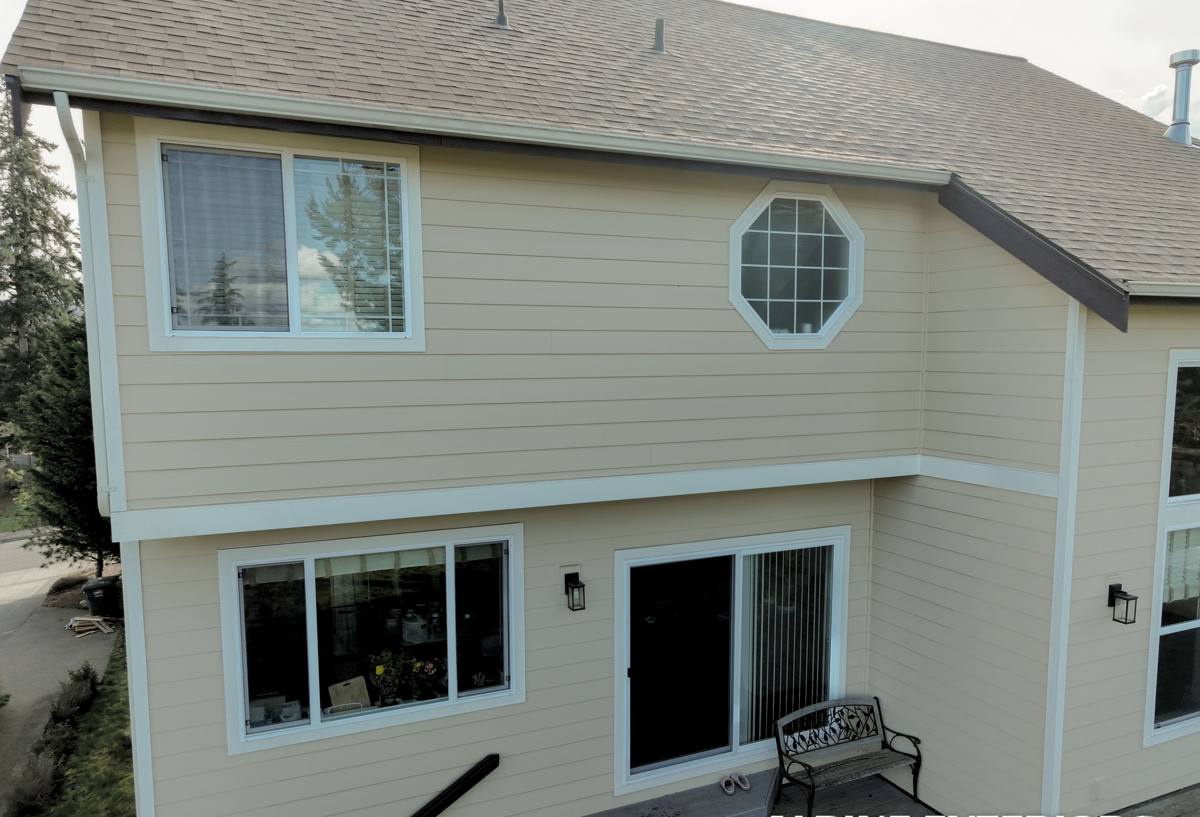
Signs Your Siding Needs Repair — Not Full Replacement
Most homes don't need a full re-side. They need targeted repair to specific elevations or sections where water, wind, or age has caused damage. Here's what we look for during an assessment:
- Soft, spongy, or crumbling siding when pressed — a sign of moisture intrusion behind the surface
- Visible cracking, splitting, or buckling, especially on the side of the home that faces prevailing wind and rain
- Paint that's peeling or bubbling in a pattern that follows seams or fastener lines rather than general sun wear
- Persistent moss or algae staining that won't clean off and keeps returning within a season
- Gaps opening up at trim, corner boards, or window and door casings
- Rust streaking from fasteners or flashing, common on homes with harbor-side salt exposure
- Soft trim boards or discoloration at the bottom few feet of walls, where splash-back and standing moisture do the most damage
If damage is isolated to a section, corner, or elevation, repair is usually the right call. If we find the same failure pattern repeating across multiple walls, that's often a sign of a systemic moisture or installation issue that repair alone won't fix — and we'll tell you that plainly rather than patch over it.
What a Correct Repair Job Actually Involves
A siding repair that just covers the visible damage isn't a repair — it's a cosmetic fix that buys a season or two before the same spot fails again. Doing it correctly means treating every repair as a small investigation into the wall assembly, not just a patch job.
Checking What's Behind the Siding
Before any new material goes up, we open up the damaged area enough to see the water-resistive barrier (house wrap), sheathing, and framing underneath. In a wind-driven-rain environment like Blaine Harbor, damaged siding is often a symptom of a flashing or barrier problem, not just weather wearing down the cladding itself. If the sheathing underneath is wet or soft, that gets addressed before anything goes back on the wall — otherwise you're sealing moisture in rather than out.
Flashing and Drainage Details
Around windows, doors, and horizontal trim, correct flashing is what keeps wind-driven rain from working its way behind the siding. A lot of siding failure we see in coastal Whatcom County homes traces back to missing or improperly lapped flashing at these transition points — not the siding material itself. Repairs get flashed and lapped correctly, so water sheds down and out rather than pooling behind a patch.
Matching Materials the Right Way
Patching damaged siding with whatever's on hand — a different product, a different thickness, or a mismatched profile — creates a visible seam and, worse, a place where water can collect. When we repair a section, we match the reveal, profile, and finish as closely as the existing material allows, and where a full section needs to come out, we replace it with James Hardie fiber cement rather than mixing materials on the same wall. Fiber cement doesn't absorb water the way wood-based siding does, doesn't rust the way some panel systems can at cut edges, and holds its factory finish longer in salt air than field-applied paint on a patch.
Repair or Replace? How We Make the Call
Not every damaged section justifies a full re-side, and not every repair is worth doing if the underlying siding is at the end of its service life. Here's how we weigh it:
| Factor | Favors Repair | Favors Replacement |
|---|---|---|
| Extent of damage | Isolated to one section or elevation | Recurring across multiple walls |
| Cause of failure | Impact damage, isolated flashing gap, aging caulk | Systemic moisture intrusion or original installation errors |
| Age of existing siding | Mid-life, otherwise sound material | Near or past expected service life |
| Underlying sheathing condition | Dry, solid wood behind the damaged area | Soft, wet, or rotted sheathing found during inspection |
| Material match | Compatible product still available or close match achievable | Discontinued product, poor match, or already mismatched from prior work |
We'll walk you through which category your situation falls into and why, with photos of what we find once the damaged section is opened up — not just a verbal estimate.
Why We Repair and Rebuild with James Hardie Fiber Cement
When a repair calls for replacing a section rather than patching it, we use James Hardie fiber cement — the only siding product we install, full stop. On a harbor-side property, that choice matters more than it might inland. Hardie's HZ5 product line is engineered for wet, freeze-prone, and moisture-heavy climates, and the material itself is non-combustible and doesn't swell, rot, or delaminate the way wood-based or some engineered wood products can when they stay damp through a long moss season.
The factory-applied ColorPlus finish is also a real advantage on repair work specifically: instead of a repaired section needing to be field-painted and matched by eye — which almost always shows as a slightly different sheen or shade a year later — a Hardie repair can be finished with the same factory-baked color system as the surrounding siding, so the patch actually disappears into the wall instead of standing out. Hardie also carries a strong transferable limited warranty on the material itself, which matters if you sell the home down the line and a buyer's inspector asks about siding history.
We won't tell you fiber cement is the only siding material that can ever work in this climate — that's not honest. What we will tell you is that after years of repair and replacement work on homes exposed to salt air and driving rain, it's the product we're willing to stand behind and warranty our workmanship on, and it's the only one we install.
Our Siding Repair Process
- On-site assessment. We inspect the damaged area, probe surrounding siding for soft spots, and check flashing and trim at the same time — problems rarely stay isolated to just the spot you noticed.
- Open and inspect. We remove the damaged section to check the water-resistive barrier and sheathing before deciding on scope.
- Written scope and estimate. You get a clear explanation of what we found, what needs to happen, and why — before any additional work starts.
- Correct the cause, not just the symptom. Flashing, barrier, or fastening issues get fixed as part of the repair, not left in place under new siding.
- Install and finish. New material is matched and installed to manufacturer spec, with attention to fastener placement and sealant joints that hold up to harbor-side wind and salt exposure.
- Walkthrough. We show you the completed repair and explain what to watch for going forward.
Why Local Experience in Blaine Harbor Matters
Siding repair looks different on a harbor-exposed property than it does a few miles inland. A crew that mostly works drier, more sheltered parts of Whatcom County can miss the specific wear patterns that show up on homes facing wind off the water — salt-accelerated fastener corrosion, caulk that fails faster than the manufacturer's rated lifespan, and moss growth that returns within months on shaded, damp elevations even after a thorough cleaning.
Working regularly in and around Blaine means we've seen how these conditions actually play out over years, not just what a spec sheet says should happen. That shapes real decisions on a repair job: where to add extra flashing attention even if it's not strictly required by code, which elevations tend to need a closer look at sealant joints, and how aggressively to address moss and moisture before closing a wall back up. It also means we're not learning the local climate on your project — we already know what Blaine Harbor does to siding.
Living With Blaine Harbor's Moss Season
Even a correctly repaired section of siding needs some ongoing attention in this climate. Moss and algae growth on shaded or north-facing walls is largely a maintenance issue rather than a defect, but left unchecked it holds moisture against the siding surface and shortens the life of caulk joints and paint finishes. A light annual cleaning with an appropriate low-pressure method, keeping nearby vegetation trimmed back from the wall to improve airflow and sun exposure, and a periodic visual check of caulk lines around windows, doors, and trim will do more to protect a repair than almost anything else. We're happy to point out the spots on your specific home most worth watching when we're out for an inspection or repair.
If you're seeing soft spots, cracking, persistent staining, or gaps opening up in your siding in Blaine Harbor, we'll come take a look and give you a straight answer on what it needs — repair or replacement — with no pressure either way. Reach out using the form below to schedule a free estimate.