 Blaine Exterior
 Blaine Harbor's Roofs Take a Different Kind of Beating
Blaine Harbor sits close enough to the water that salt air is a daily fact of life, not an occasional nuisance. Combine that with the wind-driven rain that comes off the Strait and the long, damp moss season that stretches across most of the year in Whatcom County, and you get a roofing environment that's genuinely harder on materials than most inland neighborhoods a few miles east. Fasteners corrode faster near the marina. Rain doesn't just fall here, it gets pushed sideways under eaves and around chimneys during winter storms. And shaded, north-facing roof sections stay wet long enough for moss and moisture to work into places they shouldn't.
None of that means Blaine Harbor homes need exotic materials or gimmicks. It means the replacement has to be done with those specific stresses in mind, from the fasteners we choose to how we handle transitions and edges. A roof built for a dry inland town, installed the same way here, will show its age faster than it should.
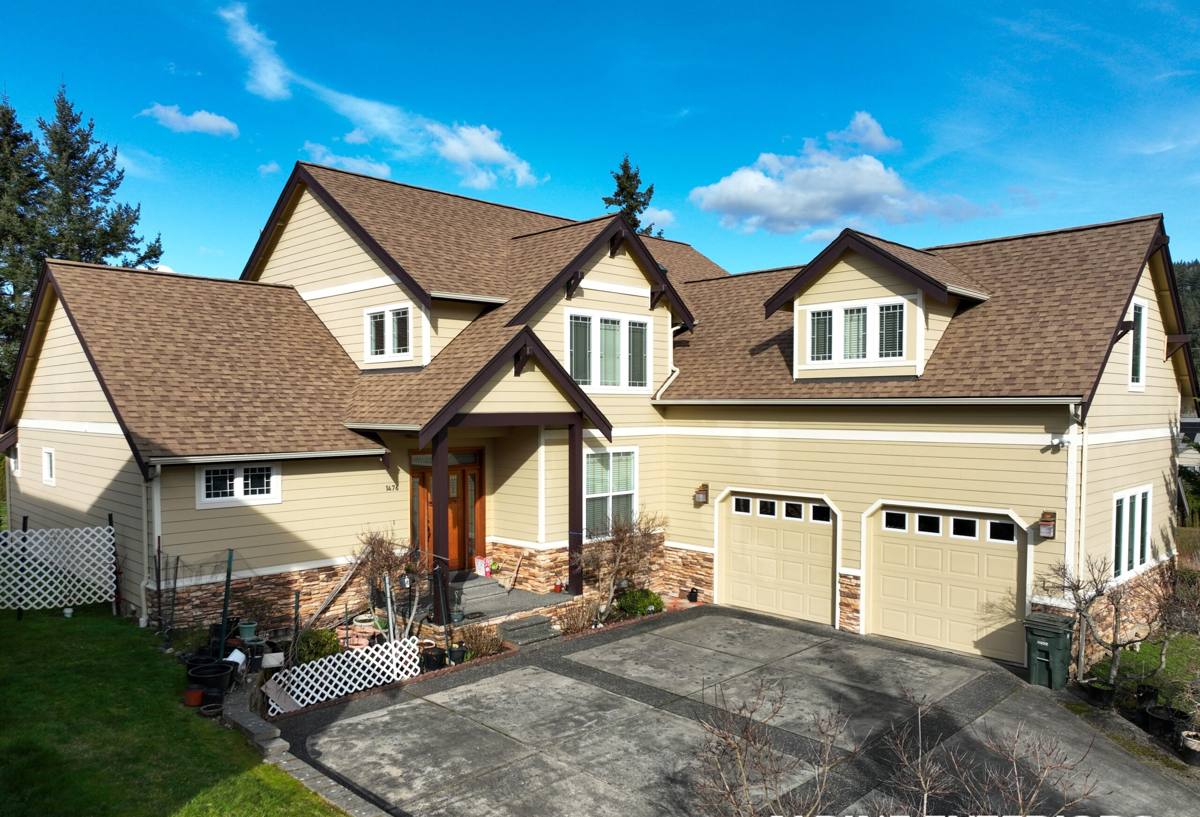
Signs a Repair Won't Cut It Anymore
Most homeowners call us after a repair, not before one. Here's how to tell when you've crossed the line from "patch it" to "replace it":
- Granule loss heavy enough that you're finding grit in gutters every season, not just after a storm
- Shingles that are cupping, curling, or cracking across multiple slopes, not just one weathered section
- Moss that keeps coming back within months of cleaning, especially on north-facing or shaded slopes
- Soft spots in the decking when walked, or staining on interior ceilings near exterior walls
- A roof that's 18-25 years old (asphalt) and has already had two or more repair visits in the last few years
- Flashing around chimneys, vents, or valleys that's rusted, lifted, or was never properly step-flashed to begin with
If you're only dealing with one of these, a repair may still make sense. If you're seeing two or three at once, you're usually better off putting that repair money toward a full replacement instead of extending a roof that's already failing in multiple places.
What a Correct Replacement Actually Involves Here
A roof replacement isn't just stripping old shingles and nailing down new ones. In a climate like Blaine's, the layers underneath the shingles matter as much as the shingles themselves.
Underlayment and Water Barrier
We use synthetic underlayment across the full roof and self-adhering ice-and-water barrier at eaves, valleys, and around every penetration — chimneys, skylights, pipe boots. Wind-driven rain off the water can push moisture uphill under shingles in a way calmer inland climates rarely see, so the barrier at vulnerable points needs to be continuous, not patched in.
Ventilation
Attic ventilation gets overlooked constantly, and it's one of the biggest factors in how long a roof lasts near the coast. Poor airflow traps moisture under the deck, which speeds up rot and gives moss and mildew a head start from underneath. We check intake and exhaust balance on every replacement, not just the shingles going on top.
Flashing and Fasteners
Salt air accelerates corrosion on cheap or mismatched fasteners. We use corrosion-resistant nails and flashing appropriate for coastal exposure, and every chimney, wall, and valley gets properly step-flashed and counter-flashed rather than sealed over with caulk or roof cement — a shortcut that fails within a few seasons in this climate.
Material Options for Blaine Harbor Conditions
There's no single "best" material for every home — it depends on your roof's exposure, your budget, and how much long-term maintenance you want to take on. Here's how the common options stack up in a salt-air, high-moisture environment:
| Material | Salt Air / Moisture Behavior | Moss Resistance | Typical Lifespan Here |
|---|---|---|---|
| Architectural asphalt shingle | Good with proper underlayment and flashing | Moderate — benefits from zinc/copper strips | 20-30 years |
| Standing seam metal | Excellent when properly coated and fastened | High — sheds moisture, little surface for growth | 40-60 years |
| Cedar shake | Requires diligent upkeep near salt air and damp shade | Low without regular treatment | 20-30 years with maintenance |
| Synthetic composite shake/slate | Very good — doesn't absorb moisture like wood | Moderate to high | 40-50 years |
We don't push cedar shake for shaded, damp Blaine Harbor lots as a first recommendation. It's a good-looking product, but on a roof that stays wet for long stretches under tree cover, it demands a level of ongoing maintenance — cleaning, treating, monitoring — that most homeowners underestimate going in. That's a fair trade-off for the right property, but we'll tell you honestly if your lot isn't a good match for it rather than sell you on the look alone.
How the Replacement Process Works
- On-site inspection. We walk the roof and attic, check decking condition, ventilation, and flashing points, and take photos of anything that affects the estimate.
- Written estimate. You get a clear scope of work and price — materials, tear-off, disposal, and any decking repair contingencies spelled out up front, not discovered mid-job.
- Tear-off and decking check. Old roofing comes off down to the deck, and we inspect for soft or rotted sheathing before anything new goes down.
- Underlayment and water barrier installation. Ice-and-water barrier at eaves, valleys, and penetrations; synthetic underlayment across the field.
- Flashing. New step and counter-flashing at chimneys, walls, and transitions — no shortcuts with sealant in place of proper metal.
- Roofing material installation. Installed to manufacturer spec, with attention to nailing pattern and exposure for wind resistance.
- Ventilation check. Intake and exhaust confirmed balanced for the attic space.
- Cleanup and final walkthrough. Magnetic sweep for stray fasteners, debris hauled off, and a walkthrough so you know exactly what was done.
What Drives the Cost
Every roof is different, but these are the factors that actually move the price on a Blaine Harbor replacement, more than anything else:
| Factor | Why It Matters |
|---|---|
| Roof pitch and access | Steeper slopes and limited access near tight harbor lots take longer and require more safety setup |
| Decking condition | Rot from long-term moisture exposure means sheathing replacement, which isn't known until tear-off |
| Material choice | Asphalt, metal, and composite carry very different material and labor costs |
| Number of penetrations | Chimneys, skylights, and vents each need individual flashing work |
| Layers being removed | Roofs with existing layers on top of layers take longer to strip and dispose of |
We won't quote a number without seeing the roof, and we're upfront if we think decking issues are likely based on age and symptoms before we ever get up there.
Moss and Maintenance After the New Roof Goes On
A new roof doesn't mean moss season stops happening — it means you're starting from a clean, properly protected surface instead of one already compromised by trapped moisture. Zinc or copper strips near the ridge are a simple, low-cost way to reduce moss regrowth over time on shaded slopes. Beyond that, a yearly look at gutters, valleys, and north-facing sections — especially heading into fall — goes a long way toward getting the full lifespan out of your new roof instead of fighting the same moss problem again in five years.
Why Local Blaine Harbor Experience Actually Matters
A roofing crew that only occasionally works this close to the water doesn't always know to spec corrosion-resistant fasteners as standard, or to pay extra attention to wind-driven rain at eaves and valleys. Those aren't dramatic differences on paper, but they're the difference between a roof that looks fine for five years and one that actually performs for its full expected lifespan in this specific environment. Working regularly in Blaine and across Whatcom County means we've seen how roofs here age — where they fail first, and what actually prevents it — rather than applying a generic approach and hoping it holds up.
Before You Hire, Ask These Questions
- Do you carry current liability insurance and workers' compensation coverage?
- What underlayment and ice-and-water barrier do you use, and where specifically will it be installed?
- Will chimneys and walls get new step-flashing, or will existing flashing be reused?
- What's your plan for attic ventilation as part of this job, not just the shingles?
- Is the estimate itemized, and what happens if decking repair is needed once tear-off starts?
- Can you provide a written warranty on both materials and workmanship?
If a contractor can't answer these clearly before they've even started, that's worth noting before you sign anything.
If your roof is showing its age or you just want an honest read on where it stands, we're happy to take a look. The estimate is free, there's no pressure, and you'll get a straight answer about whether you need a repair or a full replacement — just fill out the form below to get started.