 Blaine Exterior
 Why Metal Roofing Makes Sense for Birch Point Homes
Birch Point sits close enough to the water that homes here take a different kind of weathering than houses a few miles inland in Whatcom County. Salt-laden air, steady wind off the water, and driving rain move sideways as much as they fall straight down. Add a long moss season that runs from fall through spring, and you have a roofing environment that's genuinely harder on materials than most of the region realizes. Metal roofing, done correctly, is one of the better answers to that combination — but "done correctly" is doing a lot of work in that sentence. A metal roof installed with inland assumptions, generic fasteners, or the wrong coating will show problems here years before it would somewhere drier and calmer.
This page is about that specific job: metal roofing for homes in and around Birch Point, and what separates a roof that holds up for decades from one that starts corroding, staining, or leaking within a few winters.
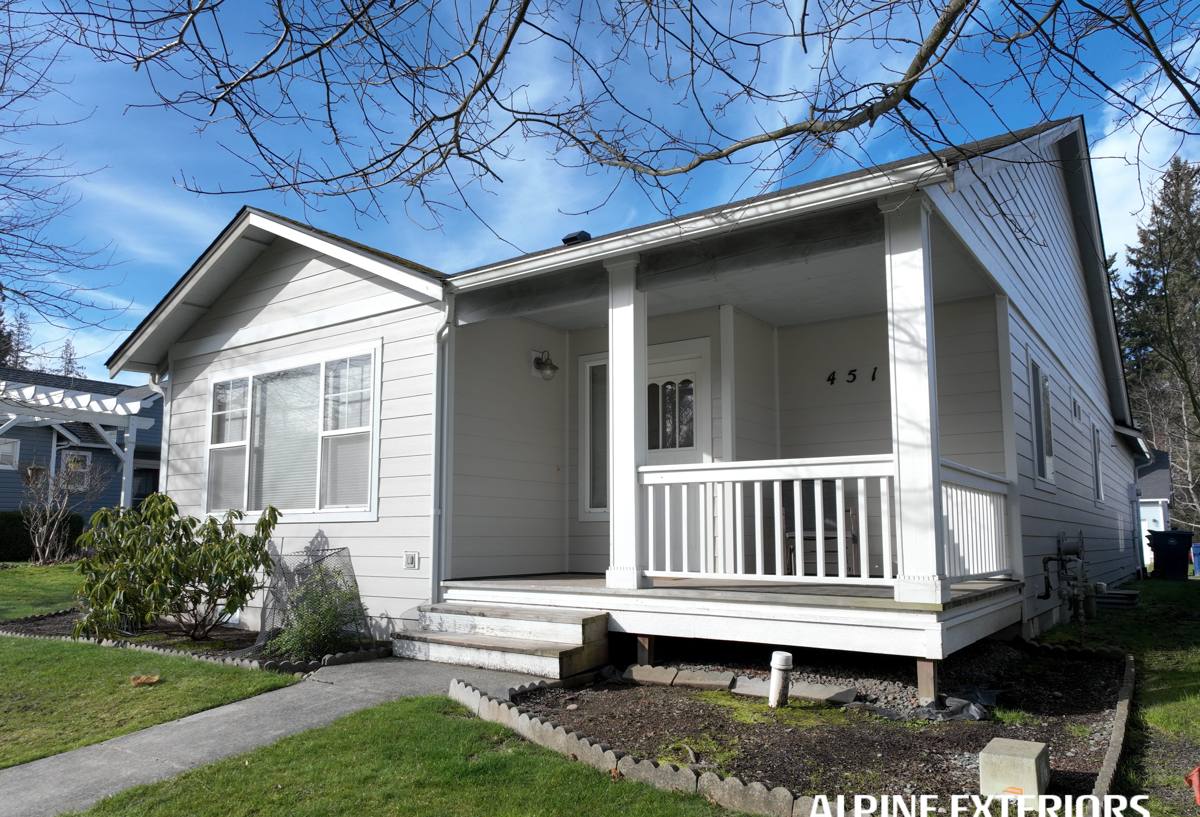
What Salt Air and Coastal Wind Do to a Roof Over Time
Salt air isn't just a coastal cliché — it's airborne sodium chloride settling on every exposed surface, including your roof, and it accelerates corrosion on metal that isn't properly protected. That process is slow and easy to miss until fasteners start weeping rust streaks down a panel, or a cut edge that wasn't sealed starts to bubble at the coating.
Wind adds a second problem: driving rain near the water doesn't just fall on a roof, it gets pushed up under laps, around penetrations, and into any gap that wouldn't matter on a calmer site. A roof detail that's "good enough" a few miles inland can fail at Birch Point simply because the wind loads and rain angles are more aggressive here. That's why the same metal roofing system can perform very differently depending on where it's installed and who installed it.
The three things that matter most in this environment
- Corrosion resistance of the panel material and, just as important, the fasteners and flashing that go with it
- Sealed, protected cut edges — an unpainted or unsealed edge is where salt-air corrosion typically starts
- Wind-rated fastening and lap details that account for driving rain, not just standing water
Galvanic Corrosion — the Detail Most Roofs Get Wrong
When two different metals touch and stay wet, they can react and accelerate corrosion of one of them — this is galvanic corrosion, and it's a bigger deal near salt water because salt air makes everything conduct electricity more easily. A steel fastener in an aluminum panel, or the wrong flashing metal paired with the wrong roof material, can quietly corrode for years before it shows on the surface. Getting the metal pairings right — panel, flashing, fasteners, and any dissimilar-metal separation — is a basic requirement for coastal work, not an upgrade.
Material and Coating Choices That Actually Matter Here
Not all metal roofing is built the same way underneath the paint, and near the water those differences show up faster. The base metal, the protective coating over it, and the paint finish on top all play a role in how long a roof holds up against salt air.
| Material | How It Handles Salt Air | Where It Fits |
|---|---|---|
| Bare or mill-finish steel | Corrodes fastest without a protective coating and finish system | Not recommended this close to the water |
| Coated steel (zinc or zinc-alloy coated, painted) | Good performance when the coating and paint system are rated for coastal exposure and edges are sealed | Common, cost-effective choice for coastal homes when specified correctly |
| Aluminum | Naturally resists rust since it doesn't contain iron; a strong fit for direct salt exposure | Often preferred for homes closest to the water or with heavy salt spray |
We spec the material and coating to the exposure, not just the budget. A home set back from the water with tree cover doesn't need the same spec as a home with an open, unobstructed view straight out over the strait. Part of an honest estimate is telling you which tier your specific site actually needs.
Standing Seam vs. Exposed-Fastener Panels
The two most common metal roofing styles handle coastal weather differently, and the right pick depends on your home, your roof pitch, and how much long-term maintenance you want to take on.
| Factor | Standing Seam | Exposed-Fastener Panel |
|---|---|---|
| Fastener exposure | Concealed clips, no exposed screws through the panel face | Screws penetrate the panel face directly |
| Long-term maintenance | Lower — no exposed gaskets to inspect or replace | Higher — screw gaskets can wear and need periodic checking, especially in this climate |
| Upfront cost | Higher | Lower |
| Best fit | Homes with direct salt exposure or where minimal upkeep is a priority | Budget-conscious projects, outbuildings, or sites with less direct exposure |
Exposed-fastener systems aren't a bad product — they're a legitimate, more affordable option, and they work fine in a lot of applications. But every exposed screw is a place water can find its way in if the gasket ages out, and that maintenance item matters more here than it would on a drier, calmer site. We'll walk through both options honestly rather than defaulting to whichever is easier to sell.
Moss, Moisture, and Whatcom County's Long Wet Season
Whatcom County's wet season stretches across most of the year, and that sustained moisture is exactly what moss and algae need to take hold. On asphalt shingles, moss roots into the granules and holds moisture against the surface. Metal roofing doesn't give moss the same foothold — there's no granule layer for it to grip — but that doesn't make a metal roof moss-proof. Moss and organic debris can still collect in valleys, around penetrations, and anywhere leaves or needles pile up, and trapped moisture sitting against any roof surface long enough will eventually find a weak point.
Why Ventilation Matters as Much as the Panel
A metal roof that isn't properly ventilated underneath can trap moisture in the attic space, leading to condensation on the underside of the deck — a problem that has nothing to do with the metal itself and everything to do with how the roof system was designed. Correct ridge and intake ventilation is part of a proper metal roof installation, not an optional add-on, especially in a climate where the air outside is damp for most of the year.
Flashing, Fasteners, and the Details That Prevent Leaks
Almost every metal roof leak we get called out to trace back to a detail, not the panels themselves. Panels are the easy part — flashing, underlayment, and fastener choice are where a roof either holds up near the water or doesn't.
- Underlayment: A high-quality, self-sealing or synthetic underlayment rated for the fastener pattern and climate, installed as a real water barrier, not an afterthought
- Valley and penetration flashing: Sized and lapped for wind-driven rain, since water at Birch Point doesn't always run straight downhill off the roof
- Fastener material: Matched to the panel metal to avoid galvanic corrosion, with corrosion-resistant coatings appropriate for salt air
- Sealed cut edges: Every field cut gets its exposed edge protected — an unsealed cut edge is one of the fastest paths to early corrosion
- Drip edge and eave detail: Built to shed wind-driven rain away from the fascia and soffit, not just off the panel edge
None of these are visible once the roof is finished, which is exactly why they're worth asking about before work starts.
Our Process for a Birch Point Metal Roof Installation
We approach every Birch Point metal roof the same structured way:
- On-site assessment: We look at your home's actual exposure — distance from the water, prevailing wind direction, tree cover, existing roof condition, and ventilation — before recommending a material or panel style.
- Spec matched to exposure: Material, coating tier, and panel profile are chosen for your specific site, not a one-size-fits-all package.
- Deck and ventilation check: We confirm the roof deck is sound and that intake and exhaust ventilation will work correctly under the new roof.
- Underlayment and flashing installed to coastal standards: This is where most of the long-term performance is actually decided.
- Panel installation with matched, corrosion-resistant fasteners: Every cut edge sealed, every fastener chosen to avoid galvanic reaction with the panel.
- Final walkthrough: We go over what maintenance the roof does and doesn't need, so there are no surprises later.
Maintaining a Metal Roof at Birch Point
A correctly installed metal roof is low-maintenance, not no-maintenance. A little attention once or twice a year keeps it performing the way it should for the long run.
- Clear leaves, needles, and debris from valleys and low points, especially after fall storms
- Check that gutters and downspouts are flowing freely — clogged gutters push water back under the eave
- Look for streaking or discoloration near fasteners or cut edges, which can signal a coating or sealing issue worth catching early
- Trim back overhanging branches that hold moisture and debris against the roof surface
- Have penetrations (vents, flashing, chimney flashing) checked periodically rather than waiting for a visible leak
Why Local Experience in Birch Point Matters
A roofing crew that mostly works drier, inland projects can install a technically fine metal roof that still isn't right for a site like this — the wrong coating tier, a fastener mismatch, or a flashing detail that assumes calmer weather than Birch Point actually gets. Crews who regularly work this stretch of Whatcom County know which details are non-negotiable here and which upgrades are genuinely worth the added cost versus which ones are just upsells. That local pattern recognition — knowing how salt air, wind, and moss actually behave on homes near the water — is the difference between a roof that's engineered for its actual conditions and one that's just engineered for a rooftop somewhere in general.
If you're weighing a metal roof for a Birch Point home, we're happy to walk your roof with you, talk through material and panel options honestly, and put together a free, no-pressure estimate — just fill out the form below.