 Blaine Exterior
 Birch Point's Climate Is Harder on a Roof Than Most Homeowners Realize
Birch Point sits close enough to the water that salt air is a daily fact of life, not an occasional nuisance. Combine that with Whatcom County's driving winter rain and a moss season that can stretch from fall through spring, and you have three separate stresses working on a roof at the same time — corrosion, water intrusion, and organic growth. A shingle roof built for a drier, inland climate simply doesn't hold up the same way out here. It's not that asphalt shingles are the wrong material for this area — they're a proven, cost-effective choice for the vast majority of homes. The issue is that the details around the shingles — the underlayment, the flashing, the fasteners, the ventilation — have to be chosen and installed with this specific coastal environment in mind.
We work on roofs in and around Birch Point regularly, which means we see how roofs here actually age, not just how they're rated to perform on paper. That's the difference between a roof that looks right on installation day and one that's still doing its job in fifteen years.
What Salt Air Actually Does to a Roof
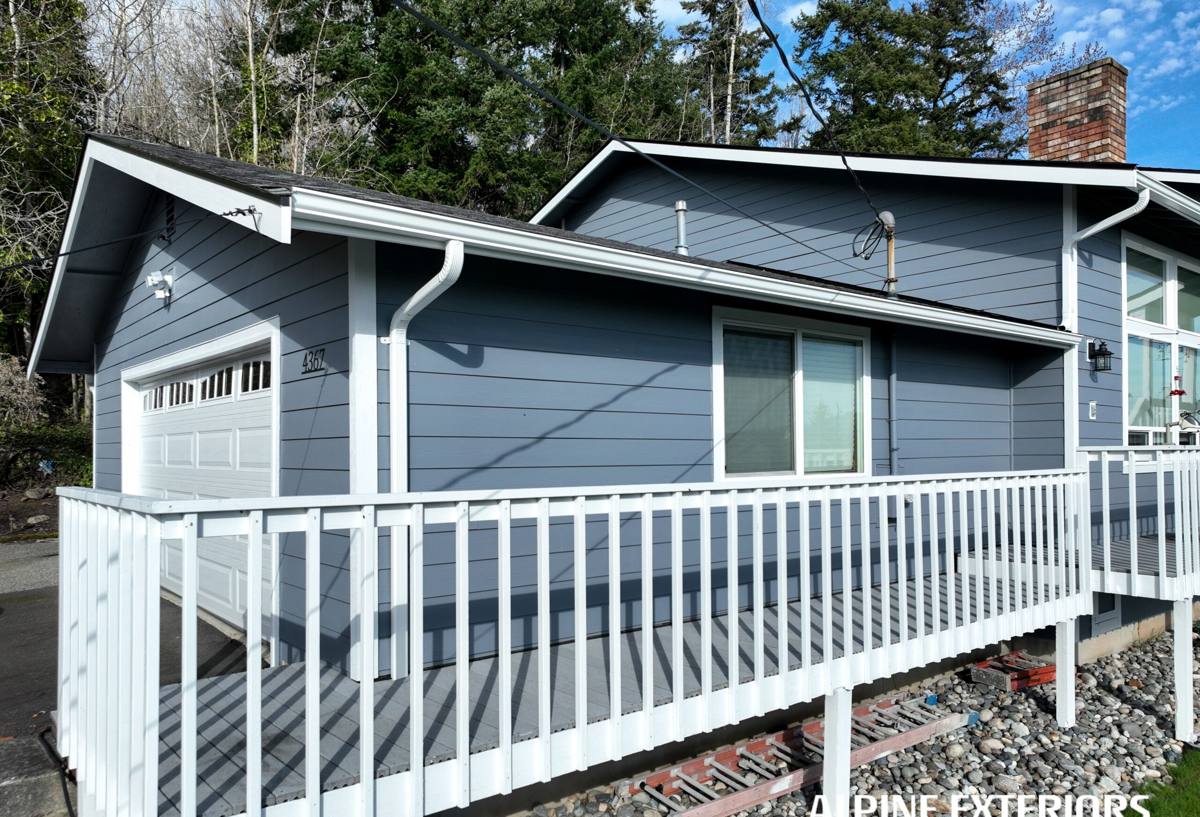
Salt-laden air carries moisture and fine salt particles that settle on every exterior surface, including the roof. Over time this accelerates corrosion on anything metal — nails, flashing, drip edge, and vent stacks. A roof that uses standard electro-galvanized fasteners or basic aluminum flashing in a salt-air environment will show rust and pitting years before an inland roof would. Once a fastener corrodes, it loses holding strength, and once flashing corrodes, it stops shedding water the way it's supposed to.
This is why the fastener and flashing spec matters as much as the shingle brand. A correctly built roof in this area leans on corrosion-resistant materials at every point where metal meets the roof system, not just the visible flashing.
Driving Rain and Wind-Driven Water
Storms coming off the water often bring rain at an angle, which pushes water sideways and upward under shingle edges instead of letting it run straight down. Standard installation practices that work fine in calmer climates can leave small gaps that wind-driven rain finds over time. This is addressed with proper underlayment coverage, correctly lapped flashing, and ice-and-water shield membrane at the vulnerable points — eaves, valleys, and roof-to-wall transitions — rather than relying on the shingles alone to keep water out.
Moss, Algae, and a Long Growing Season
Whatcom County's mild, wet climate gives moss and algae a long window to establish themselves, especially on north-facing slopes and shaded sections of roof that don't dry out quickly between rains. Moss isn't just cosmetic — as it grows, it holds moisture against the shingle surface and can work its way under shingle edges, lifting them and creating a path for water. Algae staining (the dark streaks many homeowners notice on older roofs) doesn't cause structural damage but is a sign the roof surface is staying damp longer than it should.
What a Correctly Built Roof Needs Here
A roof that's going to hold up in Birch Point's conditions needs a few things beyond a standard shingle install:
- Corrosion-resistant fasteners and flashing — stainless steel or high-grade coated materials at minimum, especially on homes with direct water exposure
- Algae-resistant shingles, which use copper-infused granules to slow algae growth on shaded or north-facing slopes
- Full ice-and-water shield coverage at eaves, valleys, and any roof-to-wall intersection, not just the code-minimum areas
- Properly lapped, sealed underlayment across the whole deck, sized for the wind-driven rain this area gets
- Balanced intake and exhaust ventilation, so moisture from inside the home isn't adding to what the roof is already dealing with from outside
- Correctly detailed flashing at every penetration — vent stacks, chimneys, skylights — since these are the most common places roofs actually leak
None of this is exotic. It's standard roofing practice done with the right materials for a coastal, high-moisture climate instead of generic materials chosen to hit a low bid.
Signs a Birch Point Roof Needs Attention
Because much of the damage from salt air and moss happens gradually, homeowners often don't notice a problem until it shows up as a leak inside the house. Watching for these signs earlier can save a lot of money:
- Moss growth on north-facing or shaded slopes, especially any moss that's visibly lifting shingle edges
- Dark streaking (algae staining) across the roof surface
- Granules collecting in gutters — a sign shingles are wearing down and losing their protective surface
- Rust staining around flashing, vent stacks, or nail heads
- Curling, cracking, or lifted shingle edges, particularly on slopes that face prevailing storms
- Any soft spots, staining, or discoloration on ceilings or in the attic after a heavy rain
How We Approach a Shingle Roof in Birch Point
Our process is the same fundamental sequence used on any well-built asphalt shingle roof, with the material choices adjusted for this specific environment:
1. Inspection and Deck Assessment
We check the existing roof deck for soft spots, rot, or moisture damage before anything else. In a marine climate, deck damage can be hiding under shingles that still look okay from the ground, so this step isn't skipped.
2. Tear-Off and Deck Repair
Old roofing material comes off completely and any damaged decking is replaced. Roofing over an existing layer hides problems and shortens the life of the new roof, so we don't do it.
3. Underlayment and Ice-and-Water Shield
Synthetic underlayment goes down across the full deck, with self-adhering ice-and-water shield membrane at eaves, valleys, and roof-to-wall junctions — the areas most exposed to wind-driven rain.
4. Flashing and Ventilation
New flashing goes in at every penetration and transition, using corrosion-resistant materials rather than whatever is cheapest. We also check and correct attic ventilation as part of the job, since a roof that can't breathe properly traps moisture that speeds up deterioration from the inside.
5. Shingle Installation
Shingles are installed to manufacturer nailing specs using corrosion-resistant fasteners, with attention to proper alignment and exposure so wind resistance and water shedding perform as designed.
6. Cleanup and Final Walkthrough
We clear debris, run a magnetic sweep for stray nails, and walk the finished roof with the homeowner so everything is visible and understood before we consider the job done.
Comparing Shingle Options for This Climate
| Option | Best For | Trade-Offs in This Climate |
|---|---|---|
| Standard 3-tab shingles | Budget-conscious projects, simpler roof lines | Shorter lifespan, less wind resistance in storm-driven rain, no built-in algae resistance |
| Architectural (laminate) shingles | Most Birch Point homes — better durability and wind rating | Higher upfront cost than 3-tab, but significantly better long-term performance in wet, windy conditions |
| Algae-resistant shingles | Shaded slopes, north-facing roof sections, homes with heavy tree cover | Slightly higher cost; reduces but doesn't eliminate the need for occasional roof cleaning |
| Impact-rated shingles | Homes wanting extra durability against debris and hail | Higher cost; may qualify for insurance discounts depending on carrier |
What Affects the Cost of a Shingle Roof Here
| Factor | Why It Matters |
|---|---|
| Roof size and pitch | More surface area and steeper slopes mean more material and labor time |
| Number of penetrations | Each vent, chimney, and skylight needs individual flashing work |
| Deck condition | Rotted or soft decking found during tear-off adds repair cost but is essential to fix |
| Shingle grade | 3-tab vs. architectural vs. algae-resistant shingles carry different material costs |
| Access and site conditions | Trees, tight lots, or difficult staging near the water can affect labor time |
| Ventilation upgrades | Adding or correcting intake/exhaust ventilation is a smart long-term investment but adds to the scope |
Every roof is different, which is why we walk each property in person before giving a number rather than quoting off square footage alone.
Simple Maintenance That Extends a Roof's Life Here
- Keep gutters and downspouts clear so water isn't backing up under the roof edge
- Trim back overhanging branches to cut down on shade, debris, and moss-friendly conditions
- Have moss physically removed rather than left to grow — don't pressure-wash shingles, which strips protective granules
- Check attic ventilation periodically, especially if condensation or musty odors show up
- Have the roof looked at after any major windstorm, even if nothing looks obviously wrong from the ground
Why Local Experience with Birch Point Homes Matters
A roofing crew that mainly works drier, inland areas doesn't build the same instincts around salt-air corrosion, wind-driven rain, and moss management that a crew working Whatcom County's coastline does every week. We know which details actually matter for homes in this kind of exposure and which upgrades are worth the extra cost versus which ones aren't necessary for a given property. That local pattern recognition — knowing what tends to fail first on a Birch Point roof and building against it up front — is the real value of hiring a contractor who already works this area, not just one who's willing to drive out for a single job.
If you're dealing with an aging roof, visible moss, or just want an honest read on where your roof stands, we're happy to take a look. Reach out for a free, no-pressure estimate using the form below.