 Blaine Exterior
 Birch Bay Roofs Work Harder Than Most
Birch Bay sits right on the water, and that location cuts both ways. The views are part of why people live here, but the same exposure that makes the waterfront desirable also makes roofs age faster than they would a few miles inland. Salt-laden air off the bay slowly corrodes exposed metal — flashing, fasteners, vent caps, gutter hardware — long before the shingles or panels themselves wear out. Add in Whatcom County's long stretch of wind-driven rain each fall and winter, and you've got water actively being pushed sideways into laps and seams that were only ever designed to shed water falling straight down.
Then there's moss. Birch Bay's shaded lots, marine humidity, and mild winters add up to a moss season that runs far longer than most homeowners expect — often eight months or more out of the year. Moss doesn't just look bad; it holds moisture against the roofing surface, lifts shingle edges as it grows, and works its way under laps where it keeps wood and underlayment damp long after a storm has passed. A roof repaired without addressing the moss problem tends to fail again in the same spot within a season or two.
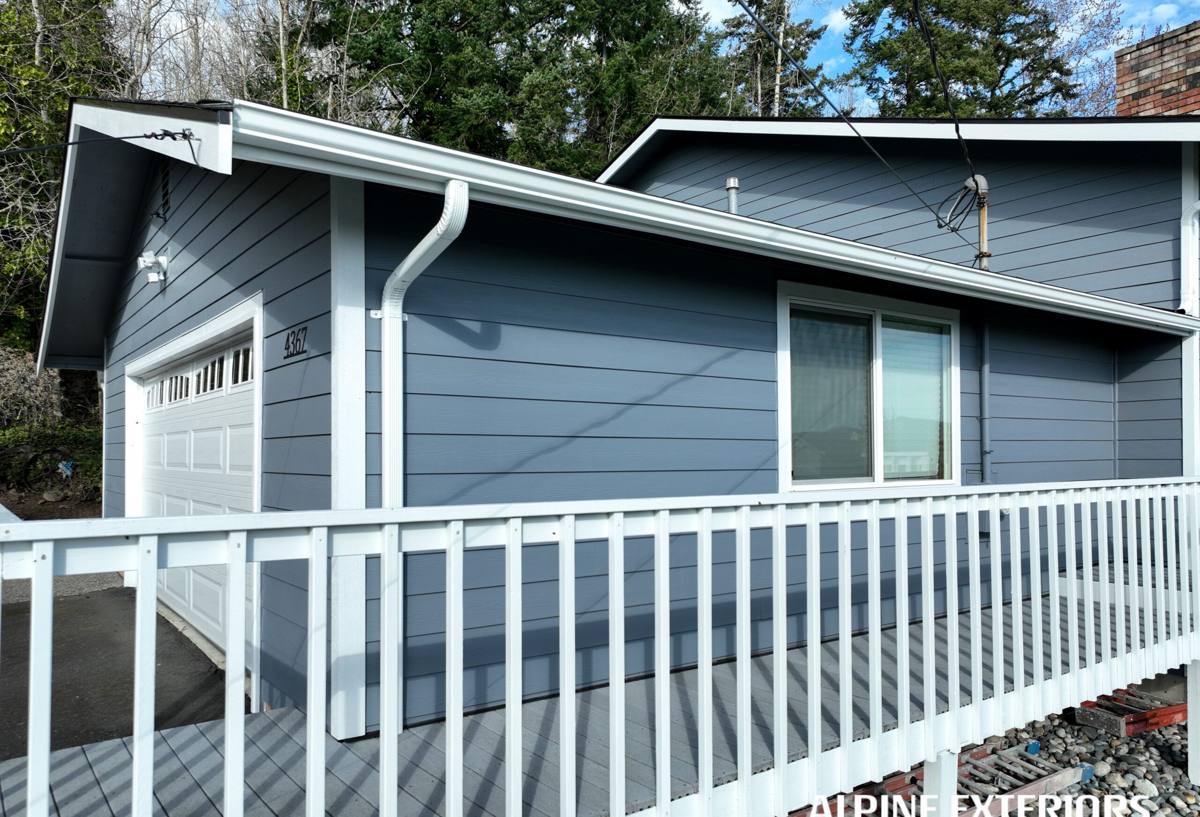
What Local Conditions Do to a Roof Over Time
Salt Air and Metal Fatigue
Nails, flashing, and drip edge are usually the first things to show wear on a Birch Bay roof. Galvanized fasteners can start rusting years before their inland equivalents would, and once a nail head corrodes and loses its grip, the shingle or panel around it starts to work loose in the wind. This is one of the most common repair calls we get in this neighborhood — not a failed roofing material, but failed hardware holding it down.
Driving Rain and Wind Uplift
Birch Bay catches wind off the water with little to break it up before it hits a roofline. That wind doesn't just blow rain sideways — it gets under shingle tabs and flashing edges that have started to lift, even slightly, and forces water uphill against gravity. A leak that shows up only during a windy rainstorm, and not during a calm one, is almost always a sign of this kind of intrusion point rather than a simple worn-out shingle.
Moss, Shade, and Prolonged Moisture
Moss growth is heaviest on north-facing slopes and anywhere tree cover keeps a section of roof from drying out between rains. Left alone, it doesn't just sit on the surface — it roots into the granule layer of asphalt shingles and can lift wood shakes enough to let water track underneath.
Signs a Birch Bay Roof Needs Repair
Most roof problems here don't start as a hole — they start as small, specific failure points that get worse with each storm. Homeowners in Birch Bay should treat any of the following as worth a look before the wet season sets in:
- Granules collecting in gutters or at downspout outlets, a sign shingles are wearing thin
- Moss or dark streaking concentrated on shaded or north-facing slopes
- Rust staining below metal flashing, vents, or exposed fasteners
- Lifted or curling shingle tabs, especially near ridges and edges where wind pressure is highest
- Water stains on interior ceilings that only appear after wind-driven storms
- Soft or spongy spots underfoot near valleys, chimneys, or skylights
- Daylight visible through the roof deck from inside an attic
- Gutters pulling away from the fascia or overflowing during heavy rain
Any one of these can usually be traced to a specific, repairable cause. The goal of a proper inspection is finding that cause, not just patching the symptom.
What a Correct Roof Repair Actually Involves
A repair that lasts starts with figuring out how water is actually getting in, not just where the stain shows up inside. Water can travel several feet along a rafter or across underlayment before it drips somewhere visible, so the ceiling stain and the actual entry point are often not in the same spot.
Diagnosis Before Anything Gets Opened Up
We walk the roof, check flashing at every penetration — chimneys, vents, skylights — and look at valleys, ridges, and edges where wind and water concentrate. In Birch Bay specifically, we pay close attention to fastener corrosion and moss intrusion, since both are more common here than in drier or more inland parts of Whatcom County.
Removing Damaged Material, Not Just Covering It
A repair done right means pulling back or removing the compromised shingles, underlayment, or flashing rather than caulking or sealing over a symptom. Sealant over a bad flashing joint might buy a season, but it isn't a repair — it's a delay, and it usually makes the eventual real fix messier.
Rebuilding the Layer System Correctly
Roofing is a layered system: deck, underlayment, flashing, and the visible roofing material all work together to shed water. A repair has to restore that order correctly — new underlayment lapped the right direction, flashing reinstalled with proper overlap, and roofing material matched and fastened to blend with the surrounding area, not just tacked on top.
Checking the Surrounding Area
Before we call a repair finished, we check adjacent sections for the same early-stage wear that caused the original failure. If nearby fasteners are corroding at the same rate, or moss is established a few feet away, we'll flag it so it can be addressed on the same visit or scheduled before it becomes its own leak.
Common Repair Situations We See in Birch Bay
| Situation | Likely Cause | Typical Fix | Urgency |
|---|---|---|---|
| Leak only during windy storms | Lifted shingle tabs or flashing edge catching wind-driven rain | Re-seat or replace flashing, re-secure or replace affected shingles | Address before next storm season |
| Rust streaks below vents or flashing | Salt-air corrosion of fasteners or metal flashing | Replace corroded hardware and flashing with corrosion-resistant materials | Moderate — worsens steadily |
| Heavy moss on north-facing slope | Shade, humidity, and long moss season typical of Birch Bay | Careful moss removal, treatment, and repair of any lifted shingles beneath | Seasonal — before fall rains |
| Soft spot near chimney or skylight | Failed flashing allowing sustained moisture into the deck | Flashing rebuild; deck repair if rot has set in | High — can indicate structural damage |
| Granule loss and thinning shingles | Age combined with accelerated wear from salt exposure | Section replacement or roof-wide evaluation depending on extent | Plan ahead, not emergency |
Our Repair Process
1. On-Site Inspection
We start on the roof itself, not just from the ground or from photos. We check the attic when accessible, since interior signs of moisture — dark wood, insulation staining, musty smell — often tell us as much as what's visible on the surface.
2. A Straightforward Explanation and Quote
We explain what we found, why it's happening, and what it will take to fix it — in plain terms, not vague line items. If a repair is a reasonable fix, we'll say so. If the roof is closer to the end of its service life and a repair would just be a short-term patch, we'll say that too.
3. The Repair Itself
Work is scheduled around weather — Birch Bay's rain patterns mean we watch forecasts closely to avoid opening up a roof section right before a system rolls in off the water. Materials are matched to the existing roof as closely as possible so the repair doesn't stand out or create a mismatched wear pattern down the line.
4. Cleanup and Follow-Up
We clear debris, check gutters and downspouts near the repair area for anything that fell during the work, and walk you through what was done. If we noted any nearby wear worth watching, we'll tell you what to keep an eye on.
Repair vs. Replacement: How to Think About It
Not every roof problem in Birch Bay needs a full replacement, and not every leak can be permanently solved with a patch. A few honest factors we weigh with homeowners:
- Age of the roofing material — a repair on a roof with several years of remaining service life is usually the right call
- Extent of the damage — isolated flashing or fastener failure repairs well; widespread granule loss or multiple failure points across the roof often doesn't
- Underlying deck condition — sound decking supports a targeted repair; soft or rotted decking usually means the repair has to expand to fix it properly
- How the roof has been maintained — a well-maintained roof with one new problem is a better repair candidate than a roof with years of deferred moss and gutter issues
We'll never push a full replacement when a repair will genuinely hold up, and we'll be equally direct if a repair would just be spending money to delay the inevitable.
Materials and Methods We Use
For fasteners and flashing in a salt-air environment like Birch Bay, we favor corrosion-resistant materials over standard galvanized options wherever it makes sense for the roof type and budget — the small cost difference up front is minor compared to another round of corrosion-driven repairs a few years out. For shingle and underlayment matching, we prioritize products with a track record for wind and moisture performance in coastal Pacific Northwest conditions, since not every roofing product handles driving rain and prolonged dampness equally well. We're happy to walk through the specific materials and their trade-offs for your roof during the estimate — what matters most is picking the right product for your roof's exposure, not just the cheapest or newest option on the market.
Maintenance That Extends the Life of a Repair
A good repair lasts a lot longer with a little upkeep in between. For Birch Bay homes specifically, we recommend:
- Clearing moss buildup at least once a year, ideally before the wet season ramps up in fall
- Keeping gutters and downspouts clear so water isn't backing up under the roof edge
- Trimming back tree cover that keeps sections of roof shaded and slow to dry
- Rinsing accumulated salt residue off metal flashing and vents periodically
- Scheduling a walk-through inspection after any major windstorm off the bay
- Checking attic ventilation, since trapped moisture indoors accelerates deck and underlayment wear from underneath
Why It Matters to Hire a Crew That Already Works Birch Bay
Roofing problems here follow patterns that are specific to this stretch of Whatcom County — where salt exposure hits hardest, which slopes hold moss longest, which flashing details tend to fail first in wind off the water. A crew that works this area regularly recognizes those patterns immediately instead of treating every roof as a generic case. That translates into faster, more accurate diagnosis, materials chosen with local conditions in mind, and repairs that are built to actually hold up through another Birch Bay winter — not just look finished on the day the work wraps up.
If you're noticing any of the warning signs above, or just want an honest read on where your roof stands, we're glad to take a look. Reach out for a free, no-pressure estimate — use the form below and we'll get back to you.