 Blaine Exterior
 Why Birch Bay Roofs Wear Differently Than Roofs Inland
Birch Bay sits right on the water, and that changes what a roof has to deal with year-round. Salt-laden air off the bay accelerates corrosion on anything with exposed fasteners or unprotected metal edges. Wind-driven rain off the Strait doesn't fall straight down — it gets pushed sideways under shingle tabs and around poorly flashed penetrations. And the long, wet, low-sun stretch from fall through spring gives moss and algae months to establish themselves on any roof that holds moisture. None of this is unique to one house on one street; it's the baseline condition for the whole Birch Bay shoreline and the properties set back from it.
A metal roof, installed correctly for this specific environment, handles all three of those stressors better than most other roofing types available to homeowners here. But "installed correctly for this environment" is doing a lot of work in that sentence — the fastener spec, the underlayment choice, and the flashing detail all need to account for salt exposure and wind-driven moisture, not just meet a generic code minimum.
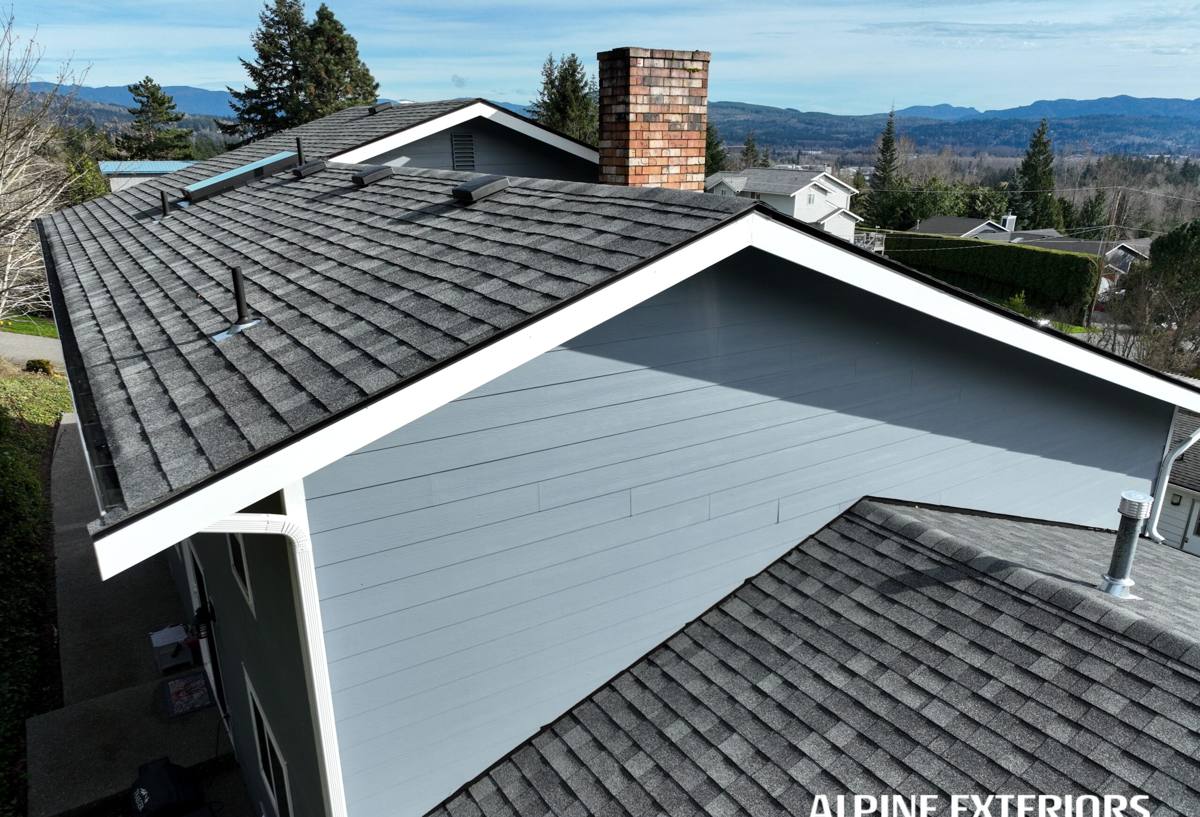
What Salt Air Actually Does to a Roof
Salt air is corrosive to bare or exposed steel, and it's particularly hard on fasteners. A roof that looks fine from the ground can be losing integrity at every screw head if the wrong fastener coating was used, or if the screws weren't torqued correctly and are sitting slightly proud or slightly crushed, either of which lets water sit against the metal.
Where Salt Exposure Shows Up First
- Exposed fastener heads and washers, especially on the windward side of the roof facing the water
- Cut edges of metal panels where the factory coating has been sheared through
- Flashing seams and end laps where two pieces of metal meet
- Any spot where dissimilar metals touch and set up galvanic corrosion
The fix isn't complicated, but it does require attention: use fasteners and flashing rated for coastal exposure, keep dissimilar metals separated with proper underlayment or isolation tape, and seal cut edges rather than leaving raw metal exposed to the air. This is standard trade knowledge, but it's also the kind of detail that gets skipped when a crew is used to working inland and treats every job the same way.
Driving Rain and Wind-Driven Moisture
Birch Bay catches wind straight off the water, and that wind pushes rain sideways and up under roof edges, at ridge caps, and around anything that penetrates the roof plane — vent stacks, chimneys, skylights. A roof that only sheds water moving straight down will eventually leak here, usually at a penetration or an edge detail rather than in the middle of a plain panel run.
What a Wind-Driven-Rain-Resistant Install Requires
- Ice-and-water shield or a comparable self-adhering membrane at eaves, valleys, and around every penetration — not just where code requires it as a minimum
- Ridge and hip caps with proper closures underneath, not just caulk bridging a gap
- Panel overlaps and seam laps run and sealed correctly for the prevailing wind direction on that specific roof
- Properly sized and positioned drip edge so water is thrown clear of the fascia instead of running behind it
A roof that's watertight in a light rain can still leak in a Whatcom County windstorm if these details were treated as optional. This is where the difference between a roof that performs for twenty-plus years and one that starts showing problems in year three usually comes down to install quality, not material quality.
Moss, Algae, and the Long Wet Season
Western Washington's wet season runs long, and Birch Bay's tree cover and marine humidity give moss and algae a head start. Moss doesn't just sit on a roof looking bad — it holds moisture against the roofing material, works its way under laps and edges as it grows, and can lift shingle tabs or hold water against metal seams long enough to cause problems.
Metal roofing has a real advantage here: it's a hard, smooth, non-porous surface, which gives moss and algae far less to grip compared to the textured surface of asphalt shingles or the porous surface of untreated wood or some composite products. That doesn't mean a metal roof is maintenance-free — needles and debris still collect in valleys and against roof-to-wall transitions, and those spots still need to be kept clear so water and organic material don't sit there through the winter. But the roof surface itself isn't feeding moss growth the way a granulated shingle surface can.
Metal Roofing Options and How They Compare
Not every metal roofing product is the right fit for every Birch Bay home, and the differences matter more here than they would somewhere with a milder, drier climate.
| Type | Coastal Performance | Typical Fit |
|---|---|---|
| Standing seam (concealed fastener) | Strongest option for wind-driven rain and salt exposure — no exposed screws for salt air to attack | Full re-roofs, waterfront and near-waterfront homes |
| Exposed-fastener panel | Good performance if fasteners are coastal-rated and re-torqued/maintained over time | Budget-conscious projects, outbuildings, secondary structures |
| Metal shingle/shake profile | Solid moss and algae resistance with a more traditional look; seams still need careful detailing | Homes where the owner wants a shingle appearance without shingle maintenance |
| Standard asphalt shingle (for comparison) | Textured surface holds moisture and gives moss more to grip; more fastener penetrations exposed to weather | Where budget is the primary driver and shorter service life is accepted |
For most Birch Bay homes exposed to direct water views or prevailing wind off the bay, we recommend standing seam. The concealed fastener system removes the single biggest long-term weak point in coastal metal roofing — exposed screws that loosen or corrode over time. For homes set back from the water with more tree shelter, an exposed-fastener panel with proper coastal-rated hardware can be a reasonable and more affordable choice, as long as it's maintained.
What a Correct Metal Roof Install Involves
The material is only part of the job. The install sequence and details are what determine whether the roof performs for its expected service life in this climate.
Our Process
- Roof and structure assessment. We check the existing deck, ventilation, and any signs of prior moisture damage before recommending tear-off versus overlay, and before quoting anything.
- Underlayment selection for exposure. Eaves, valleys, and penetrations get self-adhering waterproof membrane; the rest of the deck gets a synthetic underlayment rated to handle the wait time common with our weather windows.
- Flashing and penetration detailing. Every vent, chimney, and roof-to-wall transition gets custom-fit flashing, not a generic boot or a bead of caulk standing in for proper metalwork.
- Panel installation with coastal-rated fasteners. Fastener type, spacing, and torque are set for wind and salt exposure, not just code minimum.
- Edge and ridge detail. Drip edge, ridge caps, and closures are installed to shed wind-driven rain, not just rain falling straight down.
- Final walkthrough. We walk the roof with the homeowner (weather permitting) or review photos and the scope of what was done, so there are no surprises later.
Cost Factors for a Birch Bay Metal Roof
Every roof is priced on its own specifics, but the factors that move the number up or down are consistent.
| Factor | Effect on Cost |
|---|---|
| Roof complexity (valleys, dormers, penetrations) | More cuts, more flashing, more labor time |
| Tear-off vs. overlay | Tear-off costs more up front but lets us inspect and fix deck issues before they're hidden |
| Panel system chosen | Standing seam generally costs more than exposed-fastener panel, reflecting the labor and hardware involved |
| Roof pitch and access | Steep or hard-to-access roofs take longer and require more safety setup |
| Existing damage | Rotted decking or trapped moisture found during tear-off adds repair cost, but catching it now is cheaper than dealing with it later |
We'd rather walk a homeowner through these variables honestly during the estimate than give a number that doesn't hold up once the tear-off starts.
Why Hiring a Crew That Already Works Birch Bay Matters
A roofing crew that mostly works drier, more sheltered areas can do competent work and still miss the details that matter here — the fastener spec, the edge sealing, the flashing sequence around penetrations facing the prevailing wind. Those aren't advanced techniques; they're standard practice for anyone who works coastal Whatcom County roofs regularly and has seen what happens when those details get skipped.
We work Blaine, Birch Bay, and the surrounding Whatcom County coastline, and we price and detail every metal roof with this specific climate in mind — not a generic spec sheet written for a different part of the state.
Signs Your Current Roof May Be Struggling With This Climate
- Moss buildup that returns quickly after cleaning, especially in valleys or on north-facing slopes
- Rust streaking below fastener heads or flashing seams
- Granule loss or curling shingle edges facing the prevailing wind
- Water stains on interior ceilings near exterior walls or penetrations after windy rain events
- Visible daylight or gaps at ridge caps or flashing when viewed from the attic
If any of these sound familiar, it's worth having the roof looked at before the next wet season, whether the fix ends up being a repair or a full replacement.
If you're weighing a metal roof for a home in Birch Bay, we're happy to take a look and talk through what makes sense for your specific roof, budget, and exposure — no pressure, no obligation. The estimate form below gets you a straightforward answer.