 Blaine Exterior
 Why Birch Bay Homes Need Windows Built for the Coast
Birch Bay sits right on the water, and that location is exactly what makes window work here different from a typical inland job. Salt-laden air off the bay works on metal hardware, fasteners, and finishes year-round, not just during storms. Wind-driven rain off the Strait of Georgia doesn't fall straight down — it gets pushed sideways into any gap, seam, or weak point in a window's flashing. And Whatcom County's long, damp shoulder seasons keep wood trim, sills, and siding wet for weeks at a stretch, which is exactly the environment moss and rot need to take hold.
None of that means Birch Bay homes need exotic products. It means the installation details that get skipped on an easy inland job can't be skipped here, and the product choices that are "fine" somewhere drier aren't automatically fine on a waterfront or near-waterfront lot.
What "Custom" Actually Means for This Job
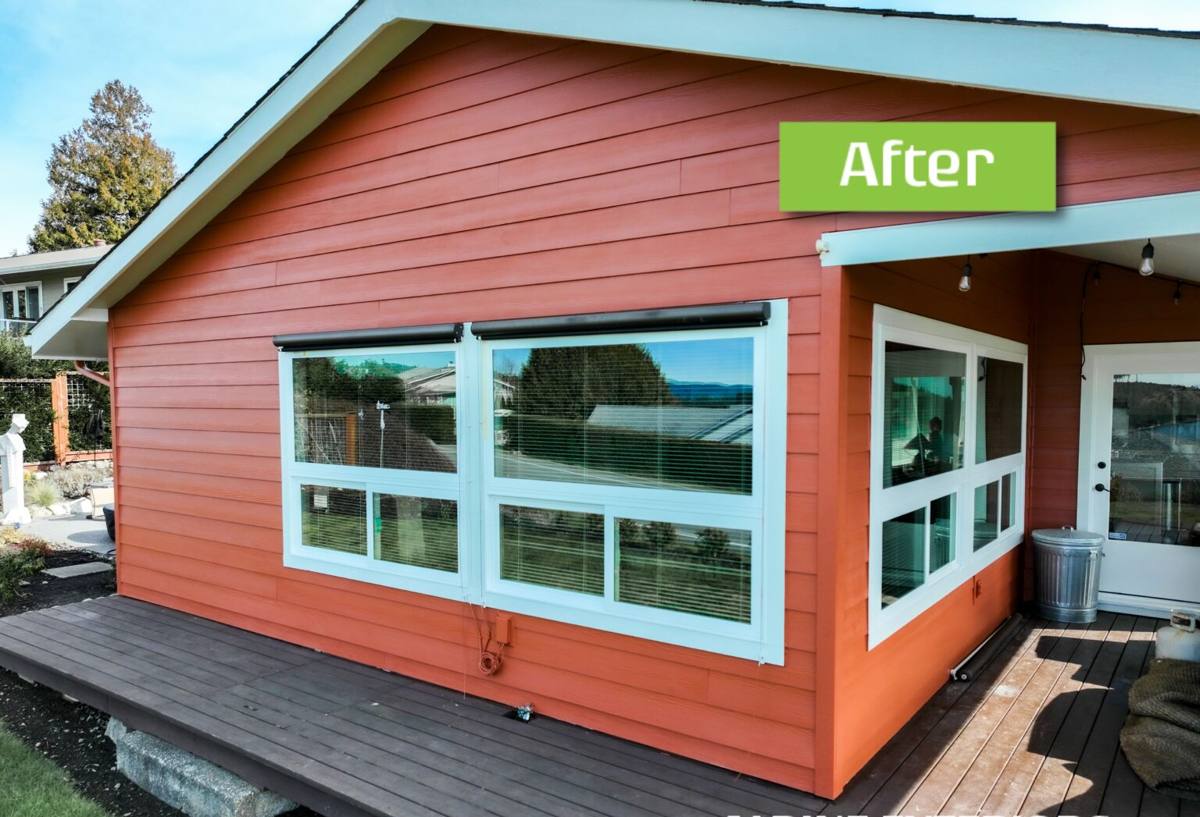
Custom windows aren't just about non-standard sizes, though plenty of Birch Bay homes — especially older cottages and additions — have openings that don't match modern standard dimensions. Custom also means matching the product and the installation approach to how exposed a particular wall actually is.
A window on the windward side of a home facing open water needs a different level of weatherproofing attention than one tucked on a sheltered side wall. A house with decades of settling may have openings that are slightly out of square, which changes how flashing and shimming need to be done to keep the unit performing correctly. Treating every opening the same way, regardless of orientation and condition, is how leaks and callbacks happen a year or two down the road.
Common Reasons Birch Bay Homeowners Replace Windows
- Persistent fogging or moisture between panes, meaning the seal has failed
- Wood trim or sills that are soft, discolored, or showing rot near the window edges
- Hardware that's corroded, sticky, or won't latch tightly anymore
- Drafts or cold spots near the window even when it's fully closed
- A remodel, addition, or siding replacement that's a natural point to upgrade windows at the same time
Material and Glazing Options: What Actually Holds Up Here
There's no single "best" window material — there's a best fit for your home's exposure, your maintenance appetite, and your budget. Here's how the common options stack up specifically for a salt-air, high-moisture environment like Birch Bay.
| Material | Salt Air / Corrosion Resistance | Maintenance Load | Typical Fit |
|---|---|---|---|
| Vinyl | Good — won't corrode, though hardware quality varies by manufacturer | Low — no painting, occasional cleaning | Most homes; best value-to-durability balance |
| Fiberglass | Very good — dimensionally stable, resists warping in wet/dry cycling | Low | Homes with heavier direct water exposure |
| Wood-clad | Fair — exterior cladding helps, but any breach exposes wood to rot | High — finish and seams need regular attention | Homes prioritizing a specific interior wood look |
| Aluminum | Poor without upgraded finishes — prone to pitting and corrosion near salt water | Moderate | Generally not our first recommendation this close to the bay |
We're not tied to pushing one material on every job. We'll walk your specific openings with you and explain the honest trade-offs — including where a lower-maintenance option will save you real headaches over the next 15–20 years versus a product that looks great on day one but needs constant upkeep this close to salt water.
Glazing: Dual-Pane vs. Triple-Pane
Most Birch Bay homes do well with a quality dual-pane, low-E insulated glass unit — it handles Whatcom County's temperature swings and cuts down on condensation risk. Triple-pane adds extra insulation value and sound dampening, which some homeowners want on a wall that takes the brunt of wind off the water, but it also adds weight and cost. We'll tell you honestly when triple-pane is worth it and when it's overkill for your situation.
The Installation Details That Actually Prevent Leaks
Most window failures near the coast aren't product failures — they're installation shortcuts. The window itself can be excellent and still leak if the details around it are wrong. This is the part of the job that matters most in a driving-rain, salt-air environment.
What a Correct Installation Includes
- Sill pan flashing under every opening, with a back dam, so any water that does get past the window drains back outside instead of into the wall framing
- Proper integration with the home's weather-resistive barrier — flashing tape lapped correctly with the house wrap, not just caulk smeared around the edges
- Correct shimming and squaring so the window operates smoothly and the seal isn't stressed unevenly over time
- Low-expansion foam or backer rod and sealant at the right points — not foam everywhere, which can bow frames and cause operational problems
- Exterior trim and caulking using sealants rated for exterior, UV, and salt-air exposure, not general-purpose caulk that breaks down in a couple of seasons
Caulk alone was never meant to be a home's primary defense against wind-driven rain — it's a secondary seal. The flashing and drainage plane behind it are what actually keep water out over the long run, and that's the part that's invisible once the trim goes back on. It's also the part that separates a window job that lasts decades from one that starts leaking in three years.
Our Process
- On-site assessment. We look at each opening individually — exposure, condition of the existing framing and sill, and how the window ties into your siding and trim.
- Product selection. We go over material, glazing, and hardware options honestly, including cost trade-offs, so you're picking based on real information.
- Careful removal. Old windows come out without unnecessary damage to surrounding siding or trim, and we inspect the framing and sill for hidden rot or moisture damage before anything new goes in.
- Repair as needed. Any soft or damaged framing gets addressed before the new window goes in — installing a new window over a rotten sill just hides the problem.
- Correct flashing and installation. Sill pan, house wrap integration, shimming, and sealing, done in the order that actually sheds water.
- Interior and exterior finish work. Insulation, trim, and caulking, matched to your home's existing look wherever possible.
- Walkthrough. We check operation, look at the finished work with you, and answer any questions before we consider the job done.
Why a Crew That Already Works in Birch Bay Matters
A contractor who mostly works inland can install a perfectly good window in a low-exposure environment and never learn the habits that matter on the water. Working Birch Bay regularly means knowing which wall orientations take the worst of the wind and rain, recognizing early signs of salt-air corrosion versus normal wear, and understanding how the area's extended damp season affects timing and drying conditions during a job.
It also means knowing when a Whatcom County permit applies. Most like-for-like window replacements — same size, same opening — are straightforward, but changes to the size or structure of an opening typically require a permit. We'll tell you plainly which situation you're in once we've looked at the job, rather than leaving you to guess.
Living With Windows on the Coast: Maintenance That Actually Matters
Even a well-installed window benefits from a bit of upkeep in a salt-air environment. None of this is complicated, but skipping it shortens the life of even a quality product.
- Rinse exterior frames and hardware periodically to clear salt residue, especially on walls facing open water
- Check weep holes (the small drainage openings at the bottom of the frame) so they stay clear of debris and moss
- Keep an eye on exterior caulking each fall and touch it up before the wet season sets in
- Clear moss and organic buildup from surrounding trim and sills before it holds moisture against the wood
- Operate hardware periodically through the winter to keep it from seizing up
Getting an Honest Look at Your Windows
Every Birch Bay home is a little different — some sit right on the water, some are a few streets back, some have been added onto over the years in ways that changed how the openings were framed. There's no substitute for an in-person look before recommending a product or a price. If you're dealing with drafty, fogged, or failing windows, or you're planning ahead for a remodel, we're glad to come take a look and give you a straightforward, no-pressure estimate — just fill out the form below.