 Blaine Exterior
 Board & Batten Siding in Sumas: A Look Built for Border Country
Board and batten is one of the most requested siding profiles we install in Whatcom County, and Sumas homeowners have good reason to like it. The vertical lines read as clean and modern on newer builds, and they echo the barns and farmhouses that still define a lot of this area near the Canadian border. It's a distinctive look, but it's also a siding profile that lives or dies on the quality of the install underneath it. Get the layering and fastening wrong and you end up with a facade that looks right for a season or two, then starts showing gaps, streaking, and soft spots at the seams. Get it right and it's one of the most durable, low-maintenance exteriors you can put on a house in this part of the state.
This page covers what board and batten actually needs to hold up in Sumas specifically, what we do differently, and why the manufacturer we've standardized on matters as much as the crew doing the work.
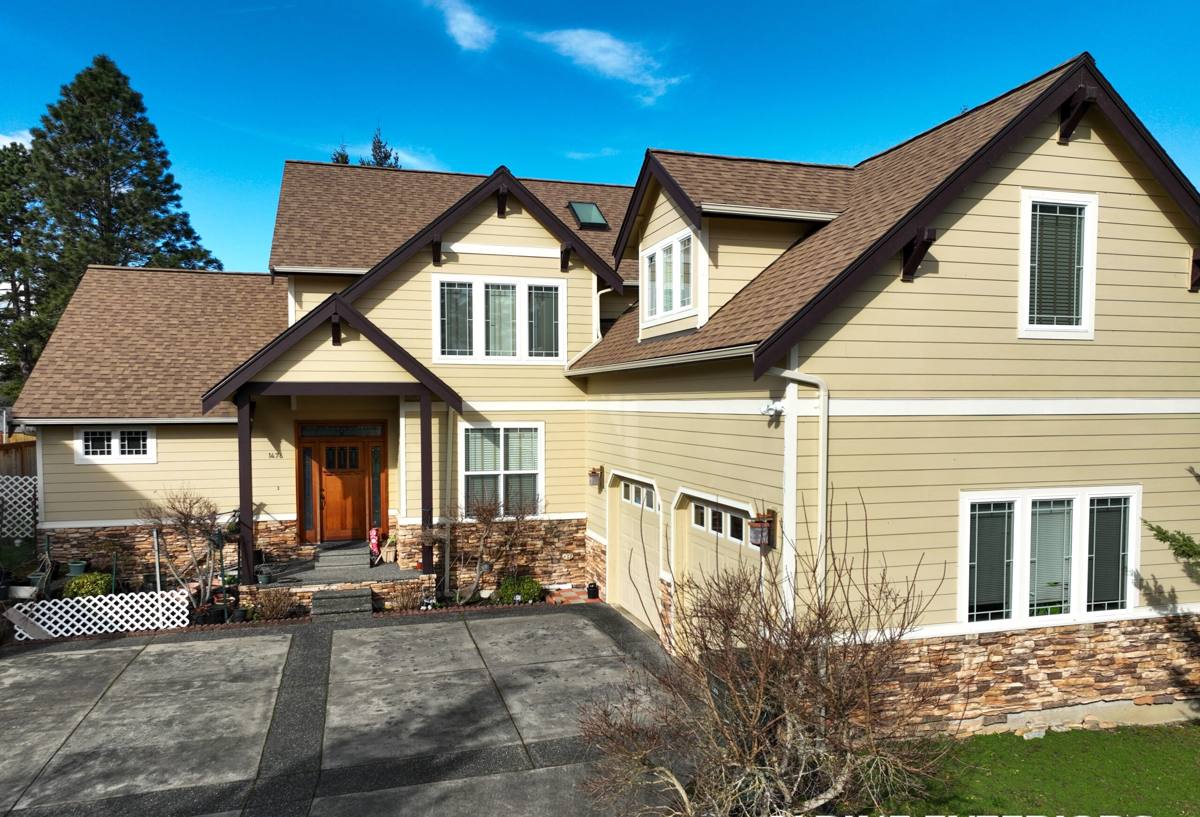
Why This Corner of Whatcom County Is Hard on Vertical Siding
Sumas sits inland from the coast, but it's still squarely inside a wet, marine-influenced climate. Homes here deal with driving rain that comes in sideways during fall and winter storms, long stretches of overcast damp weather that never fully dries the exterior, and a moss season that can run most of the year on north-facing and shaded walls. Add the salt-tinged air that moves through Whatcom County off the Strait of Georgia and the Puget Sound, and you've got an environment that's constantly testing the joints, seams, and fastener points on any vertical siding profile.
Board and batten is more exposed to this than horizontal lap siding in one specific way: every batten strip covers a vertical seam, and every one of those seams is a place where water wants to get behind the cladding if the install isn't done correctly. A horizontal lap sheds water down and off the face of the house almost automatically. A vertical board-and-batten system only sheds water correctly if the panel, the batten, the water-resistive barrier, and the flashing details underneath are all doing their job together. In a climate that stays damp for months at a stretch, there's very little margin for a sloppy install to dry out and self-correct.
The practical result: moss and algae take hold fastest at batten seams and inside corners where moisture lingers, and a poorly sealed or improperly fastened board-and-batten wall will show rot, staining, or fastener bleed years before a well-built one will.
What This Means for Material Choice
Wood board and batten looks great going up, but raw or primed wood in this climate needs a maintenance schedule most homeowners don't stick to — recaulking seams, repainting on a cycle, and watching for rot at the base of every board. Vinyl board and batten sheds water fine but flexes with temperature swings and can crack or bow over time, especially on south and west exposures. This is a big part of why we don't install either one. We'll get into the materials comparison in more detail below.
What a Correct Board & Batten Install Actually Involves
Board and batten looks simple from the street — vertical boards, narrow strips covering the seams — but the assembly behind that look is more involved than most homeowners expect. A correct install includes:
- A continuous water-resistive barrier installed and lapped correctly behind the panels, not just stapled on and covered up
- Proper furring or strapping in many assemblies, to create a drainage gap so any moisture that does get behind the cladding can escape instead of sitting against the wall sheathing
- Correct fastener spacing and depth — over-driven or under-driven fasteners are one of the most common causes of early siding failure, and they're invisible once the batten goes over the seam
- Flashing at every horizontal transition — window heads, door heads, roof-to-wall intersections, and the base of the wall where siding meets the foundation
- Batten placement that actually covers the panel seam with enough overlap to shed wind-driven rain, not just enough to look right
- Manufacturer-specified gaps and sealant at inside and outside corners, which is where board-and-batten walls fail first if it's skipped
Every one of these steps is hidden once the job is finished. That's exactly why it matters who's doing the work — a rushed or inexperienced crew can install a board-and-batten wall that looks identical to a correct one on the day it's finished, and the difference only shows up two or three wet seasons later.
James Hardie Board & Batten: The Only System We Install
We install James Hardie fiber cement exclusively — for board and batten and every other siding profile we put on a house. We don't install vinyl, LP SmartSide, Cemplank, Allura, primed spruce, or cedar, and we're upfront about why: in a climate like Whatcom County's, the trade-offs on those products show up as callbacks, not as a product we're comfortable standing behind long-term.
For board and batten specifically, Hardie's vertical panel systems give us a non-combustible, dimensionally stable substrate that doesn't expand and contract the way wood or vinyl does with our temperature and humidity swings. That stability matters at the seams — it's the difference between battens that stay tight against the panel for decades and battens that work themselves loose as the material behind them moves.
Hardie's HZ5 product line is engineered specifically for climates like ours, with formulations built to resist moisture damage in wet, humid regions. The ColorPlus factory finish is baked on under controlled conditions rather than field-painted, which means better adhesion and color consistency than a job-site paint job — and it holds up better against the UV and moisture cycling that fades and chalks field-applied paint over time. Hardie backs its products with a strong transferable limited warranty, which matters most on a profile like board and batten where a failure at the seams is expensive to catch early and worse to catch late.
Board & Batten Material Comparison
| Material | How it handles wet, mossy climates | Long-term maintenance |
|---|---|---|
| James Hardie fiber cement | Non-combustible, dimensionally stable, engineered moisture resistance in HZ5 formulation | Occasional wash-down; factory finish holds color for years |
| Cedar / primed spruce | Absorbs moisture, prone to cupping and rot at seams without diligent upkeep | Recurring paint/stain and caulk cycle; highest upkeep |
| Vinyl board and batten | Sheds water but flexes and can bow, crack, or fade with UV and temperature swings | Low upkeep but limited repair options once damaged |
| LP SmartSide | Engineered wood — moisture intrusion at cut edges and seams is the main long-term risk | Depends on sealed edges staying intact over time |
Our Process for a Sumas Board & Batten Project
We walk every Sumas project through the same sequence, whether it's a full re-side or a single wall replacement:
- On-site assessment — we look at the existing wall assembly, check for hidden moisture or rot behind the current siding, and evaluate sun and shade exposure on each elevation, since north-facing and tree-shaded walls need extra attention to drainage and moss resistance
- Detailed scope and material plan — panel and batten sizing, color selection from the Hardie ColorPlus line, and a clear plan for flashing at every window, door, and roofline transition
- Tear-off and substrate check — we don't cover up existing damage; if we find soft sheathing or old moisture issues, we address it before anything new goes up
- Water-resistive barrier and flashing installation — this is the step that determines whether the finished wall performs for decades or fails in five years
- Panel and batten installation to manufacturer spec, with correct fastener schedules and gap allowances at every seam and corner
- Final walkthrough so you understand what was done and what the warranty covers
Questions Worth Asking Any Contractor Before You Sign
- Will you install a water-resistive barrier and flashing at every horizontal transition, or just the panels themselves?
- What fastener schedule and gap tolerances do you follow, and are they the manufacturer's specification?
- Who's actually on the crew doing the work — is it your regular team or subcontracted labor?
- What does the warranty cover, and is it transferable if you sell the home?
- Have you installed board and batten specifically in this area, and can you speak to how it holds up here?
Why a Crew That Already Works Sumas Matters
Board and batten performance isn't just about the product — it's about installation details tuned to the specific wall you're covering. A crew that regularly works in Sumas and the surrounding Whatcom County towns knows which elevations on a given lot tend to stay damp longest, where moss pressure is worst, and how driving rain off a fall or winter storm typically hits a wall relative to its orientation. That local pattern recognition shapes real decisions — where we tighten up flashing details, which walls get extra attention at inside corners, and how we sequence a job around the weather window we're actually working with.
It also means accountability. If a warranty question or a maintenance question comes up five years down the road, you're dealing with a company that's still local, still working in your area, and still standing behind the same installs.
Maintenance and Cost Factors to Plan Around
| Factor | What affects it |
|---|---|
| Wall complexity | Number of corners, window/door openings, and roofline transitions — each one is a flashing detail that adds labor |
| Existing substrate condition | Hidden rot or moisture damage found during tear-off can add scope before new siding goes up |
| Elevation exposure | Shaded, north-facing, or tree-covered walls need closer attention to drainage and moss resistance |
| Color and finish | ColorPlus factory finishes come in a range of standard colors; custom field-painting adds cost and reduces the finish warranty advantage |
| Access | Multi-story walls, tight lot lines, and landscaping near the foundation can affect staging and timeline |
We won't give you a number without seeing the walls in person — anyone who quotes board and batten sight-unseen is guessing. What we can tell you upfront is that the biggest cost driver isn't usually the material, it's how much flashing and prep work a given wall needs to be done correctly.
Get a Straight Answer for Your Sumas Home
If you're weighing board and batten for a Sumas property, we're happy to walk the exterior with you, point out what your specific walls need, and give you a clear, honest estimate — no pressure, no inflated scope. Reach out through the form below to get started.