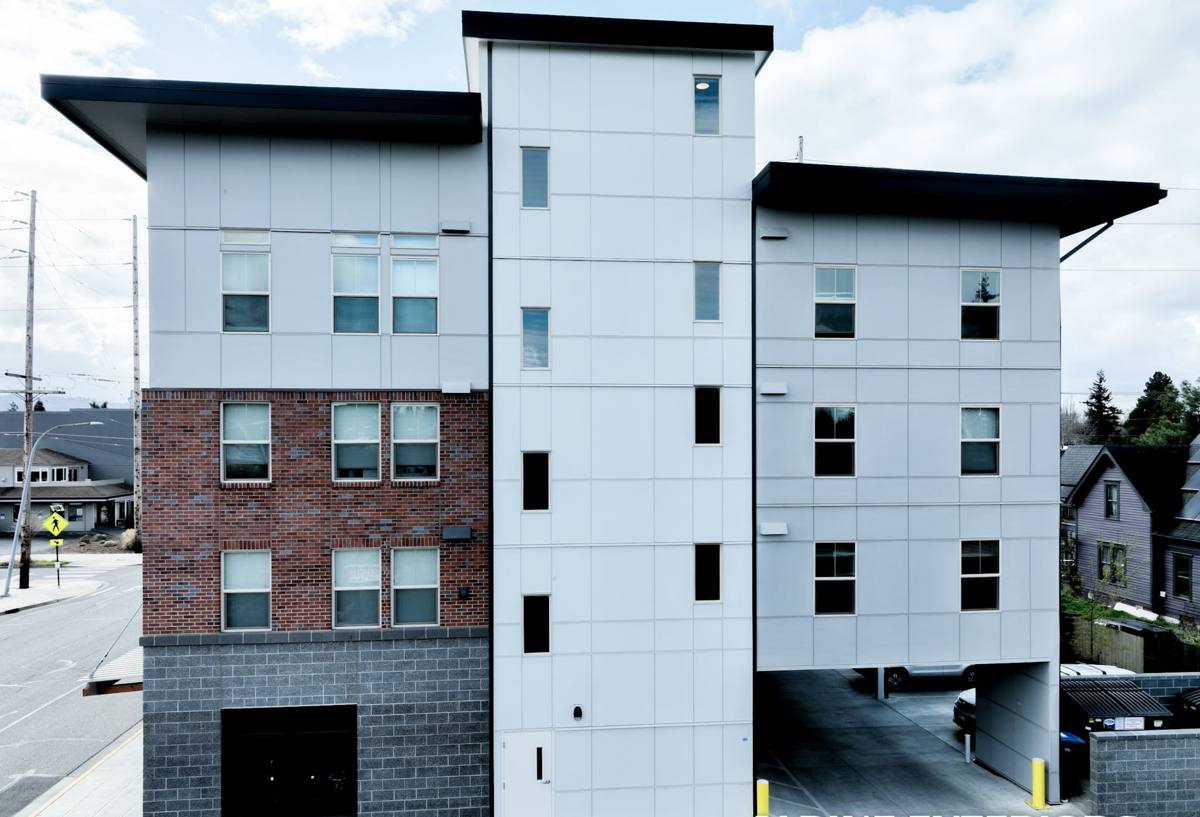
 Blaine Exterior
 Cherry Point's Siding Problem Isn't Like Most of Whatcom County
Cherry Point sits right where the Strait of Georgia meets the mainland, and that location shapes everything about how siding ages here. Homes on or near the water take a steady diet of salt-laden air, wind-driven rain that hits walls sideways instead of falling straight down, and a wet season that stretches long enough for moss and algae to get a real foothold on anything that stays damp. None of that is unique to one house — it's the baseline condition for the whole area — but it means siding decisions that work fine twenty miles inland can fail early out here.
We install siding across Blaine and the surrounding Whatcom County waterfront, and Cherry Point comes with its own short list of things we watch for on every job: how exposed the wall faces are to prevailing wind and rain, how much shade and moisture collect on the north and west elevations, and whether the existing siding and trim show the kind of early wear that signals the assembly behind it was never really suited to this environment in the first place.
What Salt Air, Driving Rain, and Moss Season Actually Do to Siding
Salt Air
Airborne salt is corrosive to exposed metal fasteners, trim flashing, and hardware, and it accelerates the breakdown of coatings that aren't formulated to handle it. Over years, a siding product with a thin or field-applied finish can chalk, fade, or start showing surface degradation well ahead of its expected lifespan — especially on elevations that face open water directly.
Driving Rain
Wind off the Strait doesn't let rain run straight down a wall the way it does on a calm inland site. It drives water sideways and upward under laps, around trim, and into any gap in the water-resistive barrier or flashing detail. A siding job that's only "good enough" in still conditions can let moisture in behind the cladding here, and once water gets behind siding it's the sheathing and framing that pay the price, not just the surface material.
Moss Season
Whatcom County's wet season is long, and Cherry Point's proximity to the water keeps humidity and dampness lingering on shaded and north-facing walls even after a dry stretch elsewhere. Moss and algae need exactly that — sustained moisture and limited sun — and once established they hold water against the siding surface, which speeds up whatever failure mode the material is already prone to.
Why We Install James Hardie Fiber Cement Here — and Nothing Else
We standardized on James Hardie fiber cement siding for every home we side, and Cherry Point's conditions are a big part of why we hold that line. Fiber cement is dimensionally stable — it doesn't swell, cup, or absorb moisture the way wood-based products can, which matters directly in a driving-rain environment where some water intrusion at laps and trim is a when, not an if, over a siding system's lifetime. It's also non-combustible, which is a genuine safety advantage regardless of climate.
Just as important for this location is the finish. James Hardie's ColorPlus factory-applied finish is baked on under controlled conditions, not brushed or sprayed on-site, and it's engineered to resist fading and hold up against the kind of UV and salt exposure that waterfront-adjacent homes see. Hardie also builds climate-specific HZ product lines, which matters in a region that swings between prolonged wet periods and real temperature range through the year.
We don't install vinyl, LP SmartSide, Cemplank, Allura, primed spruce, or cedar. Each of those has legitimate uses somewhere, but none of them is the product we're willing to put our name behind on a Whatcom County waterfront job — the maintenance burden, moisture sensitivity, or coating performance doesn't hold up the way we want it to in this specific climate. That's a standard we apply to every home we side, not a sales pitch for this page.
What a Correct Siding Installation Actually Involves
The siding panel itself is only part of the system. In an exposure like Cherry Point's, the details around it matter as much or more:
- Water-resistive barrier: A continuous, properly lapped weather barrier behind the siding, installed so water sheds down and out rather than pooling behind the cladding.
- Flashing at every penetration: Windows, doors, vents, and any wall penetration need flashing detailed to direct driving rain away from the sheathing, not just rely on caulk.
- Correct fastener placement and spacing: James Hardie specifies fastener type, spacing, and placement for each product line — following it matters for both wind resistance and long-term panel performance.
- Proper clearances: Siding held to correct clearance from grade, roofing, decks, and other transitions keeps the bottom edge from sitting in standing moisture.
- Caulking and sealant at the right joints only: Sealing every seam sounds thorough but can actually trap moisture; Hardie's install specs are clear about where sealant belongs and where laps should be left to drain.
- Painted or factory-finished cut edges: Field-cut panel edges need to be sealed or coated per manufacturer instructions so the cut edge doesn't become the weak point in the whole system.
Skipping or rushing any one of these doesn't usually show up as a problem in year one. It shows up two, five, or ten years later as moisture damage, premature coating failure, or moss taking hold at a spot where water was never draining the way it should.
Our Process for a Cherry Point Siding Installation
1. Assessment and Walkthrough
We look at every elevation, not just the ones that are visibly worn. On a Cherry Point property that usually means paying close attention to whichever wall faces the prevailing wind and water, plus any shaded or north-facing sections where moss and lingering moisture are most likely.
2. Tear-Off and Sheathing Check
Removing the old siding is also our chance to check the sheathing and framing underneath for moisture damage that wasn't visible from outside. We flag and address anything we find before new siding goes on — covering a problem up is how small issues become expensive ones.
3. Weather Barrier and Flashing
We install a continuous water-resistive barrier and detail flashing at every window, door, and penetration to manage wind-driven rain specifically, not just vertical runoff.
4. James Hardie Panel Installation
Panels go on per James Hardie's fastening and clearance specifications for the HZ product line appropriate to this climate zone, with cut edges sealed and joints treated correctly.
5. Final Walkthrough
We review the finished job with you, including how to keep an eye on the areas most exposed to this site's conditions going forward.
Cost Factors for a Cherry Point Siding Job
| Factor | Why It Matters Here |
|---|---|
| Home size and wall complexity | More corners, penetrations, and trim details mean more flashing work — especially important given the wind-driven rain exposure |
| Condition of existing sheathing | Waterfront-adjacent homes are more likely to have hidden moisture damage discovered at tear-off |
| Wind and water exposure of the site | Homes with direct exposure to the Strait often need more attention to flashing and fastening than a sheltered inland lot |
| Extent of moss/algae remediation needed | Long-neglected moss growth can mean additional cleaning or repair before new siding goes up |
| James Hardie product line and finish selected | HZ5 vs. HZ10 and ColorPlus finish options affect material cost but are matched to your specific exposure |
We give straightforward, project-specific estimates after seeing the home — broad ranges without a site visit aren't much use to you, and we'd rather look at the actual walls than guess.
Warning Signs Cherry Point Homeowners Shouldn't Ignore
- Soft or spongy spots when you press on siding, especially near the bottom courses or around windows
- Persistent moss or algae growth that returns quickly after cleaning
- Visible gaps, cracking, or separation at seams and trim joints
- Peeling, chalking, or uneven fading, particularly on water-facing walls
- Staining or discoloration on interior walls near exterior corners, which can indicate moisture getting behind the siding
Any of these on their own isn't necessarily an emergency, but in this climate they're worth having looked at before they get worse. Moisture problems behind siding rarely resolve themselves.
Why a Crew That Already Works Cherry Point Matters
Siding installation isn't one-size-fits-all, even within a small area. A contractor who regularly works Blaine and the Cherry Point shoreline already knows which elevations tend to take the worst of the wind and rain, where moss shows up first, and how to detail flashing for a site that gets more direct water exposure than a typical inland Whatcom County lot. That local familiarity translates into fewer surprises during tear-off and a better match between the installation details and what this specific stretch of coastline actually throws at a house year after year.
It also means we're not learning the area on your project. We've seen what happens when siding is installed to a generic standard on a home that needed more — and we build every Cherry Point job around avoiding that outcome from the start.
If your siding is showing wear, you're planning ahead of a problem, or you just want an honest read on where your home stands, we're glad to take a look. Request a free, no-pressure estimate using the form below — we'll walk the property, tell you what we see, and give you a straight answer either way.