 Blaine Exterior
 Why Sandy Point's Shoreline Exposure Is Different
Sandy Point sits right where Whatcom County's coastline meets the weather coming off the Strait of Georgia, and that location asks more of a home's exterior than most inland Blaine properties see. Salt-laden air moves through year-round, wind-driven rain hits siding at angles that gutters and overhangs don't fully block, and the long, damp shoulder seasons here give moss and algae months to take hold on anything that stays wet. None of that is unusual for this stretch of coastline — it's just the tradeoff of living this close to the water. What it means for your siding is that the material and the installation both have to be chosen with that exposure in mind, not treated as an afterthought. Even on the same house, the water-facing elevation usually takes noticeably more abuse than the sheltered side, which is why we look at each elevation separately rather than specifying one blanket approach for the whole home.
A siding product that performs fine on a sheltered inland lot in the same county can fail early on a waterfront or near-waterfront home in Sandy Point. Fine hairline gaps that would dry out in a day somewhere else can stay damp for a week here. That's the starting point for everything on this page: this is a job that has to be planned around this specific microclimate, not treated with a generic coastal Pacific Northwest checklist.
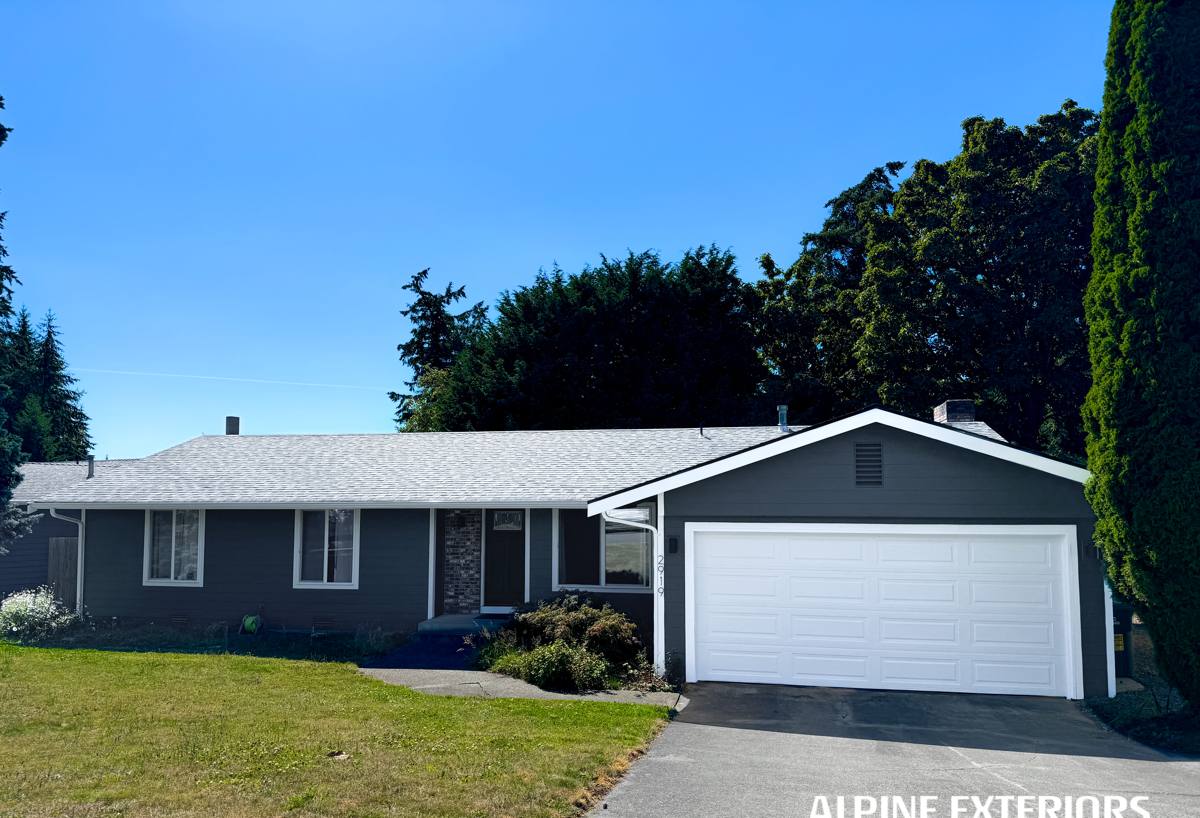
What Correct Fiber Cement Installation Requires in This Environment
Fiber cement siding is a durable, engineered product, but its durability depends almost entirely on how it's installed. In a climate like Sandy Point's, a handful of details separate a siding job that lasts decades from one that starts showing problems within a few years.
Moisture Management Behind the Siding
The siding itself is only one layer of the water management system. Behind it, a home needs a properly lapped weather-resistant barrier, correctly integrated flashing at every window, door, and penetration, and a drainage plane that lets any moisture that does get behind the cladding find its way back out. On a home taking direct salt spray and driving rain, skipping or rushing this layer is the single most common cause of hidden rot — and it's invisible from the street once the siding goes up.
Gaps, Fastening, and Caulking
Fiber cement panels and lap siding need specific gaps at butt joints and terminations, correct fastener spacing and depth, and caulking only where the manufacturer's details call for it — not as a substitute for proper flashing. Over-caulking is a common shortcut that traps moisture instead of shedding it, which is especially damaging in a location where surfaces stay damp longer because of onshore humidity and moss growth.
Cut-Edge Sealing
Every field cut on a fiber cement board exposes raw material that needs to be sealed before installation, particularly at inside corners, outside corners, and anywhere a board meets trim. In a salt-air environment, an unsealed cut edge is often where premature deterioration starts first.
Why We Install Only James Hardie Fiber Cement
We standardized on James Hardie products exclusively, and Sandy Point is a good example of why. Hardie's HZ5 formulation is engineered specifically for climates with significant moisture exposure — the kind of weather this part of Whatcom County sees for much of the year. The product is non-combustible, which matters given the dry-season wildfire smoke and occasional brush fire risk the broader region has seen in recent years, and it holds paint and color far better over time than wood-based alternatives because the ColorPlus factory finish is baked on under controlled conditions rather than applied on site in variable weather. Hardie's ColorPlus finish also cuts down on a maintenance burden that's easy to underestimate in this climate: repainting a full exterior every several years to keep ahead of salt exposure and UV fading is a real, recurring cost that a factory-applied, baked-on finish avoids for a long time.
We don't install LP SmartSide, vinyl, Cemplank, Allura, primed spruce, or cedar. That's not a knock on every homeowner who already has one of those products on their house — it's that we've made a deliberate call about what we're willing to put our name on, and for a coastal environment like Sandy Point's, fiber cement engineered for moisture exposure gives the most predictable long-term result.
Comparing Siding Options for Salt Air, Wind-Driven Rain, and Moss
Homeowners in Sandy Point often ask how the material options actually stack up once you factor in the local climate rather than a generic sales pitch. Here's an honest comparison:
| Material | Salt Air Resistance | Moisture Behavior | Moss/Algae Tolerance | Long-Term Cost Factor |
|---|---|---|---|---|
| James Hardie Fiber Cement | Engineered for it (HZ5) | Dimensionally stable, doesn't swell or rot | Factory finish resists staining, cleans up well | Higher upfront, lowest lifecycle cost |
| Vinyl | Can chalk and become brittle with sustained salt exposure | Sheds surface water but can trap moisture behind it if not detailed well | Prone to visible algae streaking | Lower upfront, shorter service life in this exposure |
| Cedar/Wood | Attractive but needs frequent refinishing near salt air | Absorbs moisture, prone to rot if finish fails | High — needs regular treatment | Lowest upfront, highest ongoing maintenance cost |
| LP SmartSide | Wood-strand core sensitive to sustained moisture | Edge and cut swelling risk if sealing isn't maintained | Moderate, finish-dependent | Mid upfront, maintenance-dependent lifespan |
The pattern that matters for this specific location: materials that depend on a perfect, never-failing seal at every cut and joint carry more risk in an environment where things stay damp longer. Fiber cement engineered for high-moisture climates gives more margin for error over the life of the siding.
Our Process for a Sandy Point Siding Job
Every job starts with an assessment specific to the property, not a generic estimate. Waterfront and near-waterfront lots in Sandy Point often have different wind exposure on the water-facing side than on the landward side, and that affects flashing details, fastener spacing, and sometimes even which siding profile makes sense.
- Exterior assessment: existing siding, trim, flashing, and any signs of past moisture intrusion around windows, doors, and roof-to-wall transitions.
- Tear-off and inspection of the sheathing and weather barrier underneath — this is where hidden problems from a prior installation usually show up.
- Repair or replacement of any damaged sheathing, and correction of flashing details before any new siding goes on.
- Installation of James Hardie fiber cement to manufacturer specification: proper gaps, fastener placement, sealed cut edges, and correctly lapped, integrated flashing at every penetration.
- Final inspection walk-through, checking every joint, corner, and transition before the job is considered complete.
We don't skip the tear-off inspection step to save time, even on jobs that look straightforward from the street. On a coastal property, what's happening behind the old siding tells you more about the real condition of the home than what's visible on the surface.
Working With Community Guidelines
Some properties in Sandy Point fall under a homeowners' association or architectural guidelines that require approval of exterior colors and materials before work begins. If that applies to your home, we build that step into the schedule up front rather than treating it as a delay, so approvals are handled before crews and materials are on site.
Living With Fiber Cement Siding in Sandy Point
Correctly installed Hardie siding is low-maintenance, but low isn't none, especially with a long moss season working against it. A simple annual routine keeps the siding performing and looking good for the long haul.
- Rinse siding with a garden hose, not a pressure washer aimed directly at seams, once or twice a year to remove salt residue and organic buildup.
- Keep gutters and downspouts clear so runoff doesn't sheet down the siding face longer than necessary.
- Trim back vegetation and tree cover that keeps siding shaded and damp, which accelerates moss growth.
- Inspect caulking at trim and penetrations annually, and have any cracked or missing sealant addressed before the wet season sets in.
- Watch for moss or algae taking hold in shaded, north-facing sections first, and address it early rather than letting it spread.
Why Local Experience in This Exact Environment Matters
A siding crew that mostly works inland jobs doesn't run into Sandy Point's wind-driven rain or its specific moss patterns on a regular basis. We work throughout Blaine and Whatcom County, and jobs on this stretch of coastline have taught us where water actually gets into a home like this — not from a manual, but from the ladder. That experience shows up in small decisions: where we pay extra attention to flashing, which elevations need a tighter fastening schedule, and how we sequence a job around the wet weather instead of fighting it.
It also matters for something more basic: showing up prepared. A crew unfamiliar with Sandy Point's access and weather patterns is more likely to schedule around convenience rather than the conditions the job actually needs.
Warranty and Long-Term Value
James Hardie backs its fiber cement products with a strong, transferable limited warranty, and the ColorPlus factory finish carries its own separate finish warranty — which matters in a salt-air environment where paint failure is usually the first visible sign of trouble on any siding material. Warranty coverage is tied to installation meeting manufacturer specification, which is another reason installation quality isn't optional — a beautiful-looking job that skipped a flashing detail or fastener spec can put warranty coverage at risk exactly when a homeowner would want to rely on it. A transferable warranty also protects resale value, worth factoring in for anyone who may sell a Sandy Point property down the road.
The honest way to think about cost here isn't the lowest bid — it's cost per year of service life. A correctly installed Hardie system, backed by a real warranty and installed by a crew that understands this coastline, is built to be the last siding job a homeowner has to think about for a long time.
If you're planning a siding project in Sandy Point, we're glad to walk your property, look at your specific exposure, and give you a straightforward, no-pressure estimate — use the form below to get started.