 Blaine Exterior
 Why Nooksack Homes Need Windows Built for This Climate
Nooksack sits inland from Blaine but still gets the full weather package that defines this corner of Whatcom County: salt-laden air pushing in off the Strait of Georgia and Boundary Bay, long stretches of driving rain from fall through spring, and a moss and mildew season that can run eight or nine months out of the year. None of that is dramatic on its own. What it does is grind away slowly at anything that isn't detailed correctly — window frames included.
Older aluminum and low-grade vinyl windows in this area tend to show their age the same way: seals fail early, condensation builds between panes, and wood trim around the opening stays damp long enough to invite rot. Salt air accelerates corrosion on hardware and fasteners that weren't rated for it. None of this means Nooksack is a hard place to keep windows in good shape — it just means the install has to account for moisture and wind-driven rain from day one, not as an afterthought.
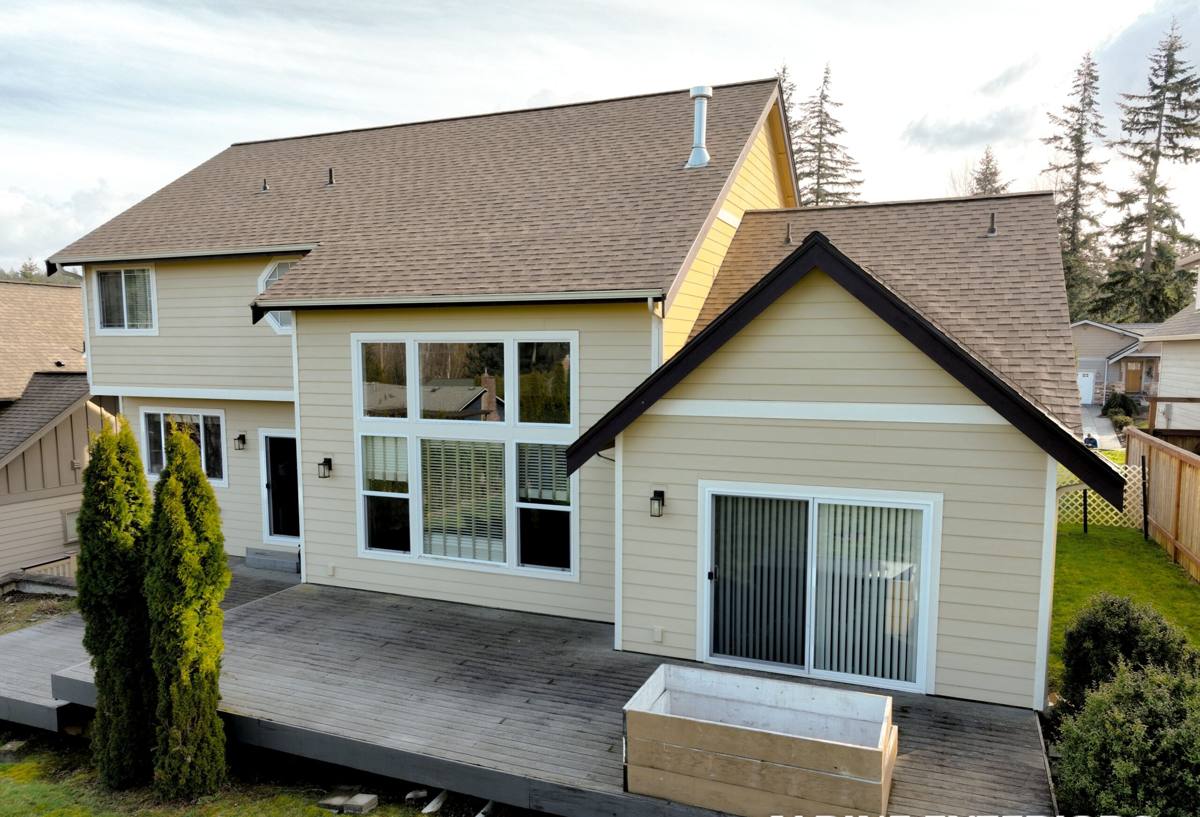
What "Custom" Actually Means for a Window Replacement
"Custom" gets used loosely in this trade, so it's worth being specific. For us, a custom window job means the window is built to the exact opening — not trimmed down or shimmed to fit a stock size — and the trim, sill, and interior finish are matched to the rest of the house rather than treated as an afterthought. On older Nooksack-area homes, openings are rarely perfectly square after decades of settling, so a stock-size unit forced into a slightly out-of-square opening is one of the more common causes of early air and water leaks we get called out to fix.
Custom also covers configuration: casement versus double-hung versus sliders, grille patterns that match the home's original style, tempered glass where code requires it near doors or low sills, and glazing packages chosen for sun exposure and wind exposure rather than a one-size-fits-all default. A farmhouse near open fields catches more direct wind-driven rain on its west and south faces than a home tucked behind trees, and the window spec should reflect that difference.
When Custom Is Worth It vs. When It Isn't
Not every project needs full custom sizing. If your existing openings are square, in good condition, and a standard size, a quality replacement window installed correctly can perform just as well for less money. Custom sizing earns its cost when openings are irregular, when you're changing the window style or size, or when you're restoring a home where matching the original proportions matters. Part of an honest estimate is telling you which situation you're actually in.
Signs Your Current Windows Are Costing You
Most homeowners don't replace windows because of one big failure — it's a slow accumulation of small ones. Here's what we look for during an assessment, and what you can check yourself before calling anyone:
- Condensation or fogging between the panes of double- or triple-pane glass (a failed seal, not a cleaning problem)
- Visible gaps or daylight around the frame when the window is closed
- Soft, discolored, or swelling wood trim on the interior or exterior sill
- Windows that are difficult to open, close, or lock — often a sign the frame has shifted
- A noticeable draft near the window even with it fully latched
- Moss, algae, or persistent green staining building up on sills and lower trim
- Higher heating bills in winter without a clear other explanation
- Paint or finish peeling specifically around the window perimeter, not elsewhere on the wall
Any one of these on its own isn't an emergency. Several together, especially on the weather-facing side of the house, usually means moisture has been getting past the seal for a while.
Material and Glass Options for This Climate
There's no single correct material for every home — it depends on budget, maintenance appetite, and how exposed the house is to wind and salt air. Here's how the common options actually compare for this specific climate:
| Material | Moisture & Salt Air Behavior | Maintenance | Typical Fit |
|---|---|---|---|
| Vinyl | Resists corrosion well; won't rot; frame can flex slightly in temperature swings | Low — occasional cleaning | Most homes; strong value for the performance |
| Fiberglass | Very stable in wet, salty conditions; expands and contracts close to glass rate | Low | Higher-exposure sides of a home; long-term owners |
| Wood-clad | Good performance if the cladding and flashing are done right; exposed wood needs protection from driving rain | Moderate to higher | Homes where interior wood aesthetic matters |
| Aluminum | Prone to corrosion and thermal transfer in salt air and cold snaps unless thermally broken | Moderate | Limited use; mostly commercial or specific architectural needs |
On glazing, double-pane with a low-E coating and argon fill is the practical baseline for this area. Triple-pane adds cost and weight but earns its keep on north- and west-facing walls that take the brunt of the wind and rain, or in rooms where you've noticed a persistent draft or cold spot. We'll walk through which sides of your specific home justify the upgrade rather than selling it as a blanket recommendation.
How We Install: The Process Step by Step
The window itself is only part of the job. Most of the long-term performance comes from what happens at the opening before and after the unit goes in.
- Assessment and measurement. We check the opening for square, inspect the existing sill and framing for hidden rot or moisture damage, and measure precisely rather than relying on the old window's dimensions.
- Removal. The old unit comes out carefully so we can inspect the framing, sheathing, and any existing flashing underneath — this is often where problems that caused the original failure get found.
- Repair framing if needed. Any soft or water-damaged wood gets addressed before the new window goes in. Installing a new window over a compromised opening just hides the problem for another few years.
- Flashing and moisture barrier. Proper sill pan flashing, side flashing, and integration with the house wrap or building paper — this is the single most important step for keeping wind-driven rain out over the long run.
- Set and shim the window. The unit is leveled, plumbed, and squared, then fastened per manufacturer spec so it isn't relying on caulk or foam to hold shape.
- Seal and insulate. Low-expansion foam or backer rod and sealant around the frame, sized correctly so it insulates without bowing the frame.
- Exterior and interior trim. Trim is finished to match the home, with attention to how water sheds off the top of the window rather than pooling.
- Final inspection and walkthrough. We check operation, look for gaps, and walk you through what to expect as caulk cures and the home settles around the new unit.
Flashing and Moisture Details: Where Most Failures Actually Start
If you talk to any contractor who's done service calls on failed window installs in this region, the same theme comes up: the glass and frame rarely fail first. The flashing does. A sill pan that wasn't sloped correctly, house wrap that wasn't lapped over the flashing instead of under it, or sealant used as a substitute for proper flashing instead of a backup to it — these are the details that let water into the wall cavity, where it does damage you can't see until trim starts to fail or drywall shows staining.
Given how much rain this area sees over a typical winter, we treat flashing sequencing as non-negotiable, not an upsell. It doesn't cost more to do it in the right order — it just takes knowing the order and not skipping steps to save time.
Energy Performance in a Marine Climate
Whatcom County doesn't hit the extreme cold of inland climates, but the combination of persistent damp and wind means drafts and heat loss show up as comfort problems as much as cost problems — cold spots near windows, condensation on interior glass in winter, and rooms that feel chilly even when the thermostat says otherwise. A properly sealed, correctly glazed window addresses both the utility bill and the comfort issue at the same time.
Look for windows with a solid U-factor rating for heat retention and a reasonable Solar Heat Gain Coefficient — for most Nooksack-area homes without heavy south-facing sun exposure, prioritizing U-factor over SHGC makes more sense than it would in a hotter, sunnier climate.
Permits, Timelines, and What to Expect
Straightforward like-for-like window replacements typically don't require a separate permit in unincorporated Whatcom County, but changes to the size, structural opening, or egress requirements (like adding a bedroom window) usually do. We'll tell you upfront if your project falls into that category rather than letting it surprise you partway through.
Timeline-wise, custom windows are built to order, so expect several weeks of lead time between measuring and the units arriving — this is standard across the industry, not something specific to how we operate. Installation itself, once the windows are on site, is usually a one-to-few-day job depending on how many openings are involved. We try to schedule around weather windows where possible, since a dry stretch makes for a cleaner, faster install.
Why Hiring a Crew That Already Works Nooksack Matters
A window installer who mostly works drier inland climates can still do competent work, but the details that matter here — flashing sequencing built for sustained wind-driven rain, hardware and fastener choices that hold up in salt air, and sill designs that shed moss and standing water instead of trapping it — are the kind of thing you learn from doing it repeatedly in this exact environment, not from a general training manual.
We work Blaine and the surrounding Whatcom County communities, including Nooksack, regularly enough to know which sides of a house typically take the worst weather, which older home styles tend to have out-of-square openings, and what a proper install actually needs to hold up through another wet season. That's not a sales pitch — it's the practical reason local experience shows up in fewer callbacks and longer-lasting seals.
Getting an Estimate
If your windows are showing any of the signs above, or you're planning ahead for a remodel, we're happy to take a look and give you a straight answer — including telling you if a full custom job isn't actually necessary for your situation. Reach out for a free, no-pressure estimate using the form below, and we'll walk your home's specific exposure and openings with you before recommending anything.